The Best Xi’an Famous Foods: A Complete Guide to Street Food and Local Specialties
As an ancient capital of thirteen dynasties, Xi’an’s food culture is a "living fossil" of Chinese culinary civilization, embodying the dietary genes of the Zhou, Qin, Han, and Tang dynasties and the flavor integration of the Silk Road. From the ritual "sheep soup" of the Western Zhou Dynasty, the kebab and naan-making skills brought by Western Regions merchants in the prosperous Tang Dynasty, to the iteration of folk snacks in the Ming and Qing dynasties, the warmth of street food hides the most authentic memories of the ancient capital. This guide is specially designed for foreign tourists, covering Xi'an famous foods, Xi'an street food, and old Xi'an food, integrating cultural interpretation and practical strategies to help you accurately punch in authentic delicacies, and immerse yourself in the "flavor of Chang’an".
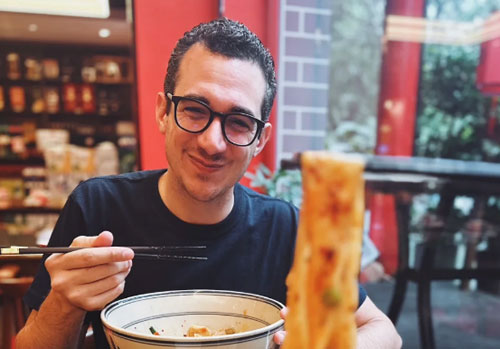 Exquisite Xi'an Night Tour Indulge in Mouthwatering Culinary Delights and Authentic Muslim Cuisine
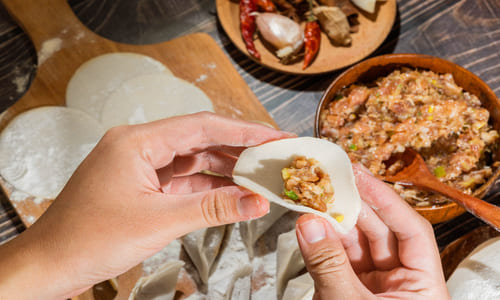 Xi'an Local Tour: Discover Dumpling Making & Savor Authentic Flavors in the Muslim Quarter
Why Xi'an is a Food Exploration Haven for Foreign Tourists?
Xi’an boasts both "historical depth" and "street vitality", forming a unique dual dietary system of "imperial flavor + folk snacks". The foods here are highly cost-effective, with an average cost of 30-80 yuan per person to taste authentic flavors, covering all needs—whether you are a vegetarian, a meat lover, or someone who prefers light or spicy flavors, you can find your favorite. More importantly, the production techniques of most foods are included in the intangible cultural heritage, making every bite a cultural experience spanning thousands of years. In addition, as an international tourist city, Xi’an’s mainstream food areas have convenient transportation, and some time-honored brands provide basic English services, greatly reducing the exploration threshold for foreign tourists.
Comprehensive Guide to Xi'an's Cuisine
A. Xi'an Street Food
a. Carb Carnival: The Soul of Xi'an's Staples
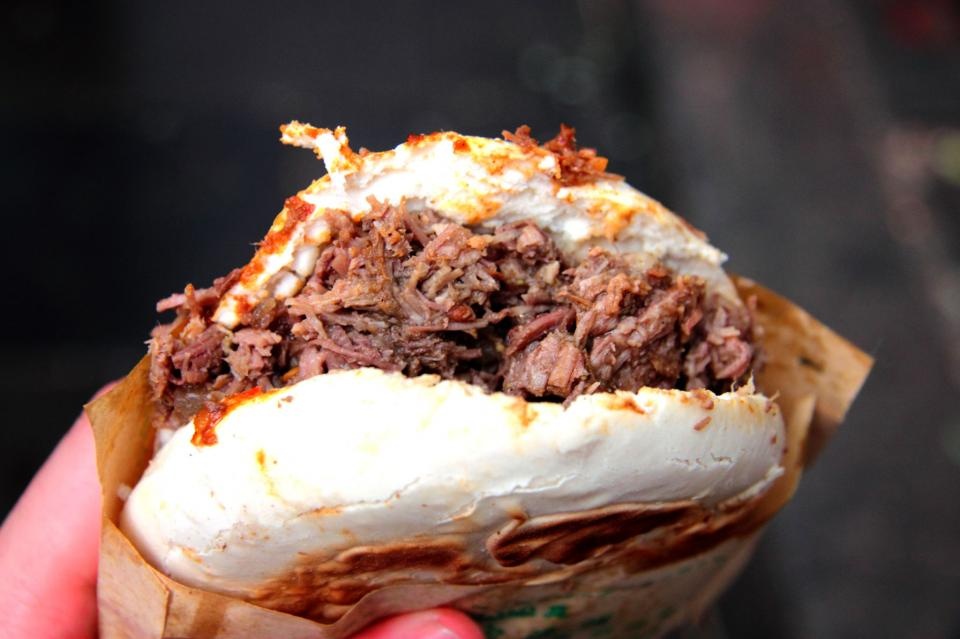
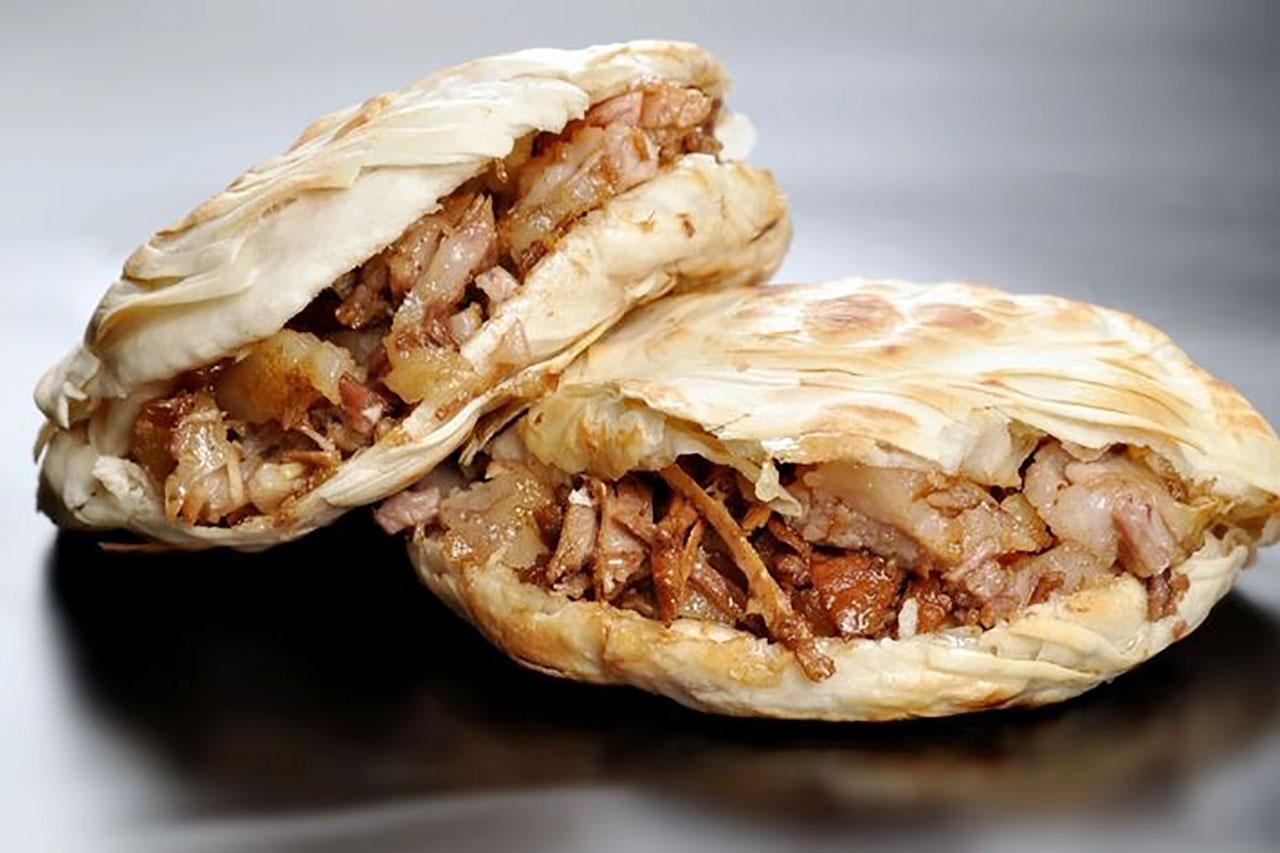
1. Roujiamo (Chinese Hamburger)
Divided into two styles to suit different tastes. Preserved Pork Roujiamo uses pork front leg meat, slow-cooked with dozens of spices for over 4 hours, tender and juicy, paired with fermented soft steamed bread, mild and not greasy, suitable for those who prefer light flavors; Tongguan Crispy Roujiamo is a thousand-layer crispy bread with braised pork, thin and crumbly outer skin, soft and juicy inside, rich in aroma, suitable for those who like strong tastes.
* Recommended Restaurant:
- Ziwulu Zhangji Roujiamo (Cuihua Road)
· Address: 227 Cuihua Road, Yanta District, Xi'an, Shaanxi Province, China
· Phone: +86-18009257687
· Opening hours (Mon to Sun): 07:00-00:30
· Price: Approximately 15-25 RMB per person ($2-3.5), offering fantastic value for authentic local Xi'an flavor.
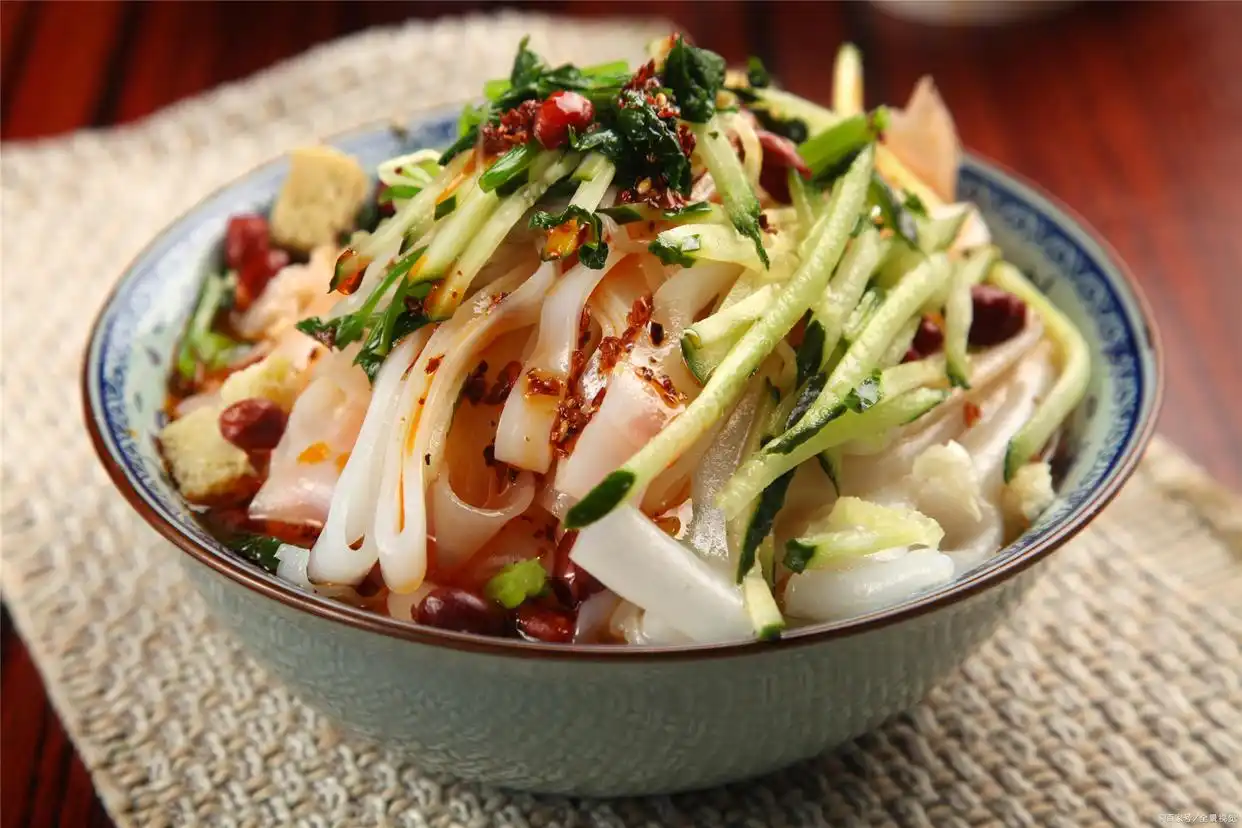
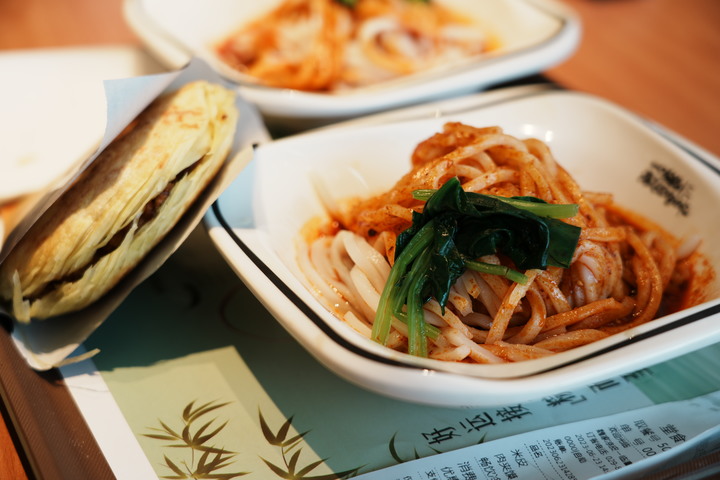
2. Liangpi (Cold Noodle)
A must-have summer dish to relieve heat in Xi’an, divided into three types based on taste and ingredients: rice liangpi (soft and smooth), wheat liangpi (chewy), and rolled liangpi (thick and textured). All are paired with freshly poured chili oil, vinegar, mashed garlic, and shredded cucumber, sour, spicy and refreshing.
* Recommended Restaurant:
- Wei Jia Liangpi (South Gate Branch)
· Address: No. 3 Nan Dajie, Nanyuanmen Street, opposite Zhongda International, Xi'an, Shaanxi Province, China
· Phone: +86-(029)87219096
· Opening hours (Mon to Sun): 00:00-24:00
· Price: Approximately 20-30 RMB per person ($2.8-4.2), offering great value for authentic Shaanxi liangpi and delicious matching set meals.
3. Biangbiang Noodles
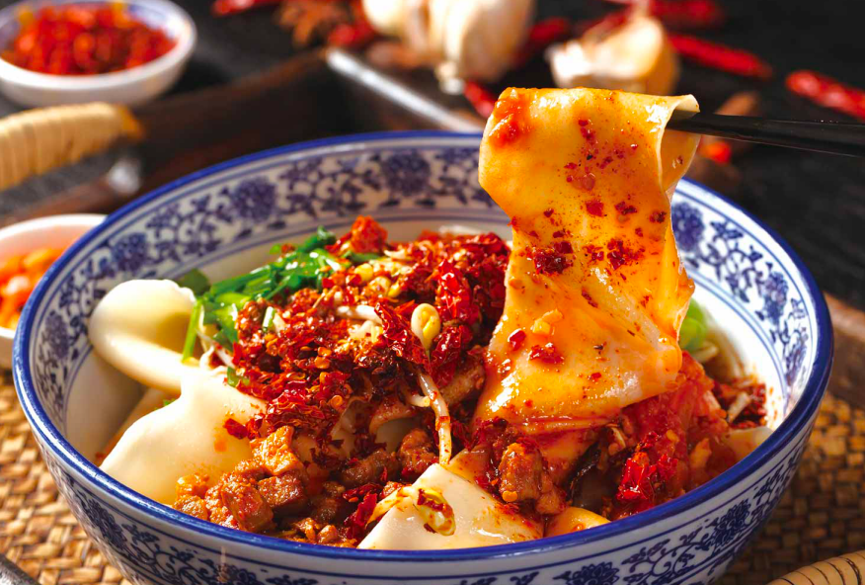
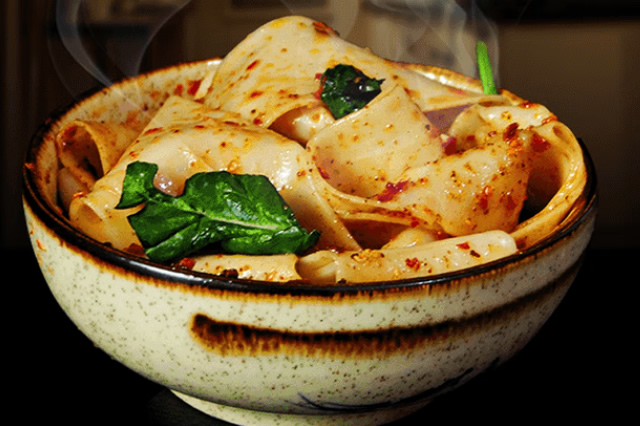
Named after the "biang" sound made when the noodles hit the chopping board during production, with a complex folk character, one of Xi’an’s iconic "carb dishes". Wide noodles are hand-rolled with uniform thickness, drizzled with hot oil to aroma chili, Sichuan peppercorn, and mashed garlic, paired with bean sprouts and green vegetables, chewy and layered in flavor (combining numbness, spiciness, and aroma).
* Recommended Restaurant:
- Old Li's Biangbiang Noodles (Bell Tower Flagship Store)
· Address: 30 meters south of the intersection of East Street and Luomashi, west side of the road (right side of Exit K, Bell Tower Station, Metro Line 2 & 6), Xi'an, Shaanxi Province, China
· Phone: +86-18392386775
· Opening hours (Mon to Sun): 09:00-22:00
· Price: Approximately 20-30 RMB per person ($2.8-4.2).
- Chang'an Qing Biangbiang Noodles (Bell and Drum Tower Store)
· Address: No. 77 Tuanjie Middle Road, Xi'an, Shaanxi Province, China
· Phone: +86-13319212929
· Opening hours (Mon to Sun): 08:00-24:00
· Price: Approximately 15-25 RMB per person ($2.1-3.5), offering great value for authentic Qin Town liangpi with free side treats.
4. Qishan Minced Pork Noodles
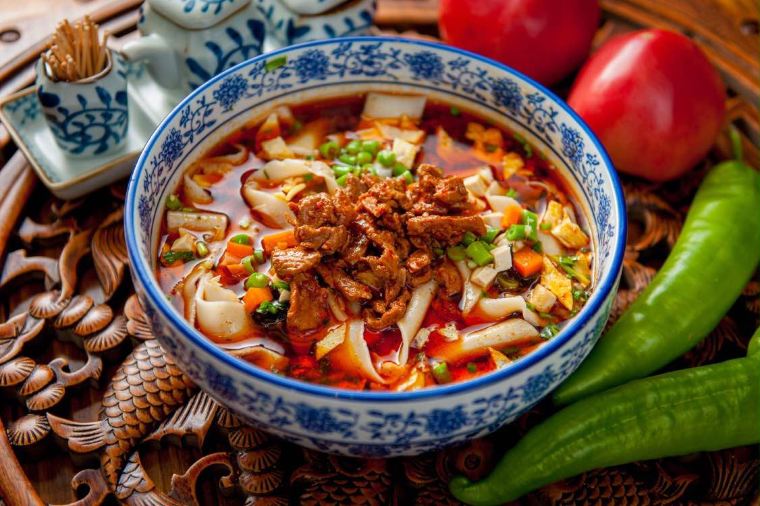
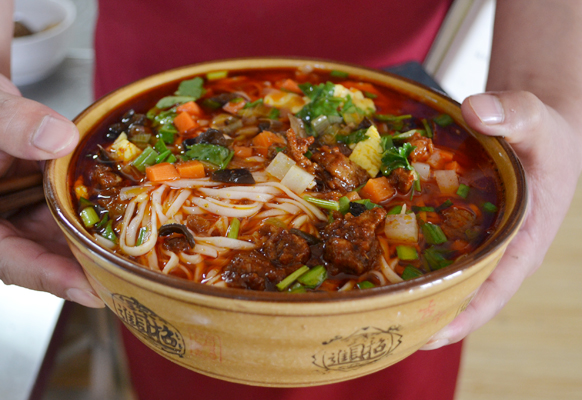
A classic pasta of the Guanzhong West Mansion, with the nine-character flavor rule of "thin, chewy, smooth, hot, light, rich, sour, spicy, fragrant", it is a highly representative sour and fragrant pasta in Xi'an. The thin noodles are hand-rolled, thin, tough and chewy. The soup base is a rich sour and fragrant red soup slowly boiled with Qishan vinegar and chili. The minced pork topping is braised and stir-fried with pork belly cubes, wood fungus, day lilies, tofu and other ingredients. With less noodles and more soup, it tastes sour, spicy, fresh and fragrant with rich layers.
* Recommended Restaurant:
- Yongming Qishan Noodles (Qujiang Store)
· Address: No. 10105, Building 5, West Gate of Jindi Xiangyue Tianxia, Yanxiang Road, Xi'an, Shaanxi Province, China
· Phone: +86-(029)89832692, +86-17791368939
· Opening hours (Mon to Sun): 11:00-21:30
· Price: Approximately 15-25 RMB per person ($2.1-3.5), offering great value for authentic Qishan minced pork noodles and classic Shaanxi side dishes.
- Yongfeng Qishan Noodles (Yanta North Road Store)
· Address: Northwest corner of Yanta North Square, next to Bank of Communications, Yanta North Road, Xi'an, Shaanxi Province, China
· Phone: +86-(029)85563300
· Opening hours (Mon to Sun): 08:00-22:00
· Price: Approximately 20-30 RMB per person ($2.8-4.2).
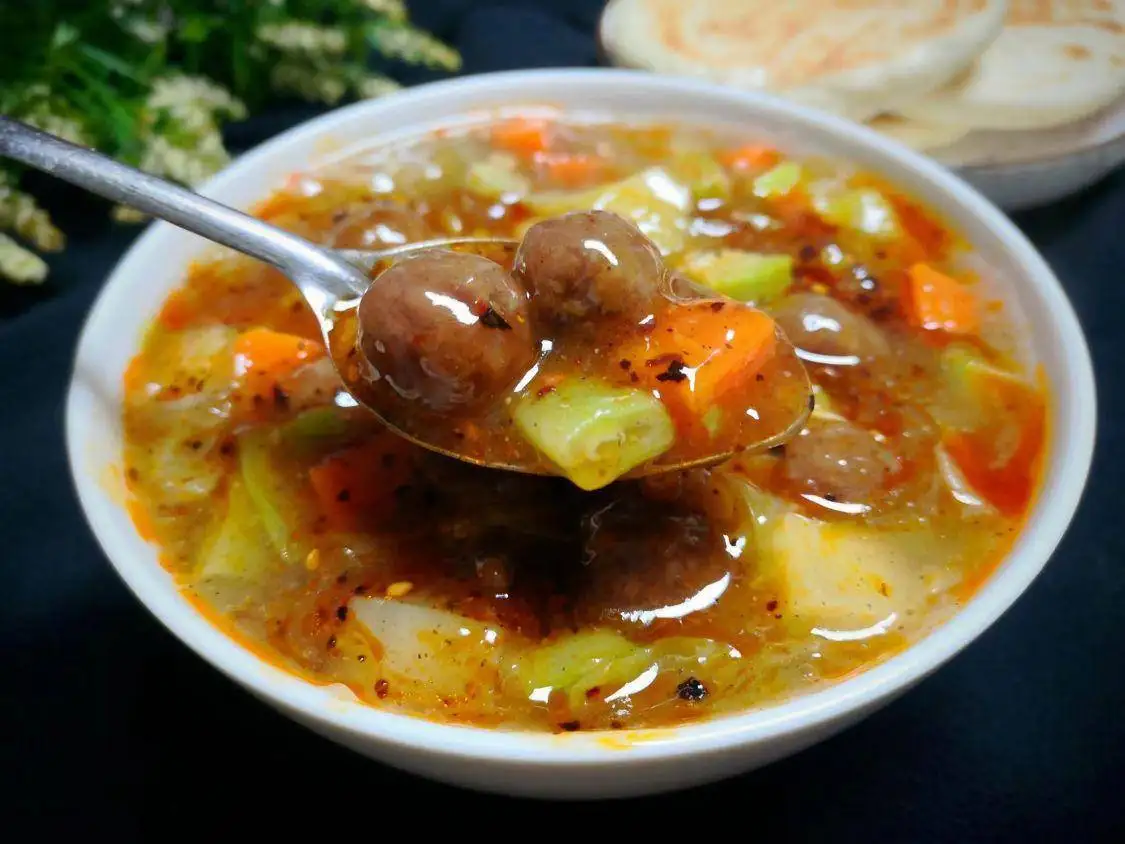
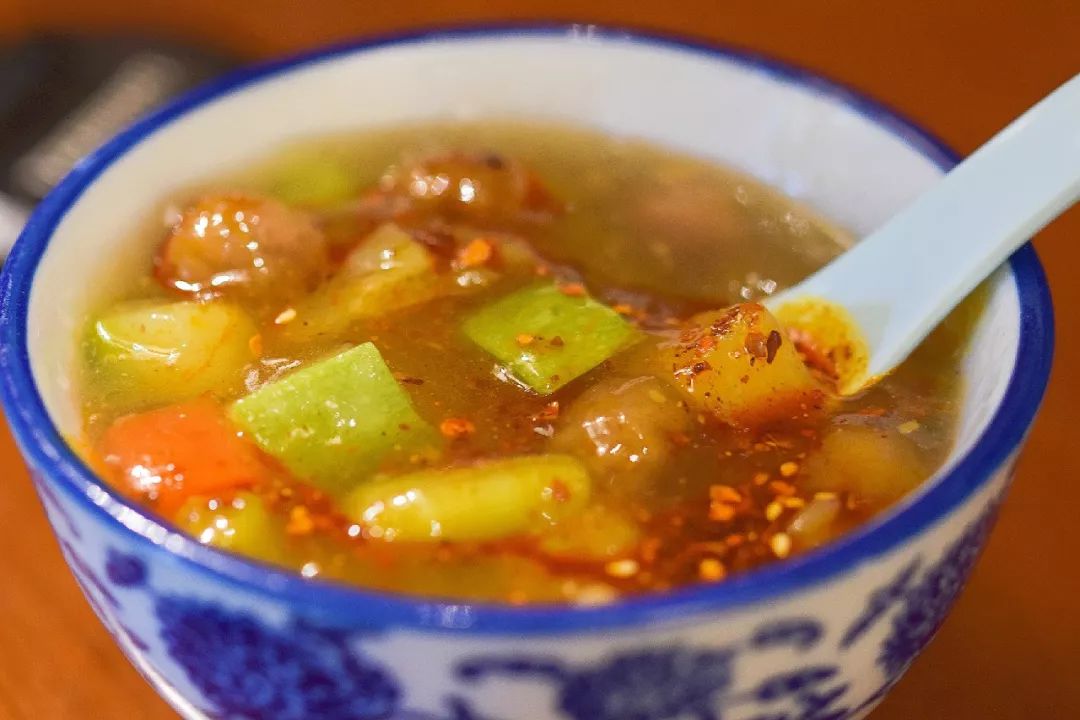
5. Rouwan Hulatang (Meatballs Spicy Soup)
A classic halal breakfast native to Xi'an and a highly down-to-earth local flavor, quite different from Henan's spicy soup. It is a signature dish for locals to warm the stomach and dispel cold in the early morning. Tender and firm meatballs are hand-beaten and kneaded with fresh beef, paired with diced seasonal vegetables such as potatoes, cabbage, carrots and fungus. The thick soup base is slow-cooked with beef bones and boiled with secret spices including pepper, star anise and cinnamon. The ingredients are stewed until soft and flavorful, the soup base is rich and spicy with a prominent peppery aroma, and the overall taste is rich and mellow.
* Recommended Restaurant:
- Xing Laosan Meatballs Spicy Soup (Bell Tower Store)
· Address: No. 28 Beidajie (30 meters near Exit B, Bell Tower Metro Station), Xi'an, Shaanxi Province, China
· Phone: +86-15129297077
· Opening hours (Mon to Sun): 06:30-23:00
· Price: Approximately 7-15 RMB per person ($1.0-2.1), with regular small bowl at 7-8 RMB, regular large bowl at 8-10 RMB, and premium "meat-rich" version at 24 RMB. As a four-generation halal time-honored brand and intangible cultural heritage of Xi'an meatball spicy soup, it's famous for its QQ-tender handmade beef meatballs and rich, peppery soup base with large-cut vegetables.
- Ma Kui Meatball Spicy Soup, Beef Jerky Roujiamo (Kangle Road Store)
· Address: Below Jiahui Apartment, No. 61 Han Sen Road, Xi'an, Shaanxi Province, China
· Phone: +86-15332466818
· Opening hours (Mon to Sun): 00:00-24:00
· Price: Approximately 7-23 RMB per person ($1.0-3.2) for individual items, with combo sets at 23.9-25.9 RMB ($3.4-3.7) . As a 30-year-old halal time-honored brand in Xi'an's eastern suburbs, it's famous for its QQ-tender handmade beef meatballs, rich peppery soup base, and generously filled cured beef burgers.
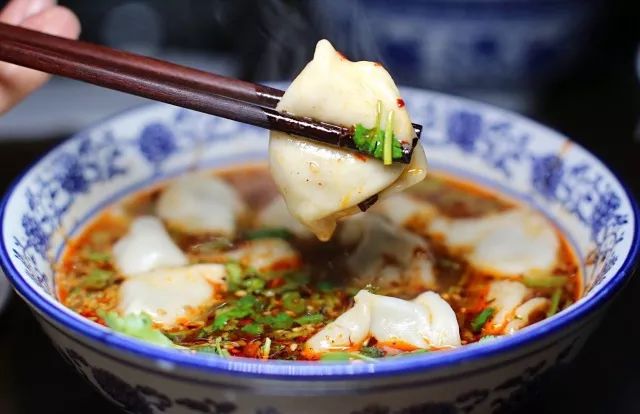
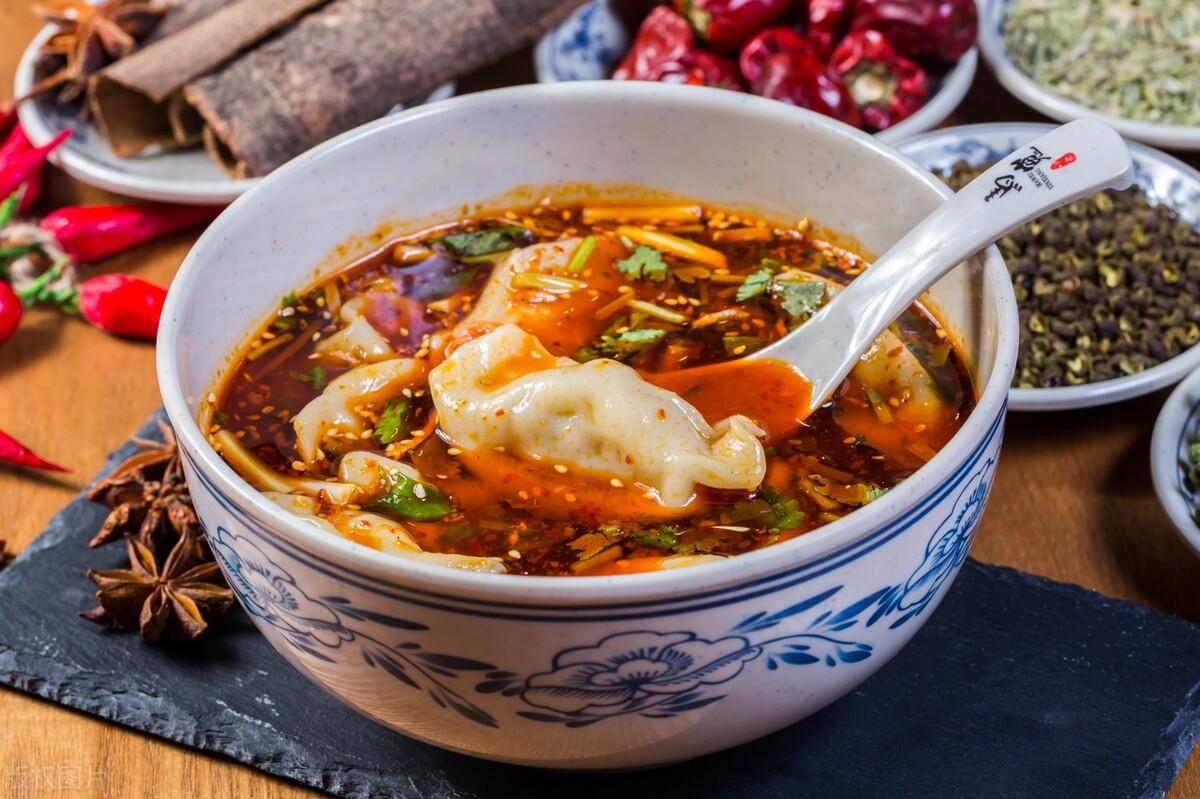
6. Suan Tang Shui Jiao (Sour Soup Dumplings)
A classic street food with distinctive local features in Xi'an, a popular delicacy blending northern and southern flavors. It is also a homely taste that warms the stomach and stimulates the appetite locally, with halal and non-halal versions, a classic choice for locals to satisfy their cravings daily. The hand-made dumplings have thin wrappers, generous fillings and tight pinches. Halal versions feature fresh beef and mutton fillings, while non-halal ones are mostly leek and pork, cabbage and pork fillings. The dumplings are boiled in boiling water and then served in a secret sour soup. The sour soup is based on balsamic vinegar and red oil chili, mixed with dried shrimps, laver, chopped green onion, coriander, white sesame and light soy sauce. The soup base is sour, spicy, fresh and fragrant, mellow in sourness and mild in spiciness. The dumplings are full of soup, with tender fillings and rich soup flavor, delicious in every bite.
* Recommended Restaurant:
- Halal Ruibaozhai Mafeng Sour Soup Dumplings (Tianciyuan Store)
· Address: 10 meters west of the North Gate, Tianciyuan, No. 18 Yongxin Road, Longshou North Road, Xi'an, Shaanxi Province, China
· Phone: +86-13991371137
· Opening hours (Mon to Sun): 11:00-20:30
· Price: Approximately 15-25 RMB per person ($2.1-3.5) for individual items, with combo sets at 19.8-28 RMB ($2.8-4.0). As a 7-year-old halal signature restaurant in Xi'an's Longshou North Road area, it's famous for its handmade chives and beef dumplings and authentic sour soup with rich flavors.
- Halal Zhigan Sour Soup Dumplings (Muslim Quarter Store)
· Address: No. 17, East Entrance of Xiaopiyuan, Muslim Quarter, Xi'an, Shaanxi Province, China
· Opening hours (Mon to Sun): 11:00-19:00
· Price: Approximately 14-28 RMB per person ($2.0-4.0) for individual items, with combo sets at 18-25 RMB ($2.6-3.6). As a popular halal sour soup dumpling restaurant in Xi'an's Muslim Quarter area, it's famous for its handmade beef and mutton fillings and authentic sour soup with rich flavors, favored by both locals and tourists.
b. Meat Feast: The Bold Flavors of the Ancient Capital
1. Kao Yangrou Chuan (Grilled Lamb Skewers)
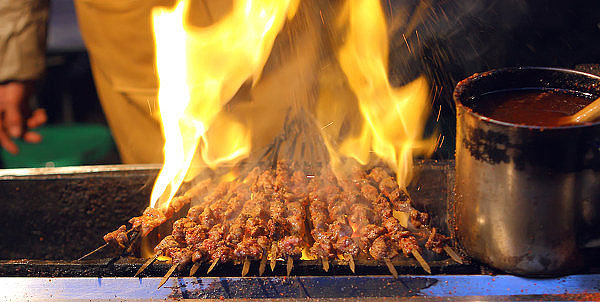
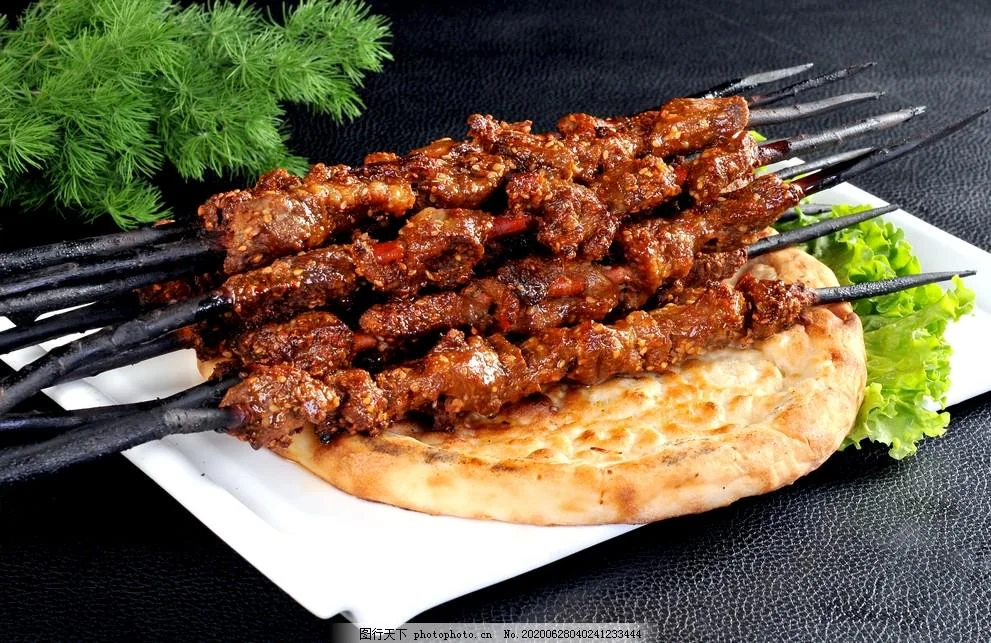
Influenced by the Western Regions culture of the Silk Road, it’s a characteristic halal food in Xi’an’s Huimin Street. Using lamb hind leg meat from Ningxia, cut into large pieces and skewered, grilled over charcoal fire, sprinkled with cumin and chili powder, crispy on the outside and tender on the inside, no mutton odor, tight and juicy.
Cultural Tip: All shops in Huimin Street are halal, with no pork or alcohol sold; please respect local customs when entering the shops and do not ask about taboo topics casually.
* Recommended Restaurant:
- Halal Faisal BBQ
· Address: No. 176 Miao Hou Street (next to Halal Hongshunxiang Luzi Liangfen), Xi'an, Shaanxi Province, China
· Phone: +86-13892860960
· Opening hours (Mon to Sun): 16:30-22:00
· Price: Approximately 30-60 RMB per person ($4.2-8.4), offering great value for authentic halal charcoal grilled meat with generous portions and rich charcoal aroma.
- Sanbao BBQ · Xi'an BBQ's No. 1 Brand (Fengcheng 12th Road Store)
· Address: Unit 1, 1st Floor, Building 5, Shouchuang Manxiang Jun, Fengcheng 12th Road, Economic and Technological Development Zone, Xi'an, Shaanxi Province, China
· Phone: +86-(029)89288380
· Opening hours (Mon to Sun): 17:30-02:30
· Price: Approximately 50-80 RMB per person ($7-11.2), offering great value for the iconic Xi'an BBQ with authentic charcoal-grilled flavor and a rich variety of skewers and signature side dishes.
2. Shuipen Yangrou (Lamb Soup in a Basin)
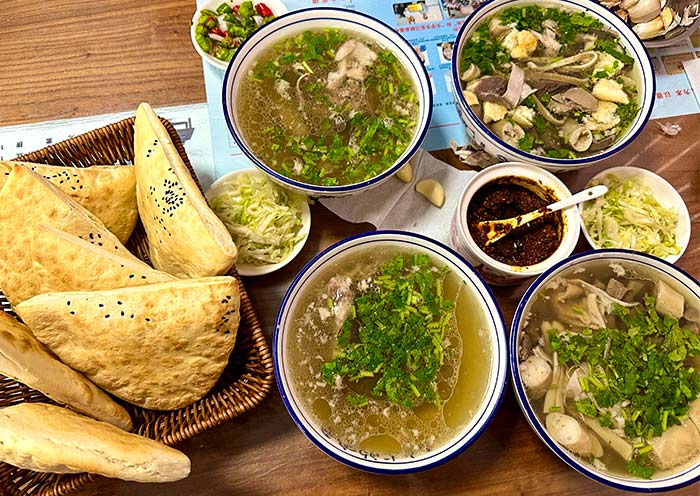
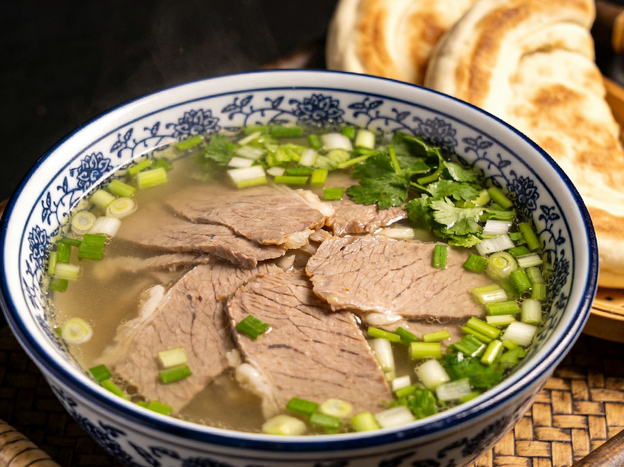
A classic halal delicacy from the Weibei area of Shaanxi Province, and a famous dish of Shaanxi cuisine. It is a must-have for warming the stomach in autumn and winter locally, and also a characteristic flavor for Xi’an’s breakfast and lunch markets. Using boneless fresh lamb meat from Northern Shaanxi’s Hengshan goats or Guanzhong sheep, it is slow-cooked for several hours with warming herbs such as astragalus and codonopsis to make a clear, fresh and non-gammy thick soup. The lamb is sliced thin and placed in a bowl, then poured with soup, served with freshly baked crescent-shaped pancakes, crisp sweet garlic and chili oil. The soup is clear and mellow, the lamb meat is tender and not tough, and it tastes warm and fragrant in the mouth.
Cultural Tip: The local authentic way to eat is to break the crescent-shaped pancake into pieces and soak it in the soup, which tastes better.
* Recommended Restaurant:
- Chonghui Chengcheng Shui Pen Yangrou (Bell Tower West First Road Flagship Store)
· Address: No. 189-1, West First Road, Xincheng District, Xi'an, Shaanxi Province, China
· Phone: +86-(029)87385357
· Opening hours (Mon to Sun): 07:30-21:00
· Price: Approximately 25-40 RMB per person ($3.5-5.6), offering great value for authentic halal Shuipen Yangrou with fresh mellow soup and tender lamb, and free refills of crescent-shaped pancakes are provided.
- Huzi Shui Pen Yangrou (Cuihua Road Flagship Store)
· Address: Street-facing shop, Qingyou Building, No. 229 Cuihua South Road (200 meters from Shaanxi History Museum), Xi'an, Shaanxi Province, China
· Phone: +86-13087505223, 18700931522
· Opening hours (Mon to Sun): 08:00-24:00
· Price: Approximately 23-40 RMB per person ($3.2-5.6), with regular serving at 23 RMB and premium serving at 38 RMB. It's the No.1 ranked lamb soup in Xi'an, famous for its clear and fresh soup (simmered since 4 AM) and tender, large-cut lamb without gaminess. Popular side dishes include spicy garlic sheep blood (16 RMB) and sizzling lamb offal (48 RMB).
 Highlights Xi'an City Tour: Discover Xi'an's Rich Heritage and Must-See Attractions
 Beijing to Xi'an 1 Day Tour: Day Trip to Terracotta Warriors From Beijing by Bullet Train
B. Classic Dishes: The Essence of Xi'an Flavors
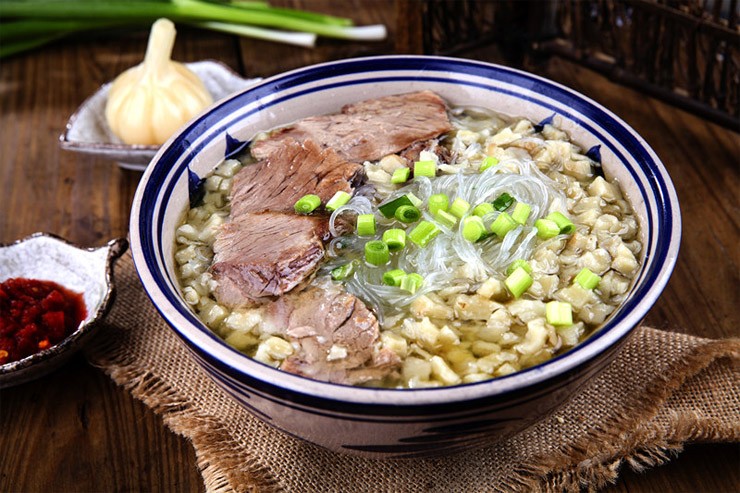
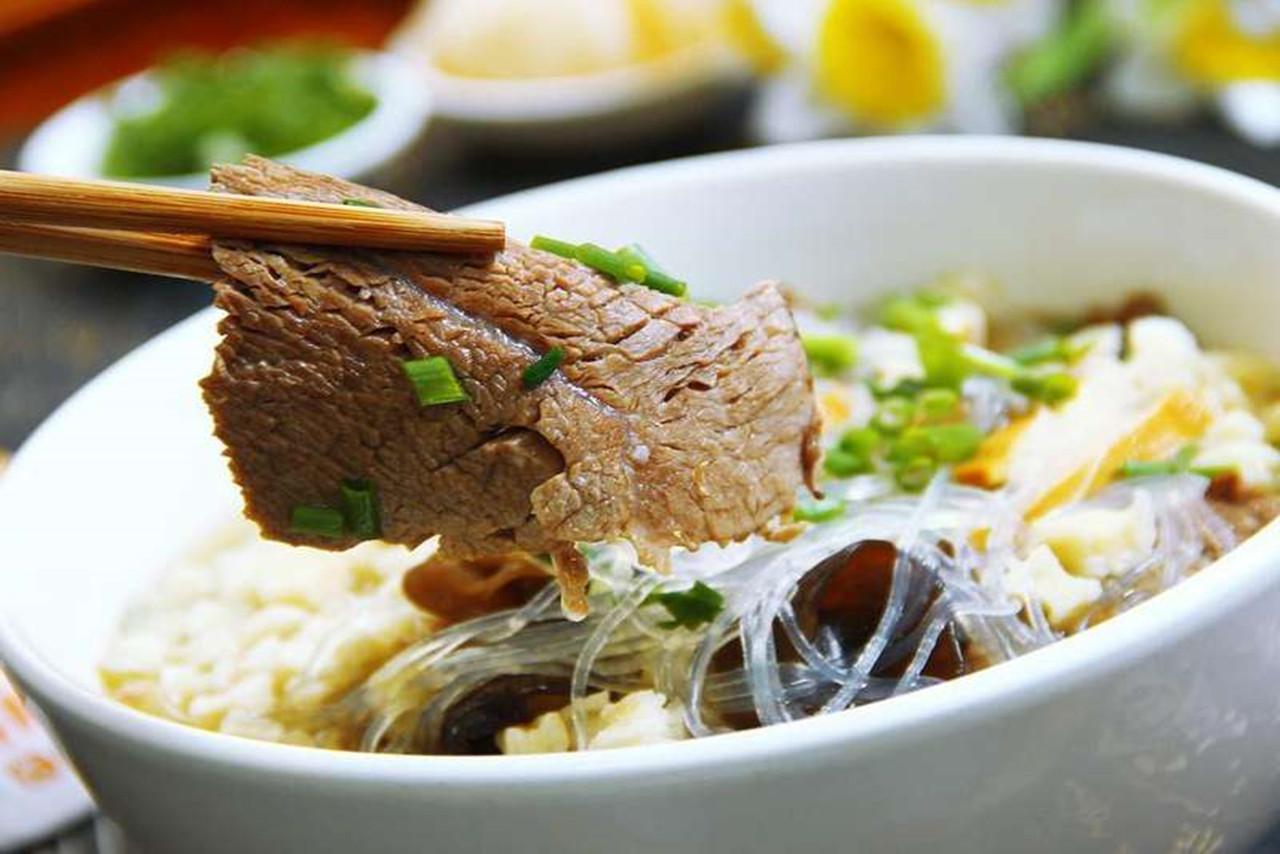
1. Yangrou Paomo (Lamb Soup with Steamed Bread)
The "business card" of Xi’an food, a national intangible cultural heritage, evolved from the "sheep soup" of the Western Zhou Dynasty, a model of the integration of Central Plains and Western Regions food culture. The core of production is "tearing the steamed bread"—tear the hard steamed bread into soybean-sized pieces (the finer, the easier to absorb the soup), then the shop adds thick soup boiled with lamb bones for over 6 hours and lamb slices, paired with sweet garlic, chili sauce, and coriander to enhance flavor. Mellow and warm, it’s the first choice to warm the stomach in winter.
* Recommended Restaurant:
- Xingshenglou Beef and Lamb Paomo & Stir-fried Dishes (Bell Tower Store)
· Address: No. 19 Anju Alley, Beilin District, Xi'an, Shaanxi Province, China
· Phone: +86-18291766460
· Opening hours (Mon to Sun): 00:00-24:00
· Price: Approximately 12-32 RMB per person ($1.7-4.5) for individual items, with combo sets at 18-26 RMB ($2.6-3.7). As a popular halal restaurant in Xi'an's Yanta District, it's famous for its rich broth, tender meat, and authentic stir-fry paomo with a perfect balance of sour and spicy flavors, favored by both locals and tourists for its affordable prices and generous portions.
- Liu Xin Beef and Lamb Paomo & Stir-fried Dishes (Muslim Quarter Store)
· Address: No. 129, Sajinqiao, Xi'an, Shaanxi Province, China
· Phone: +86-18049043001
· Opening hours (Mon to Sun): 08:00-21:30
· Price: Approximately 23-36 RMB per person ($3.3-5.1) for individual items, with combo sets at 28-34 RMB ($4.0-4.8).
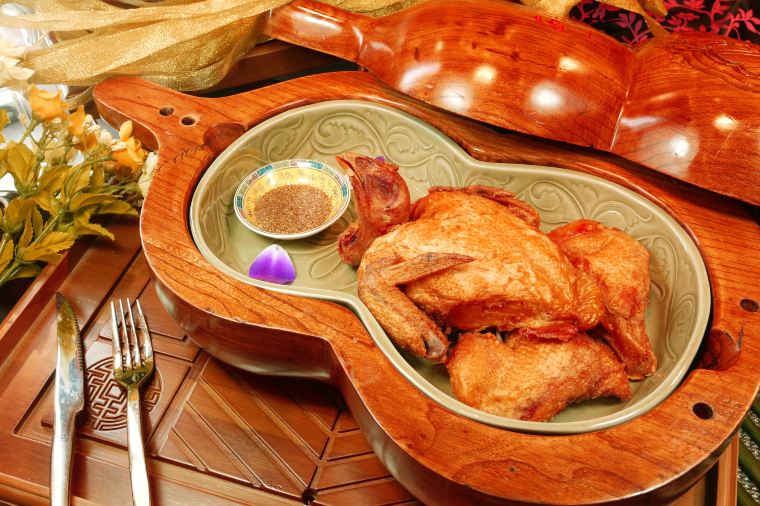
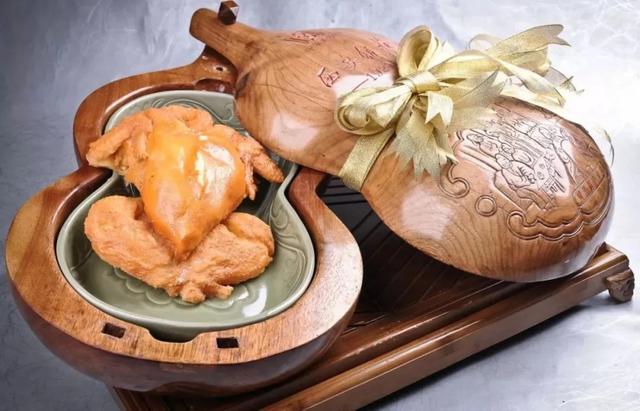
2. Hulu Ji (Braised Whole Chicken Shaped Like a Gourd)
An inheritance of Tang Dynasty imperial cuisine, shaped like a gourd, symbolizing "blessing and prosperity", a classic main dish at Xi’an banquets. The production process is complex: the whole chicken is boned, wrapped in gauze into a gourd shape, boiled first then fried, crispy on the outside and tender on the inside, golden in color, served with salt and pepper, rich in aroma.
* Recommended Restaurant:
- Xi'an Restaurant (Bell Tower Store)
· Address: 1st Floor, Xi'an Bell Tower Hotel, No. 110 Nan Dajie, Xi'an, Shaanxi Province, China
· Phone: +86-(029)87600115
· Opening hours (Mon to Sun): 10:30-21:30
· Price: Approximately 60-120 RMB per person ($8.6-17.2) for individual dining, with combo sets at 168-398 RMB ($24.1-57.0) for groups. As a 1929-founded time-honored Shaanxi cuisine restaurant and "Shaanxi Cuisine Museum", it's located in the Bell Tower Hotel, serving authentic Shaanxi delicacies favored by both locals and tourists for its rich history and exquisite craftsmanship.
- Zui Chang'an (Bell Tower Flagship Store)
· Address: No.7 Zhuba Shi, Beilin District (near Meihuali Hotel), Xi'an, Shaanxi Province, China
· Phone: +86-(029)87409055,(029)89629988
· Opening hours:
Monday to Friday: 11:00-14:00, 17:00-22:00
Saturday to Sunday: 11:00-22:00
· Price: Approximately 60-100 RMB per person ($8.6-14.3) for individual dining, with combo sets at 158-368 RMB ($22.6-52.6) for groups. As a renowned Shaanxi cuisine restaurant with intangible cultural heritage inheritors as chefs, it's located at Zhubashi Street near Bell Tower, famous for its ancient-style environment and authentic Shaanxi delicacies that perfectly blend tradition and innovation.
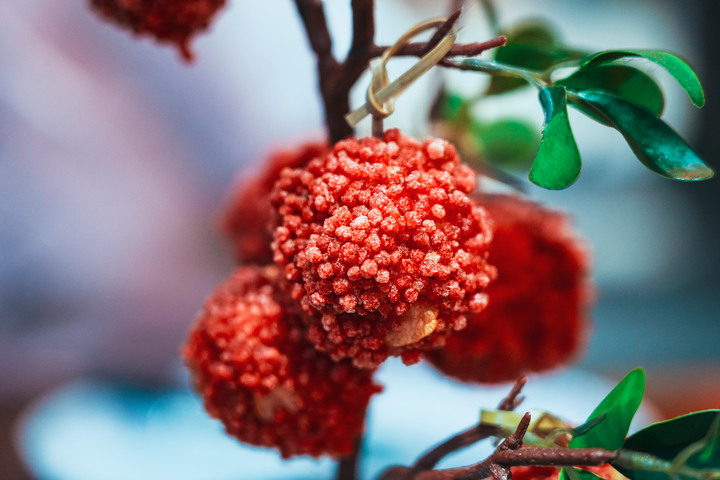
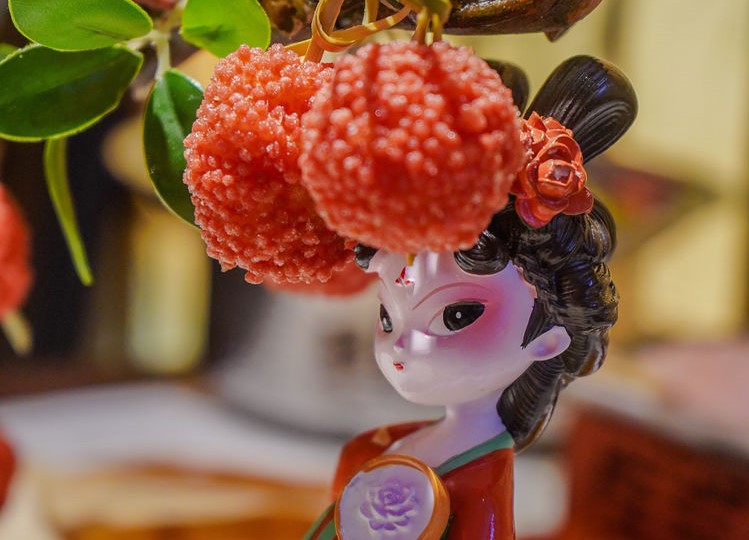
3. Fei Zi Xiao (Lychee-shaped Shrimp Balls)
Named after Du Mu's poem "One ride for red dust, the concubine smiles; no one knows it is lychees coming", it’s a representative of Xi’an’s new creative Shaanxi cuisine and a standout for both appearance and taste at banquets. Shaped like lychees, it carries an auspicious meaning. The production process is exquisite: fresh green shrimp meat is minced with water chestnuts into tender shrimp paste, rolled into balls, coated with crispy crumbs and fried until golden red. A light cross cut is made on the surface to make the crust split slightly like lychee rind when fried, and finally drizzled with a secret sweet and sour lychee sauce. Some restaurants add a little molten cheese inside the shrimp balls for a richer taste. The crust is crispy and fluffy, the filling is springy, tender and juicy, with the sweet and sour fruity aroma blending with the mellow freshness of shrimps, offering a refreshing and non-greasy taste that stimulates the appetite.
* Recommended Restaurant:
- Chang'an Dapaidang - Dream of the Tang Dynasty (Big Wild Goose Pagoda Store)
· Address: No. 410 Yanta South Road, Silver Mall B Building, 1F-12, 2F-08a, 10a, Xi'an, Shaanxi Province, China
· Phone: +86-(029)89665858
· Opening hours (Mon to Sun): 12:00-23:30
· Price: Approximately 60-90 RMB per person ($8.6-12.9) for individual dining, with combo sets at 148-328 RMB ($21.2-46.9) for groups. As a popular Shaanxi cuisine restaurant with strong Tang Dynasty cultural atmosphere, it's located on Datang Everbright City pedestrian street, famous for its immersive Tang-style environment, live performances, and creative Shaanxi delicacies that blend tradition with modernity.
- Zui Chang'an (Bell Tower Flagship Store)
· Address: No.7 Zhuba Shi, Beilin District (near Meihuali Hotel), Xi'an, Shaanxi Province, China
· Phone: +86-(029)87409055,(029)89629988
· Opening hours:
Monday to Friday: 11:00-14:00, 17:00-22:00
Saturday to Sunday: 11:00-22:00
· Price: Approximately 60-100 RMB per person ($8.6-14.3) for individual dining, with combo sets at 158-368 RMB ($22.6-52.6) for groups. As a renowned Shaanxi cuisine restaurant with intangible cultural heritage inheritors as chefs, it's located at Zhubashi Street near Bell Tower, famous for its ancient-style environment and authentic Shaanxi delicacies that perfectly blend tradition and innovation.
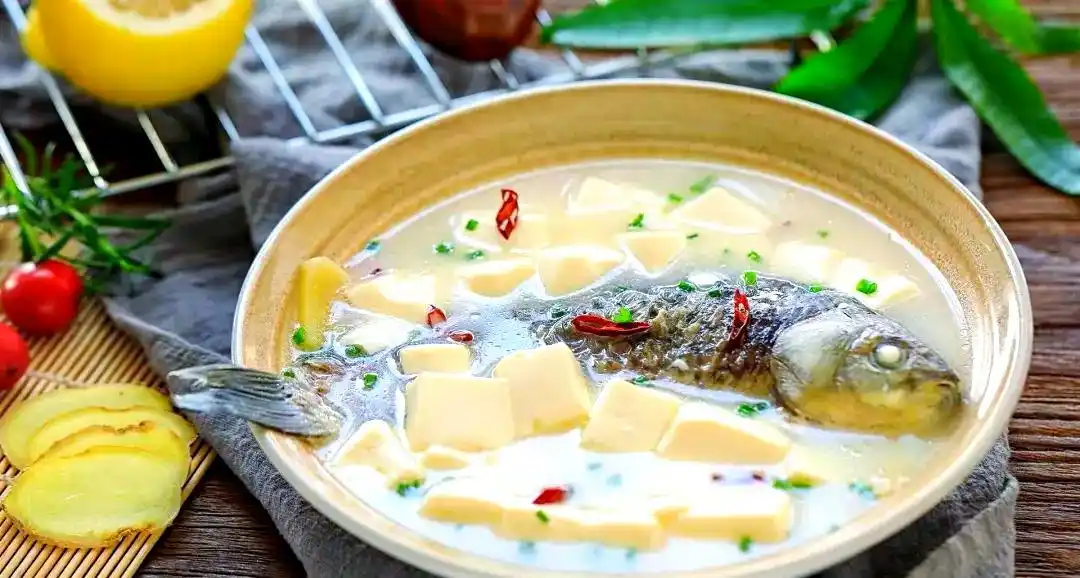
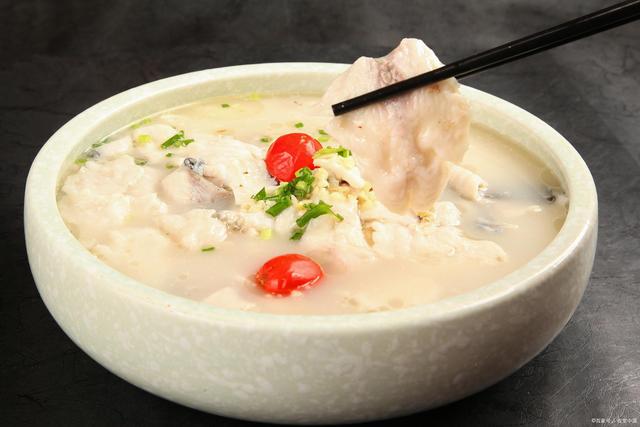
4. Naitang Guozi Yu (Creamy Fish Soup in Brass Pot)
A classic royal soup dish of Shaanxi cuisine, inheriting the health-preserving customs of the Tang Dynasty and a representative of high-end soup dishes at Xi’an banquets. It is named for being served in a special brass pot with a creamy white soup color like curd, symbolizing "may you have surplus year after year". The production process is exquisite: select fresh live Yellow River carp, debone to take the meat, simmer the fish bones for several hours until the soup turns creamy white, slide the fish fillets into the soup and blanch until cooked, paired with seasonal fresh vegetables such as tender tofu, bamboo shoot slices, shiitake mushrooms and green vegetables. A little pepper is added to the soup to enhance the freshness with no excessive seasonings, retaining the original flavor of the fish and ingredients to the greatest extent. The soup is creamy white and mellow, the fish meat is tender with few bones, the side dishes are fresh and greaseless, and the overall taste is fresh but not greasy, warming the stomach and fragrant.
* Recommended Restaurant:
- Xi'an Restaurant (Bell Tower Store)
· Address: 1st Floor, Xi'an Bell Tower Hotel, No. 110 Nan Dajie, Xi'an, Shaanxi Province, China
· Phone: +86-(029)87600115
· Opening hours (Mon to Sun): 10:30-21:30
· Price: Approximately 60-120 RMB per person ($8.6-17.2) for individual dining, with combo sets at 168-398 RMB ($24.1-57.0) for groups. As a 1929-founded time-honored Shaanxi cuisine restaurant and "Shaanxi Cuisine Museum", it's located in the Bell Tower Hotel, serving authentic Shaanxi delicacies favored by both locals and tourists for its rich history and exquisite craftsmanship.
C. Vegetarian-Friendly Delights: Exclusive Recommendations for Foreign Vegetarian Tourists
For vegetarian tourists, Xi’an offers a wide range of vegetarian options, featuring local flavors and healthy concepts. Both ordinary vegetarians (who can accept dairy and eggs) and strict vegans (no dairy, eggs, or five pungent ingredients) can find suitable foods without worrying about dietary restrictions.
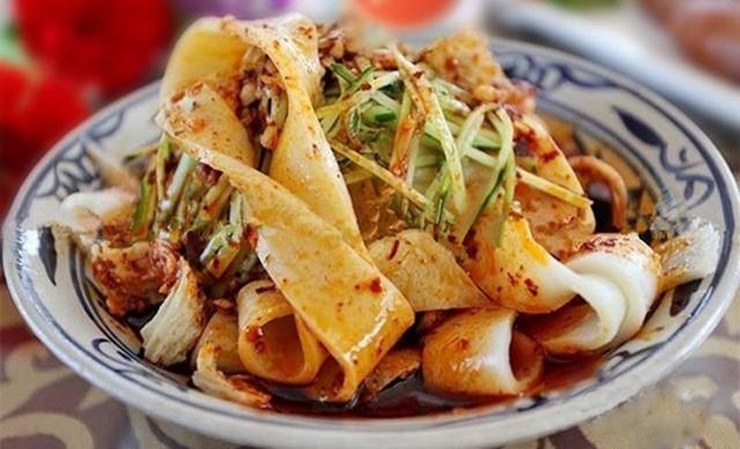
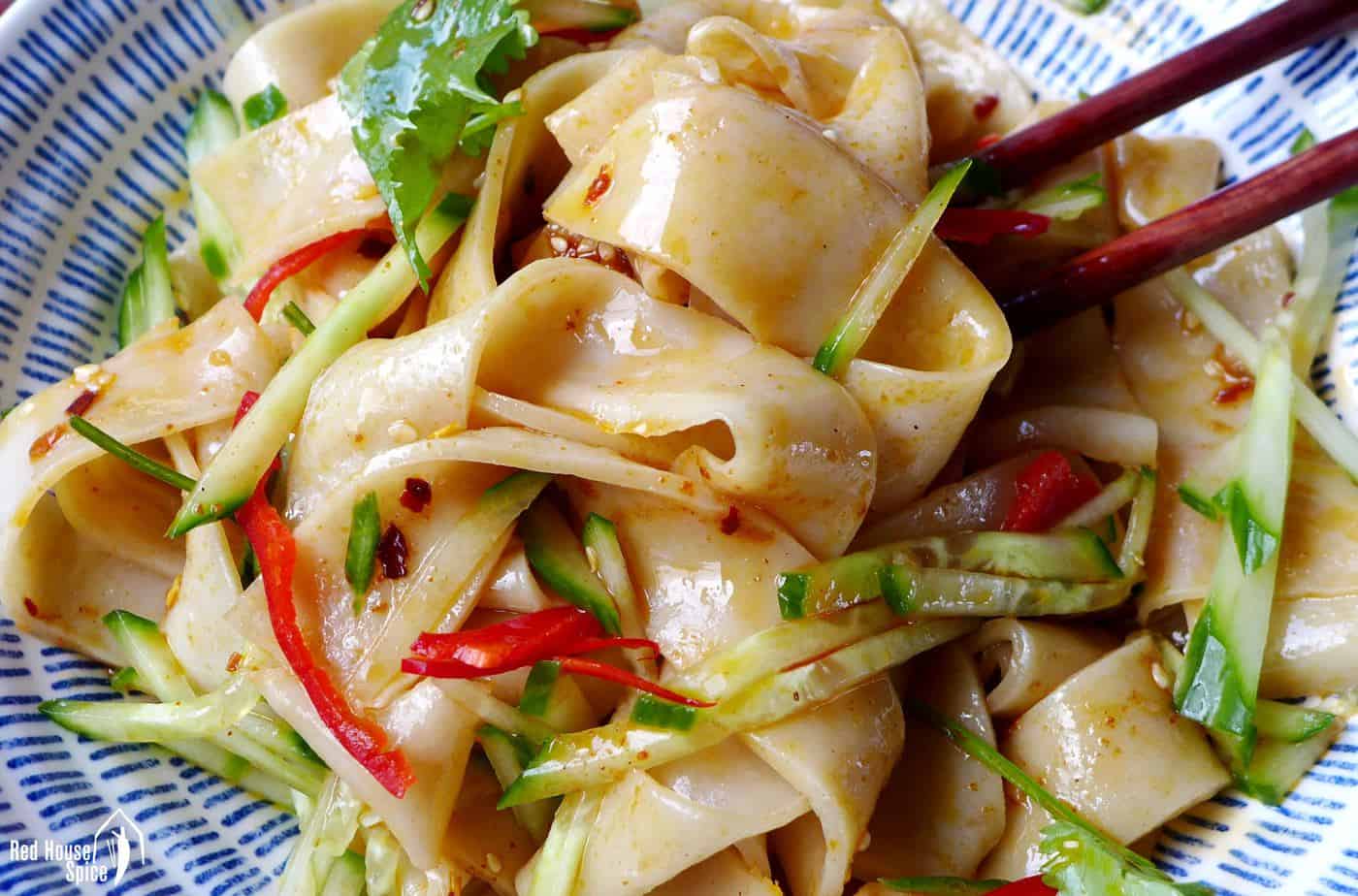
1. Su Liangpi (Vegetarian Cold Noodles)
As one of the most representative vegetarian street snacks in Xi’an, vegetarian Liangpi retains the traditional taste while completely removing meat ingredients, making it a top choice for tourists who love sour and spicy flavors. The noodles themselves are made of pure wheat flour or rice flour with no animal additives. The side dishes include fresh bean sprouts, crispy green vegetables, and refreshing shredded tofu; some shops also add gluten (wheat product, vegetarian ingredient), which absorbs the seasoning sauce for a rich taste.
* Recommended Restaurant:
- Wei Jia Liangpi (South Gate Branch)
· Address: No. 3 Nan Dajie, Nanyuanmen Street, opposite Zhongda International, Xi'an, Shaanxi Province, China
· Phone: +86-(029)87219096
· Opening hours (Mon to Sun): 00:00-24:00
· Price: Approximately 20-30 RMB per person ($2.8-4.2), offering great value for authentic Shaanxi liangpi and delicious matching set meals.
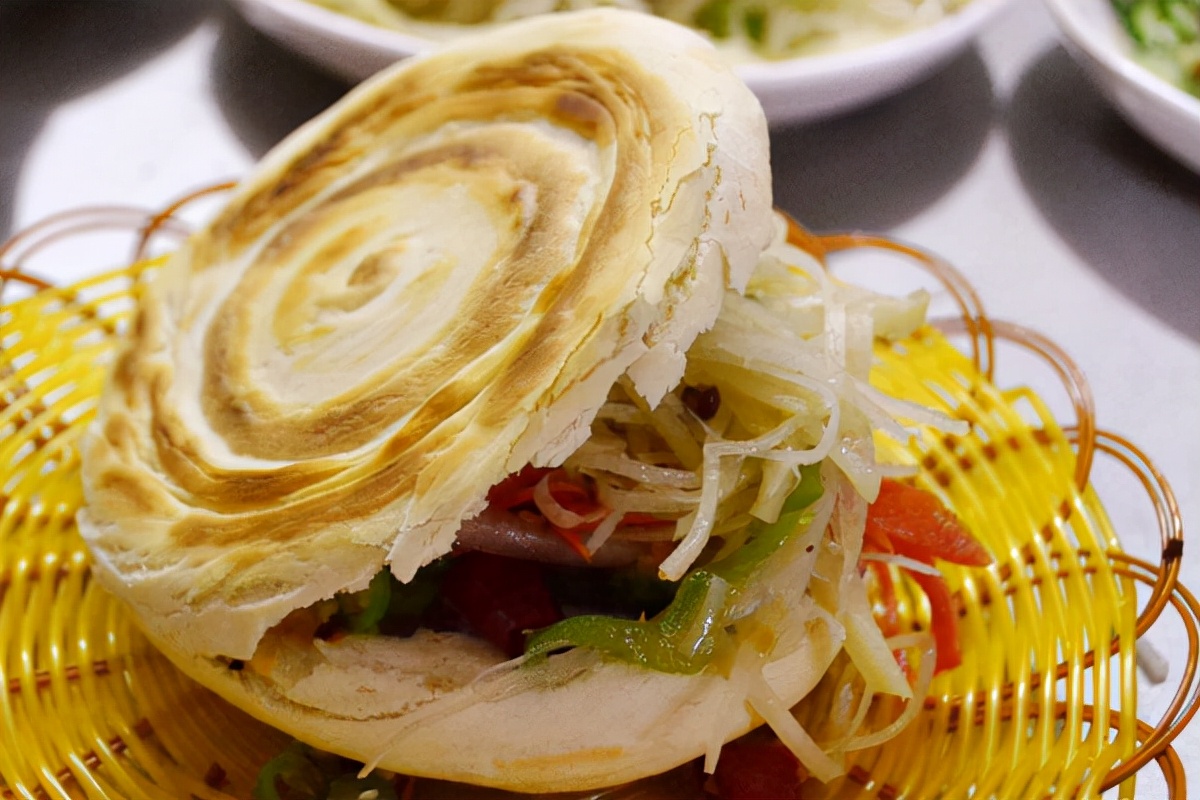
2. Caijiamo (Vegetarian Roujiamo)
Known as the "Chinese vegetarian hamburger", Cai Jia Mo uses a soft baked bun as the carrier, filled with various fresh vegetarian dishes, which is light, healthy and filling, suitable for breakfast or lunch. The bun is divided into Baiji Mo (baked to crispy outer skin and soft inside) and soft noodle bun (tender texture, suitable for tourists with poor teeth), which can be chosen as needed.
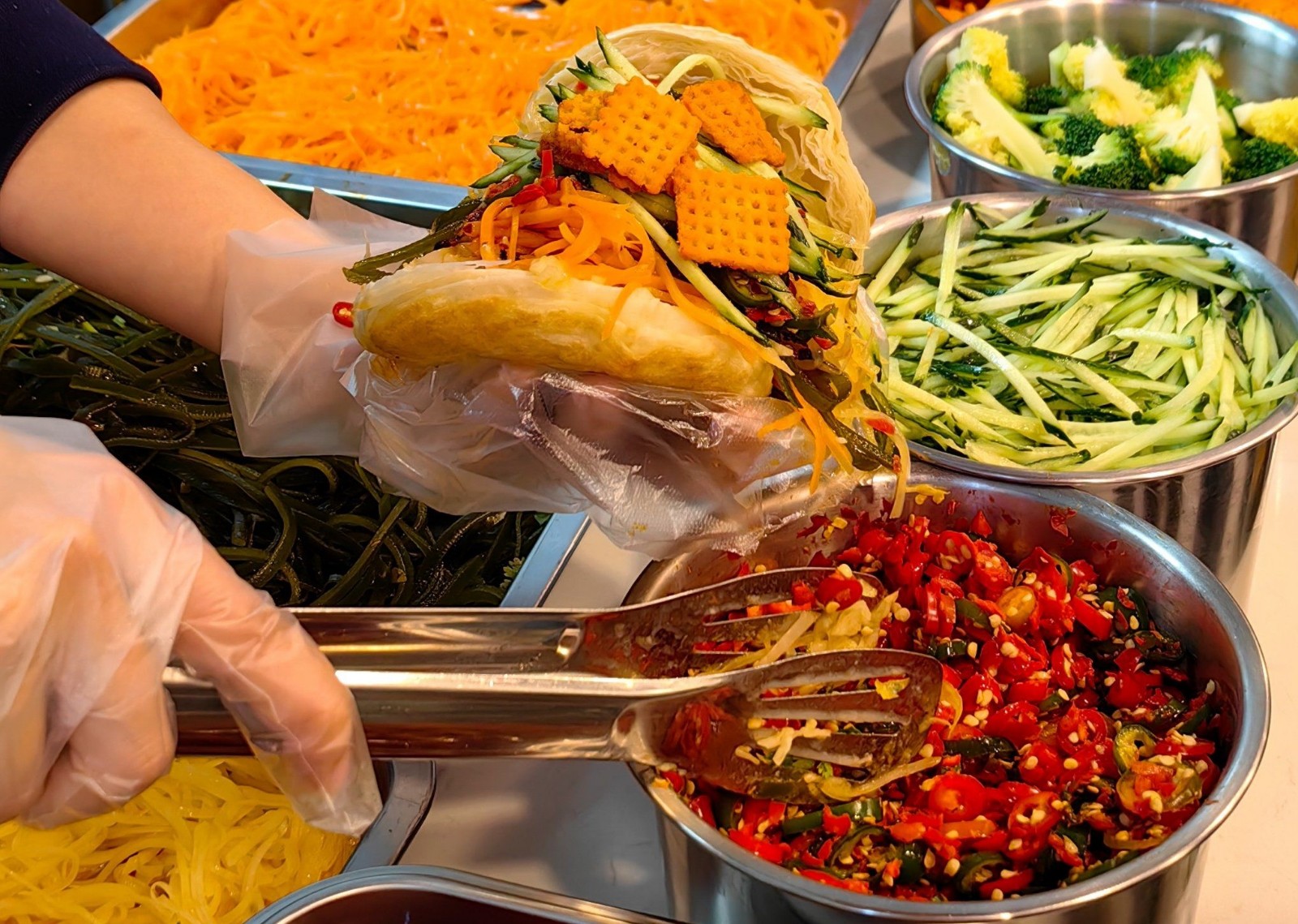
* Recommended Restaurant:
- Shangjia Alley Crispy Vegetable Roujiamo (Changyanju Branch)
· Address: No. 98 Chang'an South Road, Xi'an, Shaanxi Province, China
· Phone: +86-13891824309
· Opening hours (Mon to Sun): 05:30-20:30
· Price: Approximately 5-8 RMB per person ($0.7-1.1) for individual items, with combo sets at 9-11 RMB ($1.3-1.6). As a popular neighborhood snack shop in Xi'an's Yanta District, it's renowned for its crispy crust vegetable mo jia mo - a local breakfast favorite with over 18 kinds of self-service fresh cold dishes, paired with signature shiitake meat sauce and peanut crumbs, the multi-layer crispy crust mo makes it a must-try for food lovers exploring Xi'an's authentic street food.
3. Laozao Tangyuan (Glutinous Rice Balls in Fermented Rice Wine)
A sweet and soft vegetarian dessert, it is both a warm breakfast option and a comforting snack, with no meat ingredients, suitable for all vegetarians. Lao Zao (sweet fermented rice) is made from glutinous rice fermentation, with a light wine aroma and moderate sweetness. The glutinous rice balls are made of pure glutinous rice, with fillings of sesame or peanut (both vegetarian, no animal oil); some shops offer unfilled rice balls to highlight the original taste of Lao Zao.
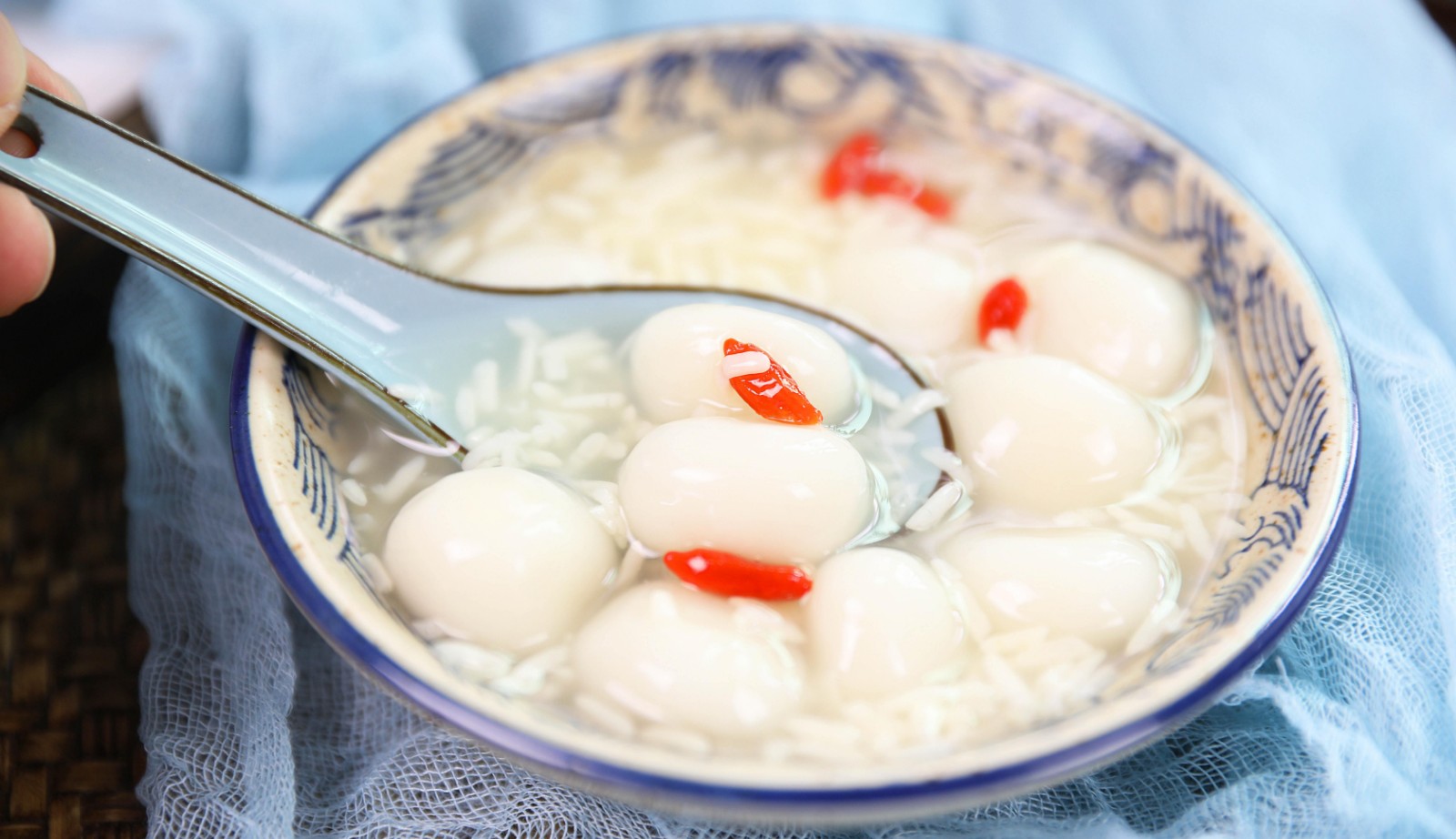
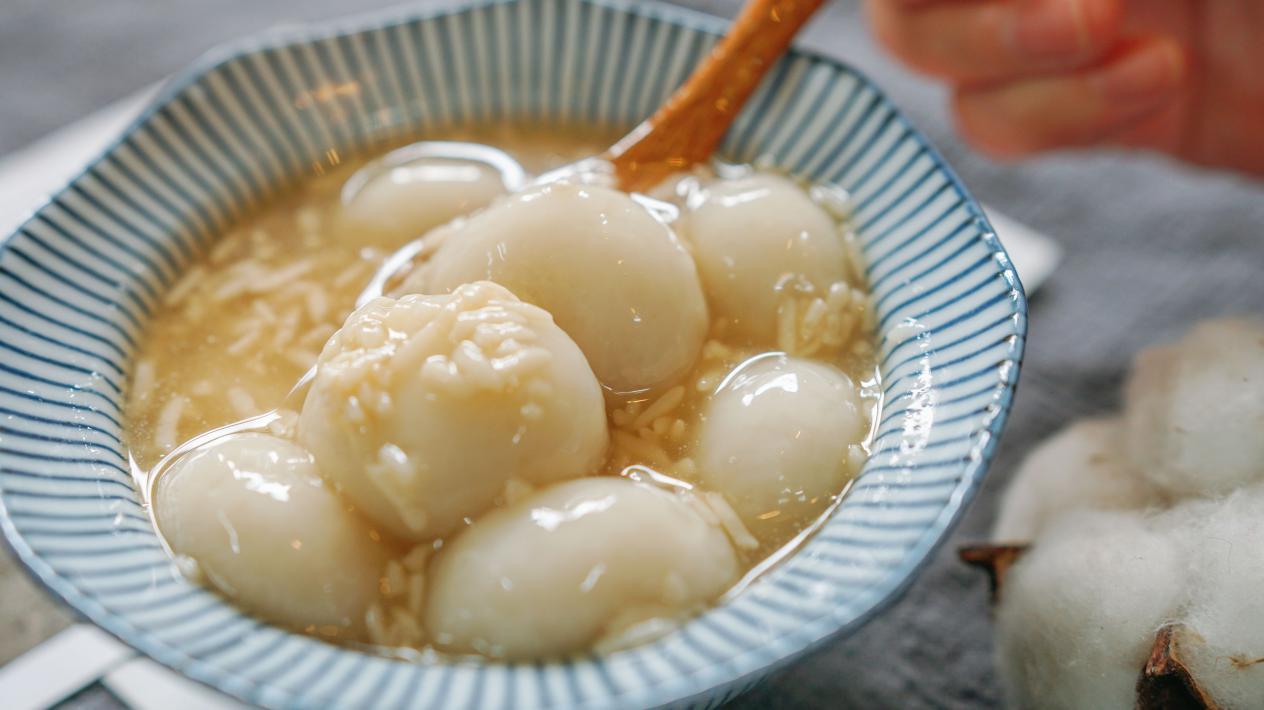
* Recommended Restaurant:
- Street Breakfast Stalls
· Price: cost-effective, 8-10 CNY per bowl, freshly cooked, warm and comforting for morning meals
· Note: Some shops may add butter (non-vegetarian) to the filling; confirm with the shopkeeper: "The filling is vegetarian, no butter".
D. Desserts and Drinks: The Perfect Refreshers and Flavorful Accents
a. Traditional Desserts
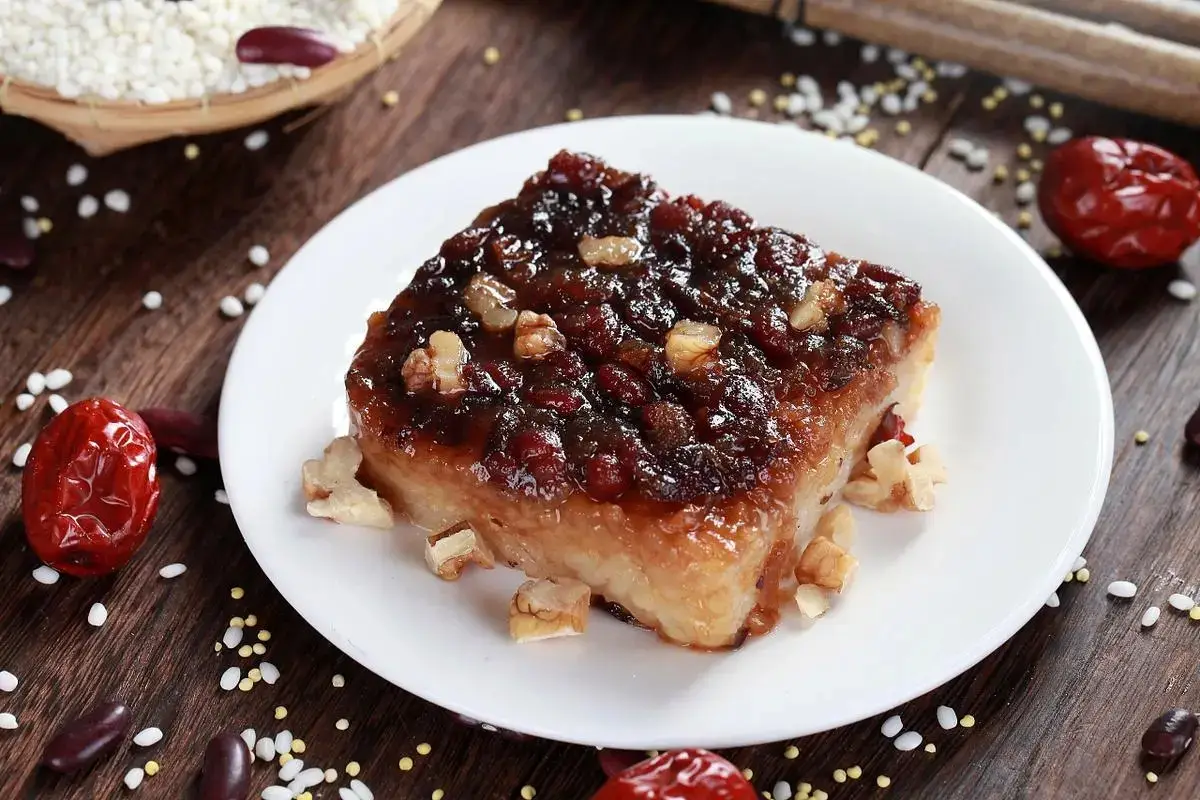
1. Zenggao (Glutinous Rice Cake with Red Beans and Dates)
The "business card" of Xi’an food, a national intangible cultural heritage, evolved from the "sheep soup" of the Western Zhou Dynasty, a model of the integration of Central Plains and Western Regions food culture. The core of production is "tearing the steamed bread"—tear the hard steamed bread into soybean-sized pieces (the finer, the easier to absorb the soup), then the shop adds thick soup boiled with lamb bones for over 6 hours and lamb slices, paired with sweet garlic, chili sauce, and coriander to enhance flavor. Mellow and warm, it’s the first choice to warm the stomach in winter.
* Recommended Restaurant:
- Pangzi Zenggao
· Address: Next to Haifurong Guotie, Zhubaishi, Beilin District, Xi'an, Shaanxi Province, China
· Phone: +86-15249120300
· Opening hours (Mon to Sun): 08:00-16:00
· Price: Price: Approximately 5-10 RMB per person ($0.7-1.4) for fresh portions, with vacuum-packed options at 11 RMB ($1.6). As a nearly 40-year-old iconic Muslim Quarter breakfast stall in Xi'an's Beilin District, it's renowned for its glutinous rice cake layered with red dates, red beans and kidney beans - a local favorite with sweet but not cloying flavor, making it a must-try for food lovers visiting Sajinqiao Street.
- Zengli Xi'an Zenggao (Taste of Chang'an, East Yanta) Counter
· Address: Big Wild Goose Pagoda Cultural and Leisure Scenic Area, East Yanta Pedestrian Street, Yanta District, Xi'an, Shaanxi Province, China
· Phone: +86-13389214465
· Price: Approximately 12-13 RMB per person ($1.7-1.9) for single packs, with combo sets at 30-68 RMB ($4.3-9.7). As a famous local Zeng Gao brand in Xi'an's Yanta District, it's renowned for its vacuum-packed glutinous rice cake layered with red dates, honey dates and kidney beans - a local favorite with sweet but not cloying flavor, making it a must-buy for tourists looking for authentic Xi'an specialty souvenirs at Dayan Pagoda.
2. Jinggao (Mini Glutinous Rice Cake)
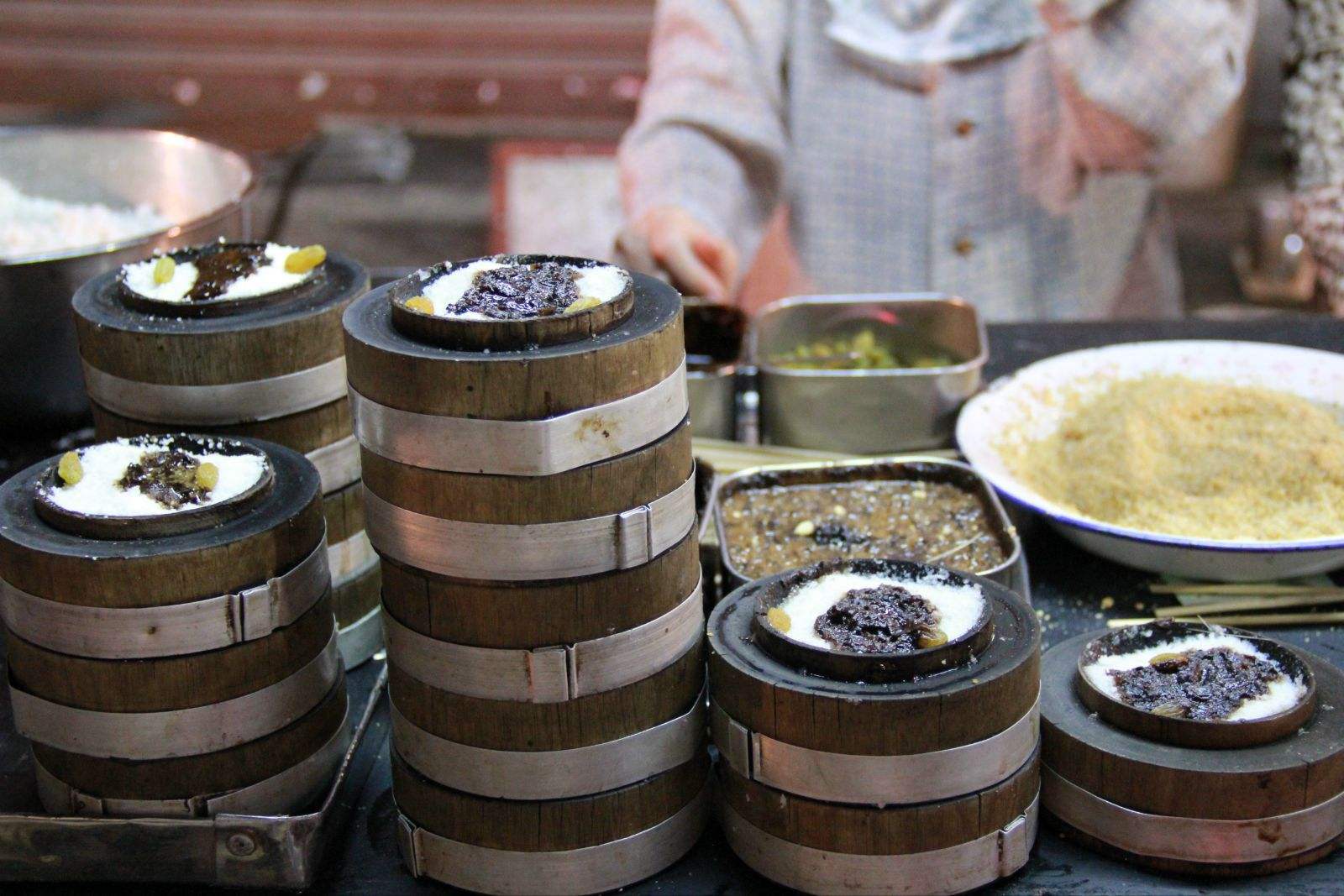
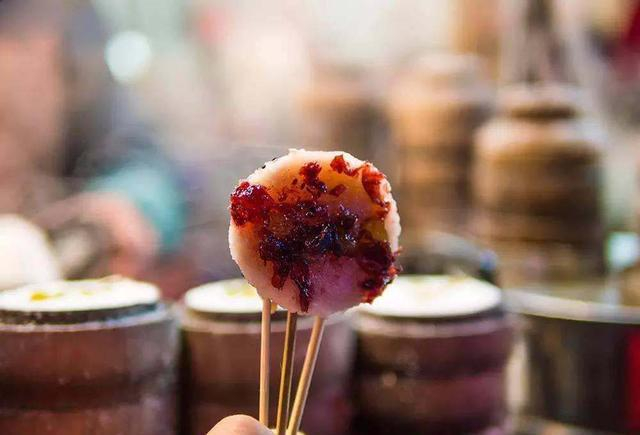
A beloved street sweet snack in Xi’an, totally different from Zenggao with its small and delicate size. It is made of glutinous rice steamed in a small bamboo steamer, and can be dipped in various toppings such as white sugar, black sesame, red bean paste and osmanthus syrup at will. Featuring a soft and glutinous texture with a light rice fragrance, it is sweet but not cloying, and is sold at mobile street stalls all over the city. It is a perfect on-the-go snack for a light bite between meals, with an affordable price and easy to carry while sightseeing.
* Recommended Restaurant:
- There are no particular restaurants to recommend, as Jinggao can be found at nearly every street stall, and their flavors are generally quite similar.
b. Featured Drinks
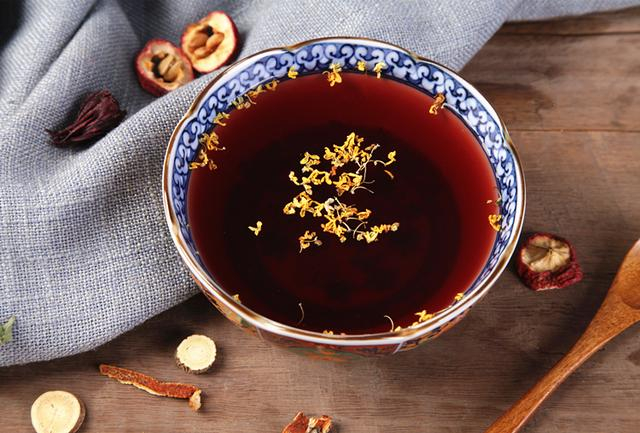
1. Suanmei Tang (Plum Juice)
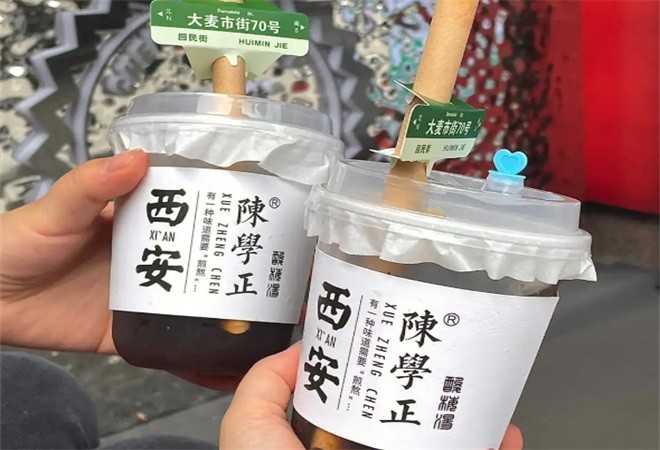
Boiled with dark plums, hawthorns, and licorice, sour and sweet to remove grease. It is an excellent drink to match Xi’an food, recommended for shops that boil it on the spot.
* Recommended Restaurant:
- Hua Nainai Sour Plum Soup (Beiyuanmen Hui Fang Cultural Street Store)
· Address: Opposite Lao Tongsheng Sheng, Middle Section of Dapiyuan, Xi'an, Shaanxi Province, China
· Phone: +86-18710975485
· Opening hours (Mon to Sun): 09:00-21:30
· Price: Approximately 5-10 RMB per person ($0.7-1.4) for fresh portions, with vacuum-packed options at 11 RMB ($1.6). As a nearly 40-year-old iconic Muslim Quarter breakfast stall in Xi'an's Beilin District, it's renowned for its glutinous rice cake layered with red dates, red beans and kidney beans - a local favorite with sweet but not cloying flavor, making it a must-try for food lovers visiting Sajinqiao Street.
- Chen Xuezheng Sour Plum Soup (Beiyuanmen Store)
· Address: No. 81-1, Beiyuanmen, Xi'an, Shaanxi Province, China
· Phone: +86-18591922224
· Opening hours (Mon to Sun): 09:00-23:00
· Price: Approximately 8-15 RMB per person ($1.1-2.1) for individual items, with combo sets at 19.8-20 RMB ($2.8-2.9). As a three-generation-old iconic Muslim Quarter drink shop in Xi'an's Lianhu District, it's renowned for its traditionally simmered sour plum soup made with ebony, hawthorn, honey and jujube - a local favorite with rich flavor and sweet aftertaste, making it a must-try refreshing drink for tourists visiting Beiyuanmen Style Street.
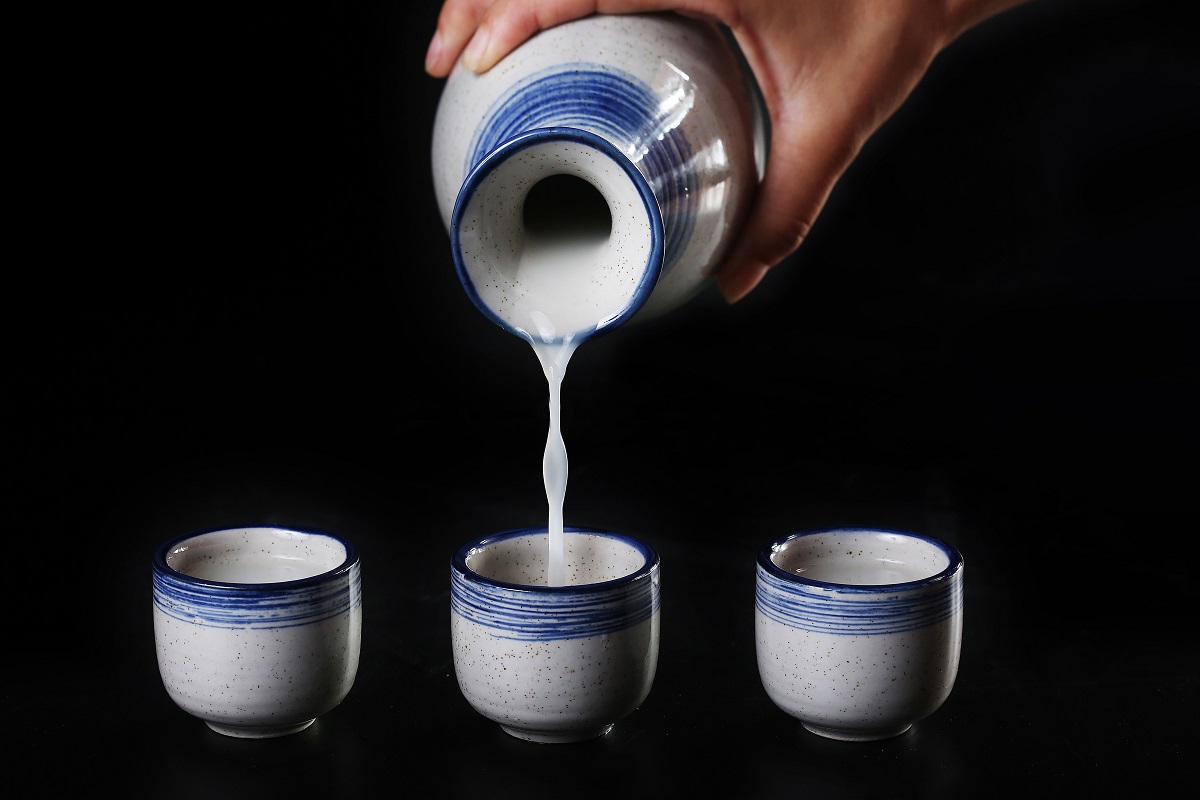
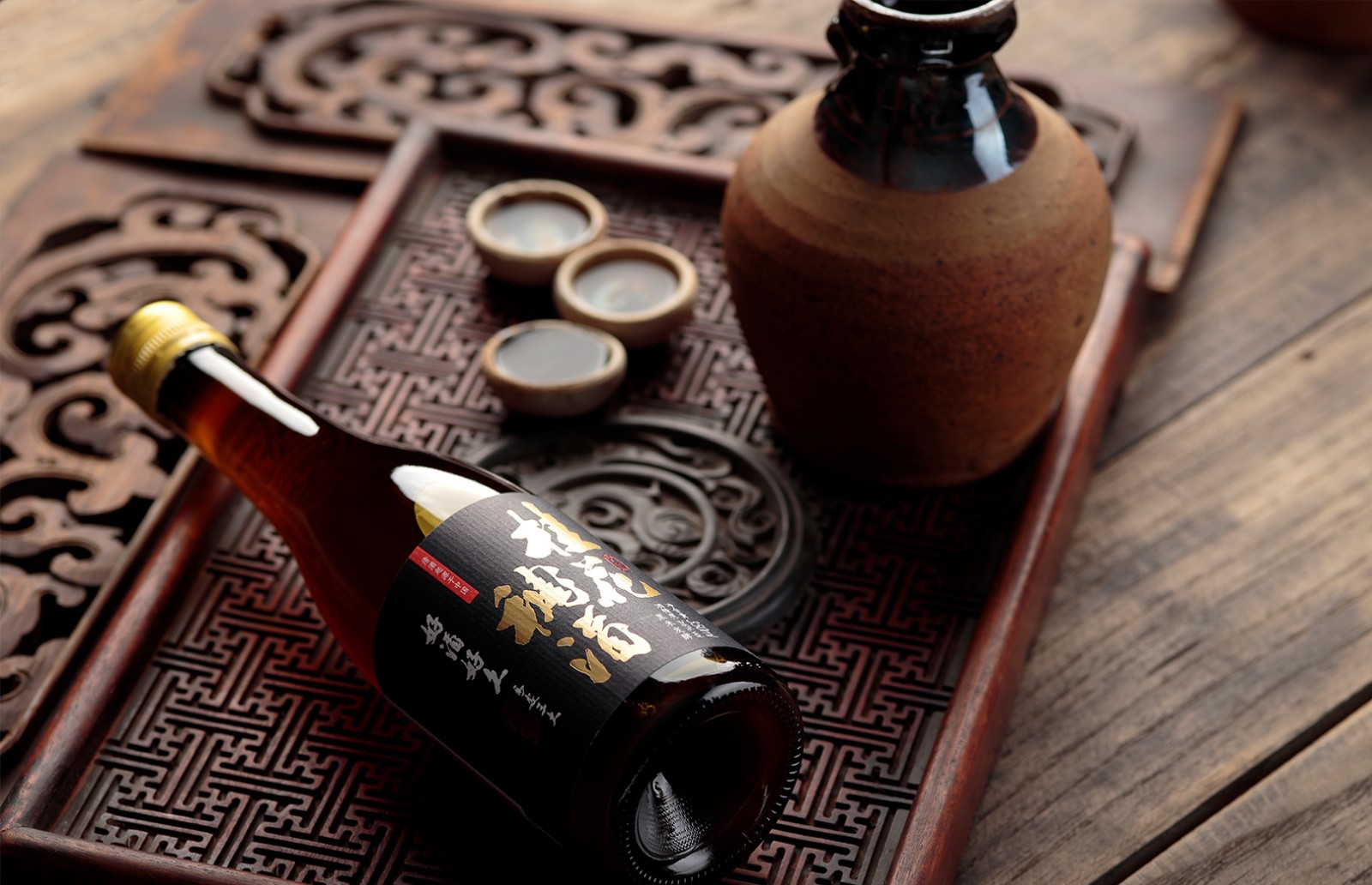
2. Huanggui Choujiu (Osmanthus Thick Rice Wine)
A low-alcohol rice wine with a mellow taste and osmanthus aroma, better to drink heated, suitable for tourists who are not good at drinking.
* Recommended Restaurant:
- Xu's Huanggui Choujiu
· Address: No. 23 Baishulin, Beilin District, Xi'an, Shaanxi Province, China
· Phone: +86-15109288488
· Opening hours (Mon to Sun): 09:30-21:00
· Price: Approximately 12-18 RMB per person ($1.7-2.6) for individual items, with combo sets at 22-68 RMB ($3.1-9.7). As a 300-year-old iconic thick wine shop in Xi'an's Beilin District, it's renowned for its naturally fermented glutinous rice wine blended with sweet-scented osmanthus - a local favorite with mellow taste and rich floral aroma, making it a must-try for tourists looking for authentic Tang Dynasty-style wine at Bell Tower area.
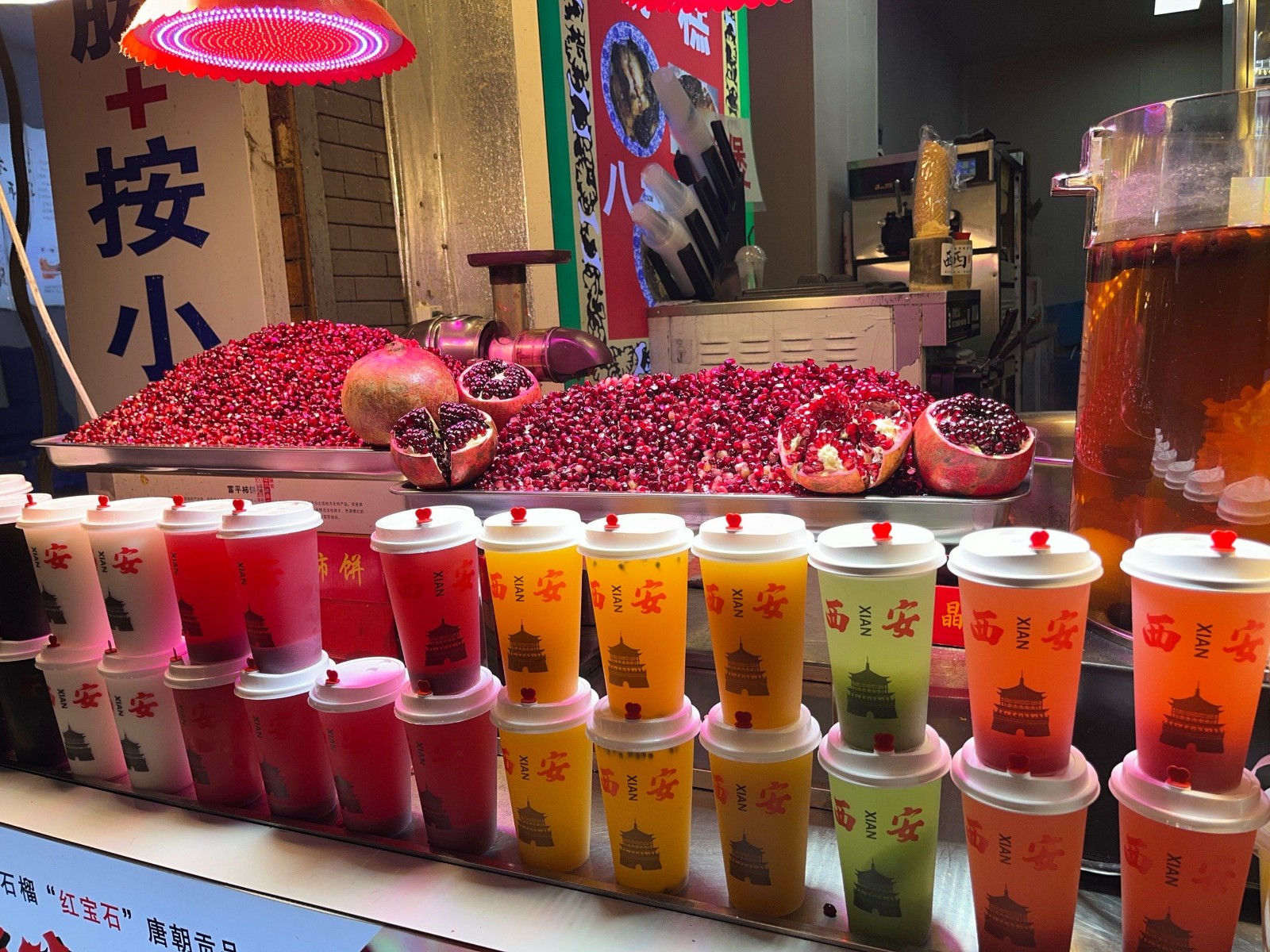
3. Shiliu Zhi (Pomegranate Juice)
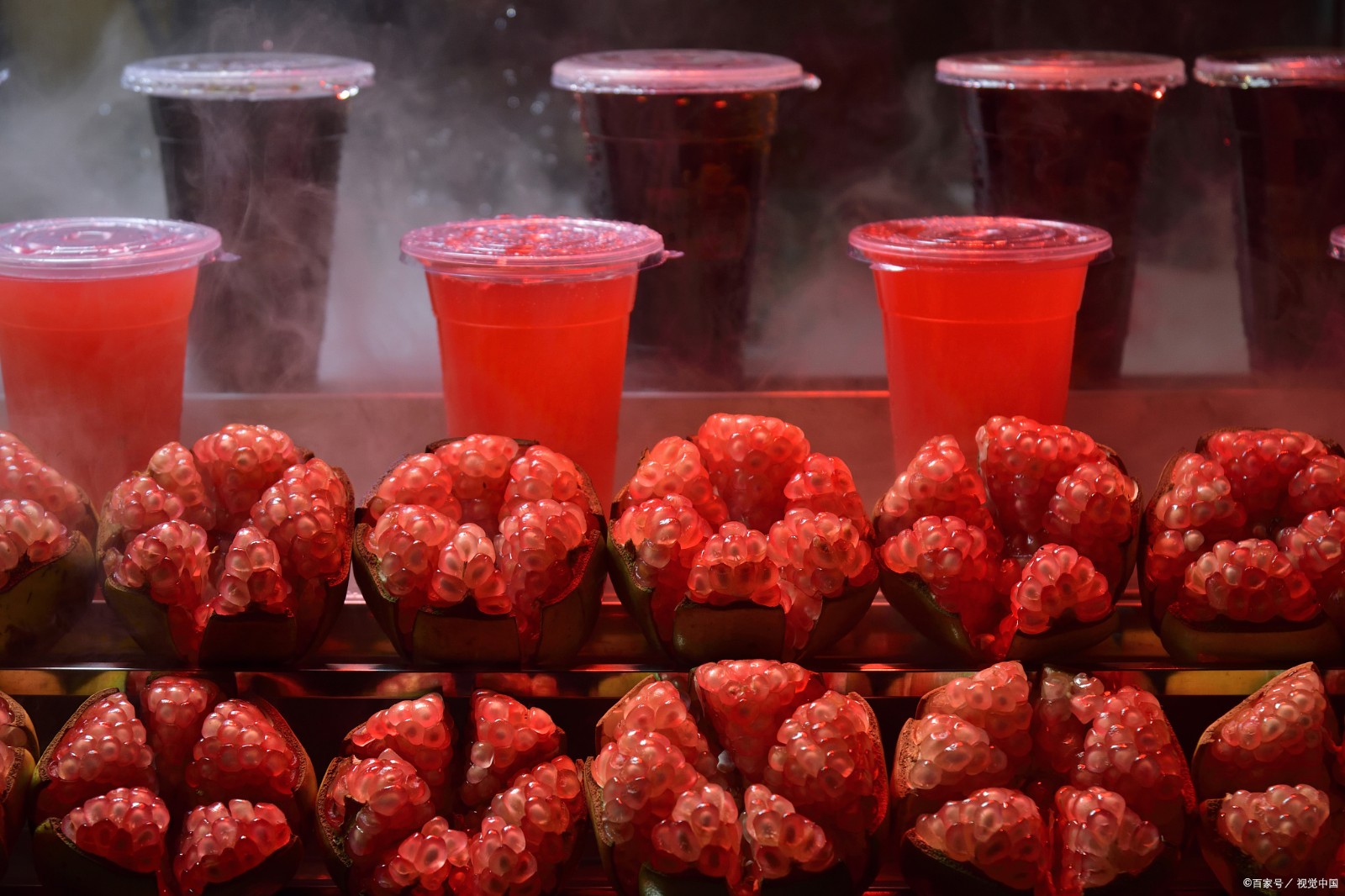
An iconic refreshing drink in Xi’an, made from the premium Lintong pomegranates, the local specialty with exceptionally rich sweetness and juicy pulp. It is freshly squeezed on the spot without any additives or extra sugar added, featuring a bright ruby red color, thick and smooth texture, and a pure sweet and slightly tart original pomegranate aroma. It is the best choice to relieve heat and greasiness in summer, an ideal match for Xi’an’s savory and spicy street foods like Rougamo and Liangpi. The bottled concentrated version with delicate packaging is also a popular local souvenir for tourists to take away.
* Recommended Restaurant:
- Jianwei Freshly Squeezed Pomegranate Juice
· Address: No. 213 Dapiyuan, Xi'an, Shaanxi Province, China
· Phone: +86-15109288488
· Opening hours (Mon to Sun): 09:30-21:00
· Price: Approximately 10-15 RMB per person ($1.4-2.1) for individual items, with combo sets at 18-35 RMB ($2.6-5.0). As a 15-year-old iconic freshly squeezed juice shop in Xi'an's Lianhu District, it's renowned for its additive-free pomegranate juice made with Lintong red sweet pomegranates - a local favorite with rich fruit flavor and balanced sweet and sour taste, making it a must-try refreshing drink for tourists visiting Beiyuanmen Muslim Quarter.
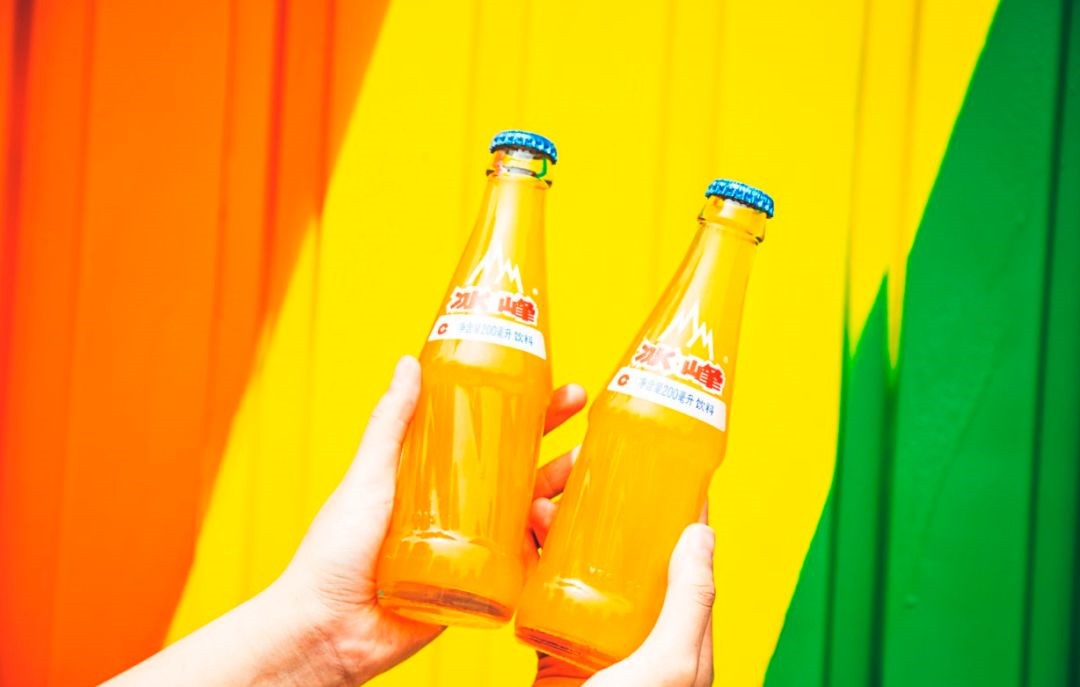
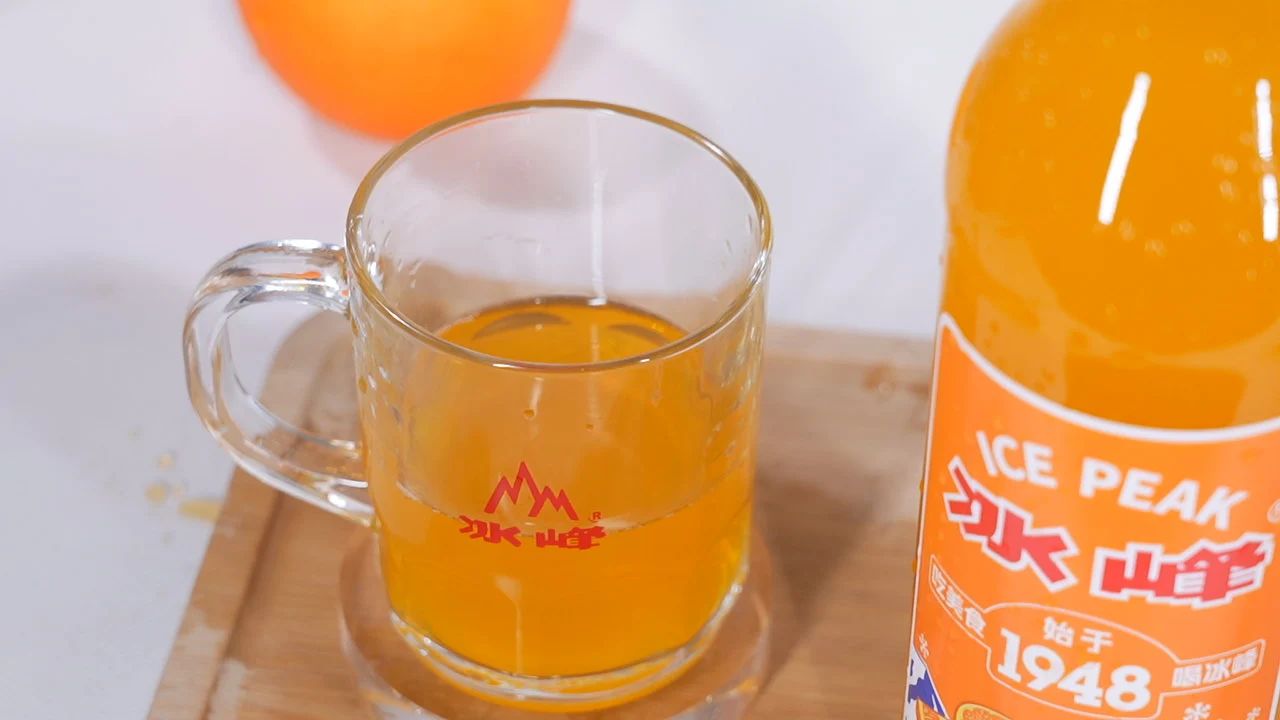
4. Ice Peak (Chinese orange-flavored soda)
Ice Peak is a popular Chinese orange-flavored soda from Xi'an, Shaanxi Province, known for its citrusy taste and as a classic pairing with local dishes like paomo (flatbread in mutton soup) or youpo noodles. It's a nostalgic and refreshing drink, often enjoyed chilled with spicy or fried Asian foods to balance the strong flavors.
* Recommended Restaurant:
- Supermarkets and convenience stores across Xi’an
· Price: Approximately 10-15 RMB per person ($1.4-2.1) for individual items, with combo sets at 18-35 RMB ($2.6-5.0). As a 15-year-old iconic freshly squeezed juice shop in Xi'an's Lianhu District, it's renowned for its additive-free pomegranate juice made with Lintong red sweet pomegranates - a local favorite with rich fruit flavor and balanced sweet and sour taste, making it a must-try refreshing drink for tourists visiting Beiyuanmen Muslim Quarter.
E. The Cultural Stories Behind the Food: Understanding the Flavors of Xi'an
Xi’an’s food is never just a taste experience. Every wisp of aroma is intertwined with the historical context of the ancient capital of thirteen dynasties, and every dish hides the marks of changing times, the warmth of street life, and the code of cultural integration. Only by understanding these stories can we truly grasp the depth and vitality in the taste of Xi’an.
1. Yangrou Paomo: From a Humble Warm Meal to a City Icon
The legend of Zhao Kuangyin, Emperor Taizu of the Song Dynasty, is widely spread about the origin of Yangrou Paomo, adding a touch of romance to this dish. During the Five Dynasties and Ten Kingdoms period, before Zhao Kuangyin ascended the throne, he was trapped on the streets of Chang’an (now Xi’an) due to wars. It was the cold winter, and he was hungry, cold, and ragged when he came across a simple lamb shop. Taking pity on him, the shopkeeper tore up the few remaining dry steamed buns, poured over lamb soup that had been simmering for most of the day, added some ginger slices and chopped green onions, and cooked it up. After eating the hot soup, Zhao Kuangyin felt warm all over and refreshed, and kept this kindness in his heart ever since.
In 960 AD, Zhao Kuangyin launched the Chenqiao Mutiny and ascended the throne, establishing his capital in Kaifeng. He still remembered the bowl of Yangrou Paomo from Chang’an, specially sent people to find the former shopkeeper, summoned him to the palace, rewarded him generously, and ordered the imperial kitchen to recreate this dish. Improved by court chefs, the production process of Yangrou Paomo became more refined: the lamb bone soup needs to be simmered for more than 6 hours, the buns must be torn into soybean-sized pieces to absorb the soup, and ingredients such as sweet garlic and chili sauce were added to enrich the taste. Later, this imperial delicacy gradually spread to the people, integrating with Xi’an’s local lamb resources (tender and less fishy lambs from Northern Shaanxi) and people’s tastes, and slowly evolved into the iconic dish of the ancient capital it is today, a must-have for old Xi’an people to entertain guests and keep warm in winter.
It is worth mentioning that the ritual of "tearing buns" also carries cultural connotations: old Xi’an people believe that tearing buns by hand not only allows the buns to blend better with the soup, but also shows respect for food, implying the street philosophy of "enjoying life slowly". Today, this dish has long surpassed food itself, becoming a symbol of Xi’an’s historical inheritance and culinary wisdom.
2. Rougamo: A Millennium-Old Legend of Military Rations
The history of Rougamo can be traced back to the Qin and Han dynasties, and its prototype, "meat stuffed in steamed buns", was the core military ration of the Qin army, meeting the dietary needs of the cold weapon era. During the Qin and Han dynasties, the army fought year-round with strong mobility, and had extremely strict requirements for military rations—they needed to be portable, storable, high in calories, and able to quickly replenish physical strength. Craftsmen at that time invented "steamed cakes" (the early version of buns), combined them with braised pork stewed until tender, and made "meat stuffed in steamed buns". Soldiers could carry them in their arms, and eat them without lighting a fire during marches.
The initial braised meat mostly used pork (the main meat of the people in the Qin and Han dynasties), using the technique of "slow stewing in old soup", adding star anise, cinnamon and other spices to remove fishy smell. The meat was tender and flavorful, not dry or greasy even when eaten cold. With the evolution of the times, "steamed cakes" gradually developed into today’s Baiji Mo—baked over charcoal fire, with a crispy outer skin and soft inside, better able to lock in the meat aroma; the braised meat process was also continuously optimized, integrating with local Xi’an tastes, adding Qin pepper and mature vinegar for seasoning, making the taste more rich.
In the Ming and Qing dynasties, Rougamo completely transformed from military rations to street food, and Rougamo stalls emerged all over the streets, becoming a convenient choice for people’s daily breakfast and lunch. Its inheritance is not only the evolution of a dish, but also a witness to the war years of the Qin and Han armies, and the transformation of Xi’an from an imperial capital to a people’s city, a vivid embodiment of "pragmatic dietary culture". Today, known as the "Chinese hamburger", Rougamo still carries the dietary memory of Xi’an people for thousands of years with its simple collocation and solid taste.
3. Dongyangshi & Xiyangshi: Living Fossils of Tang Dynasty Lamb Culture
Walking through the old city of Xi’an, the names of the two old streets, Dongyangshi and Xiyangshi, quietly tell the prosperity of Xi’an’s meat culture in the Tang Dynasty. As the starting point of the Silk Road, Chang’an in the Tang Dynasty was an international metropolis, with a large number of foreign merchants and prevalent foreign customs. Lamb, as an important ingredient introduced from the Western Regions, was deeply loved by both the royal family and the common people, becoming one of the core symbols of the dietary culture at that time.
To meet the city’s demand for lamb, the Tang court planned special lamb trading markets in Chang’an, which are today’s Dongyangshi and Xiyangshi. At that time, the market was large-scale, with not only local lamb from Northern Shaanxi and Longyou, but also high-quality lamb tributed by Western Regions countries. The trading scope covered raw lamb, cooked lamb and lamb products (such as lamb oil, lamb offal). The market was lined with shops, including high-end lamb restaurants for nobles and affordable lamb stalls for common people. Foreign merchants and local vendors gathered here, with the aroma of spices and lamb interweaving, becoming a unique scenery in Chang’an of the Tang Dynasty.
After thousands of years of vicissitudes, the pattern of the two old streets has changed, but the lamb dietary culture has never been interrupted. Today, Xiyangshi is still the core gathering place for halal food in Xi’an. The street’s grilled lamb skewers, Yangrou Paomo, halal Saimai and other dishes continue the lamb flavor of the Tang Dynasty. The craftsmanship of many time-honored shops has been passed down from the Tang Dynasty, retaining the most primitive production techniques. These two streets are not only geographical terms, but also living fossils of the prosperity and inheritance of Xi’an’s lamb dietary culture, witnessing the integration and coexistence of flavors from different nations and regions in the ancient capital.
4. Zenggao: From Zhou Dynasty Sacrificial Vessel to Street Breakfast
The origin of Zenggao can be traced back to the Zhou Dynasty. The character "Zeng" (a kind of earthenware steamer) in its name was a ritual vessel used for steaming food in ancient times, initially only used in royal sacrificial ceremonies. Sacrifices in the Zhou Dynasty emphasized "respecting heaven with food". As a sacrificial offering, Zenggao was steamed with glutinous rice, red dates and red beans, symbolizing "abundant grain harvest and good fortune". Due to its soft, sweet taste and regular shape, it became one of the core offerings in sacrifices.
With the simplification of sacrificial rituals, Zenggao gradually spread from imperial sacrificial offerings to the people, becoming a daily food of the common people. During the Qin and Han dynasties, Zenggao was mostly a dessert for the aristocracy; in the Ming and Qing dynasties, with the popularization of glutinous rice cultivation, the price of Zenggao dropped, becoming an affordable breakfast on the streets, especially popular among farmers and manual laborers—glutinous rice and red dates are high in calories and filling, can quickly replenish physical strength, and are easy to carry, fitting the living needs of laborers at that time.
Today, Xi’an’s Zenggao still uses the traditional "steaming in Zeng" technique, selecting glutinous rice from Northern Shaanxi and jujubes from Dali, laying them layer by layer and steaming slowly over low heat for more than 3 hours, allowing the glutinous rice to fully absorb the sweetness of the red dates, with a soft and non-sticky taste. In the early morning streets, the heat and sweetness of Zenggao stalls fill the lanes, which is not only the breakfast memory of old Xi’an people, but also a gentle continuation of Zhou Dynasty sacrificial culture in contemporary street life.
5. Huanggui Shizi Bing (Huanggui Persimmon Cake): Integration of Tang Dynasty Osmanthus Culture and Seasonal Flavors
The birth of Huanggui Shizi Bing originated from the osmanthus culture of Chang’an in the Tang Dynasty and the seasonal specialty of Lintong. The Tang Dynasty was the heyday of osmanthus culture, with osmanthus trees planted all over Chang’an. Every autumn, the city was filled with the fragrance of osmanthus. The royal family and nobles often used osmanthus as raw material to make pastries and drinks, showing elegant taste. As a suburb of Chang’an, Lintong was rich in persimmons, which were large, sweet and juicy, and were tributes of the Tang royal family.
Initially, people only dried persimmons to make dried persimmons. Later, inspired by the osmanthus pastries of the Tang court, they peeled and cored Lintong persimmons, mashed them into puree, added flour and osmanthus sauce to knead into dough, and fried them into Huanggui Shizi Bing. With a golden outer skin, sweet filling, and the delicate fragrance of osmanthus, it has a crispy outer layer and soft inner texture, combining the sweetness of persimmons and the elegance of osmanthus, quickly becoming a popular autumn snack among Chang’an people.
This snack not only integrates the aesthetics and flavor of the Tang Dynasty, but also reflects the traditional dietary concept of "eating in season"—it is only made when persimmons and osmanthus are harvested in autumn, and it is hard to find after the season. Today, Huanggui Shizi Bing is still a iconic autumn snack in Xi’an. From street stalls to century-old time-honored brands, they all adhere to traditional techniques, allowing the osmanthus fragrance of the prosperous Tang Dynasty and the sweetness of persimmons to warm Xi’an’s autumn after thousands of years.
 Muslim Xi'an Tour: Explore Xi’an’s Rich Islamic Heritage
 3-Day Scenic Xi'an Tour Package from Malaysia Covering Magnificent Mount Hua
Food Culture in Old Xi’an
Old Xi’an’s food culture is a profound accumulation of thousands of years of history, integrating the culinary heritage of thirteen dynasties, the flavor integration of the Silk Road, and the down-to-earth warmth of folk life. It is not only about "eating", but also a reflection of Xi’an’s history, customs, and cultural inclusiveness.
1. Historical Origin of Old Xi’an Food Culture
* Dynastic Heritage: From Imperial Cuisine to Folk Flavors
Xi’an, as the imperial capital of thirteen dynasties including the Qin, Han, Sui, and Tang dynasties, has its food culture deeply rooted in royal culinary traditions. In the Tang Dynasty, the most prosperous period, imperial cuisine reached its peak—dishes paid attention to "shape, aroma, taste, and meaning", with exquisite ingredients and complicated cooking techniques. For example, Hulu Ji (Gourd Chicken), originally a royal dish for banquets, was shaped like a gourd to symbolize "blessing and prosperity", and its production process of "boiling first then frying" has been passed down to this day. After the decline of dynasties, many imperial cooking skills flowed into the folk, combined with local ingredients and customs, and evolved into popular delicacies. For instance, the "steamed buns" in the Tang imperial dining room gradually became the Rougamo loved by ordinary people after simplifying the production process.
* Silk Road Integration: A Fusion of Eastern and Western Flavors
As the starting point of the Silk Road, Old Xi’an has become a gathering place for flavors from all over the world since ancient times. Merchants from Central Asia, West Asia, and other regions brought unique ingredients and cooking methods—lamb, cumin, sesame, and naan-making techniques were introduced to Xi’an, and integrated with local culinary traditions to form distinctive flavors. For example, Kao Yangrou Chuan (Grilled Lamb Skewers), which originated from the Western Regions, was improved by local people: using local lamb, adding Qin pepper and vinegar to neutralize the mutton odor, forming a taste that is "spicy, fragrant, and not fishy". In addition, spices such as pepper and cinnamon brought by the Silk Road also enriched the seasoning system of Old Xi’an, making its food more layered.
* Folk Evolution: Food Rooted in Daily Life
In the Ming and Qing dynasties, Old Xi’an’s food culture tended to be civilianized, with a large number of street snacks emerging, closely linked to the daily life of local people. For example, Zenggao was originally a breakfast for farmers and laborers—made of glutinous rice and red dates, it is high in calories and convenient to carry, which can meet the energy needs of heavy physical labor. Liangpi was created to cope with the hot summer in Xi’an: using wheat flour to make thin sheets, cooling them with cold water, and matching with spicy and sour seasonings to relieve summer heat. These snacks are cheap, delicious, and convenient, gradually becoming an indispensable part of Old Xi’an’s food culture, and also witnessing the simplicity and pragmatism of Xi’an people.
2. Core Flavor System of Old Xi’an Food
* Taste Orientation: Salty and Fresh as the Foundation, Sour and Spicy as the Supplement
Old Xi’an’s food takes "salty and fresh" as the core taste, emphasizing the original flavor of ingredients, and uses sour and spicy seasonings to enhance the taste without covering up the essence of the ingredients. Qin pepper (produced in Shaanxi) is the soul of spicy flavor—it is spicy but not dry, with a faint fragrance, and is widely used in You Po La Zi (Chili Oil), Biangbiang Noodles, and other dishes. Shaanxi mature vinegar is the key to sour flavor—fermented for a long time, it has a mellow sour taste, which can neutralize greasiness and enhance freshness, and is indispensable for Liangpi, Suan Tang Shui Jiao (Sour Soup Dumplings), etc. This flavor orientation is closely related to Xi’an’s geographical environment: the dry climate and cold winter make sour and spicy flavors help dispel cold and moisten the body, while salty and fresh can supplement the water and electrolytes lost due to dryness.
* Ingredient Characteristics: Localization and Seasonality
Old Xi’an’s food relies heavily on local ingredients, forming a "farm-to-table" dietary concept. Staple foods are mainly wheat and glutinous rice—wheat is made into noodles, steamed buns, and Liangpi, which are the mainstay of daily diet; glutinous rice is used to make Zenggao and pastries. Non-staple foods are dominated by lamb, pork, and local vegetables: lamb from Northern Shaanxi is tender and less fishy, suitable for making Yangrou Paomo and grilled skewers; local vegetables such as cucumber, eggplant, and potato are used in cold dishes and stir-fries. In addition, Old Xi’an people pay attention to seasonal eating: eating Liangpi and plum juice in summer to relieve heat, eating Yangrou Paomo and hot pot in winter to keep warm, and eating Huanggui Shizi Bing in autumn when persimmons are in season, which reflects the harmony between man and nature in traditional Chinese food culture.
* Cooking Techniques: Simplicity and Pragmatism, Highlighting the Original Flavor
Unlike the complicated cooking of southern cuisine, Old Xi’an’s cooking techniques are simple and practical, focusing on highlighting the original flavor of ingredients. Common techniques include boiling, steaming, frying, and stir-frying, with few fancy processes. For example, Yangrou Paomo only uses "boiling"—boiling lamb bones for a long time to make thick soup, then adding torn steamed buns and lamb slices to cook, relying on the freshness of the soup and the tenderness of the meat to impress people. Rougamo uses "stewing and baking"—stewing pork with spices until tender, then clamping it into baked steamed buns, with the combination of soft meat and crispy bun skin. This simplicity is not perfunctory, but a culinary philosophy that "less processing, more respect for ingredients".
3. Seasonal and Festival Dietary Customs
* Seasonal Diet: Following Nature’s Rhythm
Old Xi’an people follow the law of nature and have distinct seasonal dietary customs. In spring, they eat Chun Juan (Spring Pancakes) with fresh vegetables such as chives and spinach, meaning "embracing the new life of spring"; in summer, Liangpi, cold noodles, and plum juice are indispensable to relieve heat; in autumn, they enjoy Huanggui Shizi Bing made of fresh persimmons and osmanthus, and Rou Zong (Braised Pork Zongzi) during the Dragon Boat Festival; in winter, Yangrou Paomo, hot pot, and Lao Zao Tang Yuan (Glutinous Rice Balls in Fermented Rice Wine) are popular to keep warm and nourish the body. These customs reflect the traditional concept of "harmony between man and nature" and the pursuit of a healthy diet.
* Festival Diet: Food Bearing Festive Meanings
Festive diets in Old Xi’an are full of symbolic meanings, bearing people’s wishes for a better life. During the Spring Festival, families make Jiaozi (Dumplings) together—dumplings are shaped like ingots, symbolizing "prosperity and wealth"; on the Lantern Festival, they eat Yuan Xiao (Glutinous Rice Balls), meaning "reunion"; on the Mid-Autumn Festival, they eat Mooncakes with fillings such as jujube paste and bean paste, hoping for family reunion. During the Dragon Boat Festival, in addition to eating zongzi, people also drink realgar wine (now replaced by fruit wine) to ward off evil spirits. These festive foods are not only delicious, but also a carrier of traditional culture and family emotions, inheriting the customs and beliefs of Old Xi’an from generation to generation.
Food-Scenic Spot Linkage Route
1. Route: Ancient Capital Core Humanities & Food Route (Half-Day Tour)
* Route Overview
Focus on the core area of Xi’an’s ancient city, visiting the iconic Bell Tower and Drum Tower, then exploring the Muslim Quarter (Huimin Street) and Xiyangshi for authentic halal snacks and local flavors. This route is perfect for first-time visitors, combining history, culture, and street food in one convenient trip.
* Scenic Spot Tour (Order & Highlights)
- Bell Tower (Zhonglou)
The symbol of Xi’an, located at the city center. Climb to the top for a panoramic view of the four main streets and the ancient city layout.
· Visiting Time: 30 mins
· Ticket: 30 CNY / person
- Drum Tower (Gulou)
Adjacent to the Bell Tower (5-min walk). It houses ancient drums and hosts regular drum performances. The view of the Muslim Quarter from the tower is excellent.
· Visiting Time: 30 mins
· Ticket: 30 CNY / person
· Combo Ticket: Bell Tower + Drum Tower: 50 CNY
- Muslim Quarter & Xiyangshi
A historic Muslim neighborhood famous for its food. While Huimin Street is more touristy, Xiyangshi offers more authentic local snacks at better prices.
· Visiting Time: 1–1.5 hours
· Ticket: Free admission
* Food Matching (Scenic Spot Adjacent Delicacies)
- Before visiting Bell Tower/Drum Tower (Breakfast/Quick Bite)
· Rougamo at Fan Ji (near Bell Tower)
· Suanmei Tang (Plum Juice)
- In Muslim Quarter & Xiyangshi (Main Meal & Snacks)
· Yangrou Paomo (Lamb Soup with Steamed Bread)
· Jinggao (Mini Glutinous Rice Cake)
· Huanggui Choujiu (Osmanthus Rice Wine)
· Shiliu Zhi (Pomegranate Juice)
2. Route: Terracotta Army & Lintong Scenic Food Route (One-Day Tour)
* Route Overview
Explore the world-famous Terracotta Army and Huaqing Palace, then taste Lintong’s seasonal specialties, especially persimmon and pomegranate-based snacks. This route combines grand history with fresh local flavors.
* Scenic Spot Tour (Order & Highlights)
- Terracotta Warriors and Horses Museum
The 8th Wonder of the World, showcasing thousands of life-sized warriors. A guide is highly recommended to understand the history.
· Visiting Time: 2 hours
· Ticket: 120 CNY / person
- Huaqing Palace
A famous Tang Dynasty imperial garden, known for its hot springs and the romantic story of Emperor Xuanzong and Yang Guifei.
· Visiting Time: 1.5 hours
· Ticket: 120 CNY / person
- Lintong Pomegranate Garden (Optional, Sep–Nov)
Pick fresh pomegranates and enjoy the harvest scenery.
* Food Matching (Scenic Spot Adjacent Delicacies)
- Lunch (near Terracotta Army)
· Biangbiang Noodles
· Liangpi
- Afternoon Tea (near Huaqing Palace)
· Huanggui Shizi Bing (Osmanthus Persimmon Cake)
· Fresh Pomegranate Juice
- Dinner (back to city or Lintong town)
· Spicy Chicken or Roujiamo at local restaurants.
3. Route: Qujiang Tang Dynasty Culture & Creative Food Route (Half-Day Tour)
* Route Overview
Visit the Giant Wild Goose Pagoda and stroll through the bustling Datang Everbright City, enjoying Tang Dynasty-style architecture, performances, and innovative Shaanxi cuisine. Ideal for culture and photo lovers.
* Scenic Spot Tour (Order & Highlights)
- Giant Wild Goose Pagoda (Dayan Ta)
A landmark Buddhist pagoda built in the Tang Dynasty. The North Square has a famous musical fountain show.
· Visiting Time: 1 hour
· Ticket: 35 CNY (to climb the pagoda)
- Datang Everbright City
A pedestrian street with magnificent Tang-style lights and street performances (Hanfu parades, music, etc.). Best visited at night.
· Visiting Time: 1-1.5 hours
· Ticket: Free admission
* Food Matching (Scenic Spot Adjacent Delicacies)
- Before visiting Giant Wild Goose Pagoda
· Zenggao (Glutinous Rice Cake with Dates)
- Lunch/Dinner (near Datang Everbright City)
· Zui Chang’an (Popular Shaanxi Restaurant)
· Shuijing Bing (Crystal Cake)
4. Route: City Wall Night View & Night Market Food Route (Evening Tour)
* Route Overview
Cycle or walk on the Xi’an City Wall for stunning night views, then dive into Yongxingfang or a local night market for a feast of intangible cultural heritage snacks and street food. Perfect for experiencing Xi’an’s night vibe.
* Scenic Spot Tour (Order & Highlights)
- Xi’an City Wall (Night View)
The most complete ancient city wall in China. Rent a bike (45 CNY/3 hours) to enjoy the panoramic night view of the city.
· Visiting Time: 1 hour
· Ticket: 54 CNY / person
- Yongxingfang
A food court dedicated to Shaanxi’s intangible cultural heritage snacks. Famous for “Shuai Wan Jiu” (wine bowl smashing).
· Visiting Time: 1-1.5 hours
· Ticket: Free admission
* Food Matching (Scenic Spot Adjacent Delicacies)
- Before entering the City Wall (Light Bite)
· Liangpi (Cold Noodles) or Roujiamo
- At Yongxingfang (Snack Feast)
· Hulutou Paomo (Pork Intestine Soup)
· Sweet Snacks: Jinggao, Shizi Bing, Liaohua Tang
· Drinks: Suanmei Tang, Pear Juice
Xi'an Halal Cuisine
Xi'an's Halal cuisine is deeply rooted in the culture of the Muslim Quarter (Huimingjie). Centered around beef and lamb, it combines the ruggedness of the Northwest with the delicacy of the Silk Road. Strictly adhering to Islamic dietary laws, it features rich, mellow flavors and meticulous craftsmanship, serving as a vital pillar of Xi'an's culinary culture.
a. Signature Dishes
1. Beef and Lamb Paomo
The soul of Xi'an's Halal cuisine, with a history dating back to the Tang Dynasty. A creamy white soup is slowly simmered for 8 hours using Qinchuan beef, lamb, and beef bones. Diners traditionally tear the flatbread into small pieces by hand—the finer the pieces, the more flavorful the result. The finished dish features tender meat, a rich broth, and chewy bread soaked in soup. Served with pickled garlic, cilantro, and spicy sauce, it is incredibly warming and filling.
2. Spiced Beef and Lamb
A representative of Xi'an's Halal braised meats. Primarily made with beef shank and lamb ribs, it is braised with over a dozen spices including star anise, cinnamon, and Sichuan peppercorns. It has a ruddy color, a tender texture, a rich aroma, and a perfectly balanced saltiness. It is a classic choice for sandwiches or as an appetizer with alcohol.
3. Steamed Lamb with Rice Flour
Lamb ribs are cut into strips, mixed with rice flour, Sichuan peppercorn powder, ginger powder, and other seasonings, then steamed. The meat is tender, and the rice flour is soft and glutinous. Served with lotus-leaf pancakes or in a bun, it has a strong, non-greasy aroma and is a common dish at Halal banquets and for daily snacks.
b. Recommended Restaurants and Neighborhood Guide
Xi'an’s Halal food is most concentrated in the Muslim Quarter (Huifang), where the core area covers three interconnected streets—North Gate Street (Beiyuanmen), Xiyangshi Street, and Dapiyuan Street. These streets are lined with time-honored shops and authentic street food stalls, making it easy to hop between restaurants and savor a variety of flavors in one trip. Below is a detailed breakdown of the must-visit shops and how to navigate the area.
* Recommended Restaurant:
- Qingzhen Yixiangzhai Old Mi's Paomo (Dapiyuan Store)
· Address: 68 Dapiyuan, Lianhu District, Xi'an, Shaanxi Province, China
· Phone: +86-13309216231
· Opening hours (Mon to Sun): 08:30-23:00
· Price: Approximately 25-28 RMB per bowl ($3.5-4.0) for individual items, with combo sets at 48-70 RMB ($6.8-9.9).
- Qingzhen Xi'an Jia San Soup Dumpling Restaurant (Beiyuanmen Flagship Store)
· Address: 93 Beiyuanmen, Xi'an, Shaanxi Province, China
· Phone: +86-(029)87257507
· Opening hours (Mon to Sun): 08:00-22:30
· Price: Approximately 18-28 RMB per basket ($2.5-4.0) for individual items, with combo sets at 45-68 RMB ($6.4-9.6).
c. Dining Culture and Etiquette Tips
1. Cultural Origin
Xi'an’s Halal cuisine has a long and rich history, dating back to the Tang Dynasty (618-907 AD). During this period, the Silk Road was at its peak, and a large number of Muslim merchants, travelers, and artisans from Central Asia, the Middle East, and other regions settled in Xi'an (then known as Chang'an), which was the capital of the Tang Dynasty and a global hub of trade and culture. These Muslim settlers formed their own communities, known as the "Seven Mosques and Thirteen Quarters" —a network of 13 neighborhoods centered around 7 mosques, where Islamic culture and traditions were preserved and passed down. The locals in these communities, known as "Fangshang", have inherited thousand-year-old cooking craftsmanship and strictly adhere to Islamic dietary laws (Halal). This means that pork, lard, and any ingredients derived from pigs are strictly prohibited. Additionally, the slaughter of animals (such as beef and lamb) must follow Islamic rituals, and the handling, processing, and cooking of food must meet strict hygiene and religious standards. Over time, this unique blend of Silk Road culture, Islamic traditions, and Guanzhong local customs gave birth to Xi'an’s distinctive Halal cuisine, which is not only a culinary delight but also a living carrier of history and culture.
2. Dining Etiquette
When dining in Xi'an’s Halal restaurants or the Muslim Quarter, it’s important to respect local customs and Islamic traditions. Below are some key etiquette tips to ensure a pleasant and respectful dining experience:
* Paomo Etiquette: Tear the Mo by Hand
Eating paomo is not just a meal—it’s a ritual that reflects the culture and traditions of Xi'an. When you order paomo, the restaurant will serve you a piece of flatbread and a bowl of broth (separately). Diners are expected to tear the flatbread into small, even pieces by hand—this is an essential part of the experience. The finer you tear the bread, the better it will absorb the broth, making each bite more flavorful. It’s also considered polite to tear the bread yourself, as it shows that you appreciate the food and the tradition behind it.
* Enjoying Spiced Beef and Lamb
Spiced beef and lamb are classic Halal cold dishes in Xi'an. They are usually served sliced, either as an appetizer or a side dish. There are two common ways to eat them: you can either eat them directly (they are already seasoned and flavorful) or stuff them into a Baiji mo (a type of crispy flatbread) to make a delicious sandwich. For a more authentic experience, pair them with a glass of local white liquor (if you drink) or a cup of sour plum soup—both help to cut through the richness of the meat and enhance the flavor. It’s also common to take spiced beef and lamb as a souvenir, as they can be vacuum-packed and stored for several days.
* Respect Halal Customs in Restaurants
The most important etiquette tip when dining in Halal restaurants is to respect Islamic dietary laws. Non-Halal food (especially pork and pork products) is strictly prohibited from being brought into the restaurant. This includes snacks, drinks, and any other food items that contain pork or lard. Additionally, avoid asking for pork or any non-Halal ingredients in the restaurant, as this may offend the staff and other diners. Most Halal restaurants will have a sign indicating that non-Halal food is not allowed, so please pay attention to these signs and follow the rules. By respecting these customs, you not only show courtesy to the local culture but also ensure a harmonious dining environment for everyone.
Souvenir Shopping Guide
1. Preserved Beef/Lamb (Vacuum-packed)
Xi’an’s iconic halal meat, tender and flavorful with rich spices. Vacuum packaging ensures a 7-10 day shelf life, perfect for cooking or as a side dish.
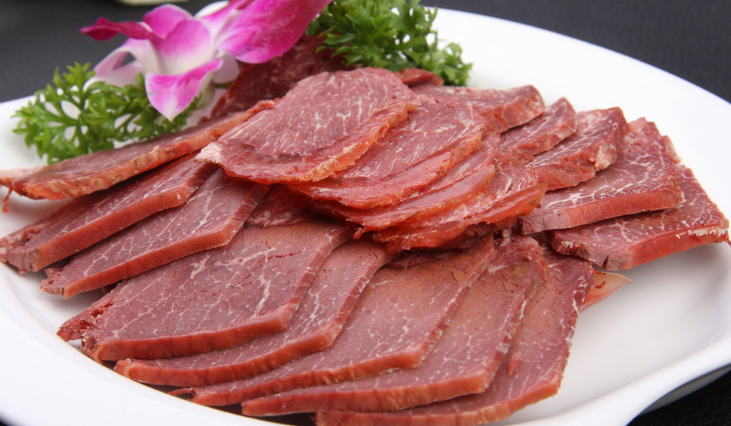
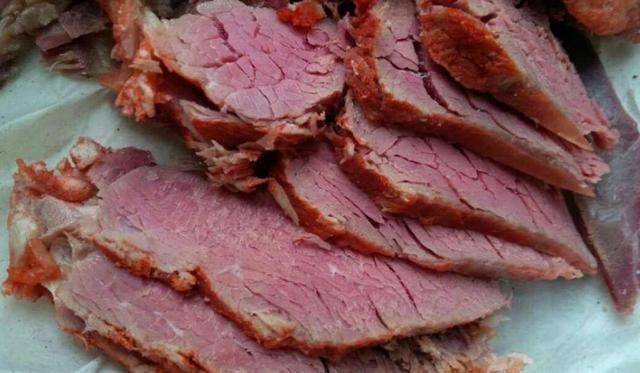
* Recommended Price: 60-80 CNY/500g
* Recommended Store: Liu Jixiao Preserved Meat, Xihulan Preserved Meat
2. Crystal Cake
A century-old traditional pastry with crispy crust and sweet, non-greasy filling. The gift box with Tang tri-color design is exquisite for gifting.
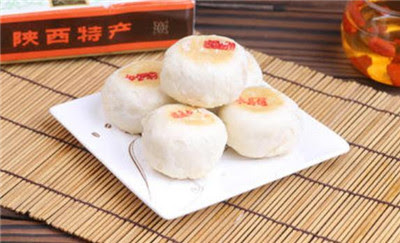
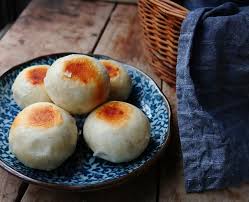
* Recommended Price: 20-30 CNY/regular box, 78 CNY/Tang tri-color gift box
* Purchase Channel: Supermarkets, brand stores, major business districts
3. Qiongguo Candy
A time-honored sweet snack of Guanzhong area, made of glutinous rice, sesame and rock sugar through multiple processes. Crispy but not sticky, sweet with rich sesame aroma, no added sucrose, and the independent small package is easy to carry and store.
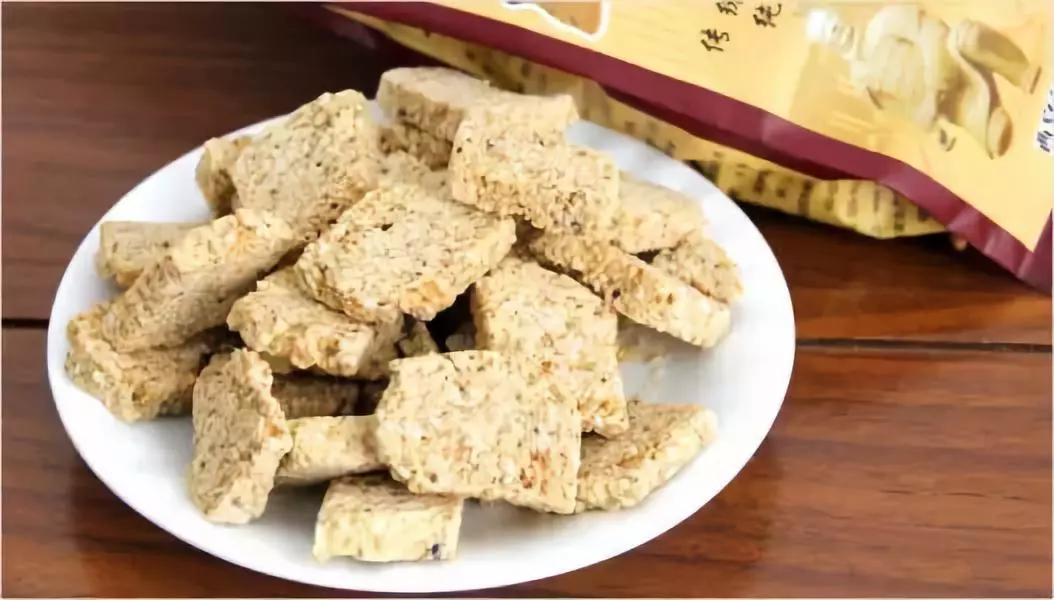
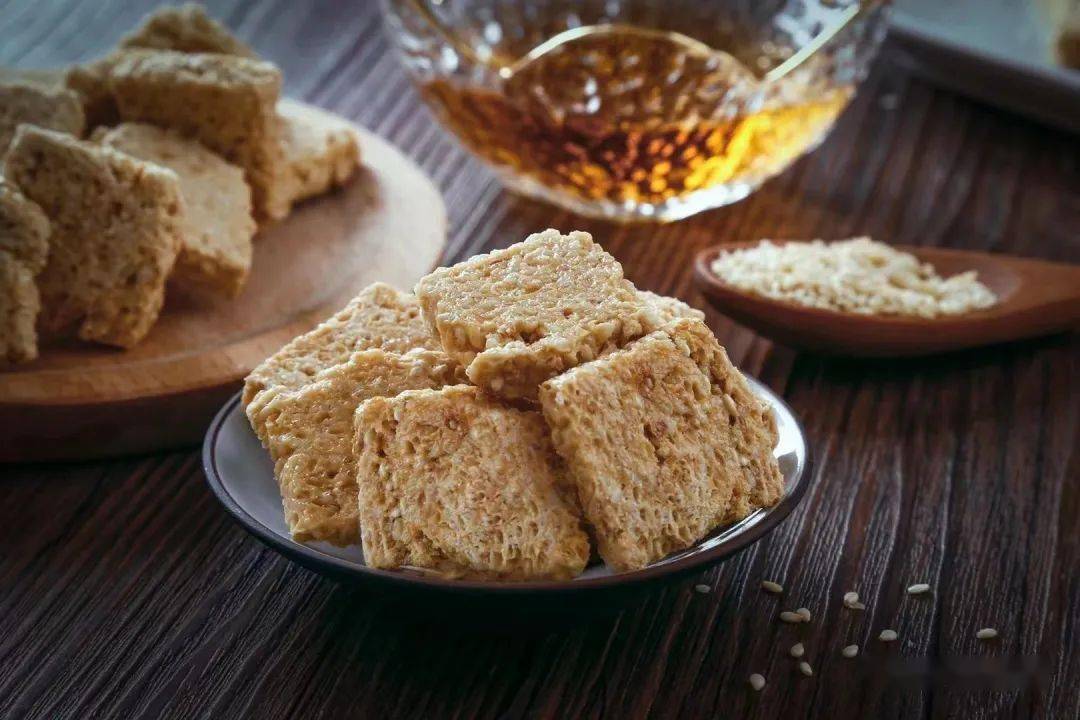
* Recommended Price: 12-25 CNY/bag (200g), 58-88 CNY/gift box
* Purchase Channel: Sajinqiao Food Street, Muslim Quarter branch alleys, local specialty counters in supermarkets
4. Huanggui Shizi Bing (Huanggui Persimmon Cake)
Xi’an’s classic seasonal pastry, a signature autumn delicacy made of premium Lintong persimmons and osmanthus sauce. The fried version is crispy outside and soft inside, the frozen vacuum version retains the original sweet taste, with strong osmanthus and persimmon aroma, sweet but not cloying.
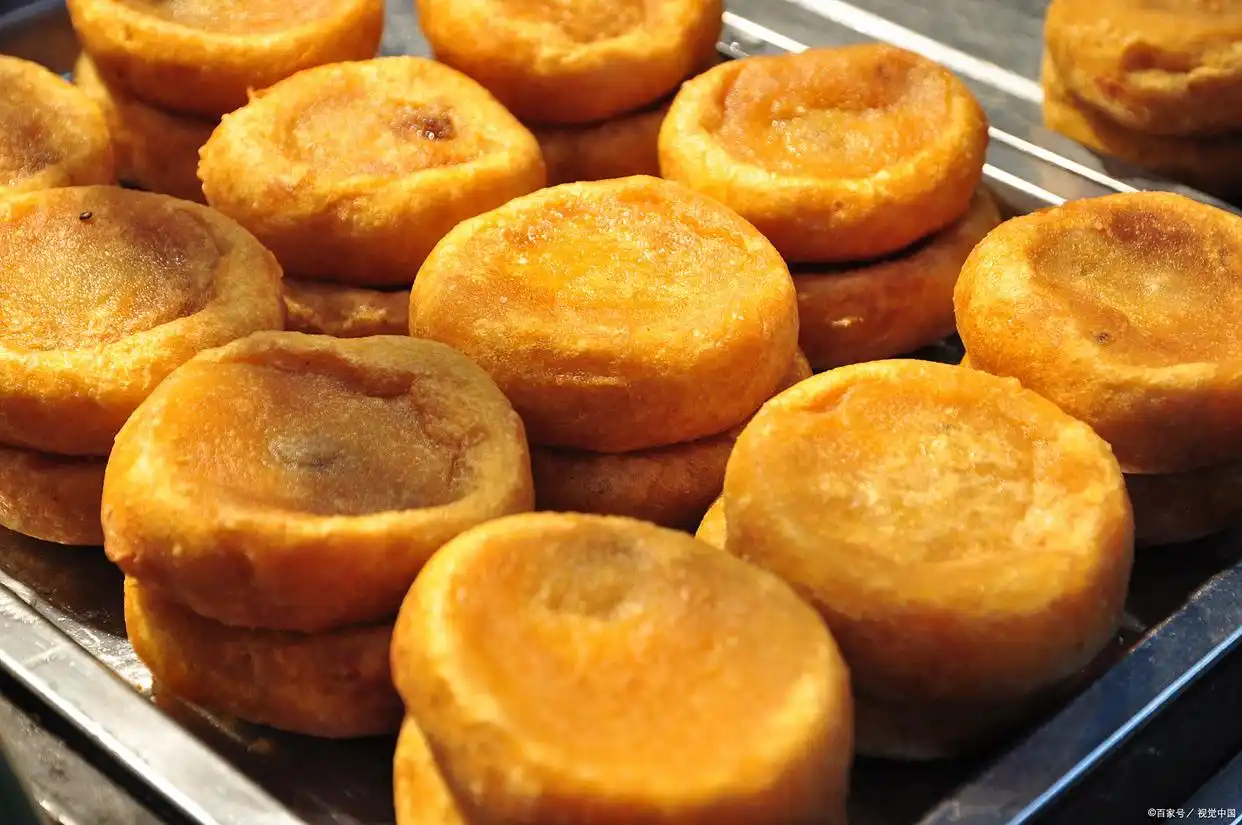
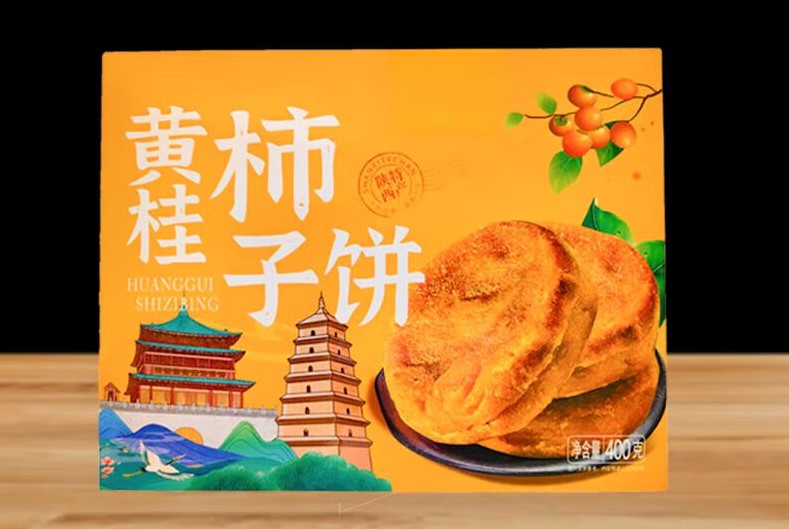
* Recommended Price: 10-15 CNY/5 pieces (bulk), 35-68 CNY/vacuum gift box
* Purchase Channel: Xiyangshi, Yongxingfang, Lintong Scenic Area specialty shops (the taste is more authentic near the raw material producing area)
5. Spicy Chili Oil
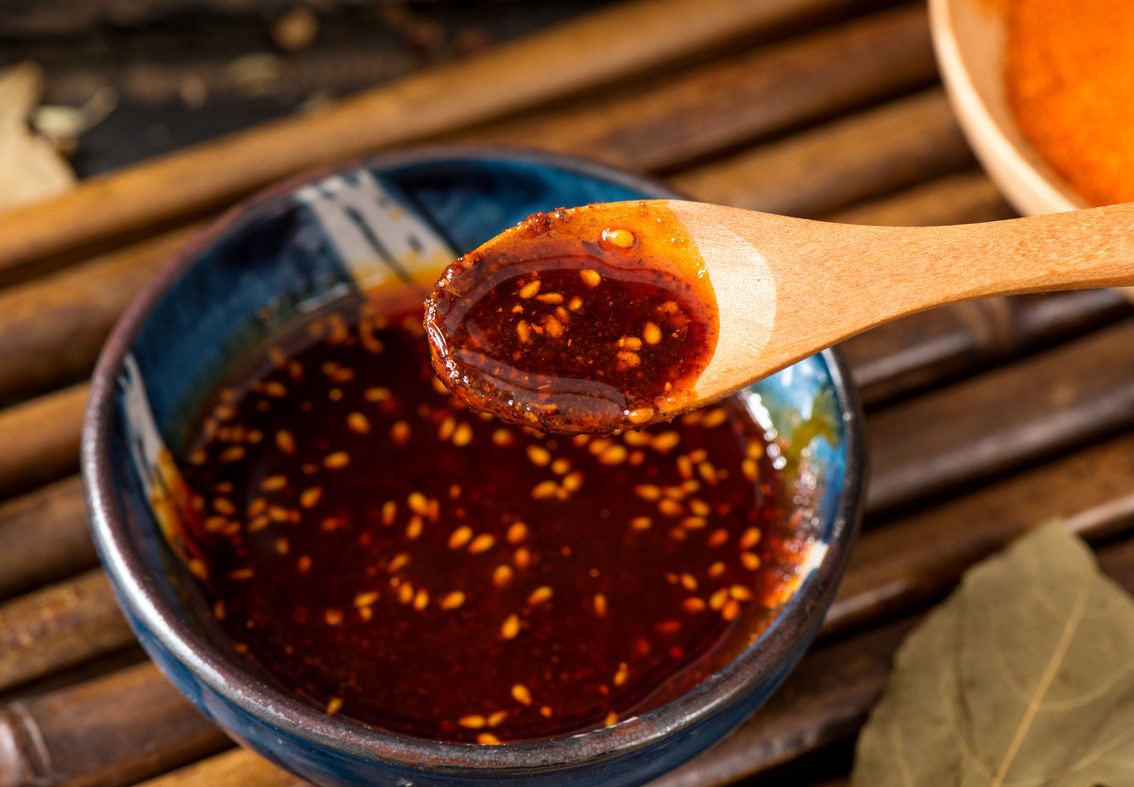
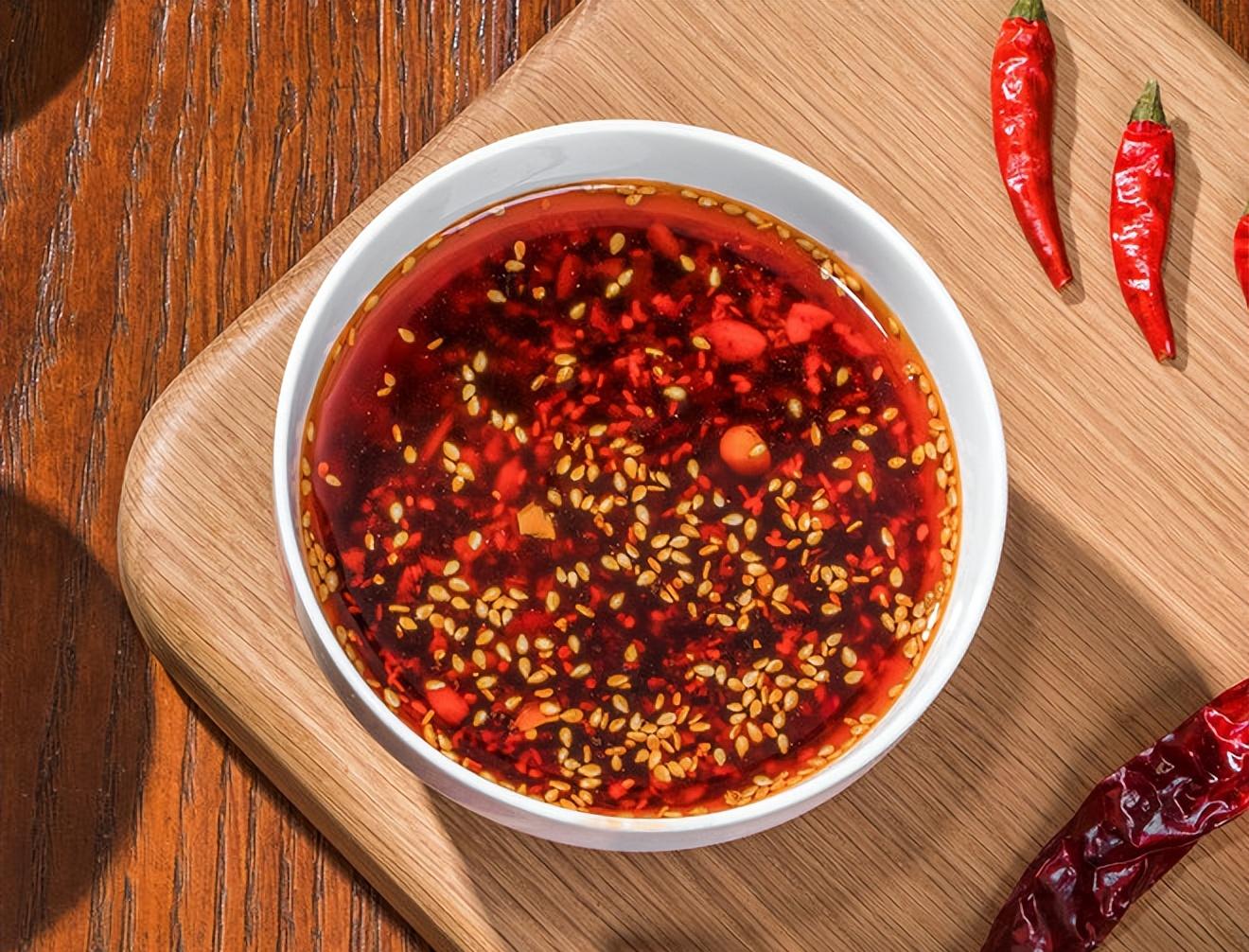
Shaanxi’s "one dish of chili oil", made of local Qin pepper and sesame oil through high-temperature pouring. Fragrant and spicy, not dry or bitter, suitable for mixing noodles, cold dishes and sandwiches, pure natural without additives.
* Recommended Price: 15-25 CNY/bottle (200ml)
* Purchase Channel: Laomajia Koukouxiang (Dapiyuan), Qinren Spicy Chili Square (Beiguangji Street)
 2-Day Family-Friendly Adventure in Xi'an: Explore Ancient Wonders & Iconic Sights
 Xi'an Day Tour: Hands-On Cooking Class for Authentic Dumplings & Noodles
Off-Peak & Local Hidden Eats
1. Sajinqiao (The "Real" Muslim Quarter)
* Overview
Far less crowded than the main Huimin Street, Sajinqiao is the top choice for locals. It’s lined with time-honored halal restaurants, offering the most authentic Muslim flavors in Xi’an.
* Must-Try Dishes & Recommended Stores
- Yangrou Paomo (Lamb Soup with Bread)
Liu Xin Lamb & Beef Paomo: The broth is rich yet clear, and the meat is incredibly tender. A top choice among locals.
- La Roujiamo (Spiced Beef Burger)
Yang Tianyu Spiced Beef Roujiamo: Crispy bread with juicy, savory beef. A classic breakfast staple.
- Meatball Spicy Soup
Old Li's Meatball Spicy Soup: Thick, spicy, and full of ingredients. Perfect when paired with beef cakes.
- Zenggao (Glutinous Rice Cake)
Pangzi Zenggao: Soft and sweet. It usually sells out by 10 AM, so arrive early!
* Practical Info
· Best Time: 6:00-10:00 (breakfast), 17:00-20:00 (dinner). Avoid noon.
· Average Cost: 20-35 CNY/person.
2. Xiaonanmen (South Gate) Morning & Night Market
* Overview
A hidden gem under the City Wall. The morning market (6-9 AM) is for fresh breakfast, while the night market (18:00-late) is a lively spot for late-night snacks, loved by young locals.
* Must-Try Dishes & Recommended Stores
- Morning Market (Breakfast)
Old Wu's Walnut Soup with Fried Dough Sticks: Creamy walnut soup paired with crispy fried dough sticks. A classic representative of traditional breakfast.
Laotongguan Roujiamo / Caijiamo: The ultimate expression of the "everything in a bun" culture. A wide variety of choices for a quick and filling meal.
- Night Market (Late-Night Snacks)
A Long Barbecue: Lamb skewers and grilled tendons are the must-try signature dishes, with an irresistible aroma.
Yueliang Fried Noodle Shop: Wok-hei infused fried noodles, the perfect choice for late-night snacks.
* Practical Info
· Best Time: Morning (6:00-9:00), Night (19:00-23:00).
· Average Cost: 15-25 CNY (morning), 40-60 CNY (night).
3. Maijian Street & Back Alleys of Lianhu Road
* Overview
Narrow alleys in the old city, home to small, family-run restaurants with decades of history. No signs, no tourists—just pure, old flavors.
* Must-Try Dishes & Recommended Stores
- Barbecue
Ma Le Barbecue: A favorite late-night spot among locals, offering great value for money with tender, delicious meat.
- Fried Lamb Soup with Mo
Ma Hong Stir-Fried Lamb Paomo: Spicy, sour, and aromatic, it’s a bold twist on traditional paomo—heaven for lovers of bold flavors.
* Practical Info
· Best Time: 11:00-14:00, 17:30-21:00.
· Average Cost: 25-40 CNY/person.
Seasonal Foods in Xi'an: A Year-Round Culinary Guide
Xi'an's cuisine is deeply rooted in history and geography, with each season bringing a unique harvest and traditional flavors.
a. Spring (March to May)
Spring in Xi'an is a time for fresh, light dishes that celebrate the season's new growth.
1. Spring Bamboo Shoots
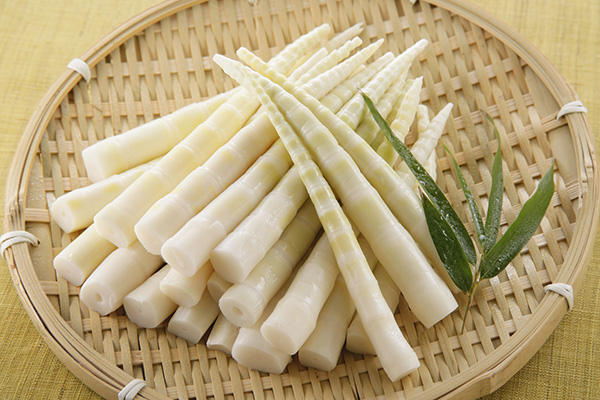
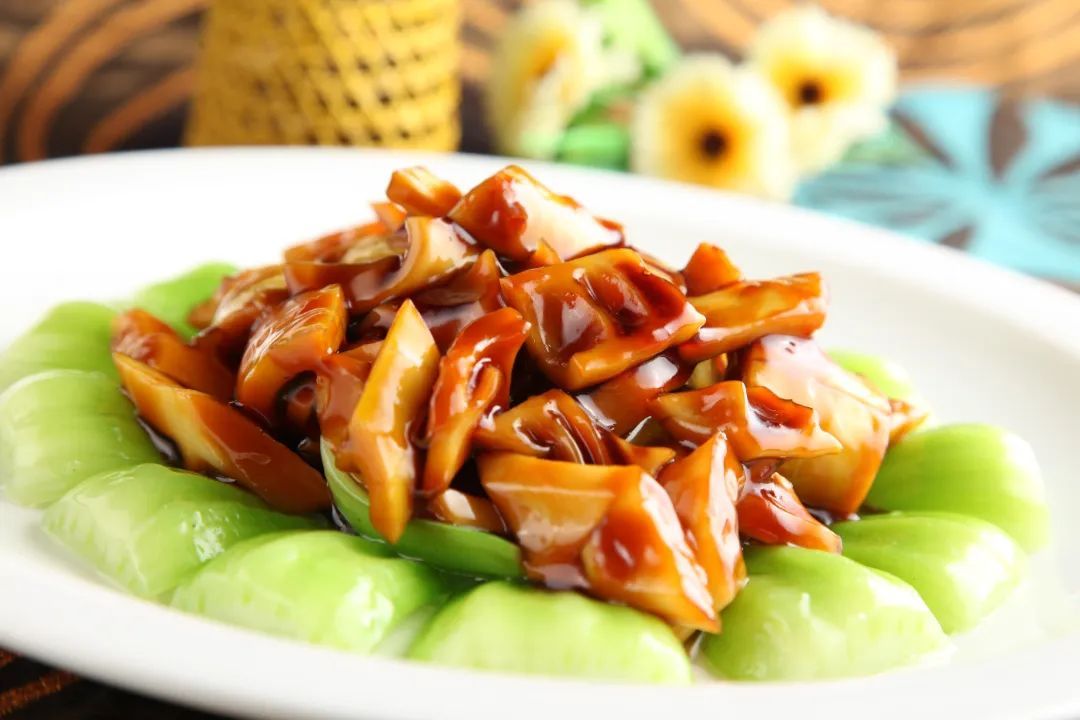
As the first fresh produce of spring, tender and crisp spring bamboo shoots are a seasonal delicacy not to be missed. They are widely used in a variety of stir-fries and clear soups, often paired with pork, mushrooms, or cured ham. This simple cooking method helps to highlight their naturally sweet, delicate flavor and crunchy texture, perfectly embodying the freshness of spring.
2. Qingtuan
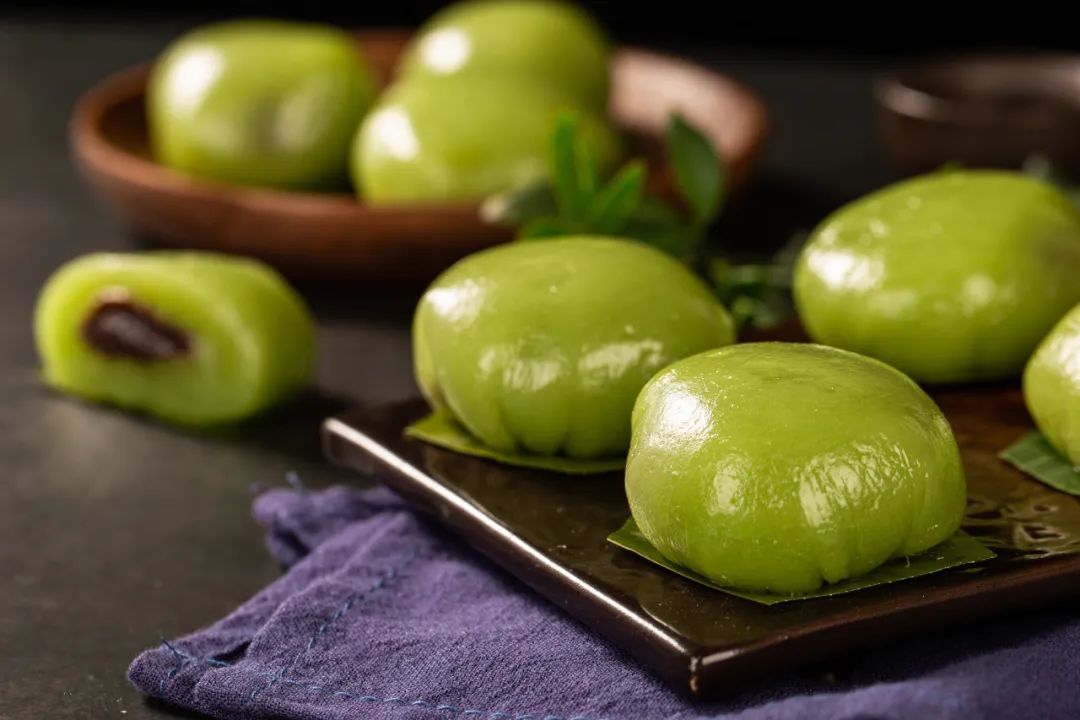
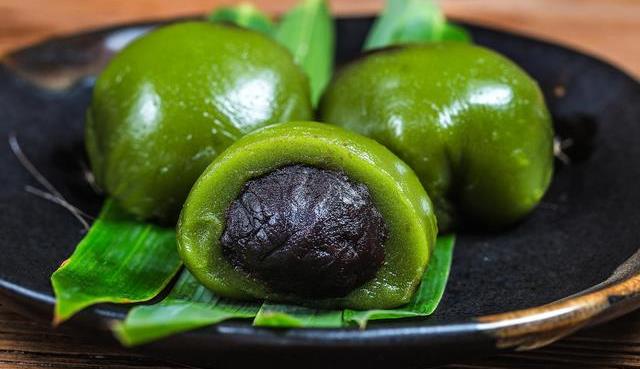
A beloved traditional spring snack, especially popular around the Qingming Festival. These vibrant green glutinous rice balls get their color and unique aroma from mugwort or wormwood juice. They are typically filled with either sweet red bean paste for a classic, comforting taste or savory pork for a more substantial option. The soft, chewy texture and fresh herbal scent make them a perfect symbol of spring.
3. Pagoda Tree Flower Steamed Flour / Scrambled Eggs
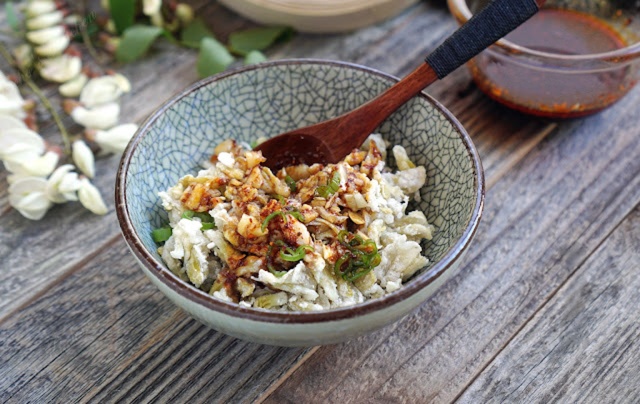
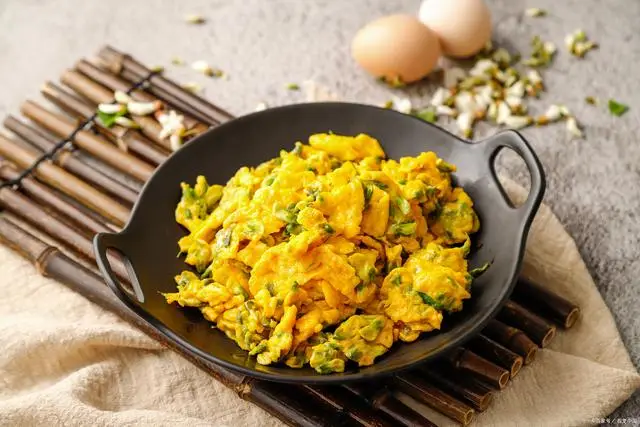
From April to May, the fragrant pagoda tree flowers (sophora japonica) bloom across Xi'an, offering a unique seasonal ingredient. They can be prepared in two classic ways: Steamed Flour, where the flowers are mixed with flour, steamed, and then tossed with garlic and sesame oil; or Scrambled Eggs, a simple dish that lets the flower's naturally sweet, delicate aroma shine through, creating a light and fragrant taste of spring.
4. Toona Sinensis with Tofu in Chili Oil
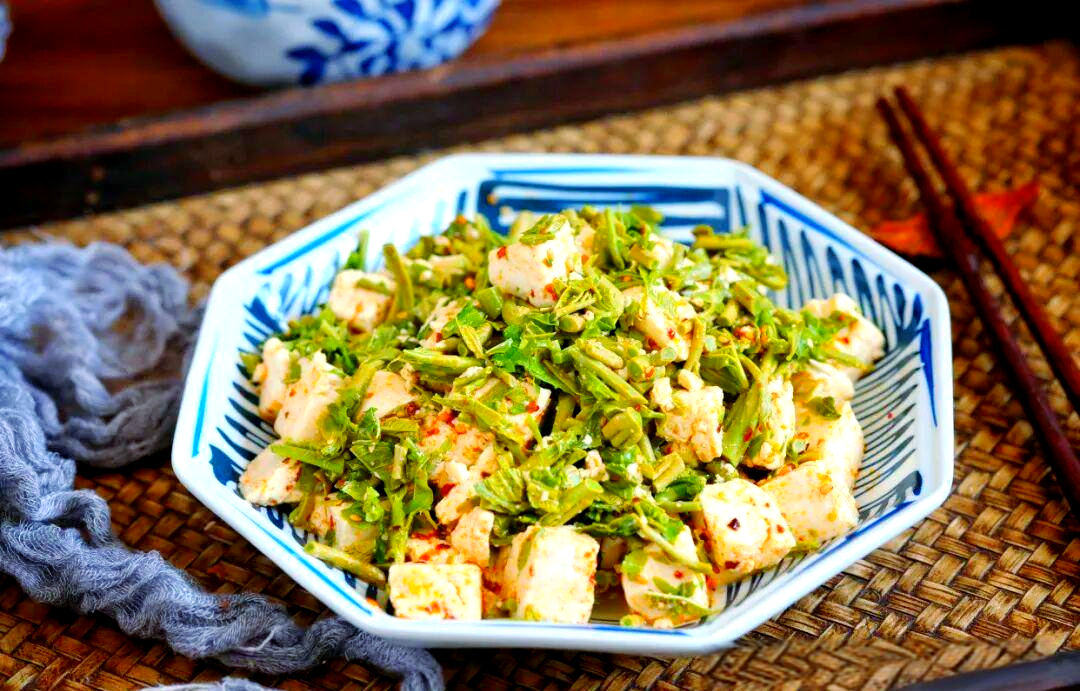
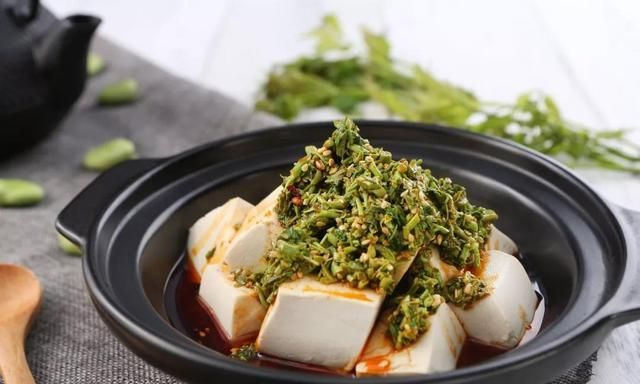
Tender toon sprouts (Chinese mahogany) from the Lintong district are a highly prized spring vegetable. After being blanched to enhance their unique, pungent aroma, they are finely chopped and mixed with silky, soft tofu. The dish is dressed with fragrant chili oil and sesame oil, resulting in a perfect balance of strong, unique flavors and a fresh, tender texture.
b. Summer (June to August)
Xi'an's summers are hot, so the cuisine focuses on cooling, refreshing dishes to beat the heat.
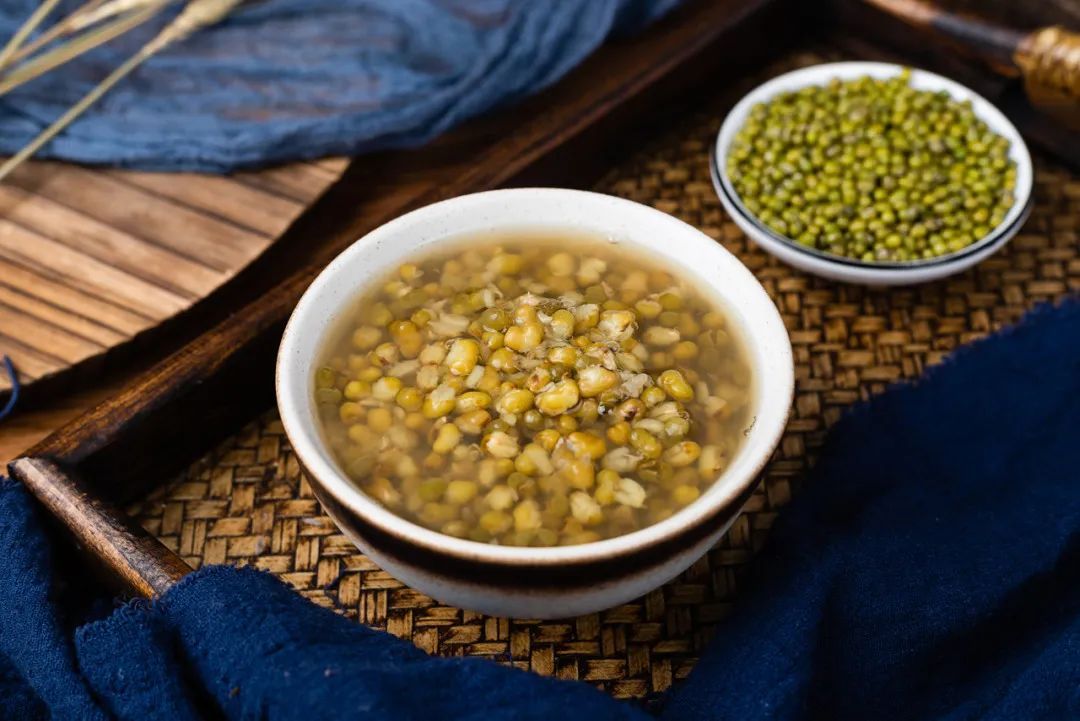
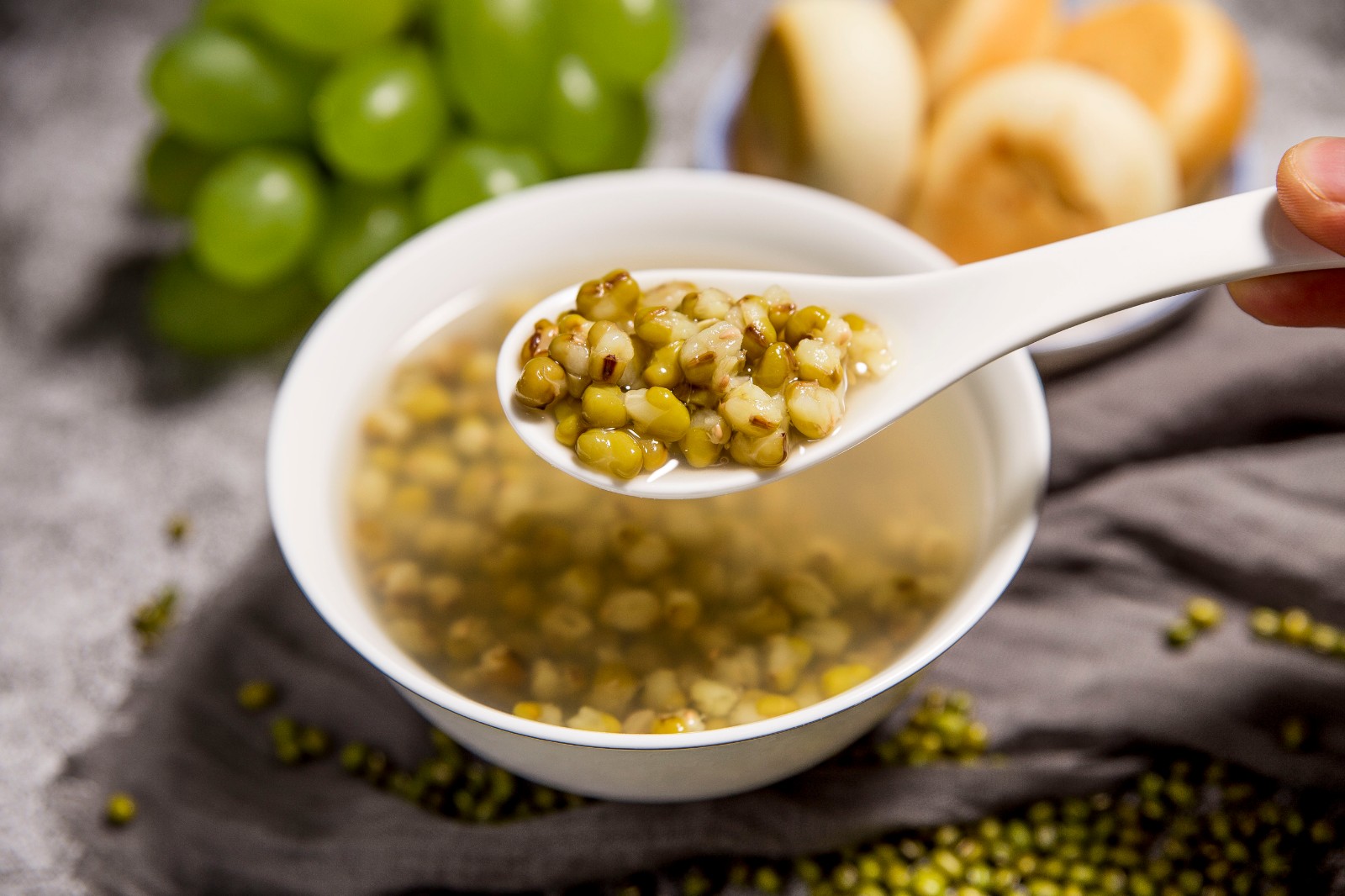
1. Mung Bean Soup
A classic and essential Chinese summer remedy. Mung beans are slowly boiled with rock sugar until they break down into a sweet, soothing soup. Served chilled, it is not only a deliciously refreshing drink but also traditionally believed to clear internal heat and detoxify the body, making it a staple in every household during hot weather.
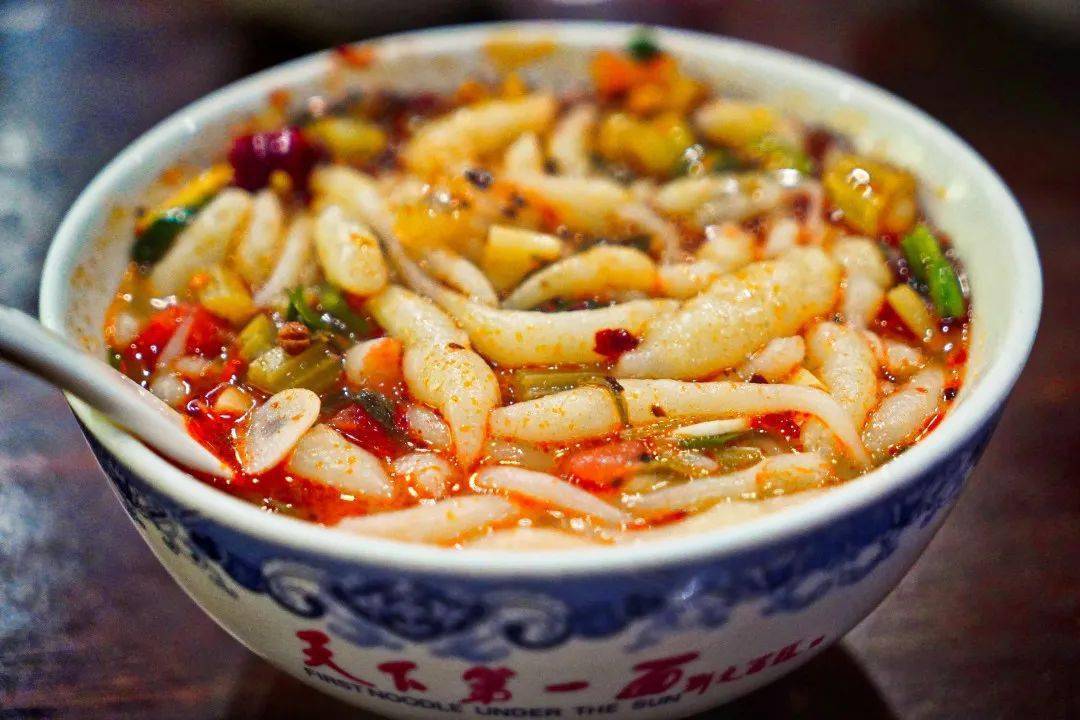
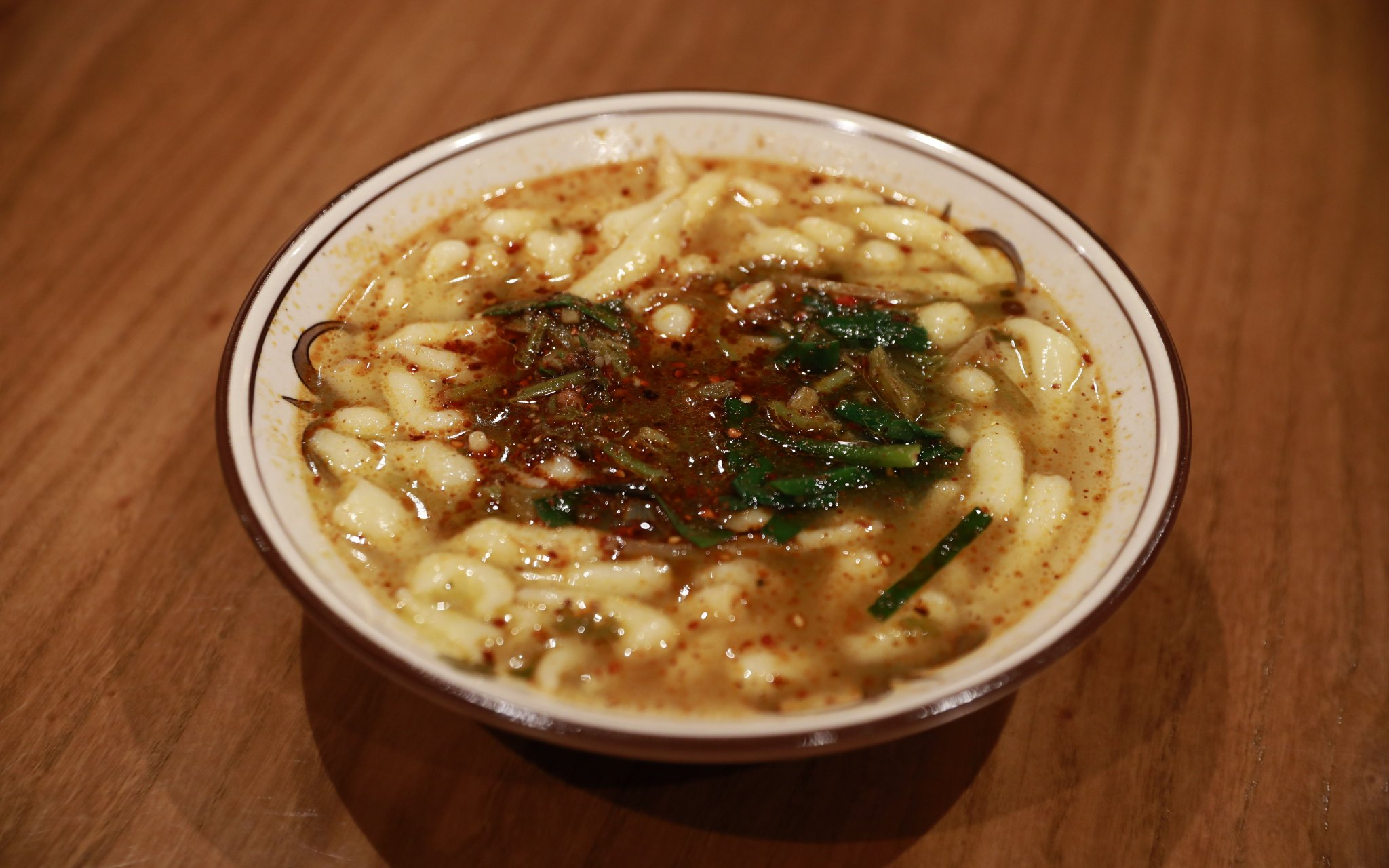
2. Pickled Cabbage Fish Jelly (Jiangshuiyuyu)
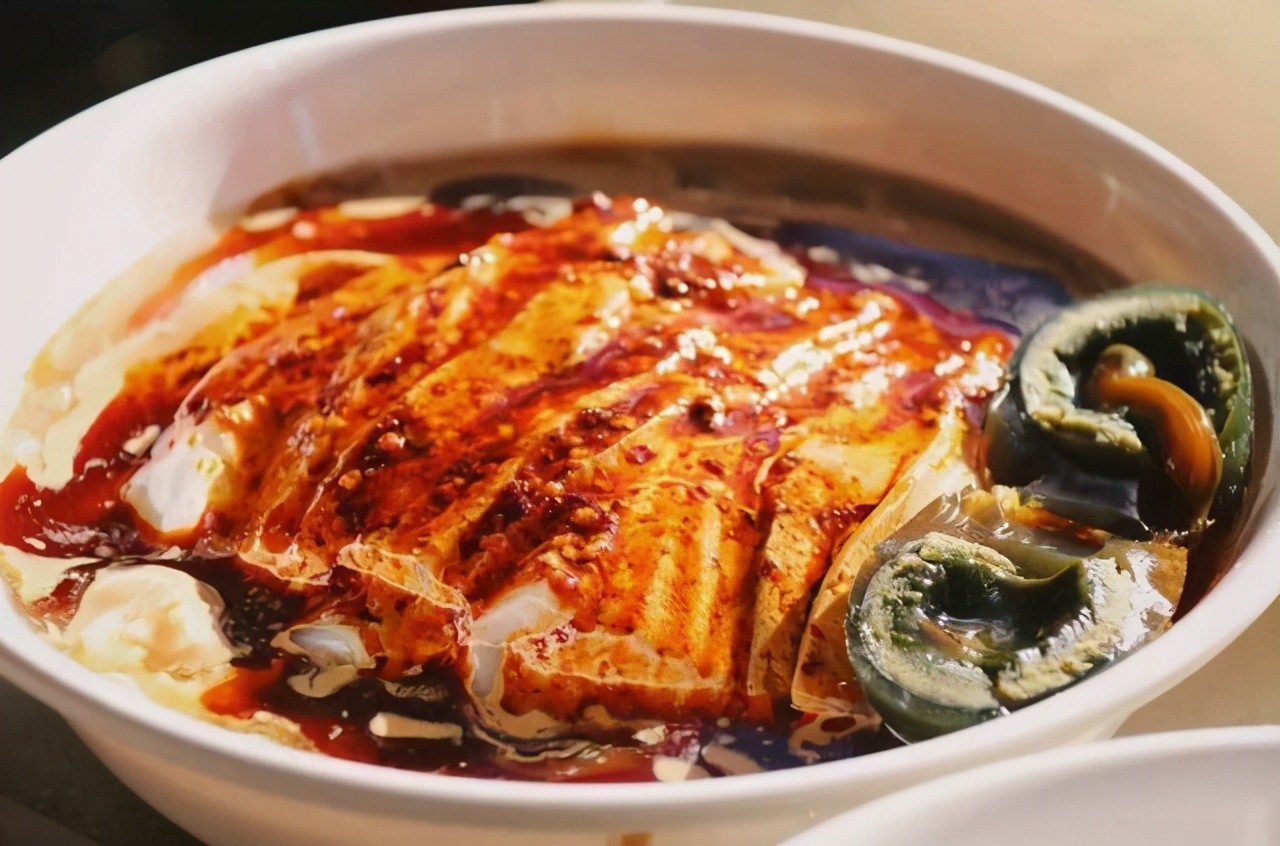
A uniquely refreshing local specialty. The name comes from its "fish" shape, made from corn or bean flour jelly. It is served in a light, sour broth made from fermented pickled cabbage (Jiangshui), garnished with spicy oil and fresh chives. The combination of the silky jelly, tangy broth, and subtle heat creates a sour, appetizing flavor that is incredibly cooling and perfect for a hot summer day.
3. Marinated Cold Jelly (Luzhiliangfen)
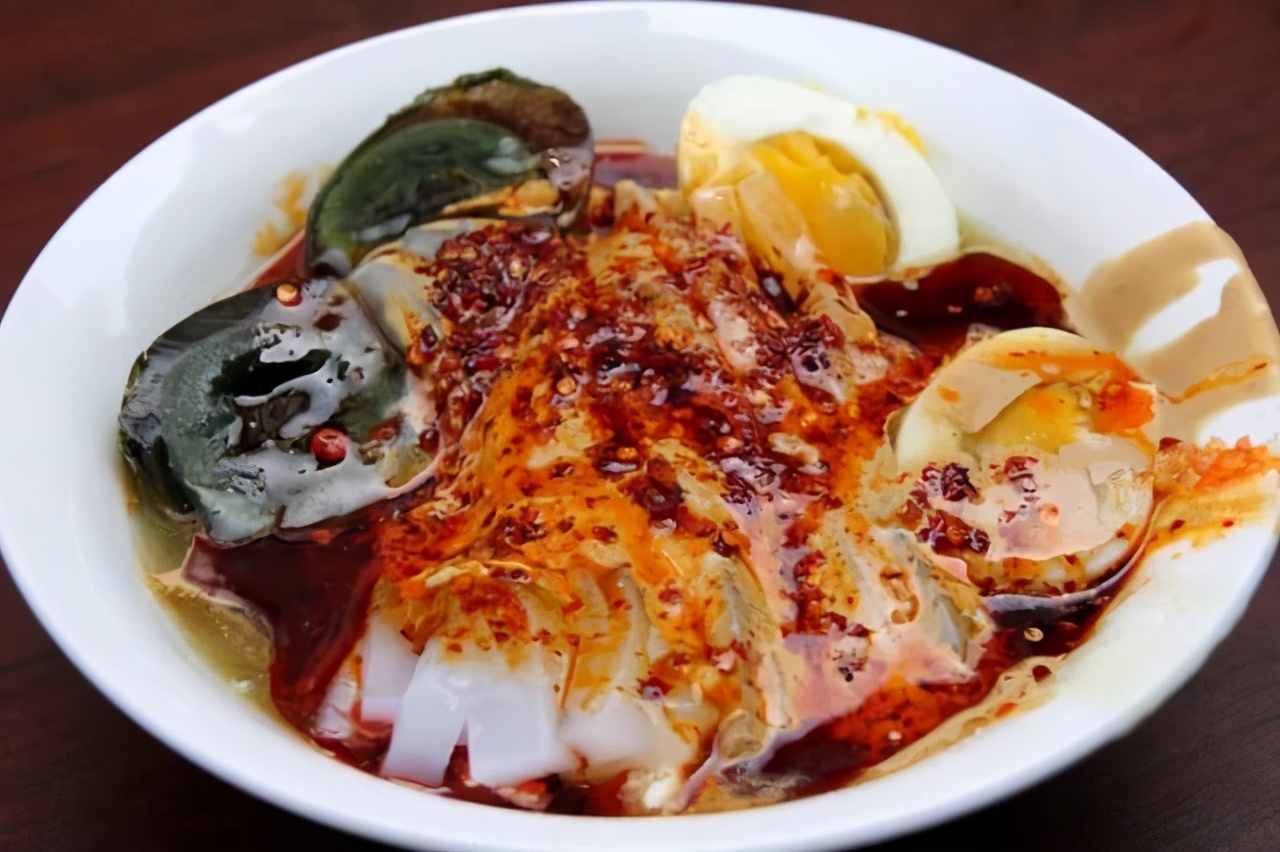
A bold and complex Xi'an classic. This dish features cold jelly noodles generously topped with a thick, savory sesame paste, pungent mustard, spicy chili oil, and a rich, aromatic marinade. The texture is exceptionally smooth, while the flavor profile is a powerful mix of numbing, spicy, savory, and tangy notes. It's a unique and addictive "spicy-cool" treat for adventurous eaters.
4. Honey Cold Cake
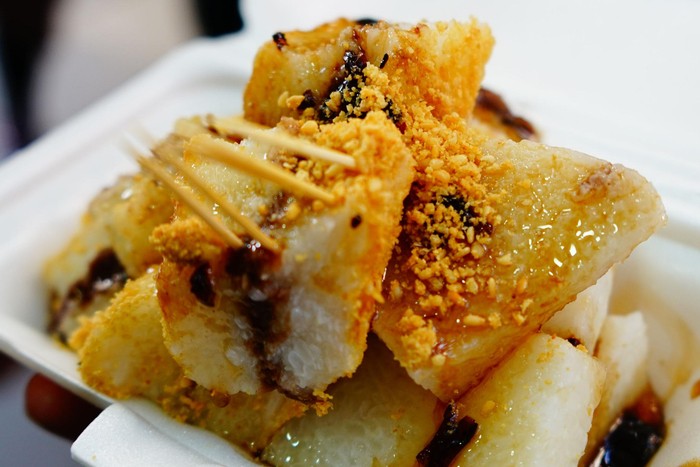
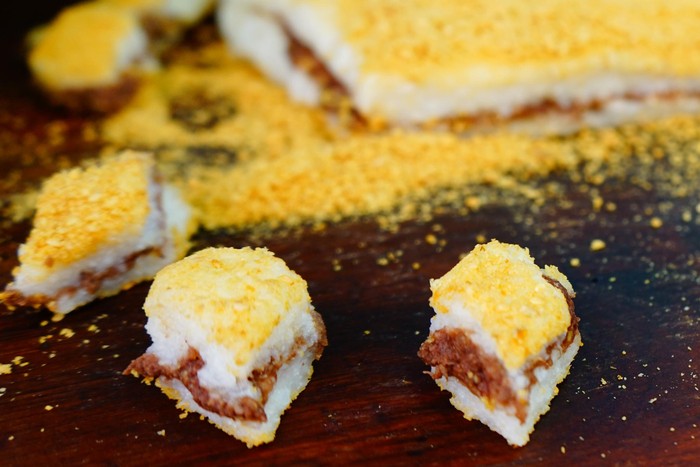
A beloved sweet summer dessert. Soft, glutinous rice cake is served chilled, then drizzled with fragrant honey and sweet rose jam, and sprinkled with crushed peanuts for added crunch. It is sweet, sticky, and pleasantly icy, offering a delightful, cooling finish to any spicy meal or a satisfying snack on its own.
c. Autumn (September to November)
Autumn is Xi'an's prime culinary season, offering a perfect blend of cool weather and abundant harvests.
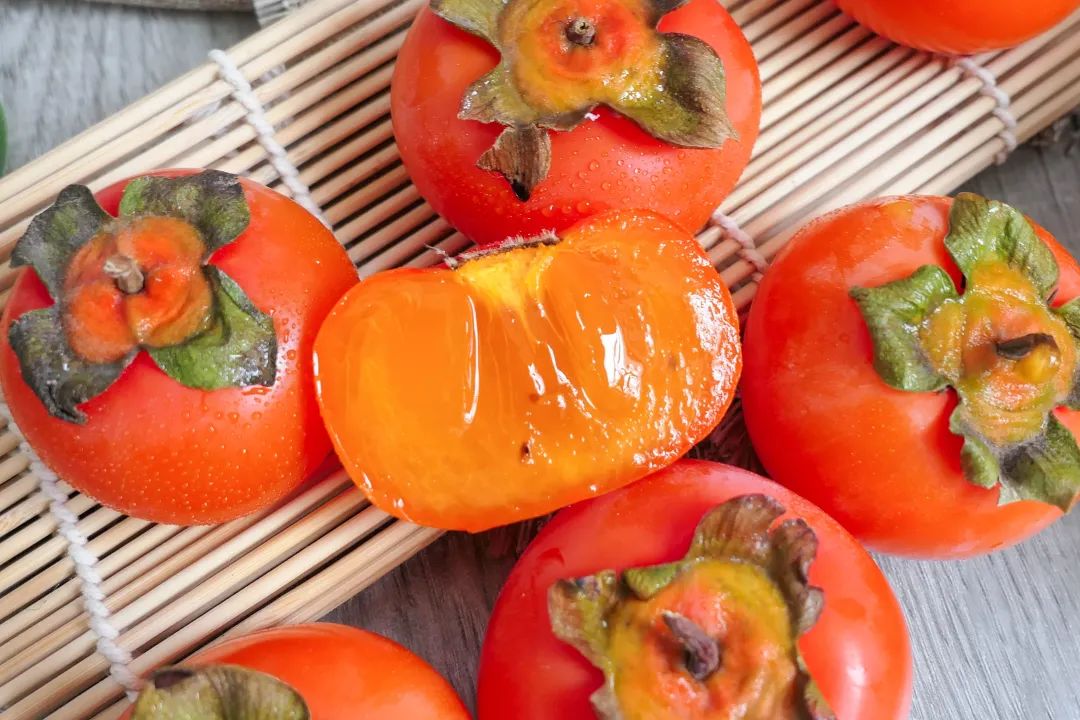
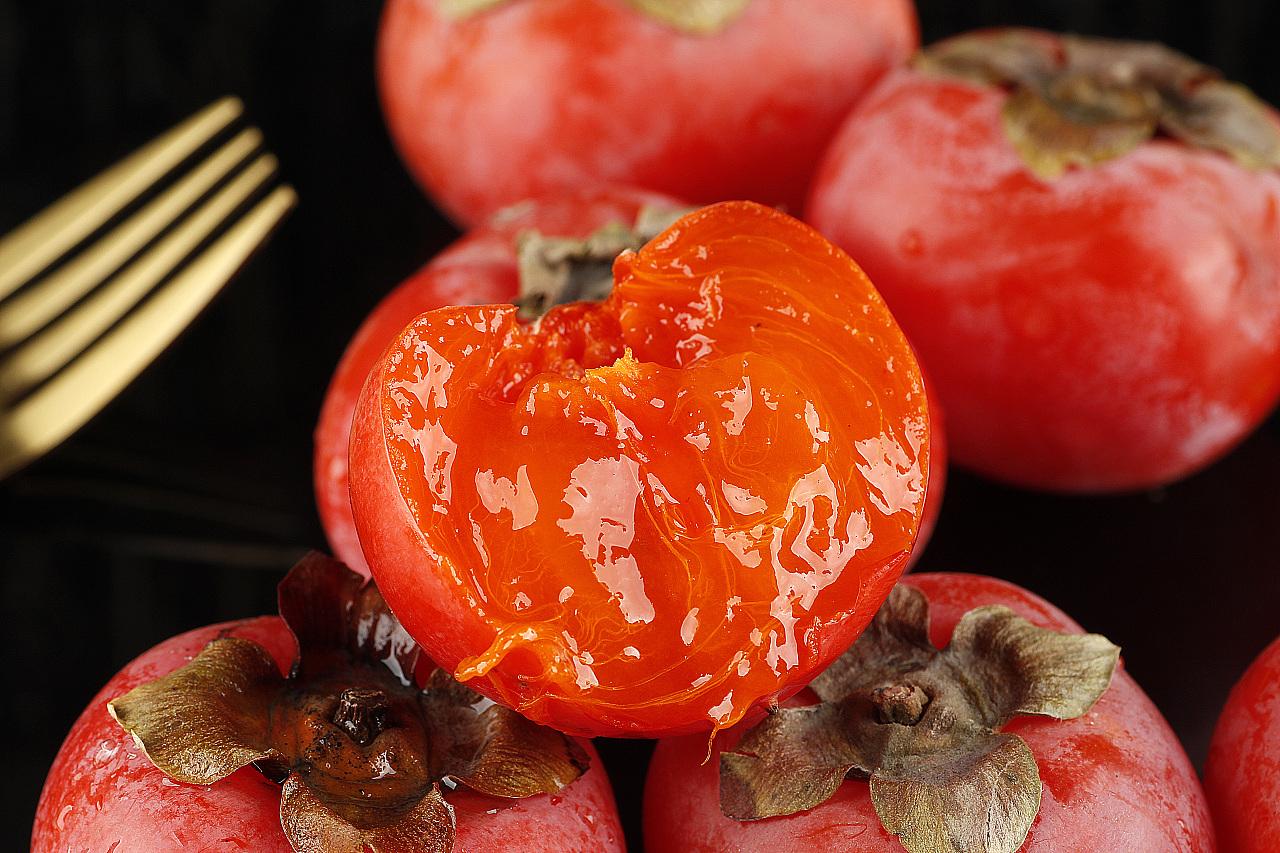
1. Fire Crystal Persimmons
The undisputed star of Xi'an's autumn harvest. These small, bright-red persimmons from Lintong are renowned for their exceptional sweetness and juiciness. Boasting a paper-thin skin and translucent, jelly-like flesh, they are a pure delight to eat fresh. They are also a key ingredient in traditional persimmon cakes, offering a concentrated, natural sweetness that captures the essence of the season.
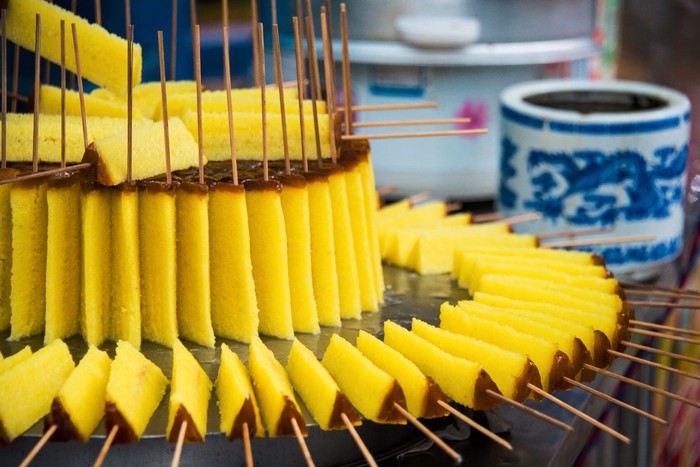
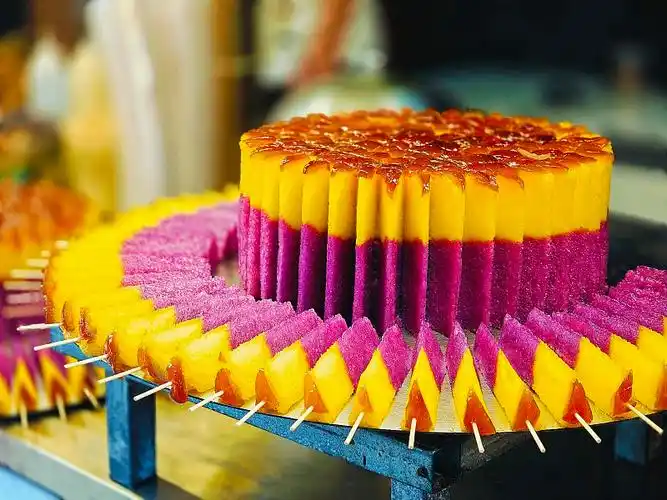
2. Osmanthus Cakes
A fragrant tribute to Xi'an's late autumn. As golden osmanthus flowers bloom, their delicate, sweet aroma infuses these classic local pastries. The soft, chewy cakes are a beloved street snack and the perfect accompaniment to a cup of hot tea, providing a sensory experience that combines taste and the unmistakable scent of fall.
3. Chestnuts
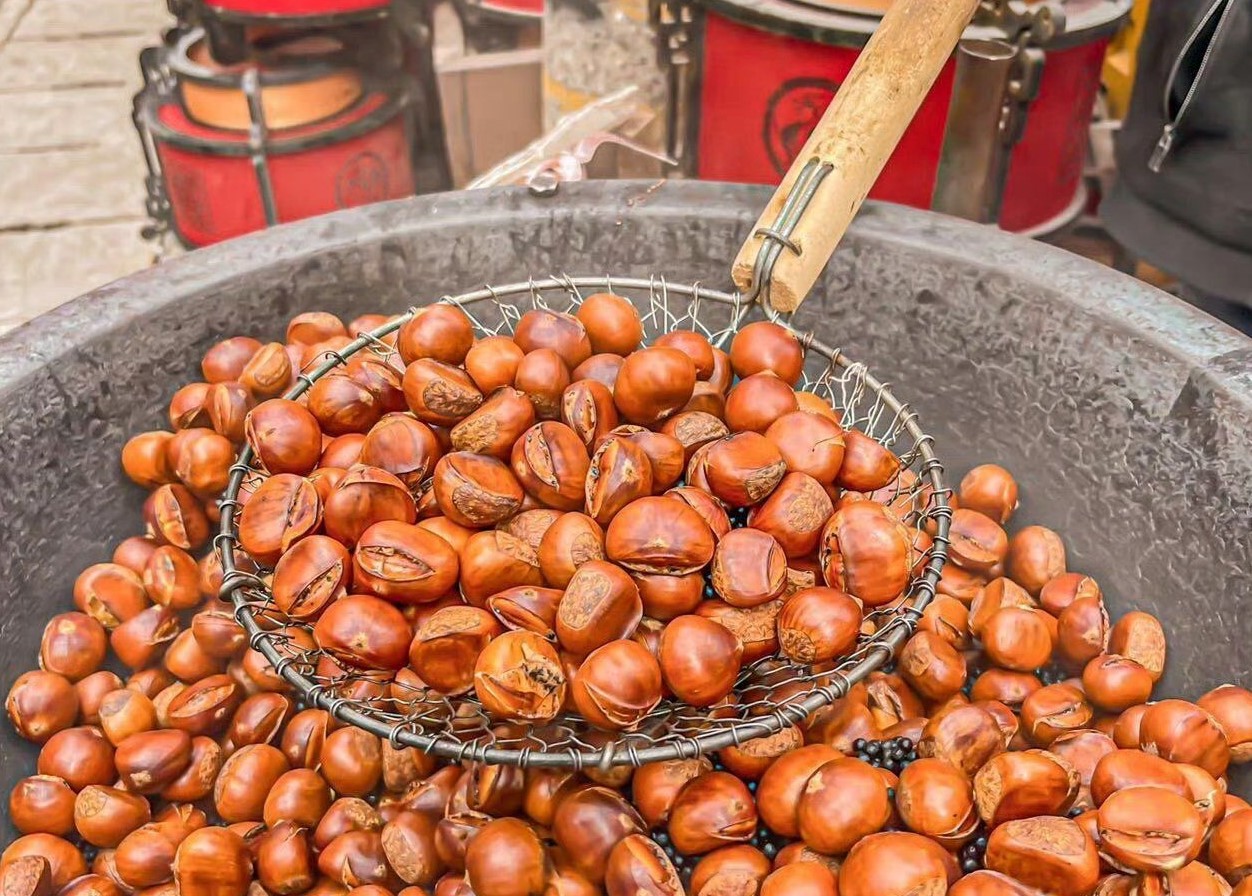
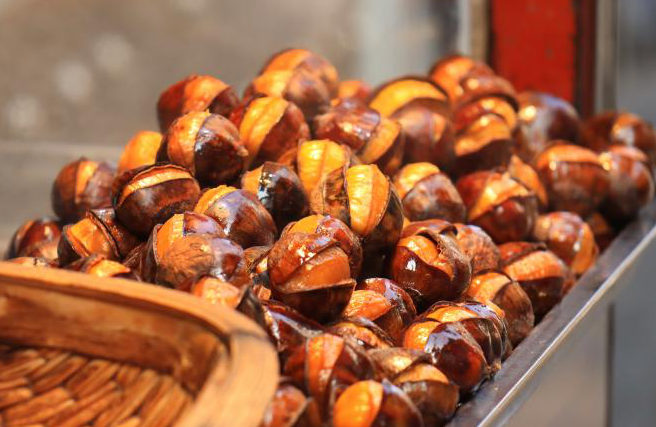
The quintessential street food aroma of autumn. Plump chestnuts from the Qinling Mountains are roasted to perfection, emitting a warm, inviting scent. Warm, sweet, and richly nutty, they are the ideal handheld snack for chilly evenings, providing a comforting burst of energy as you explore the city's ancient streets.
4. Pomegranates
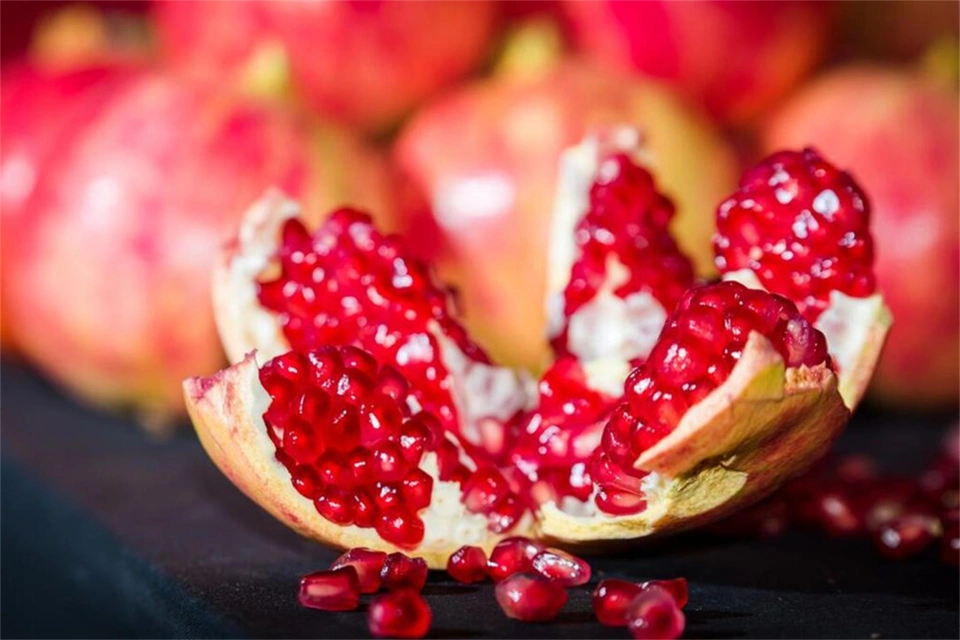
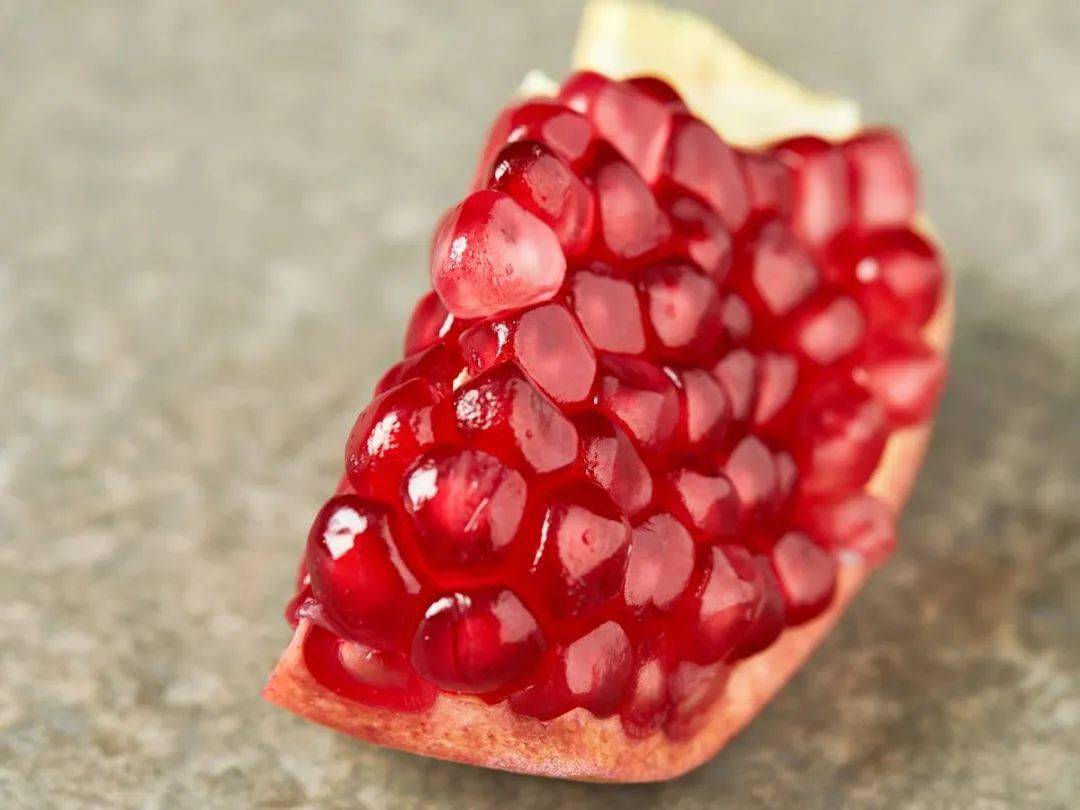
A symbol of prosperity and a delicious autumn treat. Lintong pomegranates are famous for their large size, jewel-like bright red arils, and a perfect balance of sweet-tart flavor. Juicy and refreshing, they are not only a healthy snack but also carry a traditional meaning of good fortune and abundance, making them a popular gift during the season.
d. Winter (December to February)
Winter in Xi'an is cold, so the cuisine is hearty, warm, and designed to keep you cozy.
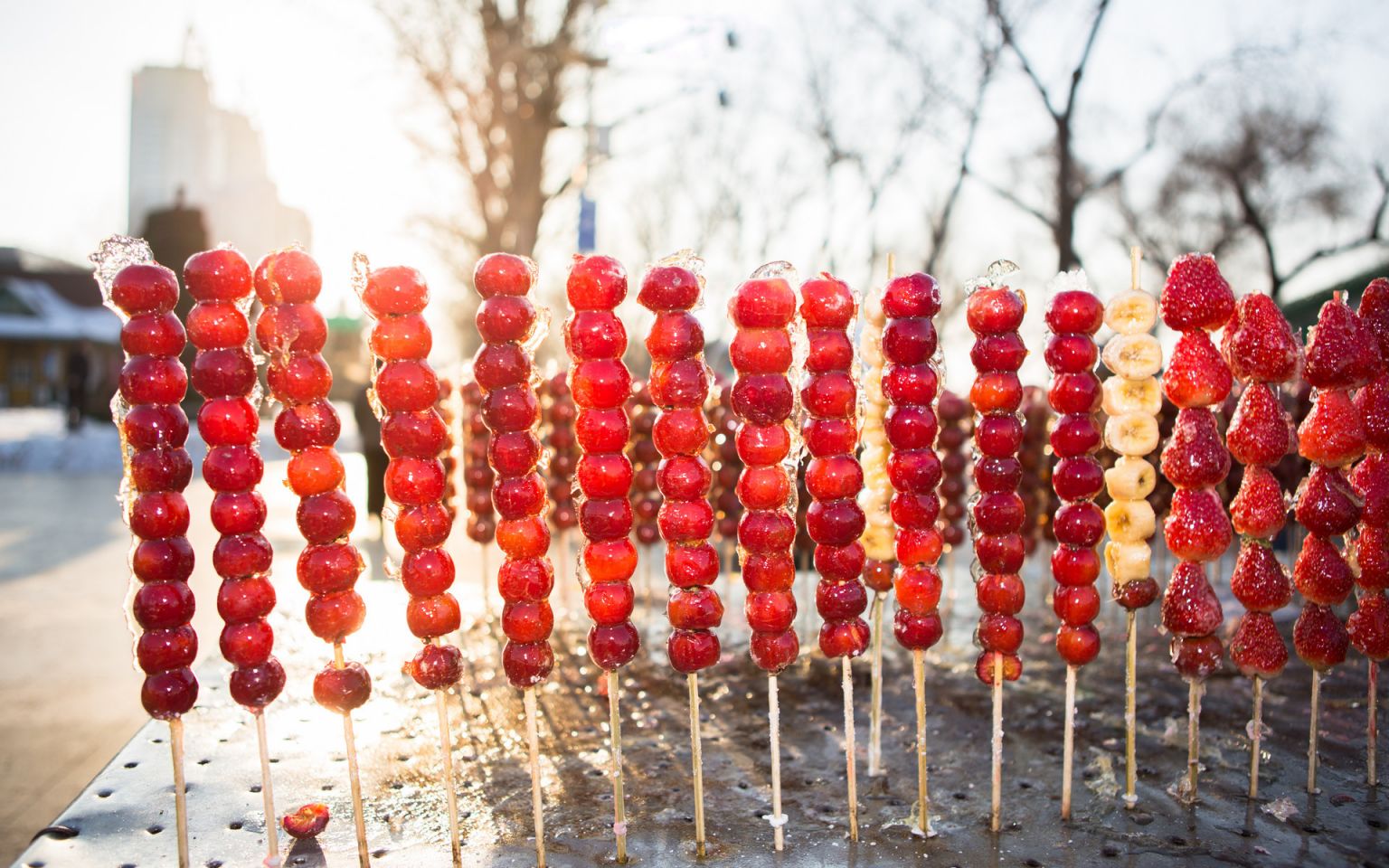
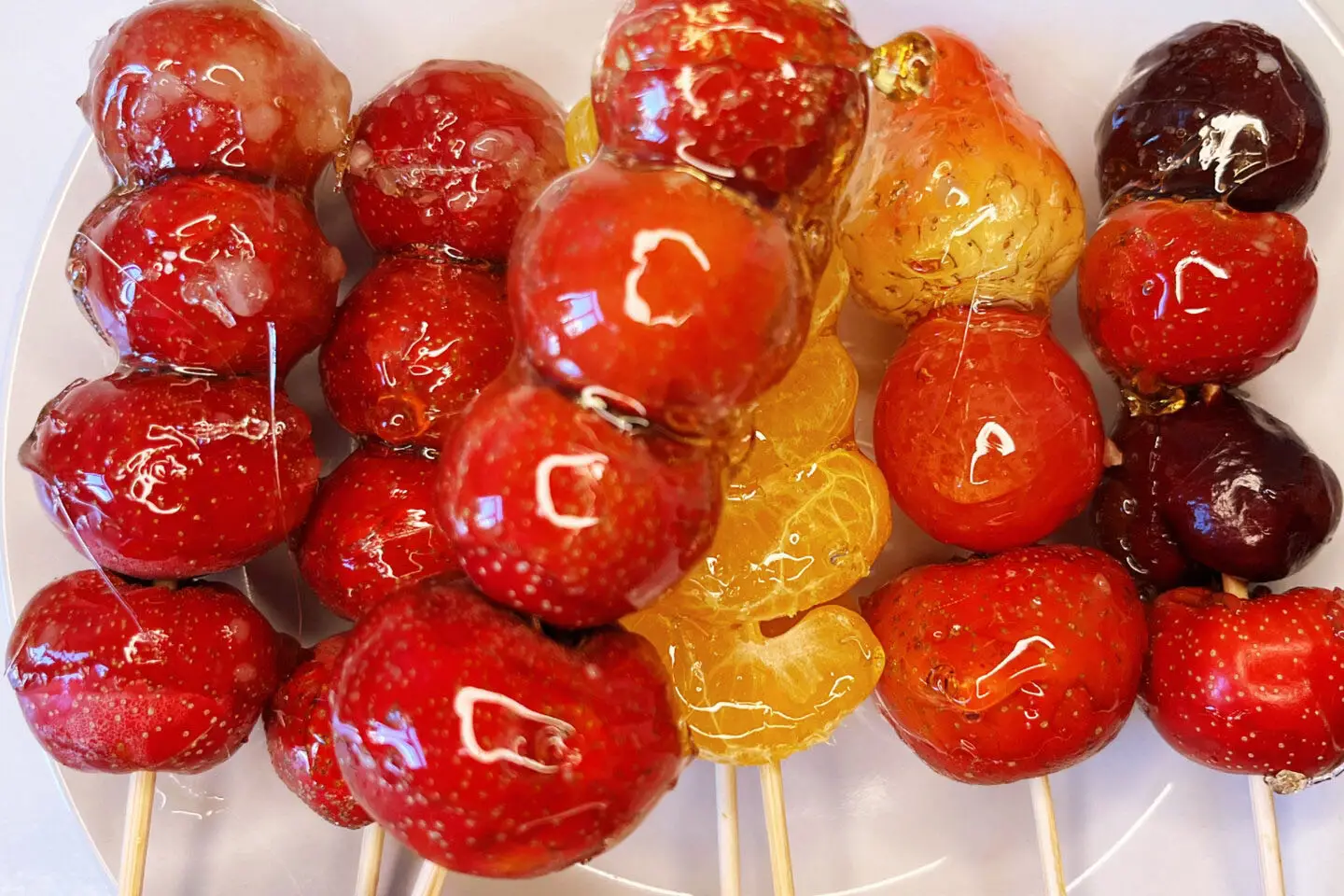
1. Tanghulu
A classic and iconic winter street snack in Xi'an. Candied fruits on a stick—usually hawthorns, but sometimes featuring grapes, strawberries, or kiwi—are coated in a shiny, crisp sugar shell. They offer a delightful contrast of sweet, tangy, and slightly tart flavors, with a satisfying crunch. Fun to eat and visually appealing, they are especially popular during the Spring Festival, adding a festive touch to the cold winter streets.
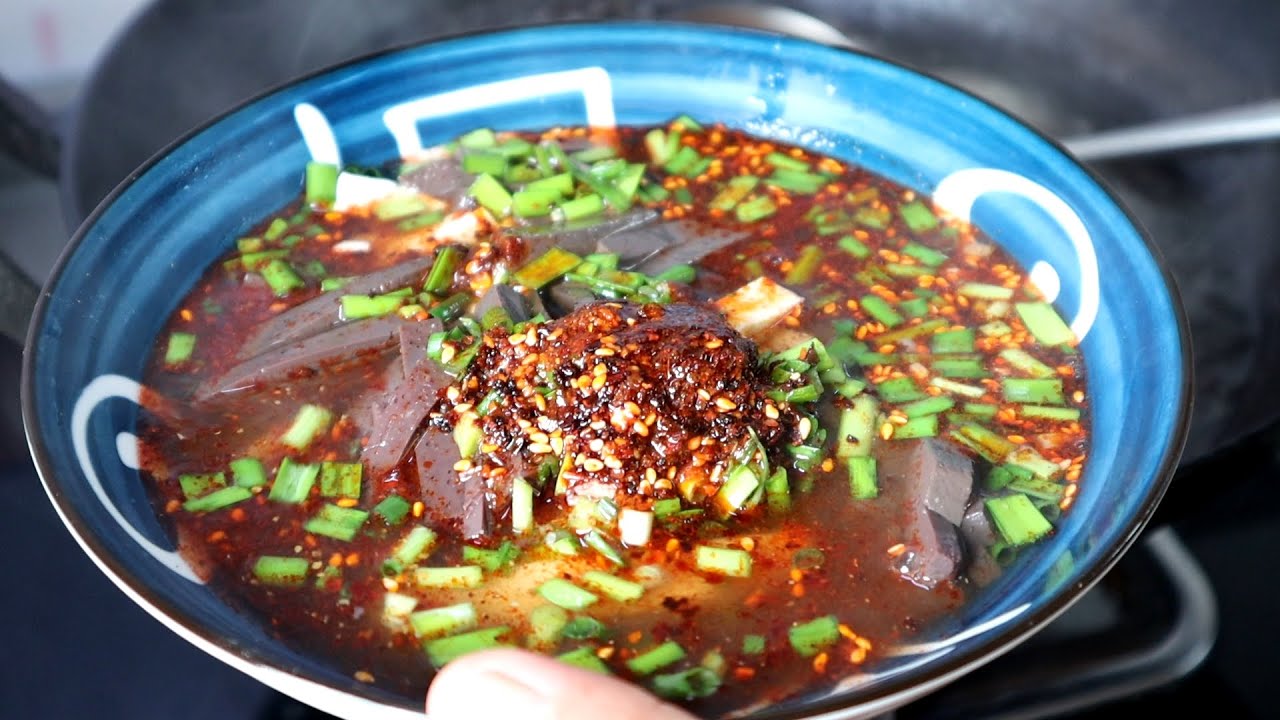
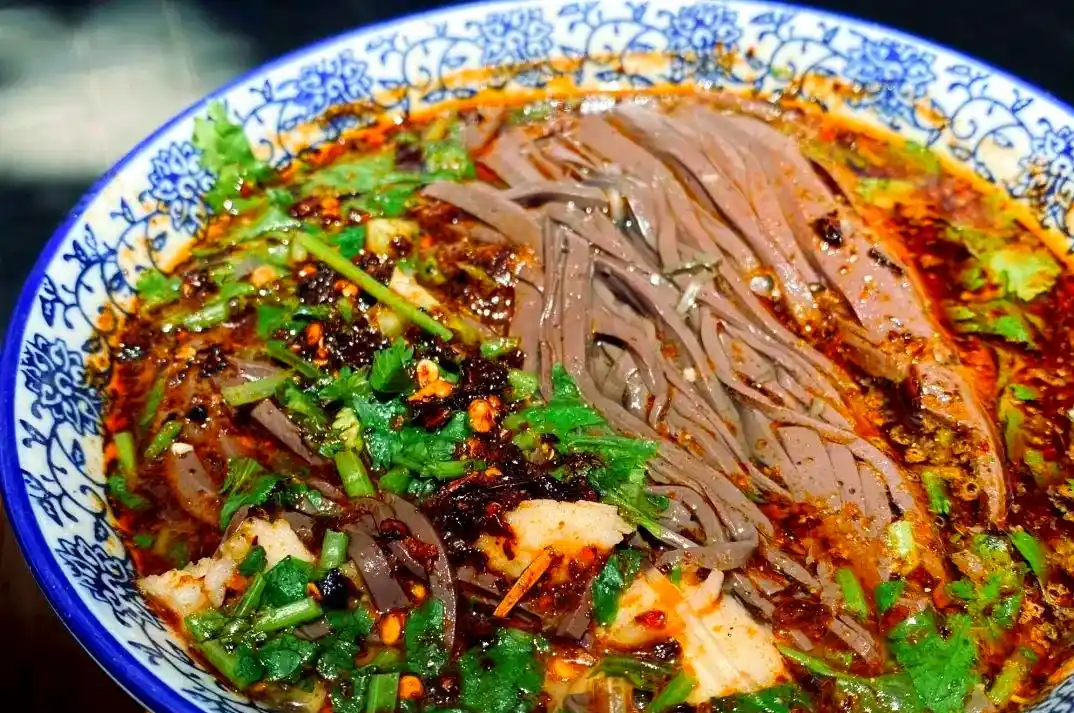
2. Spicy Lamb Blood Soup
A beloved local specialty for beating the winter cold. Silky-smooth lamb blood curds and tender vermicelli are served in a bold, spicy, and numbing soup infused with Sichuan peppercorns, chili oil, and fragrant spices. One bite and the rich, warm broth will make you break a sweat, instantly chasing away the chill. It's a hearty, flavorful favorite among Xi'an locals.
3. Northern Shaanxi Braised Lamb
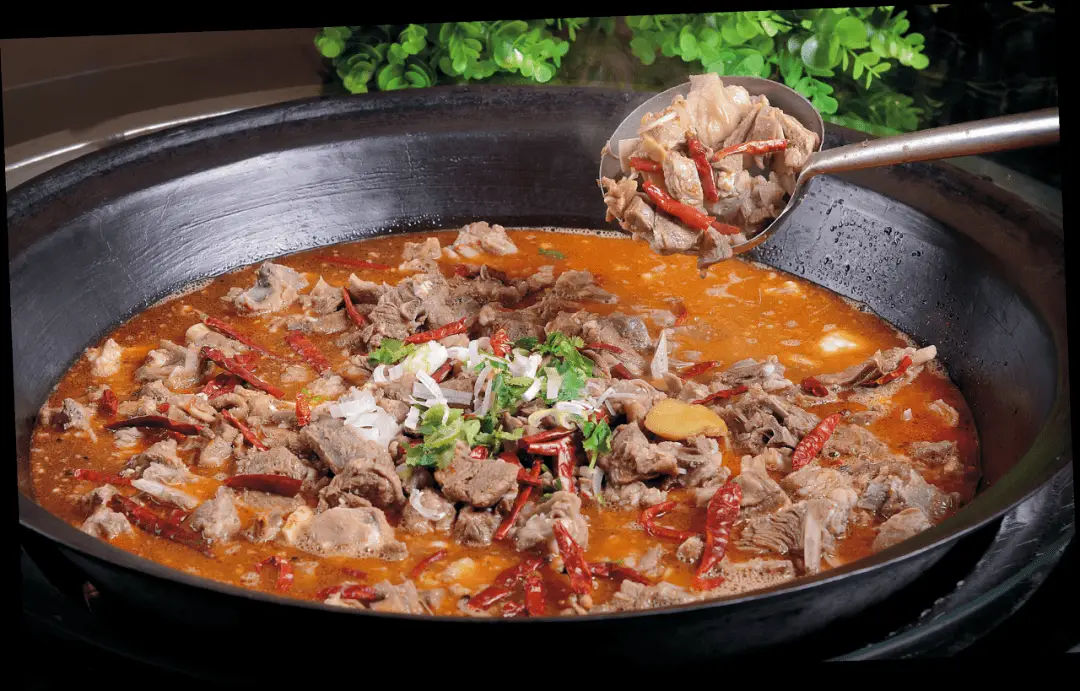
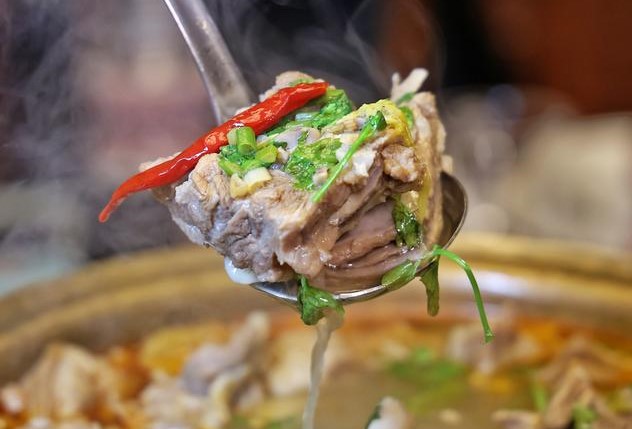
A nourishing and iconic winter dish from Northern Shaanxi, perfect for warding off the cold. Premium lamb from Hengshan, known for its tender texture and rich flavor, is the star of this dish. It is slow-cooked for over 3 hours with red dates, goji berries, and white radishes, allowing the ingredients to meld perfectly. The result is incredibly tender lamb that falls off the bone, and a deeply rich, clear soup infused with the natural sweetness of the radishes and the subtle fragrance of the red dates and goji berries. This hearty dish is not only delicious but also highly nourishing and warming, making it the ultimate comfort food for Xi'an's cold winter days.
Practical Tips
1. Travel Preparation & Documents
* Essential Documents
Passport and valid visa are a must for foreign tourists. For visiting scenic spots, you can show your passport for ticket purchase and entry (equivalent to ID card for Chinese citizens). International student ID, senior citizen card can be brought for preferential ticket treatment in some scenic spots.
* Weather & Dressing
Xi’an has four distinct seasons with large temperature differences between morning and evening. Spring (10-20?) & Autumn (15-20?): thin coat + long-sleeve shirt; Summer (25-35?): breathable short-sleeve + sun protection gear; Winter (0? or below): down jacket + thermal underwear + scarf and gloves. Comfortable sneakers are a must for walking around scenic spots.
* Necessary Articles
The climate is dry in Xi’an, so prepare moisturizing cream, lip balm and sunscreen (SPF50+ in summer). Bring a portable water bottle, power bank and a small backpack for storing personal belongings.
2. Payment
* Payment Method
Most shops, stalls and scenic spots support WeChat Pay/Alipay (bind overseas bank card or recharge with cash). Prepare a small amount of cash (100-200 CNY) for small street stalls that do not support mobile payment. Xi’an Bank ATMs support overseas bank card cash withdrawal (15 CNY per transaction).
3. Food Tasting
* Flavor Customization
Most local snacks are spicy, you can clearly tell the shopkeeper "Shao la (less spicy)" or "Bu la (no spicy)" when ordering. Halal food in Huimin Street does not contain pork, please respect the dietary customs.
* Price Reference
The average price of local snacks is 5-45 CNY per serving; the per capita consumption of Shaanxi cuisine restaurants is 60-120 CNY, and the high-quality local restaurants in residential areas are more cost-effective.
4. Culture & Manners
* Religious Customs
Muslim Quarter and surrounding Muslim communities respect Islamic customs, do not touch religious articles at will, and avoid eating in public during fasting hours.
* Communication Skills
Large restaurants and scenic spots have English menus and signs. Prepare simple Chinese phrases in advance (e.g., "Su shi (vegetarian food)", "Fapiao (invoice)") for convenient communication with shopkeepers.
5. Shopping Tips
* Vacuum Packaging & Delivery
Most food stores provide free vacuum packaging; for bulk purchases, contact the store or supermarket for express delivery (door-to-door delivery), avoiding luggage weight.
* Gift Box Customization
Time-honored stores and large supermarkets provide free gift box packaging for souvenirs, which can be matched according to your needs, beautiful and economical.
FAQs
Q: Are there clear allergen labels on Xi’an’s food stalls and restaurants?
A: Most street stalls do not have formal allergen labels due to their simple operation. However, large restaurants, chain stores (e.g., Wei’s Liangpi), and time-honored brands (e.g., Tong Sheng Xiang) provide ingredient explanations on menus (some with English). You can directly tell the shopkeeper your allergies using the phrase “I am allergic to XX, please avoid it in all dishes” to ensure safety.
Q: Is the lamb in Xi’an’s dishes suitable for people who are not used to mutton odor?
A: Yes. Local lamb (mostly from Northern Shaanxi) is tender and has a light mutton odor. Moreover, Xi’an people use spices such as Qin pepper, mature vinegar, and cumin to neutralize the odor during cooking. Dishes like Yangrou Paomo and Grilled Lamb Skewers have almost no fishy smell, only a rich aroma. If you are still worried, you can ask for “less mutton odor” when ordering.
Q: Are there sufficient vegan options in Xi’an, especially strict vegan dishes without onions, garlic, or chives?
A: Yes. There are specialized vegan restaurants in scenic areas such as Yongxing Fang (“Vegetarian Hut”) and Muslim Quarter (“Qing He Zhai”), which provide strict vegan set meals and can customize dishes without five pungent ingredients (green onions, garlic, chives, etc.). Most large restaurants also offer vegan dishes like Vegetarian Saozi Noodles and Cold Mixed Wild Vegetables—just clearly inform the shopkeeper of your needs.
Q: Can I bring my own food and drinks into Xi’an’s restaurants, especially halal ones?
A: Generally, non-halal restaurants allow bringing your own drinks (e.g., mineral water), but it is not advisable to bring food to avoid affecting the shop’s business. Halal restaurants have strict taboos: It is strictly forbidden to bring pork products, alcohol, or non-halal food. There are usually reminders at the entrance, so please abide by them.
Q: When is the best time to eat Huanggui Shizi Bing in Xi’an? Where to eat the most authentic one?
A: The best time is autumn (September-November), when Lintong persimmons are in season—sweet and juicy, making the cakes taste the best.
Q: Do restaurants in Xi’an provide kids tableware and chairs?
A: Yes. Most large restaurants (e.g., Xi’an Restaurant, Zui Chang’an) and chain stores provide kids tableware (bowls, spoons, bibs) and kids chairs for free. You can directly ask the waiter: “Please give me a set of kids tableware and a kids chair”. Street stalls generally do not provide these, so it is recommended to bring your own portable tableware for children.
Q: Are there barrier-free facilities and multi-language services in Xi’an’s food streets?
A: · Barrier-free Facilities: Core food streets (Huimin Street, Yongxing Fang) are equipped with barrier-free access at main entrances and roads, as well as barrier-free toilets, suitable for wheelchairs.
· Multi-language Services: Multi-language service centers near Bell Tower and Giant Wild Goose Pagoda provide English, Japanese, and Korean consultation, and free bilingual food maps. Volunteers in red vests in scenic areas can also provide simple English guidance.
Xi'an’s food scene is an essential part of its culture, offering a diverse and delicious selection of street food and local specialties. Whether you’re savoring a bowl of noodles, biting into a freshly made Roujiamo, or enjoying a warm bowl of lamb soup, every meal tells a story of the city’s rich history. Explore the streets, dive into the local flavors, and let your taste buds experience the true essence of Xi'an.
Your Way Holiday’s Essential Guide to Xi’an’s Famous Foods: Explore the Best Street Food & Local Delicacies
We design private and tailor-made Xi'an tours customized to your travel style at affordable local prices. You’ll enjoy the comfort of a private, spacious car and the company of a professional local guide with over 5 years of experience, dedicated exclusively to you or your group. From transportation and tickets to authentic dining experiences (we always recommend the dishes most loved by locals), everything will be arranged according to your preferences. Please take a look at some of our most popular Xi’an tours below:
 Explore Xi'an Mosques: A Comprehensive Xi'an Package Tour for Muslim Culture Enthusiasts
 Xi'an Spring Delights: Private Day Tour to Cherry Blossoms & Historic Temples
Not exactly what you’re looking for? Don’t worry — all of our Xi’an tours can be fully customized based on your interests, schedule, and budget. We specialize in creating unique Xi'an experiences that go beyond the guidebook, giving you the chance to truly connect with the local culture and people. Our enthusiastic tour experts are always ready to provide detailed suggestions and will respond to your inquiry within 24 hours. Ready to explore Xi’an your way? Contact us today and let us design a Xi'an travel experience that fits your style. Your Way Holiday looks forward to your message! We're ready to design an unforgettable Xi'an trip for you anytime.


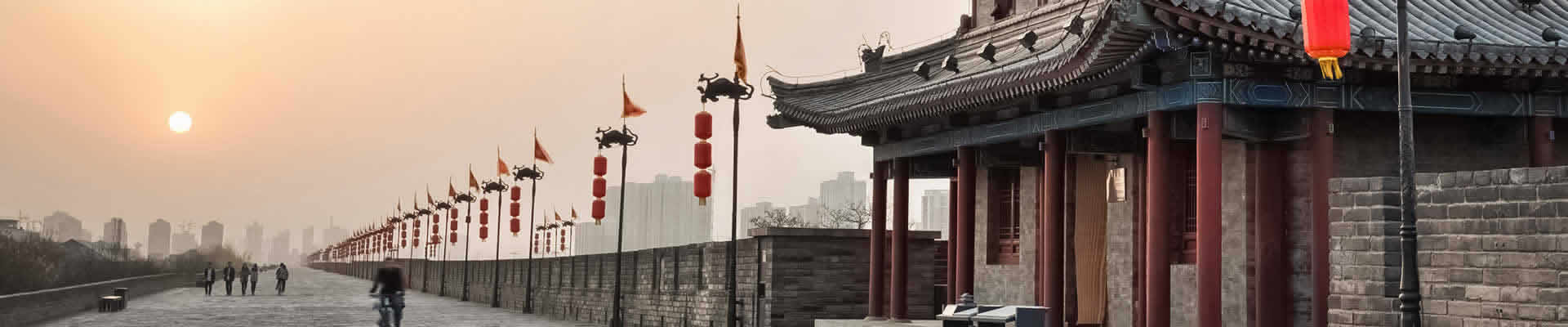


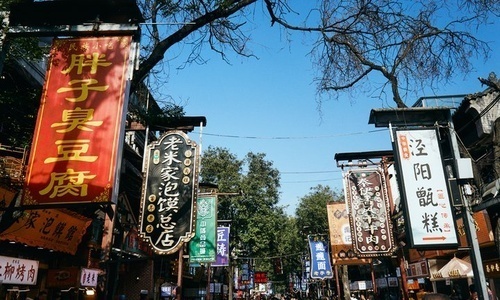


.jpg "The Song of Everlasting Sorrow: A Timeless Tale of Love and Tragedy in Xi'an")