
For more food information, please refer to:
https://www.xianprivatetour.com/xian/xian-dining.htm

24 Hours Hotline: +86 137-3541-1378
Email:[email protected]
24 Hours Hotline: +86 137-3541-1378
Email:[email protected]
Xi'an, once the ancient capital of China, is a city where history and modernity blend seamlessly. Home to some of China’s most famous landmarks, Xi'an is a must-visit destination for travelers seeking a deeper connection to Chinese culture. From the awe-inspiring Terracotta Warriors to the bustling streets of Muslim Quarter, Xi'an offers countless experiences for every type of traveler. This guide will help you navigate the best things to do and see in Xi'an, ensuring you don't miss out on any of the city's most iconic attractions.
 Xi'an Day Tour Package: Premier Private Fully Guided Tour with Terracotta Warriors & Xi'an Highlights
 Highlights Xi'an City Tour: Discover Xi'an's Rich Heritage and Must-See Attractions
Core Attractions to See in Xi'an
a. Must-See Attractions in Xi'an
1. Qin Shi Huang Terracotta Army Museum
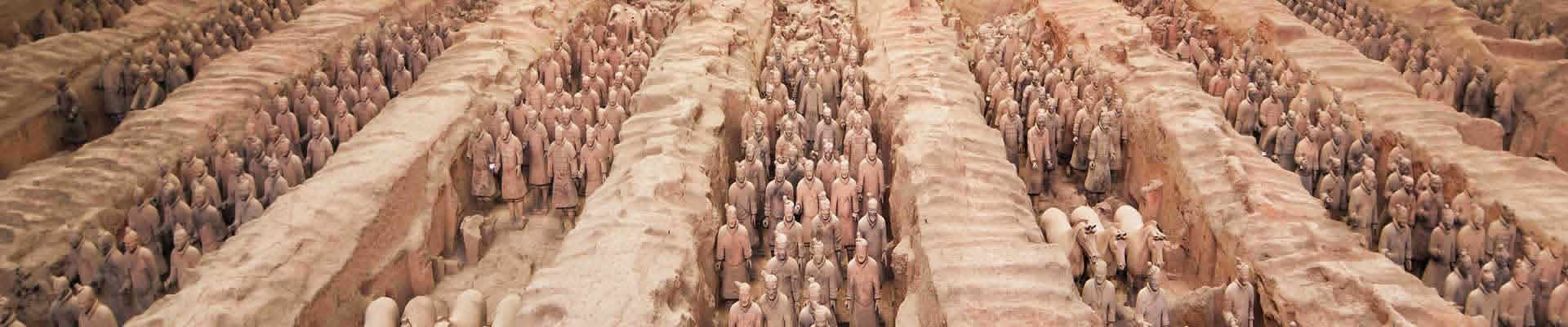
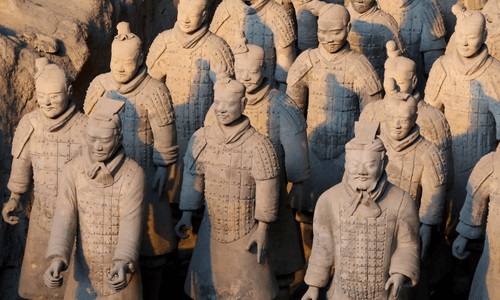
No trip to Xi’an is complete without visiting the Terracotta Army, hailed as the “Eighth Wonder of the World” and a UNESCO World Heritage Site. Located about 35 kilometers east of Xi’an’s city center (in Lintong District), it is the accompanying burial pit of Qin Shi Huang, the first emperor who unified China, and a masterpiece of Qin Dynasty military culture and sculpture art. This site not only showcases the unparalleled national strength of the Qin Dynasty but also offers a unique window into ancient Chinese military systems, craftsmanship, and funeral customs.
· Address: Qinling North Road, Lintong District, Xi'an City, Shaanxi Province
· Opening hours:
Peak Season: March 16th – November 15th, 8:30 AM-5:00 PM; Closing Time 6:30 PM
Low Season: November 16th – March 15th of the following year, 8:30 AM-4:30 PM; Closing Time 6:00 PM (Last entry is 1 hour before closing.)
· Time for Visit: 3 hours
· Phone: +86-29-81399127
· Ticket: Full-price ticket costs 120 CNY per person, including the Mausoleum Site, Terracotta Army Pits and Bronze Chariot Exhibition Hall.
* Key Highlights
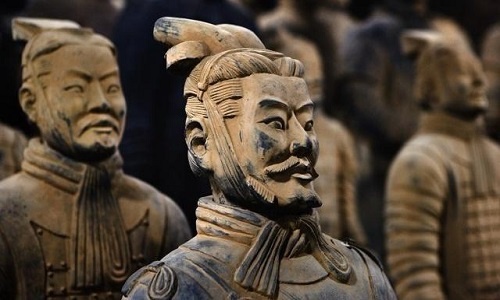
- Pit 1: The largest and most spectacular pit, with over 6,000 terracotta warriors and horses arranged in a grand military formation. The warriors are life-sized, with distinct facial expressions, hairstyles, and costumes—no two are identical. You can clearly see the details of their armor, weapons (such as swords, spears, and crossbows), and even the wrinkles on their faces, which reflect the superb sculpture skills of the Qin Dynasty.
- Pit 2: Home to rare terracotta cavalry, chariots, and archers, showing the diversity of the Qin army’s arms. This pit is smaller but more exquisite, with well-preserved chariots and horses, allowing you to imagine the power and momentum of the Qin army on the battlefield.
- Pit 3: The command center of the military formation, with only 68 terracotta warriors. Unlike the warriors in other pits, these warriors wear higher-grade armor and have a more solemn demeanor, believed to be the generals who commanded the army. The layout of this pit reflects the strict hierarchy of the Qin military.
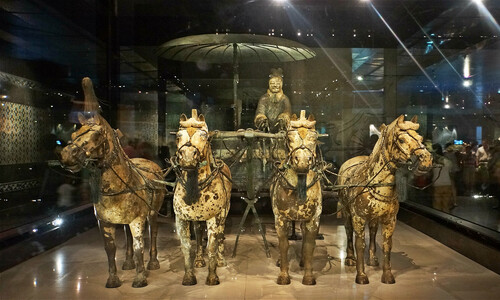
- Bronze Chariot and Horse Exhibition Hall: Houses two sets of large bronze chariots and horses unearthed near Qin Shi Huang’s Mausoleum, which are the largest and most well-preserved ancient bronze artifacts in the world. The chariots are exquisitely crafted, with detailed decorations such as jade inlays and gold and silver inlays, showing the luxury and craftsmanship of the Qin royal family.
* Tips
- Reservation: Must be booked in advance via the official WeChat account “Qin Shi Huang’s Mausoleum Museum” (real-name registration with passport number and full name required). Book 3–5 days in advance during peak seasons (March–May, September–November, and public holidays) and 1–2 days in advance during off-peak seasons. No reservation fee is required.
2. Big Wild Goose Pagoda (Dayan Ta) & Da Ci'en Temple
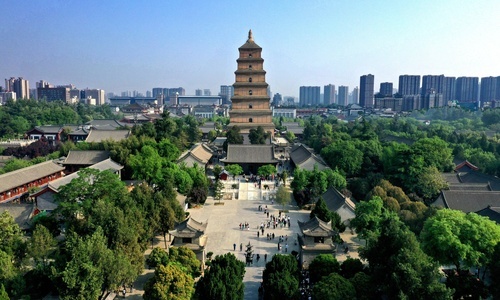
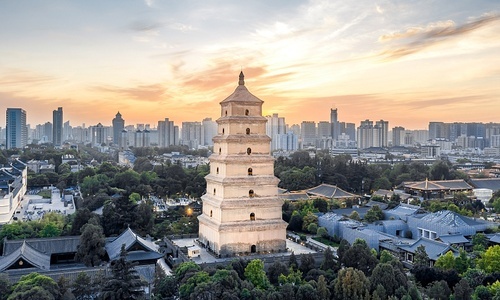
Located in Qujiang New District, the Big Wild Goose Pagoda is the iconic building of Xi’an and a symbol of Buddhism’s eastward spread in China. Built in 652 AD during the Tang Dynasty, it was presided over by the famous monk Xuanzang to store the Buddhist scriptures, statues, and relics he brought back from his 17-year pilgrimage to India. Combining Tang Dynasty architectural style with Indian Buddhist pagoda elements, the pagoda is a masterpiece of ancient Chinese architecture and a UNESCO World Heritage Site (part of the “Silk Roads: the Routes Network of Chang’an-Tianshan Corridor”).
· Address: No. 1 Ci'en Road, Yanta District, Xi'an City, inside Da Ci'en Temple
· Opening Time: 8:00 AM–6:30 PM (March–November); 8:00–18:00 (December–February).
Music Fountain: 12:00 PM, 2:00 PM, 4:00 PM, 6:00 PM, 8:00 PM (subject to weather changes).
· Time for Visit: 2-3 hours
· Phone: +86-17792398839
· Ticket: Temple admission is free; the tower-climbing ticket is 40 CNY per person (optional), allowing access to the observation deck at the top of the pagoda.
* Key Highlights
- The Pagoda itself: A 7-story brick pagoda, 64.5 meters high, with a solemn and elegant shape. You can climb to the top of the pagoda (for a small fee) to enjoy a panoramic view of Xi’an’s cityscape—on clear days, you can see the Xi’an City Wall, Datang Everbright City, and distant Qinling Mountains.
- Da Ci'en Temple: Attached to the Big Wild Goose Pagoda, it is one of the most famous Buddhist temples in China. The temple preserves many cultural relics from the Tang Dynasty, including stone steles inscribed with calligraphy by famous Tang scholars, ancient Buddha statues, and Xuanzang’s relics. The temple’s courtyard is quiet and serene, with ancient cypresses and lotus ponds, making it a perfect place to escape the hustle and bustle of the city.
- Big Wild Goose Pagoda North Square Music Fountain: Located north of the pagoda, it is one of the largest musical fountains in Asia. The fountain shows changes with music and lights, creating a magnificent and romantic scene. The fountain performances are held at 12:00, 14:00, 16:00, 18:00, and 20:00 every day (duration 20 minutes), free of charge.
* Tips
- Note: When visiting the temple, please dress modestly (avoid short skirts, shorts, and sleeveless tops). Photography is allowed in most areas, but flash photography is prohibited in the cultural relic exhibition halls.
3. Xi’an City Wall
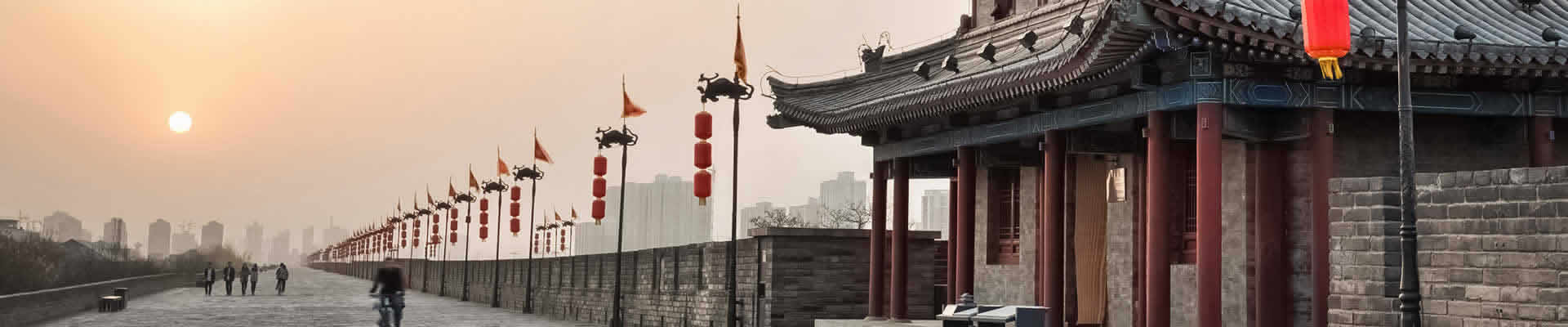
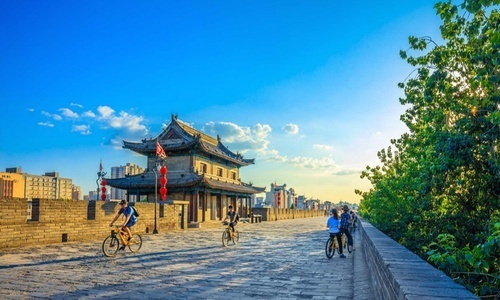
The Xi’an City Wall is the largest and best-preserved ancient city wall in China, a national key cultural relic protection unit, and a symbol of Xi’an’s status as an ancient capital. The existing wall was built during the Ming Dynasty (1370–1378 AD), based on the ruins of the Tang Dynasty Chang’an City Wall, with a total length of 13.74 kilometers, a height of 12 meters, and a width of 12–14 meters at the top. It is a complete military defense system integrating the city wall, moat, drawbridge, and watchtowers, witnessing the historical changes of Xi’an for over 600 years.
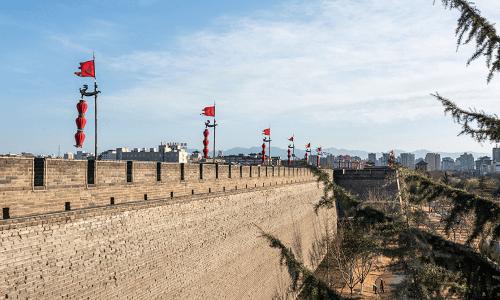
· Address: The city center of Xi'an, Shaanxi Province, is rectangular, with four gates: Dongchanglemen (Xi'an City Wall, Huancheng East Road, Xincheng District, Xi'an),
Xi'an Dingmen (West Street and Xijuyuan Lane) Nearby Xi'an City Wall (Huancheng West Road),
South Yongning Gate (No. 2 South Street, Beilin District, Xi'an),
Bei'an Yuanmen (Intersection of North Street and Huancheng North Road, Xincheng District, Xi'an)
· Opening Time: 8:00 AM–10:00 PM (Admission ends at:10:00 PM; Tickets available until:10:00 PM)
· Time for Visit: 1-2 hours
· Phone: +86-29-87272792 | +86-29-87283602
· Ticket: Full-price ticket is 54 CNY per person, valid for the same day and accessible via any of the four main gates.
* Key Highlights
- City Gates: There are four main gates (East Changle Gate, West Anding Gate, South Yongning Gate, North Anyuan Gate), each with a unique history and architectural style. Yongning Gate (South Gate) is the most magnificent and well-preserved one, with a complete set of city towers, arrow towers, and sluice towers. It is also the main entrance for tourists to climb the wall.
- Wall Experience: The top of the wall is paved with bricks, wide enough for 8 horses to walk side by side. You can walk, rent a bicycle (single or double, about 45–90 yuan per hour), or take a battery car (about 150 yuan per person) to tour the wall. Cycling is the most popular way—it takes about 1.5–2 hours to cycle around the entire wall, allowing you to enjoy the beautiful scenery of the old city and new city of Xi’an.
- Cultural Activities: From time to time, cultural activities such as ancient military performances, traditional music performances, and lantern shows are held on the wall, especially during festivals such as the Spring Festival and Mid-Autumn Festival, which allow you to experience the charm of ancient Chinese city defense culture and folk customs.
* Tips
- Note: Wear comfortable shoes if you plan to walk or cycle. There are bicycle rental points and rest areas at each main gate. The wall is windy, so bring a light jacket in spring and autumn.
4. Shaanxi History Museum
Known as the "treasure house of Chinese civilization", Shaanxi History Museum is one of the largest and most important museums in China. Located in the southern part of Xi'an (near the Giant Wild Goose Pagoda), it covers an area of 65,000 square meters and houses over 370,000 cultural relics unearthed in Shaanxi Province, spanning from the Paleolithic Age to the Qing Dynasty. These relics include bronze ware, pottery, porcelain, gold and silver ware, calligraphy and painting, and stone carvings, which systematically show the historical development of Shaanxi and the glory of the Thirteen Dynasties.
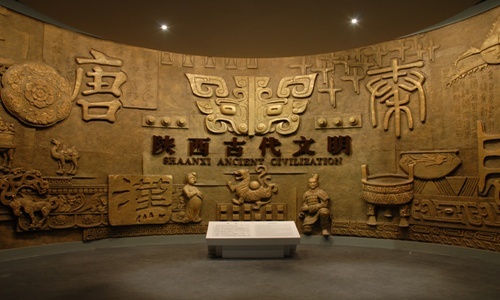
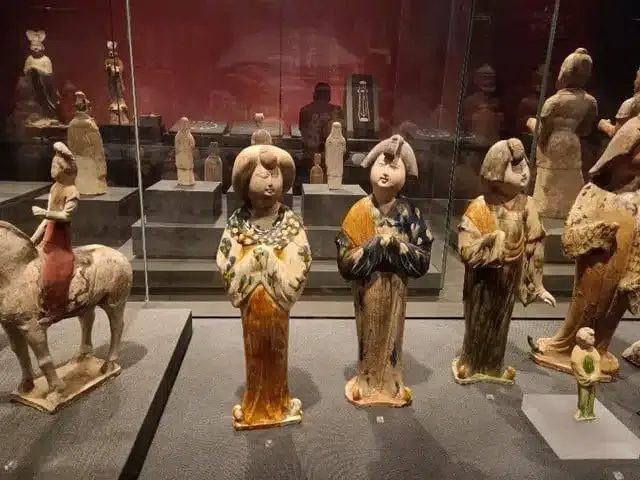
· Address: No. 91 Xiaozhai East Road, Yanta District, Xi'an (Northwest Side of Big Wild Goose Pagoda)
· Opening Time:
Tuesday-Sunday: 9:00 AM–5:30 PM (Tickets available until: 4:30 PM)
Monday: Closed all day
· Time for Visit: 2-3 hours
· Phone: +86-29-85253806 | +86-4000293806
· Ticket: The basic exhibition is free with mandatory real-name reservation; the special Tang Dynasty Mural Hall exhibition charges 260 CNY per person, and the Tang Dynasty Treasures Exhibition charges 30 CNY per person, both being optional paid exhibitions.
* Key Highlights
- Permanent Exhibition Halls: There are three permanent exhibition halls, displaying cultural relics in chronological order. The most famous exhibits include the bronze ware of the Zhou Dynasty (such as the He Zun, which bears the earliest record of the character “Zhongguo” (China)), the pottery figurines of the Qin and Han Dynasties, the Tang Dynasty tri-color glazed pottery (Sancai), and the gold and silver ware of the Tang Dynasty (exquisite and luxurious, reflecting the prosperity of the Tang Dynasty).
- Tang Dynasty Murals Hall (Paid Exhibition): Houses more than 60 murals unearthed from Tang Dynasty tombs, which are known as "the frescoes of the Tang Dynasty royal family". These murals are vivid and colorful, depicting scenes of Tang Dynasty court life, hunting, and foreign envoys, which are invaluable art treasures. The ticket for this hall is 260 yuan per person, but it is well worth it for art and history lovers.
- Datang Yibao Exhibition (Paid Exhibition): Displays cultural relics unearthed from the Famen Temple Underground Palace, including the Sakyamuni Buddha’s finger bone relic, Tang Dynasty royal gold and silver ware, and porcelain, showing the prosperity of Buddhism and the royal family in the Tang Dynasty. The ticket is 30 yuan per person.
* Tips
- Reservation: Free tickets are extremely tight and must be booked in advance via the official WeChat account "Shaanxi History Museum" (tickets are released at 8:00 AM every day, book 3–5 days in advance). Paid exhibitions (Tang Dynasty Murals Hall and Datang Yibao) can be booked simultaneously with free tickets, no need to rush for tickets.
5. Datang Everbright City
Located in Qujiang New District, adjacent to the Big Wild Goose Pagoda and Da Ci'en Temple, Datang Everbright City is a pedestrian street themed on Tang Dynasty culture. It is not an ancient relic but a modern reproduction of the prosperous scene of Chang’an in the Tang Dynasty, integrating food, shopping, performances, and cultural experiences. Here, you can “travel back to the Prosperous Tang Dynasty in one second,” experience the lively folk life of Tang Chang’an, and enjoy the blend of ancient culture and modern vitality.


· Address: Big Wild Goose Pagoda South Square, No. 6, East Section of Huanta South Road, Yanta District, Xi'an
· Opening Time: Open all day
· Time for Visit: 2-3 hours
· Phone: +86-29-85228412 | +86-29-81211080
· Ticket: The whole block and regular performances are open for free, no ticket required.
* Key Highlights
- Tang-Style Architecture: The entire street is built in Tang Dynasty architectural style, with overhanging eaves, carved beams and painted buildings, red walls and green tiles, which are grand and exquisite. The street lamps, signs, and decorations are also designed in Tang Dynasty style, creating a strong Tang Dynasty atmosphere.
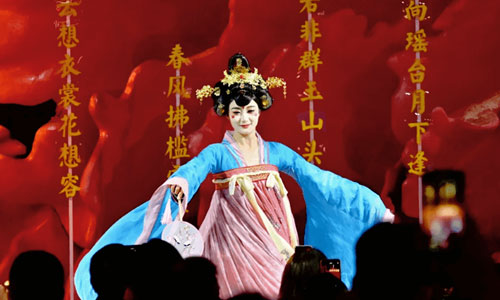
- Cultural Performances: There are various free Tang-style performances every day, including Tang Dynasty music and dance, poetry recitation, shadow puppetry, puppet shows, and street performances by actors dressed in Tang Dynasty costumes. The most popular performances are the "Tang Dynasty Beauty Parade" and “Poetry Recitation under the Pagoda,” which are held regularly in the central square.
- Food and Shopping: The street gathers a variety of Tang-style snacks, classic Xi’an food, and cultural and creative products. You can taste Huanggui Thick Wine, Tang-style pastries, and Biangbiang Noodles, and buy Tang-style souvenirs such as calligraphy works, jade carvings, and silk products. There are also many characteristic shops, such as Tang-style teahouses and costume rental shops (you can rent Tang Dynasty costumes to take photos, which is very popular among tourists).
- Night View: Grand Tang Mall is most beautiful at night. When the lights are on, the entire street is bright and magnificent, with thousands of lanterns hanging high, which is as beautiful as the “Chang’an Night” described in Tang poems. It is a must-visit place for night tours in Xi'an.
* Tips
- Note: The street is very crowded during peak tourist seasons, so be careful with your belongings. Most shops accept Alipay/WeChat Pay and cash.
6. Bell Tower (Zhong Lou) & Drum Tower (Gu Lou)
Located in the center of Xi’an, the Bell Tower and Drum Tower are twin landmarks of the city, built in the Ming Dynasty (Bell Tower in 1384 AD, Drum Tower in 1380 AD). In ancient times, the bell was rung at dawn to wake people up, and the drum was beaten at dusk to tell people to rest—hence the saying "Bell at dawn, Drum at dusk". Today, they are important cultural relics and symbols of Xi’an’s ancient city style, offering a glimpse into the urban planning and architectural art of the Ming Dynasty.
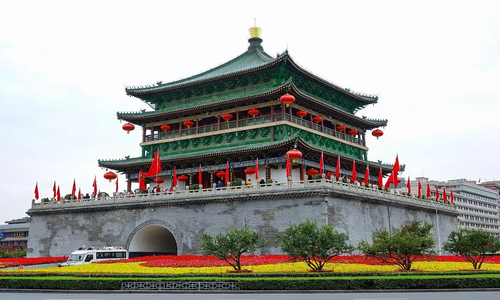

· Address: No. 74, North Courtyard, Lianhu District, Xi'an City
· Opening Time:
Every year from Oct 11 to Mar 31 of the following year: 8:30 AM–6:00 PM(Admission ends at:5:30 PM; Tickets available until:5:30 PM)
Apr 1–Jul 18 every year: 8:30 AM–9:30 PM(Admission ends at:9:30 PM; Tickets available until:9:00 PM)
Jul 19–Aug 31 every year: 8:30 AM–10:30 PM(Admission ends at:10:30 PM; Tickets available until:10:00 PM)
Sep 1–Oct 10 every year: 8:30 AM–9:30 PM(Tickets available until:9:00 PM)
· Time for Visit: 1 hour
· Phone: +86-29-87278797
· Ticket: Single-site ticket costs 30 CNY per person; Xi’an Drum Tower: Single-site ticket costs 30 CNY per person; a combined ticket for both towers is 50 CNY per person with better value.
* Key Highlights
- Bell Tower: A 36-meter-high square tower with a wooden structure, covered with blue glazed tiles. The top of the tower is decorated with a golden roof, which is grand and magnificent. Inside the tower, there is a large bronze bell (weighing 6 tons) from the Ming Dynasty, which was once used to ring the dawn. You can climb to the top of the tower to overlook the bustling city center of Xi’an, including the crossroads around the Bell Tower and the nearby Muslim Quarter.
- Drum Tower: Located 200 meters west of the Bell Tower, it is a 34-meter-high rectangular tower, also with a wooden structure and blue glazed tiles. Inside the tower, there are 24 drums of different sizes, which are used to perform traditional drum music every day. The drum music performances are held at 9:30, 11:00, 14:30, 16:00, and 17:30 (duration 15 minutes), allowing you to experience the charm of ancient Chinese drum music.
- Bell and Drum Tower Square: Located between the two towers, it is a spacious square with green plants and fountains. It is a popular place for locals to relax and exercise, and also a perfect spot to take photos of the two towers.
* Tips
- Note: The Bell Tower and Drum Tower are located in the downtown area, with convenient transportation and many restaurants and shops nearby. You can visit them together with the nearby Muslim Quarter.
7. Daming Palace National Heritage Park
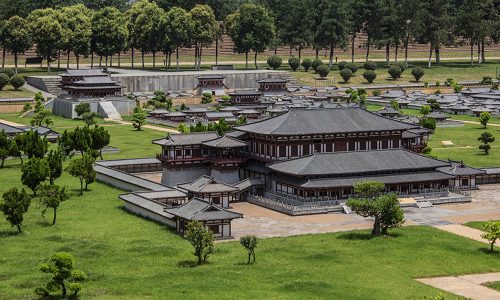
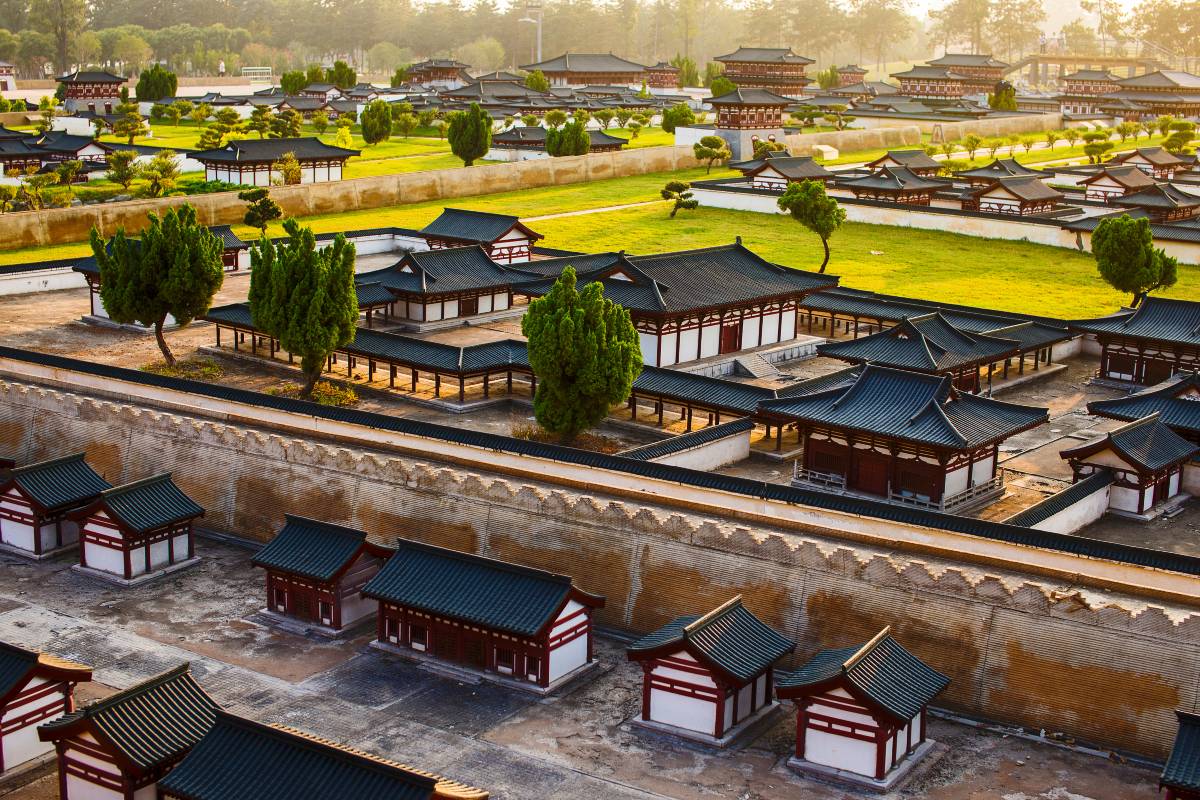
Located in the northern part of Xi’an, Daming Palace was the imperial palace of the Tang Dynasty, built in 634 AD during the reign of Emperor Taizong of Tang. It was the largest and most magnificent imperial palace in the world at that time, covering an area of 3.2 square kilometers (4.5 times the size of the Forbidden City in Beijing). As the political center of the Tang Dynasty for over 200 years, it witnessed the prosperity of the Prosperous Tang Dynasty and many important historical events. Today, most of the palace has been destroyed, but the ruins are well protected, and a national heritage park has been built to reproduce the grandeur of the Tang Dynasty palace.
· Address: 585 Ziqiang East Road, Xincheng District, Xi'an, Shaanxi Province, China
· Opening Time:
Every year from Oct 16 to Apr 14 of the following year: 8:30 AM–6:00 PM(Admission ends at:5:30 PM; Tickets available until:5:00 PM)
Apr 15–Oct 15 every year: 8:30 AM–7:00 PM(Admission ends at:6:30 PM; Tickets available until:5:30 PM)
· Time for Visit: 2-4 hours
· Phone: +86-4000096635
· Ticket: Full-price ticket is 60 CNY per person; the on-site VR experience is about 30 CNY per person, an optional paid activity.
* Key Highlights
- Hanyuan Hall Ruins: The main hall of Daming Palace, where the Tang emperors held grand ceremonies and received foreign envoys. Although only the foundation of the hall remains, you can still imagine its grandeur from the size of the foundation. There is a viewing platform next to the ruins, allowing you to overlook the entire ruins of the hall.
- Danfeng Gate: The main gate of Daming Palace, the largest ancient city gate in the world. The existing gate is a modern reproduction based on historical records, with a grand and magnificent shape. Inside the gate, there is an exhibition hall showing the archaeological discoveries and historical culture of Daming Palace.
- Tang Dynasty Palace Ruins Museum: Located in the park, it houses cultural relics unearthed from the Daming Palace Ruins, including pottery, porcelain, bricks, and tiles, which show the architectural style and daily life of the Tang Dynasty imperial palace. There are also virtual reality (VR) experiences, allowing you to “restore” the grand scene of the Tang Dynasty palace through technology.
8. Tang Paradise (Datang Furong Yuan)
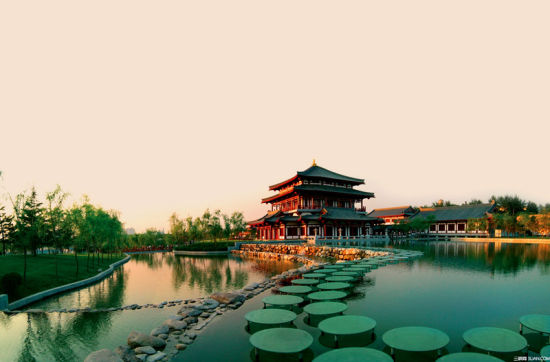
If you want to step back in time to experience the grandeur and splendor of the Tang Dynasty (618-907 AD), Tang Paradise is an absolute must-visit. This magnificent 1,000-acre royal garden-style cultural theme park was rebuilt on the ruins of the original Tang Dynasty Furong Garden, which served as a private retreat for imperial families and nobles 1,300 years ago. Opened to the public in 2005 after three years of reconstruction, it is the first national 5A-level scenic area in China dedicated to comprehensively showcasing the prosperity of the Tang Dynasty, with 300 acres of its area covered by serene lakes and waterways. As you wander through its Tang-style pavilions, corridors, and gardens, you'll feel like you've traveled back to "Flourishing Chang'an," the golden age of Chinese civilization.

· Address: No. 99, Furong West Road, Qujiang New District, Xi'an
· Opening Time: 9:00 AM–10:00 PM (Admission ends at: 9:00 PM; Tickets available until: 9:00 PM)
· Time for Visit: 3–5 hours
· Phone: +86-29-85511888
· Ticket:
Peak season (March 1 – November 30): 120 CNY per person
Off season (December 1 – February 28): 90 CNY per person
* Key Highlights
- Ziyun Tower: The iconic landmark of the garden, a 36-meter-tall tower with seven floors that offers panoramic views of the entire park and the surrounding Qujiang New District. The tower's name means "Purple Clouds," symbolizing imperial dignity in Tang culture.
- Tang Poetry Gorge: A 120-meter-long valley adorned with 25 groups of stone carvings featuring famous Tang poems and 48 stone statues of renowned Tang poets (Li Bai, Du Fu, Bai Juyi, etc.), creating a poetic journey through the golden age of Chinese literature.
- Lady's Pavilion (Cai Xia Ting): A delicate pavilion dedicated to Tang Dynasty women's culture, displaying ancient cosmetics, costumes, and artworks that reflect the high status and artistic achievements of women during that period.
- Luyu Tea House: A traditional Tang-style tea house named after the "Tea Sage" Luyu, where you can participate in a classic Tang tea ceremony, taste premium Chinese tea, and learn about the development of tea culture in ancient China.
- "Dream of Chang'an" Water Screen Movie: A spectacular 3D water screen show held every night at 8:30 PM (April-October) on the central lake, combining laser projections, holographic technology, and traditional music to tell the romantic stories of the Tang Dynasty.
- Tang Music & Dance Shows: Daily performances of traditional Tang music and dance at the Tang Music Palace, featuring elegant costumes, graceful movements, and ancient musical instruments like the pipa and erhu.
- Imperial Ceremony Reenactments: The "Datang Welcome Ceremony" at the main gate (Yuyuan Gate) at 9:30 AM and "Tang Imperial Wedding" performance in the afternoon allow you to witness the grand rituals of the Tang court.
- Street Performances: Candid encounters with performers dressed as Tang emperors, nobles, poets, and dancers throughout the garden, creating perfect photo opportunities for Hanfu enthusiasts.
* Tips
- Note:
· Rent Hanfu costumes at the garden entrance (100–300 CNY/day) with matching accessories like silk fans and hairpins for an immersive Tang Dynasty experience.
· Wear comfortable shoes as the garden is large and requires extensive walking.
· Most shops and restaurants accept Alipay/WeChat Pay; cash is also accepted for small purchases.
· Arrive early to avoid crowds, especially on weekends and holidays. The best time to visit is on weekday afternoons when the light is soft and the garden is less crowded.
b. Other Must-See Attractions
Beyond the seven core attractions mentioned above, Xi’an is home to many other remarkable sites that deserve your time. These attractions cover Buddhist sacred places, ancient towns, royal gardens, and folk experience spots, each with its own unique cultural charm and distinctive features. They allow you to dive deeper into Xi’an’s diverse culture—from the solemnity of Buddhism to the simplicity of folk life, from the romance of royal stories to the vibrancy of modern cultural integration. Below is a detailed introduction to these not-to-be-missed attractions, helping you enrich your Xi’an itinerary and gain a more comprehensive understanding of this ancient capital.
1. Famen Temple (Famen Si)
Known as the “Sacred Land of Buddhism in China,” Famen Temple is a world-famous Buddhist temple located about 120 kilometers west of Xi’an’s city center (in Fufeng County, Baoji City). With a history of over 1,700 years, it was first built in the Eastern Han Dynasty and flourished during the Tang Dynasty, serving as a royal temple where emperors worshipped Buddha relics. The temple is renowned worldwide for housing the Sakyamuni Buddha’s finger bone relic—the only true Buddha relic in the world—and unearthed 2,499 pieces of national treasures from the Tang Dynasty, making it a “underground treasure house of the Tang Dynasty” and a key witness to the prosperity of Buddhism and royal culture in the Tang Dynasty.

· Address: Famen Town, 10 kilometers north of the city center, Fufeng County, Baoji City, Shaanxi Province, China
· Opening Time:
Every year from Dec 1 to Feb 28 of the following year: 9:00 AM–5:00 PM (Admission ends at:4:30 PM)
Mar 1–Nov 30 every year: 8:30 AM–5:30 PM (Admission ends at:5:00 PM)
· Time for Visit: 2-3 hours
· Ticket: Peak season (March 1 to November 30) ticket costs 120 CNY per person; off-season (December 1 to February 29) ticket costs 90 CNY per person. The ticket includes access to the He Shi Relic Pagoda, Famen Temple Courtyard, and Treasure Museum, allowing visitors to see the Buddha's finger bone relic and precious cultural relics unearthed from the Tang Dynasty underground palace.
* Key Highlights
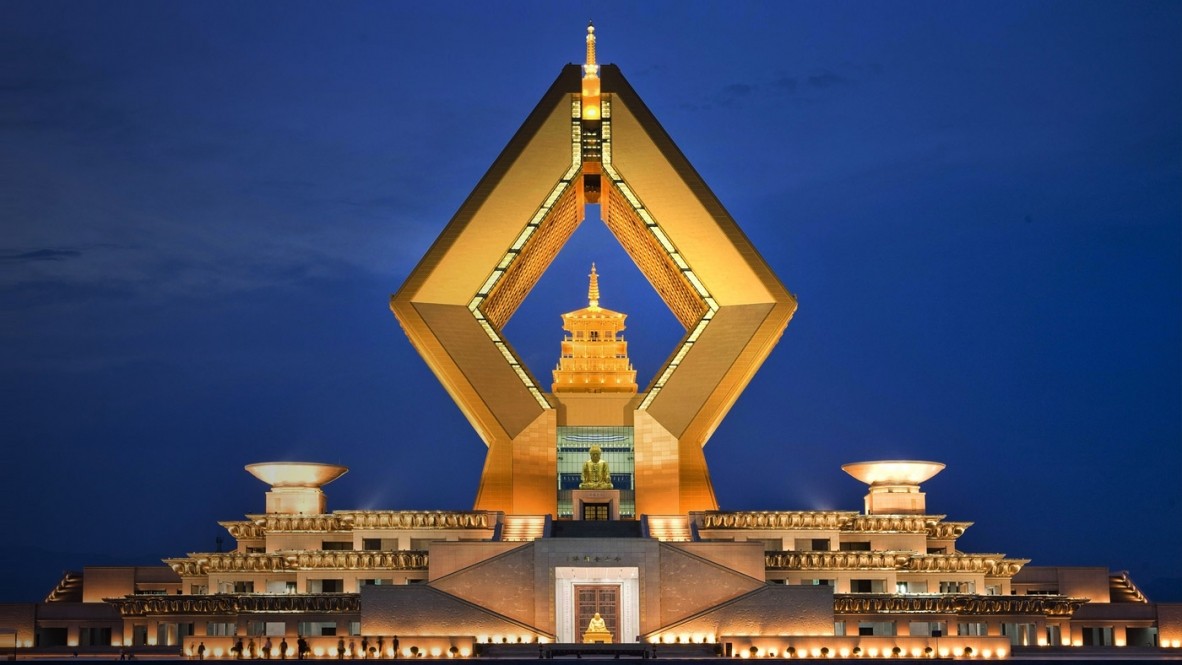
- Buddha Finger Bone Relic & Hehe Shrine Pagoda: The 148-meter-high Hehe Shrine Pagoda, designed by Taiwanese architect Li Zuyuan, is the iconic building of Famen Temple. Its double-palm clasped shape symbolizes the compassion and inclusiveness of Buddhism, and the pagoda houses the true finger bone relic of Sakyamuni Buddha. The relic is only open to visitors for a limited time (10 minutes per day) on the first and fifteenth days of the lunar calendar and public holidays, requiring advance reservation. The 1,230-meter-long Buddha Light Avenue in front of the pagoda is lined with statues of eighteen arhats and ten bodhisattvas, creating a solemn and sacred atmosphere as you walk along it.
- Famen Temple Underground Palace & Museum: Discovered in 1987 during the renovation of the True Body Pagoda, the underground palace of Famen Temple is the best-preserved and most complete Tang Dynasty underground palace in China. It unearthed a large number of precious cultural relics, including four-layered treasure boxes containing the Buddha relic, gilded tin staffs (hailed as the "highest-grade Buddhist ritual instruments in the world"), secret-color porcelain (solving the thousand-year mystery of "secret-color porcelain"), royal tea sets of the Tang Dynasty, and exquisite silk fabrics (such as Wu Zetian’s “embroidered skirt” with gold thread thinner than hair). The Famen Temple Museum displays these relics in detail, allowing you to appreciate the peak of Tang Dynasty craftsmanship.
- True Body Pagoda & Famen Temple Courtyard: The 47-meter-high Ming Dynasty brick pagoda (True Body Pagoda) has 13 stories, and its base houses the underground palace where the Buddha relic was enshrined six times in history. The temple courtyard follows the "pagoda-in-front, hall-behind" layout, and visitors can offer incense for free in front of the Mahavira Hall, experiencing the Buddhist ritual of “holding incense with the left hand and making wishes with the right hand”.
* Tips
- Note: Dress modestly when visiting the temple (avoid short skirts, shorts, and sleeveless tops); photography of Buddha statues and relics is prohibited. There is a vegetarian restaurant (Fuhui Zhai) in the scenic area, offering authentic Buddhist vegetarian food at a reasonable price.
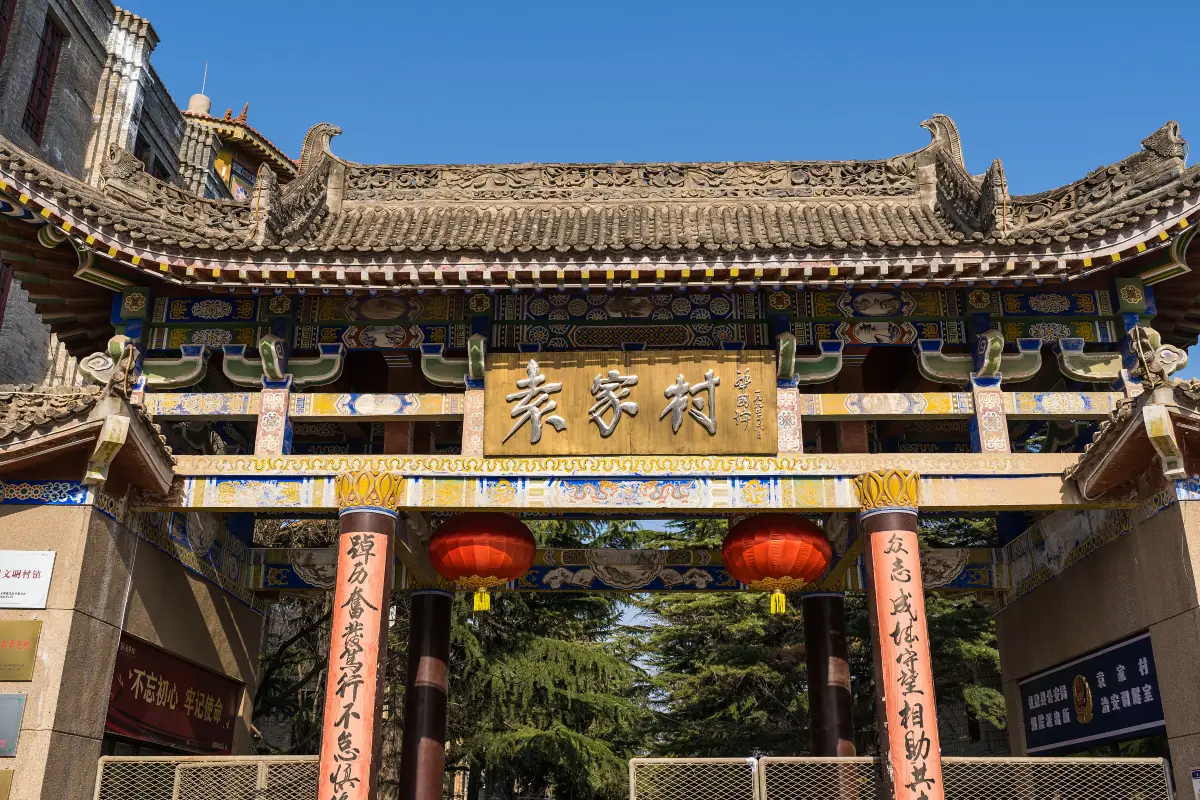
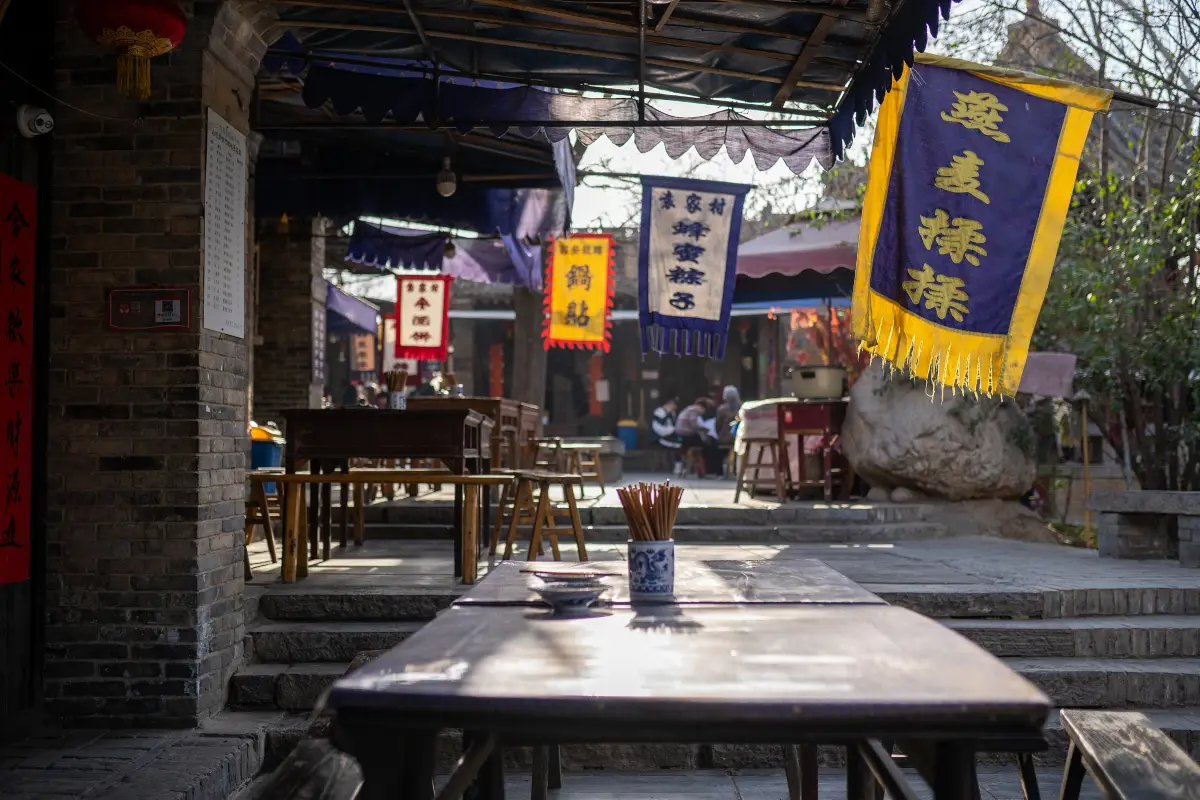
2. Yuanjia Village (Yuanjia Cun)
If you want to experience the authentic Guanzhong folk life and taste the most down-to-earth local snacks, Yuanjia Village is a must-visit. Located about 80 kilometers northwest of Xi’an (in Yanxia Town, Liquan County), this ancient village was built in the Ming and Qing Dynasties and has been perfectly preserved. Unlike the bustling commercial streets, Yuanjia Village retains the simplicity and primitiveness of Guanzhong rural life, with blue brick houses, narrow alleys, old courtyards, and traditional workshops, making it a “living museum of Guanzhong folk culture” and a favorite among locals for weekend getaways.
· Address: Yuanjia Village, Guyu Road, Yanxia Town, Liquan County, Xianyang City, Shaanxi Province, China
· Opening Time: Open all day
· Time for Visit: 3-4 hours
· Phone: +86-917-5254465
· Ticket: Free of charge (no entrance fee; fees are only for individual experience projects such as paper cutting and wine making).
* Key Highlights
- Folk Culture Experience: Walk through the ancient alleys of the village, and you can see traditional Guanzhong workshops everywhere—such as oil pressing workshops, tofu workshops, wine making workshops, and paper cutting workshops. You can personally participate in making tofu, pressing rapeseed oil, and cutting paper cuttings, experiencing the traditional craftsmanship passed down by Guanzhong people for centuries. The village also has a folk culture museum, displaying old objects such as ancient farm tools, furniture, and costumes, recording the changes of Guanzhong rural life over the years.
- Authentic Guanzhong Snacks: Yuanjia Village is a "paradise for food lovers" with no repeated snacks. You can taste local delicacies such as Liquan Laotang Noodles (sour and spicy, chewy), Yuanjia Braised Pork (tender and not greasy), Fried Dough Twists with Sesame, Sweet Persimmon Cakes, and Handmade Tofu Pudding. All snacks are made on site with fresh ingredients, without additives, retaining the most authentic Guanzhong flavor. Most snacks are affordable, with prices ranging from 5 to 15 yuan, allowing you to eat to your heart’s content without spending too much.
- Rural Scenery & Folk Activities: Surrounded by farmland, the village offers beautiful rural scenery—golden wheat fields in summer and autumn, and snow-covered courtyards in winter, creating a peaceful and idyllic picture. During festivals such as the Spring Festival and Mid-Autumn Festival, the village holds folk activities such as Qinqiang Opera performances, lion dances, and lantern shows, allowing you to experience the lively Guanzhong folk customs.
* Tips
- Note: Wear comfortable shoes as the village is mainly for walking. Most shops accept Alipay/WeChat Pay; cash is also acceptable. It is best to avoid peak hours (11:00 AM–2:00 PM) to avoid crowds in snack shops.
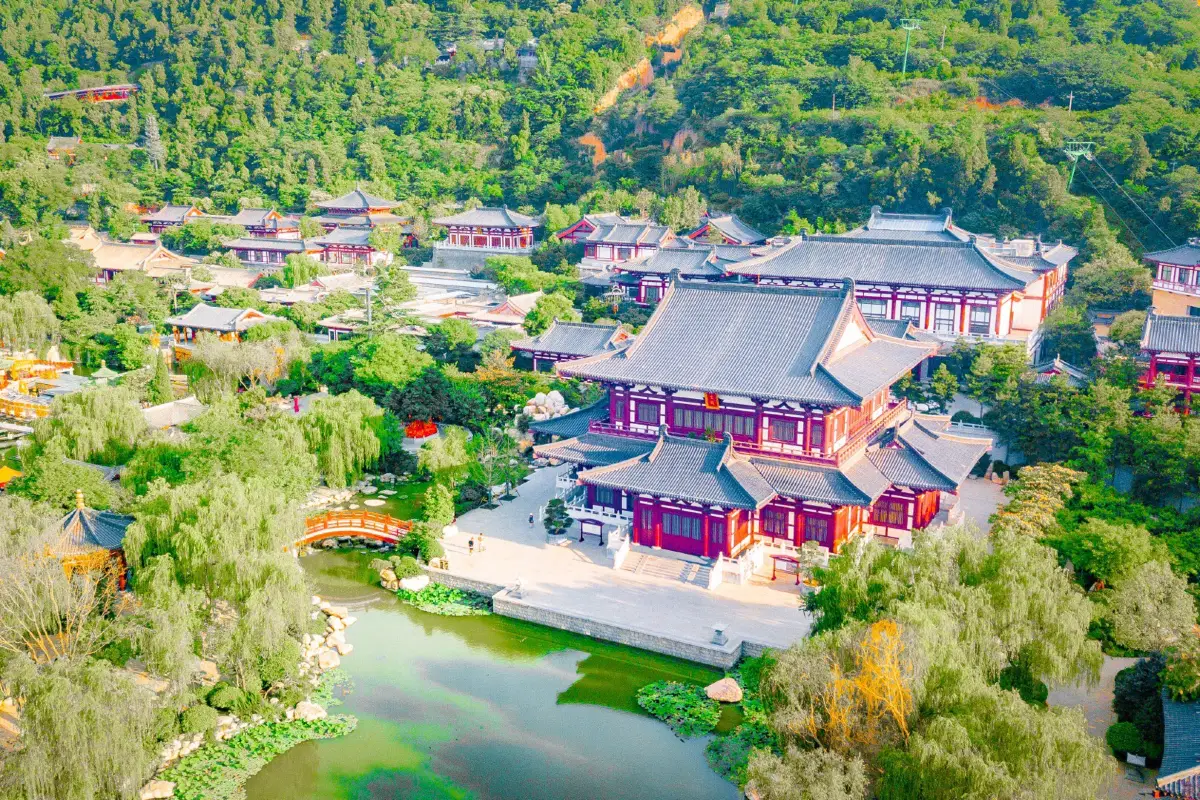
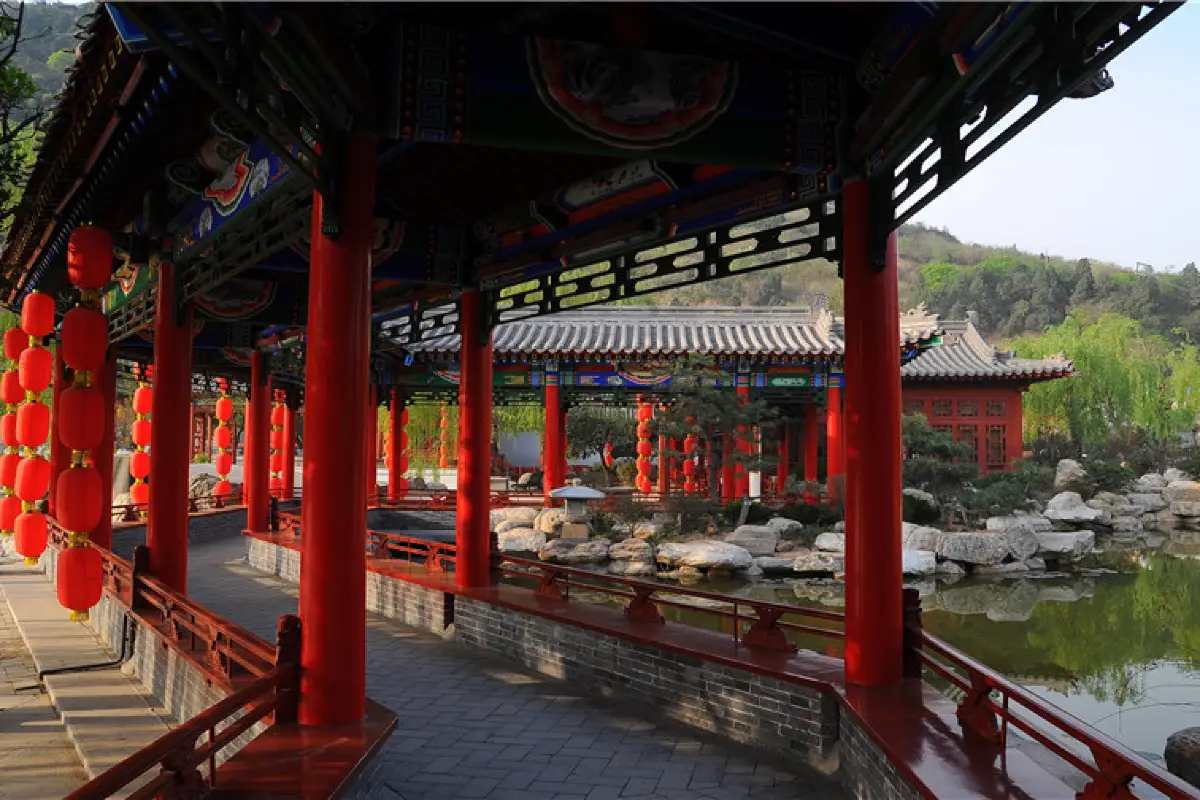
3. Huaqing Palace (Huaqing Gong)
Located at the foot of Lishan Mountain, 30 kilometers east of Xi'an’s city center, Huaqing Palace is a famous royal garden with a history of over 3,000 years. It was built in the Western Zhou Dynasty and flourished during the Tang Dynasty, serving as a summer resort for Tang emperors. The palace is renowned for the romantic love story between Emperor Xuanzong of Tang and Yang Guifei, as well as the site of the "Xi'an Incident" in 1936, integrating natural scenery, royal culture, and modern history. With clear springs, lush mountains, and exquisite palaces, it is known as the “most beautiful royal garden in the Tang Dynasty”.
· Address: No. 38, Huaqing Road, Lishan, Lintong District, Xi'an City
· Opening Time: 7:00 AM–5:50 PM (Admission ends at:5:30 PM; Tickets available until:5:20 PM)
· Time for Visit: 2-3 hours
· Phone: +86-29-83812004 | +86-29-83812003
· Ticket: Full-price ticket costs 120 CNY per person. The ticket covers attractions including Huaqing Hot Spring, Lishan Mountain, the former site of the Xi'an Incident (Wujian Hall), and Bingjian Pavilion. Separate tickets are required for the "Song of Everlasting Sorrow" live performance and "12·12 Xi'an Incident" show inside the scenic area, with prices subject to the on-site listed prices of the scenic area and no mandatory consumption required.
* Key Highlights
- Royal Springs & Palaces: The core of Huaqing Palace is the "Huaqing Pool", a group of natural hot springs with a constant temperature of 43? all year round. The most famous springs include the "Haitang Soup" (Yang Guifei’s private hot spring, shaped like a crabapple flower), “Lotus Soup” (Emperor Xuanzong’s hot spring, shaped like a lotus), and "Star Soup" (used by previous emperors). The springs are clear and rich in minerals, which are beneficial to the skin and health. The palaces in the scenic area, such as the "Hall of Eternal Love" and "Hall of Dispelling Clouds", are built in Tang Dynasty style, with red walls and green tiles, reflecting the luxury of the Tang royal family.
- Site of the Xi’an Incident: Huaqing Palace is an important historical site of the Xi’an Incident. The “Five-Room Pavilion” and "Long Corridor" are the places where the incident occurred. You can visit the rooms where Chiang Kai-shek lived and the bullet holes left on the walls, learning about the important historical event that changed the course of modern Chinese history. There is also a museum in the scenic area, displaying cultural relics and photos related to the Xi’an Incident, with detailed English explanations for foreign visitors.
- "Song of Everlasting Sorrow" Live Performance: Every evening from April to October, the large-scale real-scene historical dance drama Song of Everlasting Sorrow is staged in Huaqing Palace. Based on the legendary love story between Emperor Xuanzong and Yang Guifei, the drama combines traditional Tang music and dance, poetic narration, and high-tech lighting and special effects, vividly reproducing the prosperity of the Tang Dynasty and the tragic ending of the royal couple. Tickets for the performance need to be booked in advance, with prices varying by seating area (ranging from 298 CNY to 988 CNY per person). Staged in an open-air venue with Lishan Mountain’s natural landscape as the backdrop, it creates an immersive viewing experience that blends history and nature, a must-see for deepening your understanding of Tang Dynasty culture.
- 12·12 Xi'an Incident Live Show: Besides the Tang Dynasty-themed performance, the scenic area also stages the real-scene show 12·12 Xi’an Incident, which recreates the entire process of the 1936 historical event through live acting, scene restoration and sound effects. The 40-minute show is a vivid way to learn about modern Chinese history, with separate tickets available for purchase on site or online.
* Tips
- Note:
· The attraction closes at 6:20 PM. The "Song of Everlasting Sorrow" performance begins after Huaqing Palace closes (actual start time depends on the day's time slots). During this time, only the performance area remains accessible while other sections of Huaqing Palace are closed to visitors.
· Book tickets for Song of Everlasting Sorrow 3-5 days in advance during peak tourist seasons (holidays, summer vacation) as good seats sell out quickly.
· Wear comfortable walking shoes if you plan to hike Lishan Mountain, and bring a light jacket in spring and autumn as the mountain top is windy.
· Most shops and ticket offices in the scenic area accept Alipay/WeChat Pay and cash, with currency exchange services available at the visitor center for foreign tourists.
4. Lishan National Forest Park
Lishan Mountain, one of the branches of Qinling Mountains, is located at the south of Lintong Town, Xi'an City, Shaanxi Province. The elevation of the highest peak Jiulongding is 1,301.9 meters above sea level. The pines and cypresses o-n the mountain are exuberantly green all year round; the mountain looks like a pure black horse seen from afar, so it is called Lishan (pure-black horse mountain) Mountain. Lishan Mountain is famous for its scenic beauty that is like beautiful brocade, so it is also called Xiuling (beautiful mountain). At sunset, the afterglow tints the mount far and near with an enchanting golden luster, and the scene is very beautiful and gorgeous, so it is reputed as the Sunset of Lishan Mountain.
.jpg "Lishan National Forest Park")
.jpg "Lishan National Forest Park-xian")
· Address: No. 3, Huancheng East Road, Lintong District, Xi'an City
· Opening Time: 7:00 AM–5:30 PM (Admission ends at: 5:10 PM; Tickets available until:5:00 PM)
· Time for Visit: 2-3 hours
· Phone: +86-29-83812003 | +86-29-83820601
· Ticket:
Peak season (March 1 – November 30): 70 CNY per person
Off season (December 1 – February 28): 45 CNY per person
* Key Highlights
- Fenghuotai (Beacon Tower): The site where King You of Zhou played the "beacon fire trick" to win his concubine Bao Si's smile, ultimately leading to the fall of the Western Zhou Dynasty. Climb to the top for panoramic views of the Guanzhong Plain and imagine the ancient warning system that once protected the capital.
- Laomu Palace (Lishan Old Mother Palace): A famous Taoist temple dedicated to Nüwa (the goddess who repaired the sky in Chinese mythology). The temple features ancient architecture, stone carvings, and a peaceful courtyard with centuries-old cypress trees.
- Bingjian Pavilion: The exact spot where Chiang Kai-shek was found hiding in a crevice after the Xi'an Incident in 1936, a crucial historical site that changed the course of modern Chinese history.
- Chaoyang Pavilion & Wangmu Hall: Tang Dynasty-style pavilions offering stunning sunrise views and cultural displays about imperial life during the Tang Dynasty.
- Jiulongding (Nine-Dragon Peak): The highest point of Lishan, offering 360° panoramic views of Huaqing Palace, Lintong District, and the distant Qinling Mountains. On clear days, you can even see the Weihe River winding through the plain.
- Cherry Blossom Trail: In early spring (late March to mid-April), the mountain's cherry blossoms bloom along the hiking paths, adding a romantic touch to the ancient mountain.
- Lishan Waterfalls: During summer rains, the mountain streams transform into spectacular waterfalls, providing a refreshing escape from the heat.
* Tips
- Note:
· The ticket includes access to all mountain attractions; separate tickets are required for Huaqing Palace (120 CNY) and cable car rides.
· Wear comfortable non-slip shoes as the mountain paths can be steep and slippery, especially after rain.
· Bring water and snacks, as there are limited options on the mountain; spring and autumn visitors should bring a light jacket as the mountain top can be windy.
· Start hiking early in the morning to avoid crowds and the midday heat.
 Highly Recommended Private Half-Day Xi'an Terracotta Warriors Tour with Optional Morning or Afternoon Departure
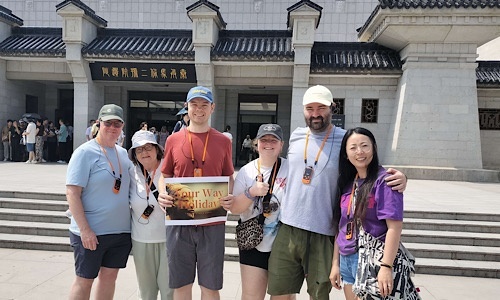 Beijing to Xi'an 1 Day Tour: Day Trip to Terracotta Warriors From Beijing by Bullet Train
Unmissable Things to Do in Xi’an
a. Immersive Experience of Tang Dynasty Culture
1. Tang Costume Rental and Photography
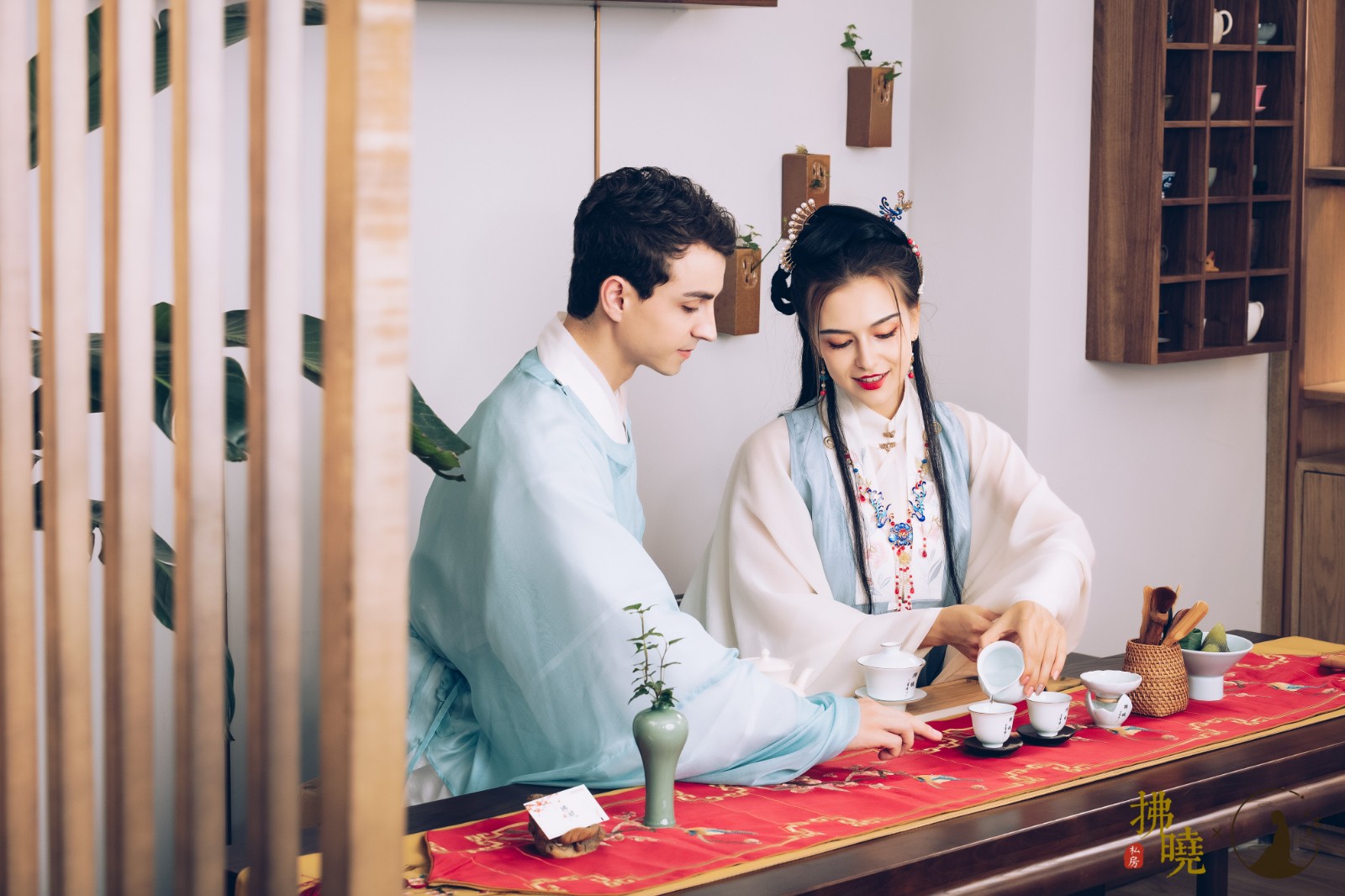
There are many Tang costume rental shops around scenic spots such as Grand Tang Mall, Giant Wild Goose Pagoda and Daming Palace, with a variety of styles, including Tang Dynasty noble costumes, lady costumes, warrior costumes, etc. You can rent Tang costumes (price about 50-200 yuan per day, including makeup and styling), take photos in Tang Dynasty style scenes, immerse yourself in the costume culture of the Tang Dynasty, and leave exclusive ancient style memories of Xi’an.
The best photo spots can be selected according to the costume style: for noble costumes, it is recommended to go to Ziyun Tower in Tang Paradise and Jiujianjiang Pavilion in Qujiang Pool Ruins Park to highlight the royal grandeur; for lady costumes, the North Square of Giant Wild Goose Pagoda and the Lantern Corridor of Datang Everbright City are suitable, with ancient buildings and lights creating a full sense of atmosphere; for warrior costumes, you can go to Daming Palace National Heritage Park and take photos in front of the palace ruins to restore the bold spirit of Tang Dynasty warriors. It is recommended to rent the costume 1-2 hours in advance to reserve sufficient photo time, avoiding the peak flow of people at noon. The light is soft in the early morning or evening, and the photos taken are more ancient and charming. When renting, you can check the cleanliness and integrity of the costume in advance, agree on the return time to avoid additional costs, and beginners can ask the shop staff to recommend photo poses to easily take beautiful photos and leave exclusive ancient-style memories of Xi’an.

* Recommended Shops
- Xuanyingge Hanfu Studio (Datang Everbright City Branch)
· Address: 99 Ci'en East Road, Dayanta Subdistrict, Yanta District, Xi'an, Shaanxi Province, China
· Phone: +86-17791718564
· Opening hours (Mon to Sun): 9:00 AM-11:00 PM
- Chang'an Ling Hanfu Store (Xingyue Mall Branch)
· Address: B2 Floor, European Style Street, Next to G2 Metro Exit, East Bell Tower Street, Beilin District, Xi'an, Shaanxi Province, China
· Phone: +86-15902940185
· Opening hours (Mon to Sun): 10:30 AM-9:00 PM
2. Watching Tang Dynasty Theme Performances
In addition to free daily street performances in Datang Everbright City (Tang costume parades, poetry recitals, shadow puppetry clips), Xi’an hosts several high-quality immersive Tang-themed shows that recreate the glory of the Tang Dynasty.
* Song of Everlasting Sorrow
A large-scale outdoor real-scene performance set against the natural landscape of Huaqing Palace and Lishan Mountain. It tells the tragic love story of Emperor Xuanzong and Yang Guifei with spectacular dance, lighting, and fireworks.
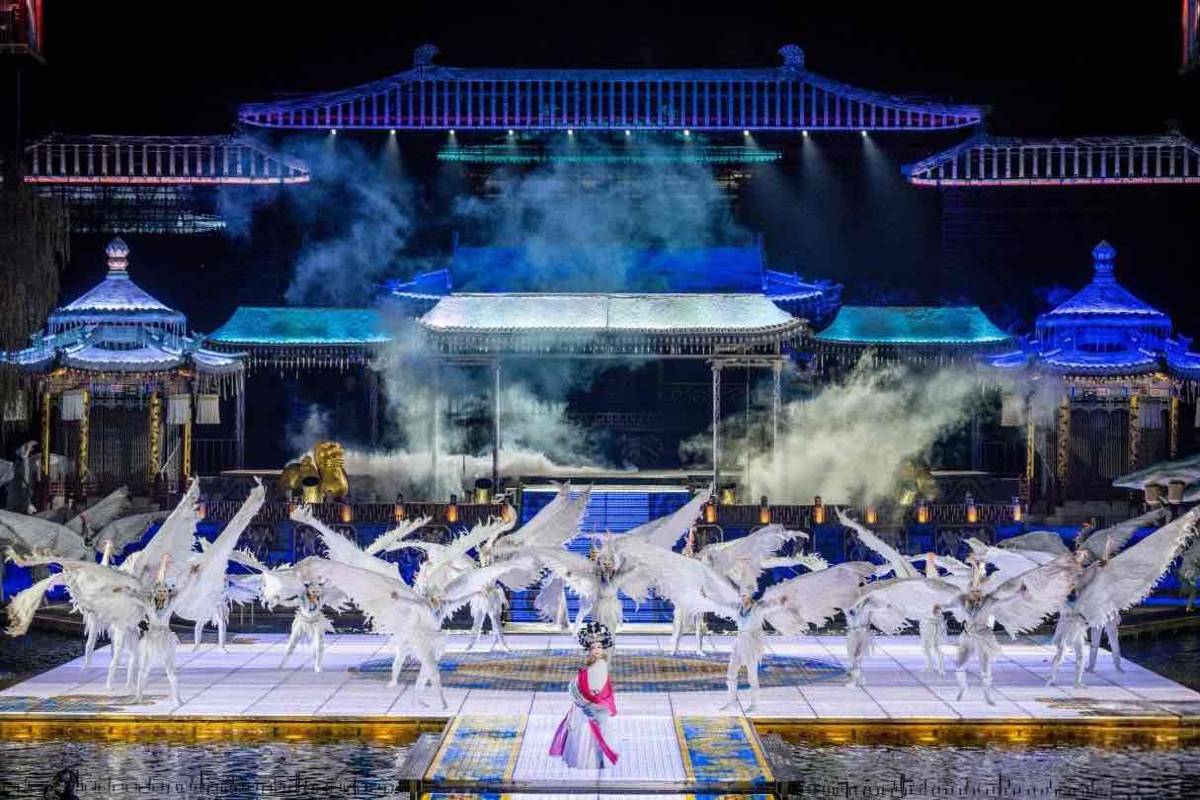
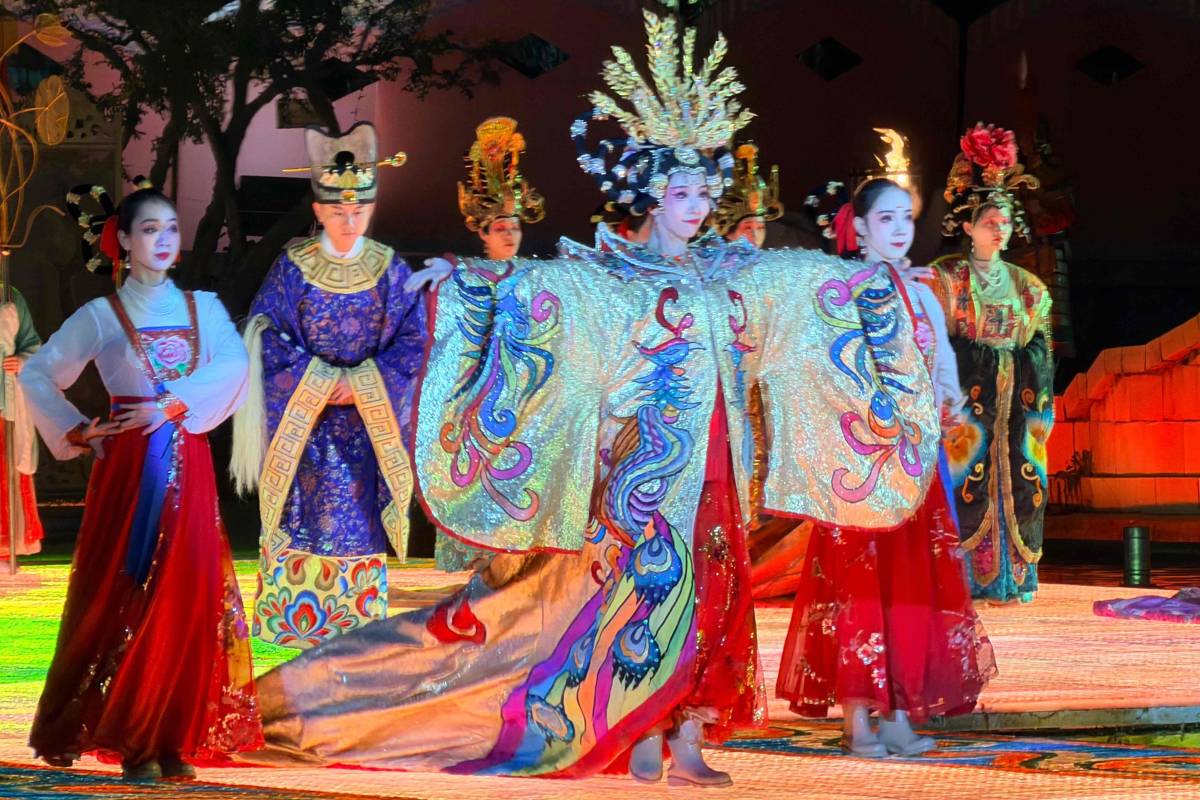
· Address: Huaqing Palace Scenic Area, 038 Huaqing Road, Lintong District
· Schedule: April–October only, 1-3 shows nightly (7:10 PM, 8:40 PM, 10:10 PM), approx. 70 minutes. (The performance of Song of Everlasting Sorrow (Ice and Fire Edition) runs from early December to the end of February the following year.)
· Tickets: ¥208–888. Book 10 days in advance during peak season.
* Dream Back to the Tang Dynasty
An indoor immersive show depicting the prosperity of Chang’an in the Tang Dynasty through historical episodes such as the Zhenguan Reign and Kaiyuan Prosperity.
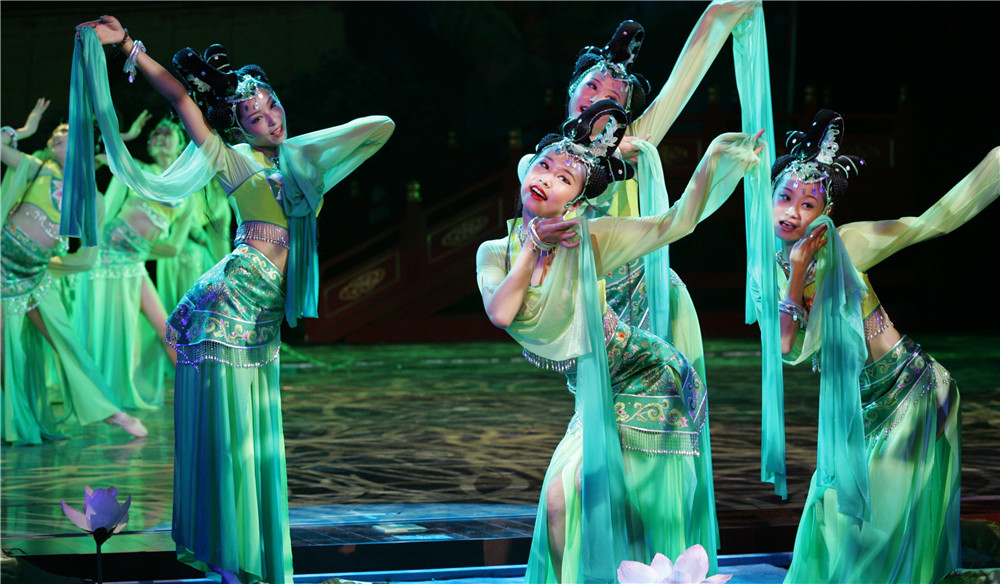
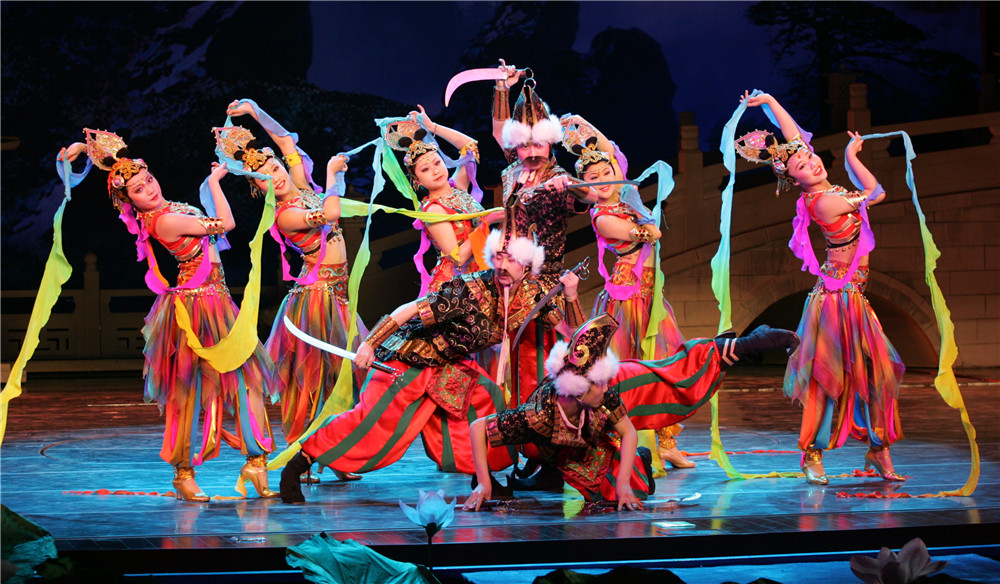
· Address: Fengming Jiutian Theater, within the Tang Paradise, 99 Furong West Road, Qujiang New District, Xi'an, Shaanxi Province, China
· Schedule: 5:00 PM-6:00 PM daily, approx. 60 minutes
· Tickets: ¥268–368
* Dream Pursuit of the Tang Dynasty
The large-scale water and light show Dream Pursuit of the Tang Dynasty is centered around the figure of the "Immortal Poet" Li Bai, with the melody of his famous poem "Bring in the Wine" as its theme. Set against the majestic landscape of mountains and gardens, the performance seamlessly integrates the grandeur of Tang Dynasty culture with deep audience participation. Through the dramatic interpretation of scenes and stories, along with the use of various new technologies, the show strives to connect the audience's emotional state with the real-time environment depicted in the play, delivering a surreal visual experience aboard a boat through an enchanting illusion.
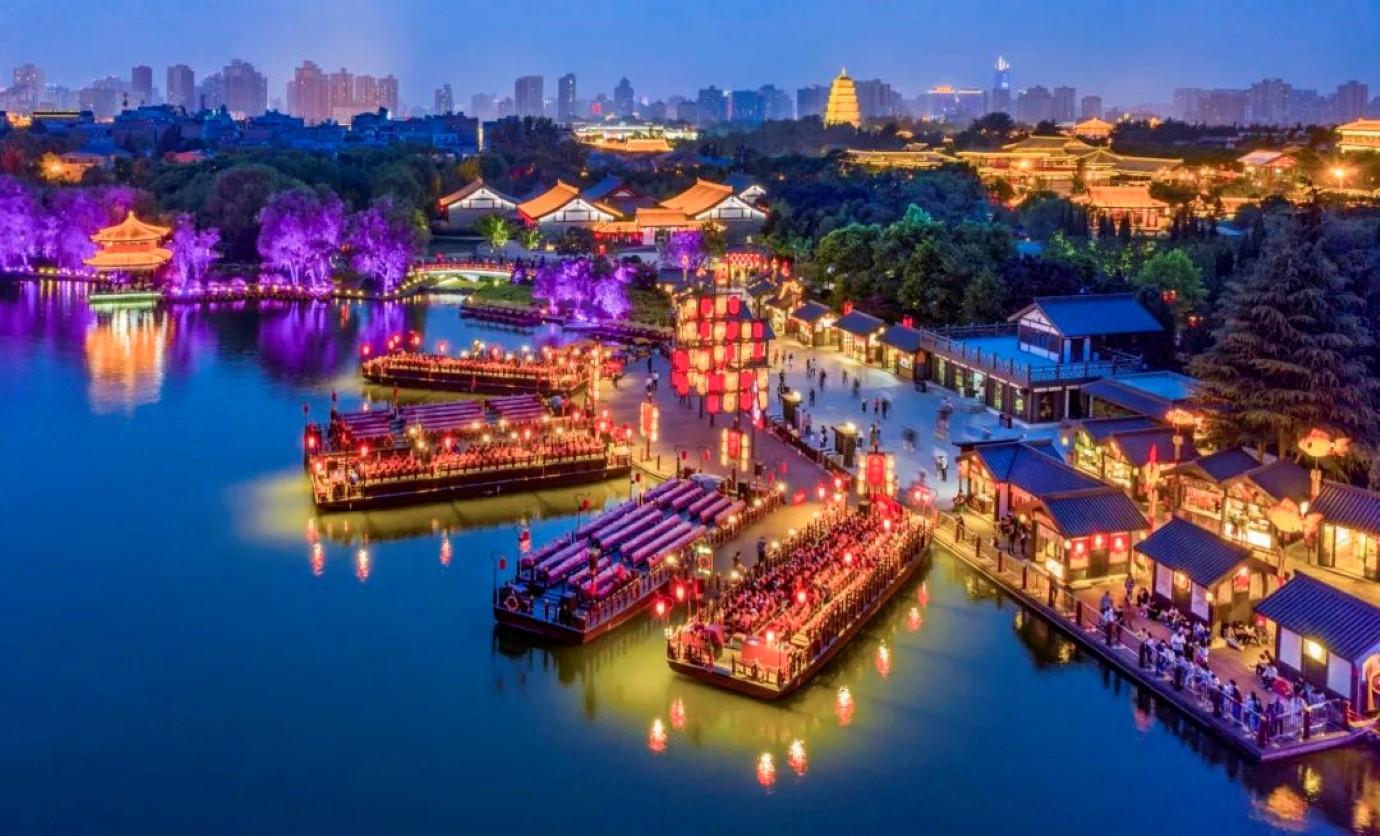

· Address: Fengming Jiutian Theater, within the Tang Paradise, 99 Furong West Road, Qujiang New District, Xi'an, Shaanxi Province, China
· Schedule: 8:30 PM-9:20 PM daily, approx. 50 minutes
· Tickets: ¥318–618
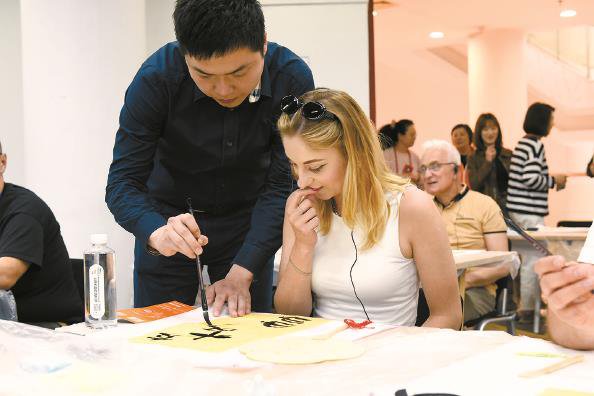
3. Calligraphy Experience and Cultural and Creative Production
There are many calligraphy experience shops around Shuyuanmen Pedestrian Street and Forest of Steles Museum. Under the guidance of professional teachers, you can learn the basic brushwork of Chinese calligraphy and write simple Chinese characters (such as "Chang'an" and "Xi'an") to feel the charm of Chinese calligraphy; you can also experience cultural and creative production, such as making small Tang Sancai ornaments and shadow puppetry props, to create your own exclusive Xi’an souvenirs and take away a unique travel memory.
No experience is required. Instructors teach basic brushwork and writing of characters such as "Chang'an" and "Xi'an", or short Tang poems. Popular cultural experiences include small Tang Sancai ornaments, shadow puppet props, ancient papermaking, and seal carving.

* Recommended Shops
- Shuyuanmen Cultural Street
Shuyuanmen Pedestrian Street, Beilin District. Numerous studios such as Moyun Hall and Chang’an Brush Shop offer calligraphy, seal carving, and ancient papermaking experiences from ¥30–80.
- Tang Paradise Cultural and Creative Center
Inside Tang Paradise, 99 Furong West Road, Yanta District. Tang Sancai pottery and shadow puppet making experiences, ¥80–150/person. Finished pieces can be collected or mailed.
b. Exploring Intangible Cultural Heritage and Folk Culture
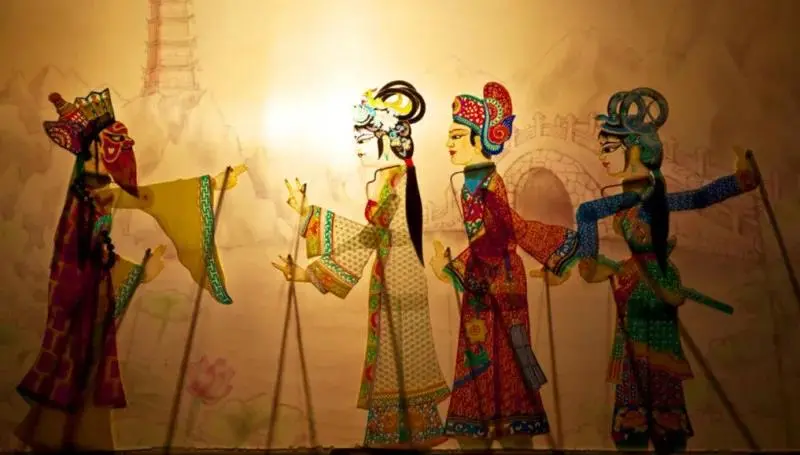
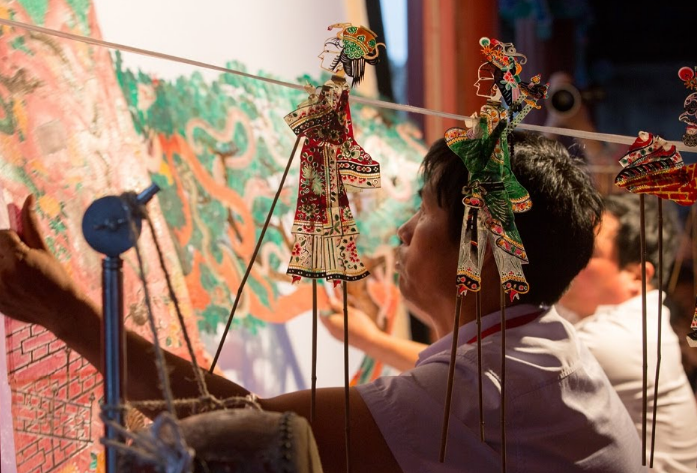
1. Shadow Puppetry Experience
Shadow puppetry, a traditional intangible cultural heritage of China that has been passed down for thousands of years, is often referred to as the "ancient Chinese cinema." As one of the key birthplaces of shadow puppetry, Xi'an has preserved the most authentic production techniques and performance styles. It serves as an excellent window into exploring China's intangible cultural heritage and is a perfect experience for visitors of all ages.
* Recommended Shops
- Qin Fengyuan Intangible Cultural Heritage Theater Bell Tower Store
· Address: 99 Ci'en East Road, Dayanta Subdistrict, Yanta District, Xi'an, Shaanxi Province, China
· Opening hours (Mon to Sun): 11:00 AM–8:30 PM
- Xi'an Shadow Puppet Art Museum
· Address: East section of Zhenguan North Street
· Phone: +86-15319922816
· Opening hours:
Monday:Closed all day
Tuesday-Sunday:9:00 AM–6:00 PM (Admission ends at: 5:30 PM)
- The Former Residence of Gao Yuesong (Gao Grand Courtyard)
· Address: No. 144, North Courtyard, Xi'an
· Phone: +86-29-87401029 | +86-13309276330
· Opening hours (Mon to Sun): 9:00 AM–10:30 PM (Admission ends at: 10:00 PM)
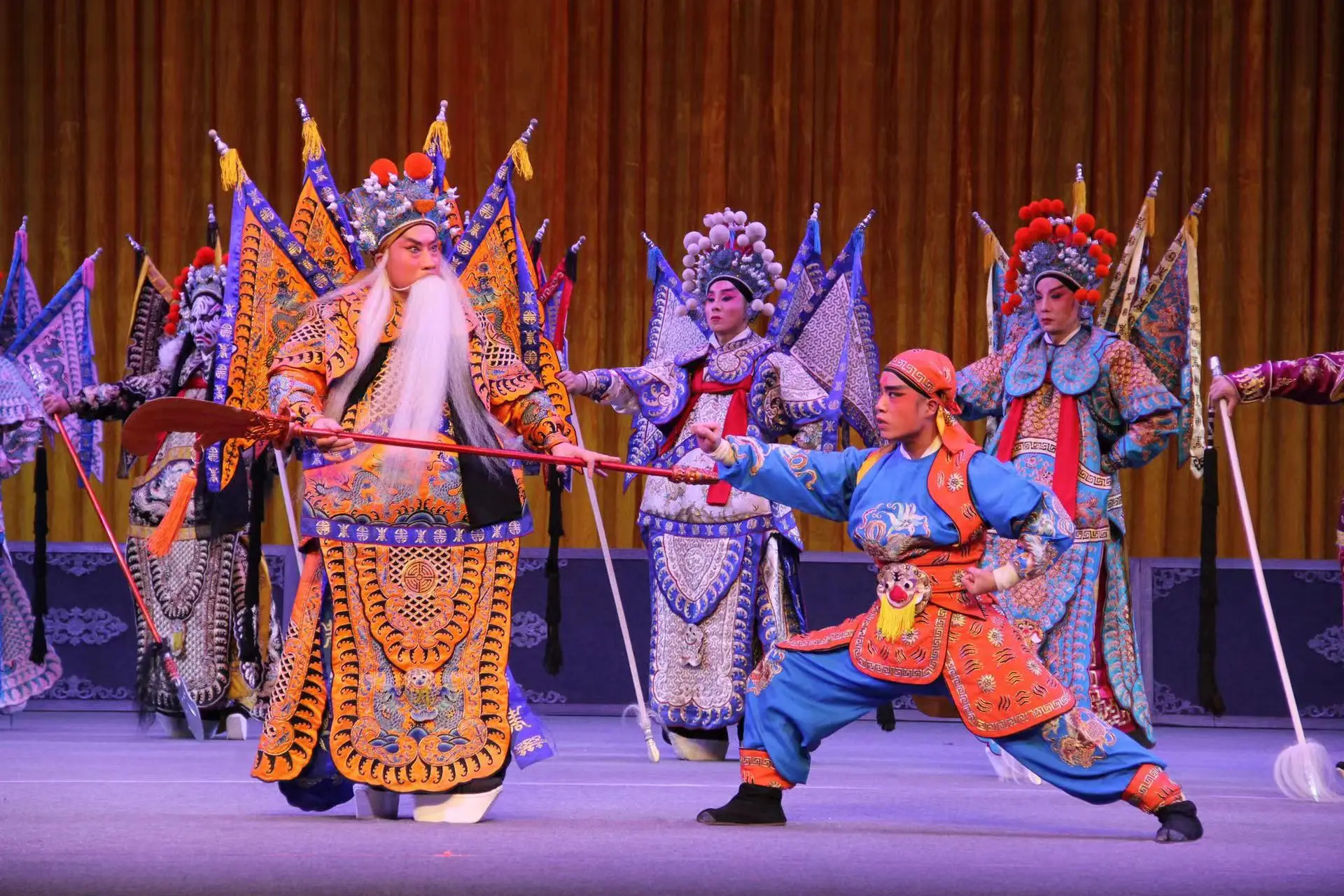
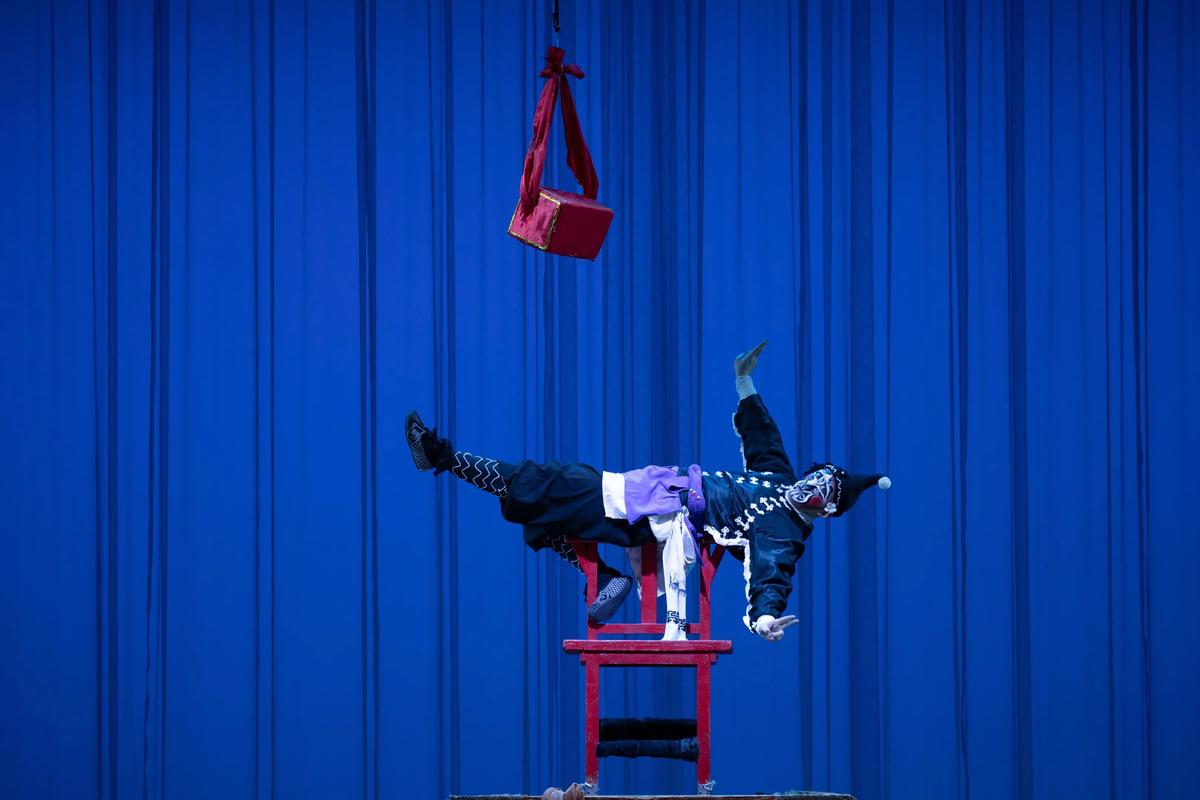
2. Qinqiang Opera Watching and Experience
Qinqiang Opera is the most representative local opera in Shaanxi, known as “the ancestor of Chinese Bangzi Opera”. Its singing is high-pitched and passionate, and its performance is bold and unrestrained, showing the character of the people in Northwest China. You can watch professional Qinqiang Opera performances in Shaanxi Song and Dance Grand Theatre, Yisu Society Theatre and other places. The performances are mostly classic historical stories, and it is recommended to buy tickets in advance; some theatres also provide Qinqiang Opera experience activities, where you can learn simple Qinqiang Opera singing and movements to feel the unique charm of Qinqiang Opera.
* Recommended Shops
- Yisu Grand Theatre
· Address: 26 Anban St, ZhongLou ShangQuan, Xincheng Qu, Xi'an Shi, Shaanxi Sheng, China
· Phone: +86-4000698899
· Opening hours (Mon to Sun): 10:30 AM–11:00 PM
- Shaanxi Opera Research Institute Theater
· Address: No.133 Wenyi North Road, Beilin District, Xi'an
· Phone: +86-29-87856083
· Opening hours (Mon to Sun): 7:30 PM–10:15 PM
- Shaanxi Song and Dance Theater
· Address: No.161 Wenyi Road, Beilin District, Xi'an
· Phone: +86-29-86696692 | +86-29-87853295 | +86-29-87853296
· Opening hours (Mon to Sun): 9:00 AM–8:30 PM
c. Participating in Folk Activities
Xi'an, a city with a rich cultural heritage, offers an array of exciting festivals and events throughout the year, blending traditional folk arts with modern performances. These festivals not only showcase the deep historical roots of the city but also highlight its vibrant contemporary culture. From ancient opera performances and traditional folk festivals to international music festivals and contemporary arts celebrations, Xi'an’s events provide a comprehensive experience for all types of travelers. Whether you are exploring the ancient calligraphy and paper-cutting traditions or enjoying grand cultural festivals, Xi'an’s events invite visitors to immerse themselves in the city’s lively and diverse atmosphere.
1. Xi'an Folk Culture Festival
During these festive times, Xi'an hosts a variety of folk cultural activities, including dragon and lion dances, lantern festivals, temple fairs, and more. These events give visitors a deep dive into the vibrant folk traditions and customs of Xi'an, offering a lively atmosphere and an authentic experience of local cultural celebrations.
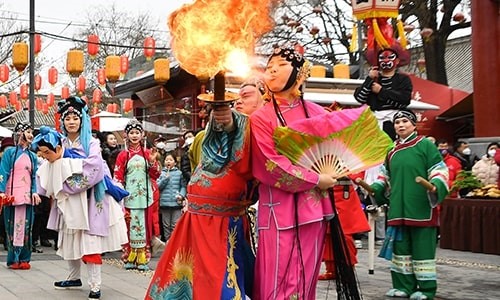

* Time: Typically held during traditional Chinese festivals such as the Spring Festival, Mid-Autumn Festival, and Dragon Boat Festival
2. Xi'an Spring Festival Temple Fair
During the Chinese New Year, Xi'an’s temple fairs are an exciting and lively celebration. Held at various locations such as Bell Tower Square and the Big Wild Goose Pagoda Square, the fairs feature traditional folk performances like dragon and lion dances, traditional Chinese opera, folk art displays, and many food stalls offering local snacks. This is an excellent opportunity to experience the festive atmosphere and traditional customs of Xi'an.
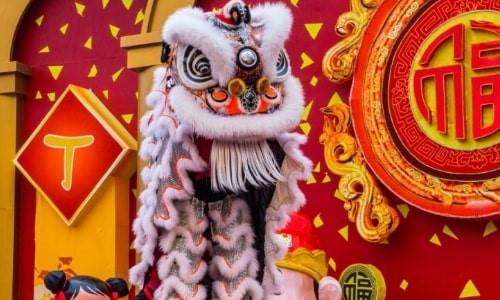
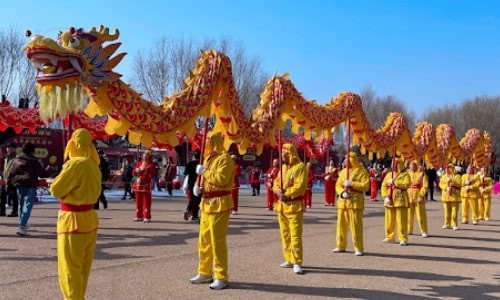
* Time: During the Spring Festival (Chinese New Year)
3. Xi'an Lantern Festival (Lantern Show)
During the Lantern Festival, Xi'an’s parks and tourist sites, including Tang Paradise and Huaqing Pool, host grand lantern shows. The lanterns, which come in various traditional and modern designs, are often combined with light effects and dazzling displays, creating a breathtaking visual feast that celebrates Chinese culture and artistry.
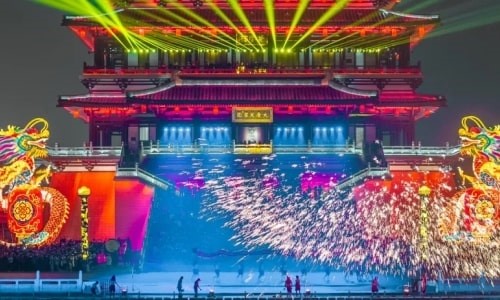
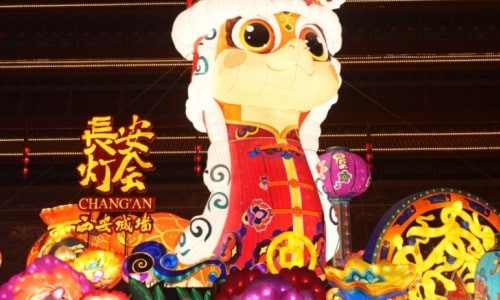
* Time: Lantern Festival, on the 15th day of the first lunar month
4. Dragon Boat Festival
Watch exciting dragon boat races on Qujiang Lake, where teams compete in traditional wooden boats with rhythmic drumbeats, showcasing the vitality of traditional folk sports.
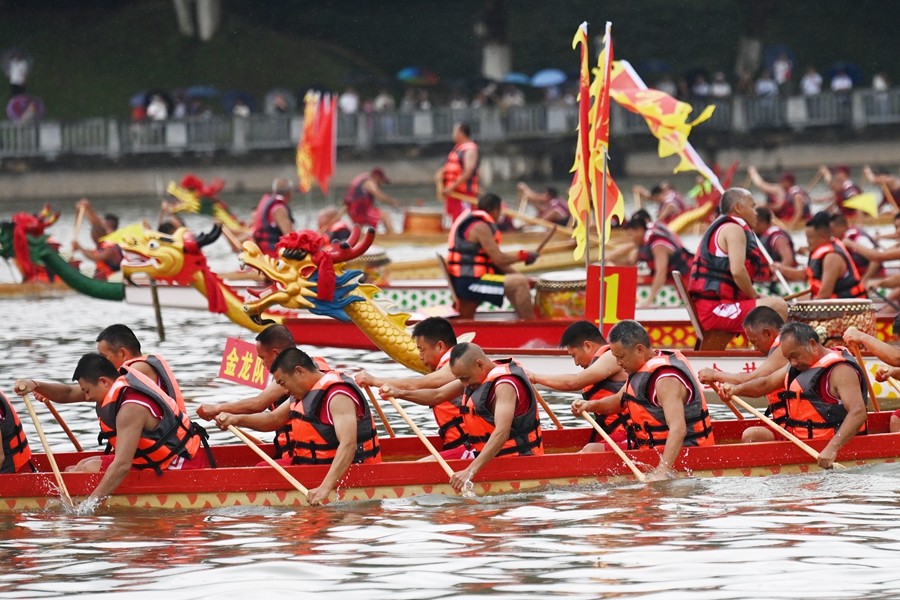
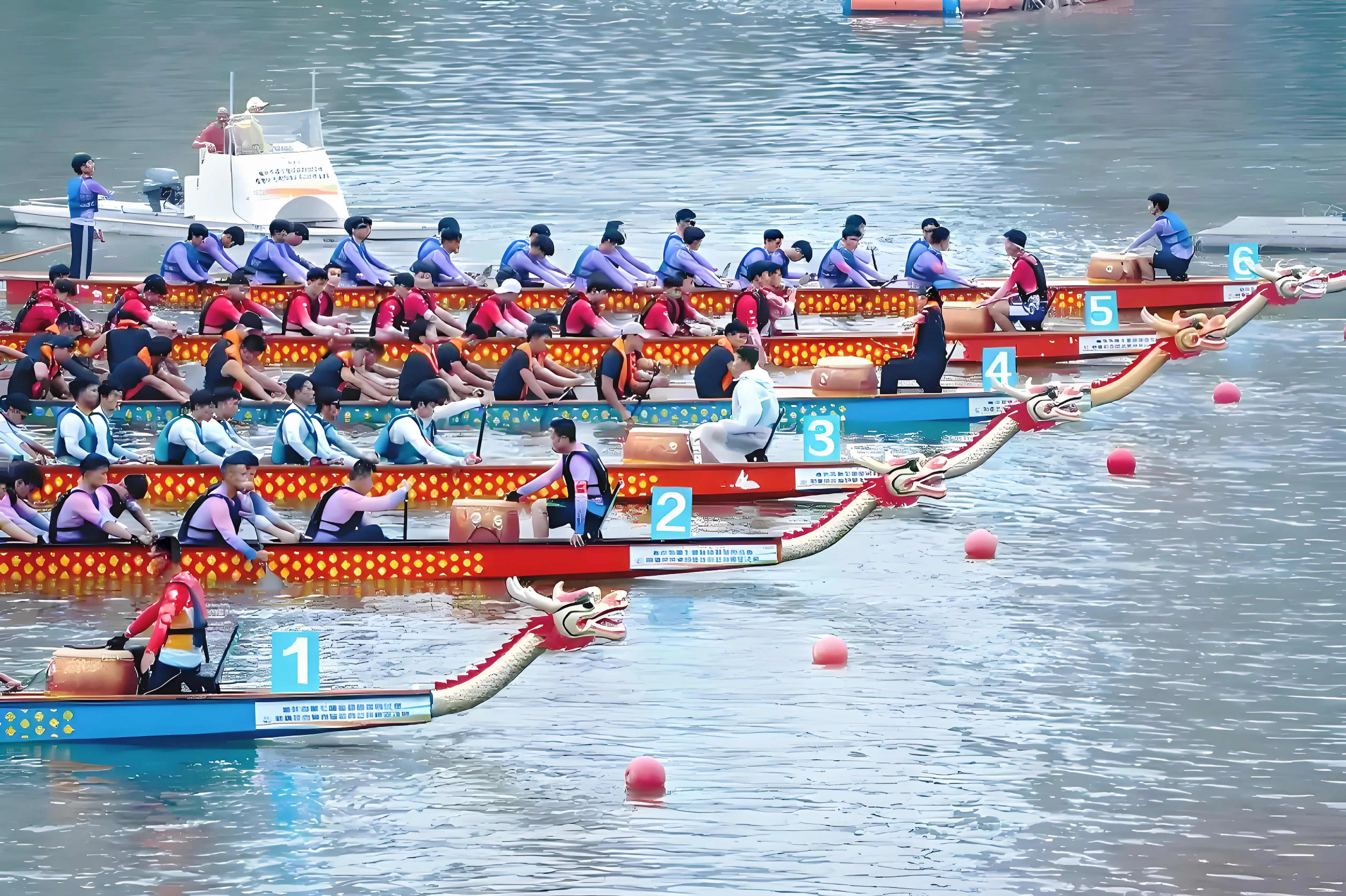
* Time: 5th day of the 5th lunar month
5. Mid-Autumn Festival
Enjoy the full moon in the serene gardens of Tang Paradise or by the lake at Qujiang Pool, while tasting traditional mooncakes and osmanthus cakes—classic treats for the festival symbolizing family reunion.

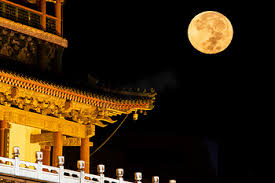
* Time: 15th day of the 8th lunar month
d. Food Exploration and Characteristic Experiences
1. Street Food Check-in
Xi’an has a wide variety of street food with unique flavors, which is an important way for foreign visitors to feel the fireworks of Xi’an. In food gathering places such as Muslim Quarter, Sajinqiao and Yongxingfang, you can check in various characteristic snacks, such as Roujiamo (Chinese hamburger), Yangrou Paomo (lamb paomo), Liangpi (cold noodles), Biangbiang Noodles, Zenggao (glutinous rice cake with red dates), Huanggui Persimmon Cake, etc. Each kind of food has its own unique production process and flavor. It is recommended to try them one by one to feel the charm of Northwest food.
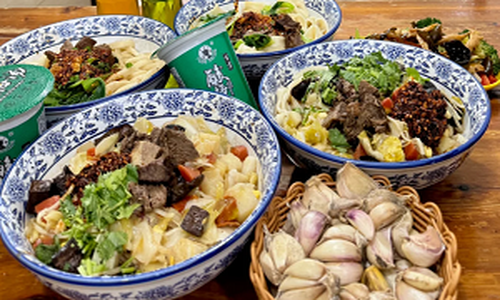
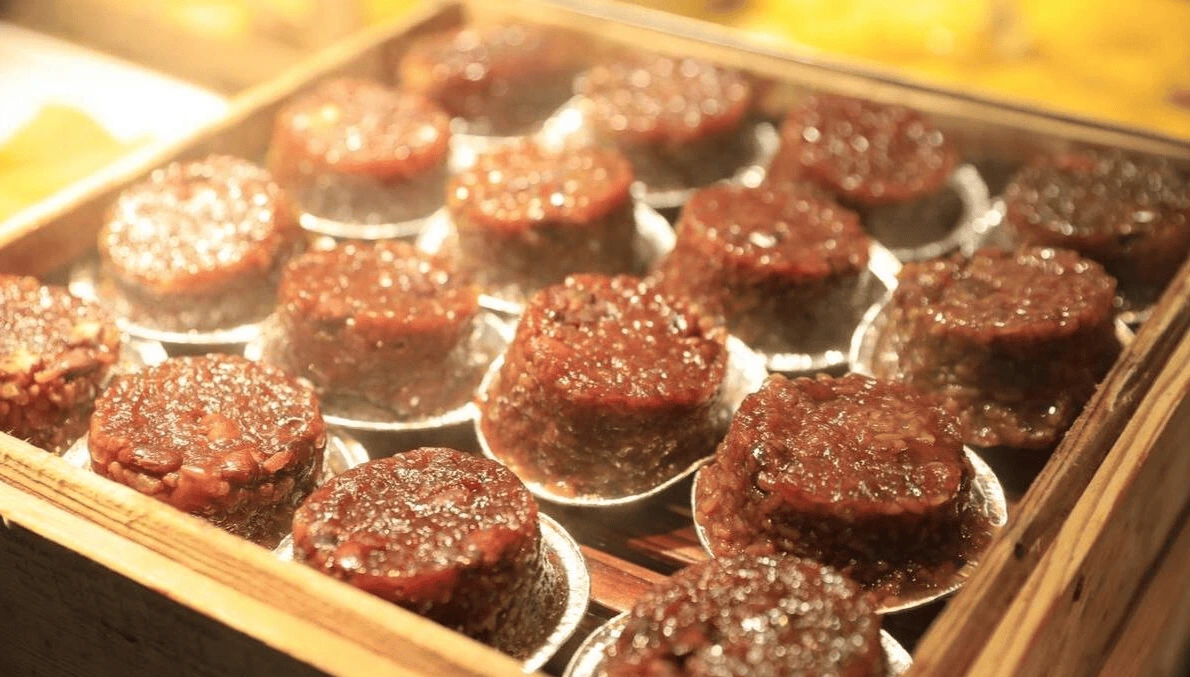
2. Food Making Experience
If you want to deeply understand the production process of Xi’an food, you can participate in food making experience activities. In places such as Yongxingfang and Chang’an Grand Restaurant, professional chefs will guide you to experience making food such as Roujiamo, Liangpi and dumplings. The food made by yourself is not only delicious, but also can take away a unique experience; you can also experience “Shattering Bowl Wine”, which is a characteristic activity in Yongxingfang. After drinking the wine, you shatter the bowl, which means “peace year after year”, feeling the boldness of the people in Northwest China.
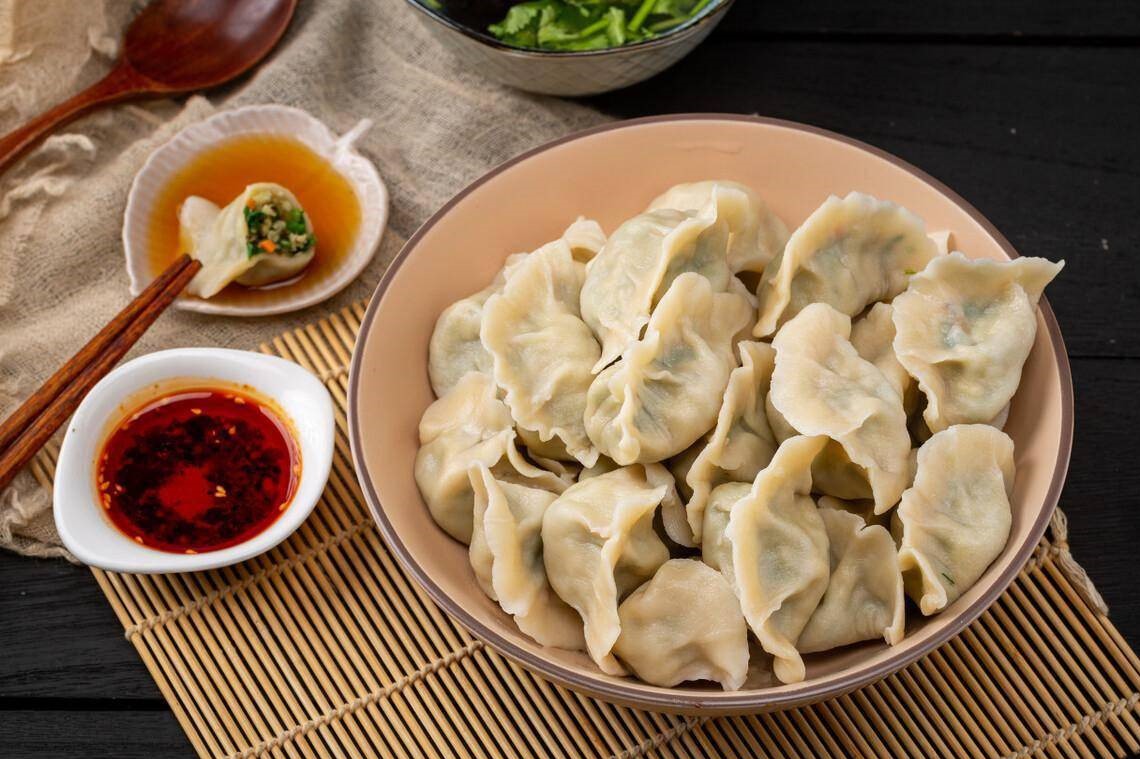
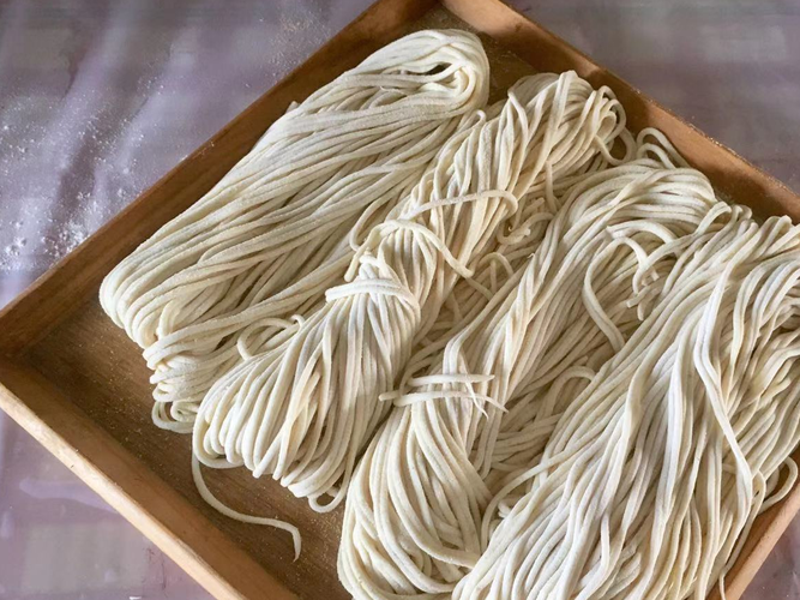
e. Outdoor Leisure and Nature Exploration
1. City Wall Cycling and Hiking
The Xi’an City Wall is the largest and best-preserved ancient city wall in China. Cycling or hiking around it offers views of ancient architecture blending with modern cityscapes.
The wall is 13.74 km long with four main gates. Yongning Gate (South Gate) is the most popular entry point. Bicycle rental: single ¥45–60/100 mins, tandem ¥80–100, family ¥90–120. Returnable at any gate. Hiking takes 3–4 hours.
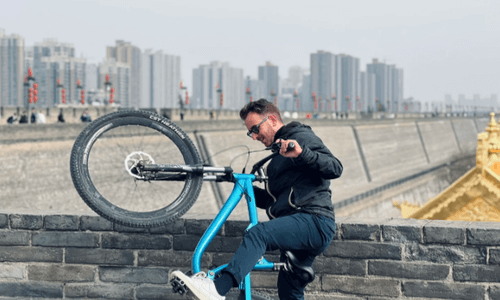
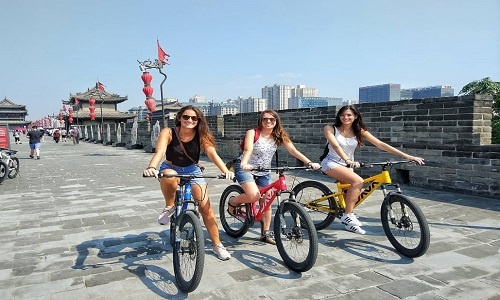
* Best times: early morning (7:00–9:00) or late afternoon (17:00–19:00) to avoid heat. Evening lighting creates beautiful photo opportunities.
2. Exploring Surrounding Natural Attractions
* Mount Hua
If you have enough time, you can go to the natural attractions around Xi’an to feel China’s natural scenery. Mount Hua: Located in Huayin City, Xi’an, about 120 kilometers from Xi’an, it is one of China’s Five Great Mountains, famous for its “wonder, danger, steepness and beauty”. You can climb the mountain by cable car or on foot. The scenery on the top of the mountain is spectacular, and you can overlook the mountains, suitable for tourists who like mountaineering and nature exploration; Qinling Wildlife Park: Located in Chang’an District, Xi’an, it is one of the largest wildlife parks in China, with a large number of rare wild animals. You can take a sightseeing bus to visit and watch animals up close, suitable for family tourists and animal lovers.

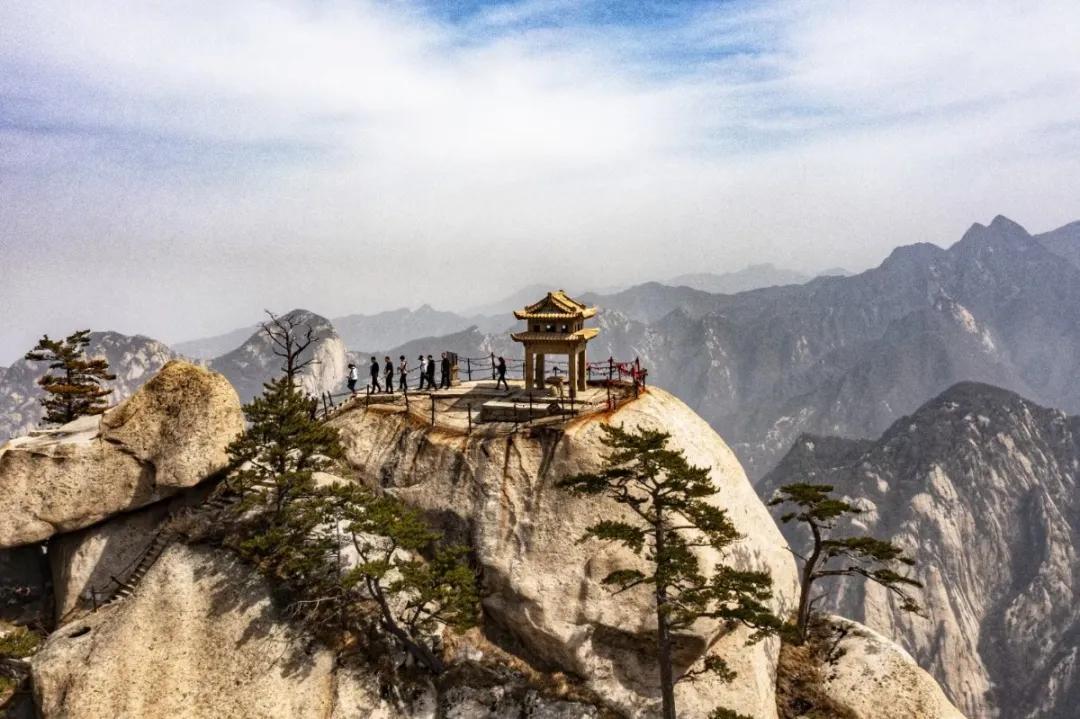
· Address: Huayin City, Weinan. 120 km from Xi’an, 1.5–2 hours by car, 30 minutes by high-speed rail (Xi’an North — Huashan North). One of China’s Five Great Mountains, famous for steep cliffs and thrilling trails.
· Tickets: ¥160 (peak), ¥100 (off-peak). Cable cars ¥80–140 one way.
* Qinling Wildlife Park
It is one of China's largest wildlife reserves and one of the most iconic natural attractions on the northern slopes of the Qinling Mountains. The park is home to a wide variety of rare and endangered wild animals, including mammals, birds, amphibians, and reptiles. It is an ideal destination for family visitors, parent-child experiences, and animal enthusiasts.


· Address: Luanzhen Subdistrict, Chang’an District. 25 km from Xi’an.One of China’s largest wildlife parks with giant pandas, golden monkeys, etc.
· Tickets: ¥100 adult, ¥50 student. Sightseeing bus ¥30.
 Xi'an to Huashan Day Trip: Experience the Breathtaking Scenery of Mt. Huashan
 Smooth Xi'an to Luoyang Day Tour: Enjoy a Comfortable & Efficient High-Speed Train Trip to Longmen Grottoes and Shaolin Temple
A Culinary Journey Through Xi’an: Top Eats & Hidden Gems
a. Must-Try Classic Food
1. Roujiamo (Chinese Hamburger)
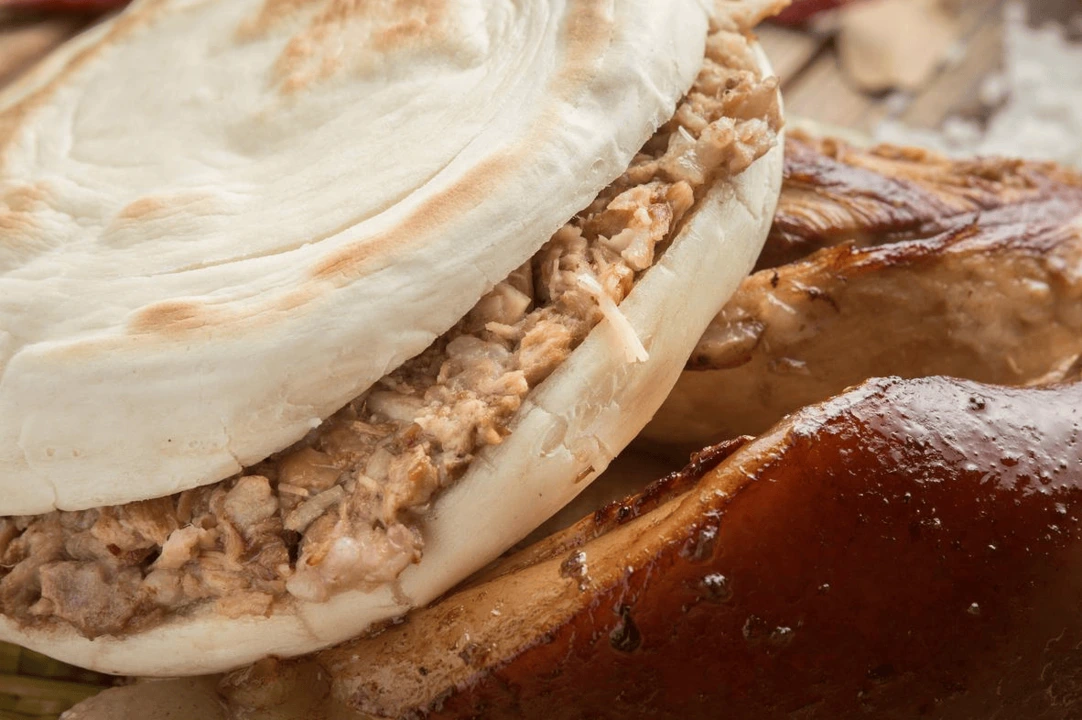
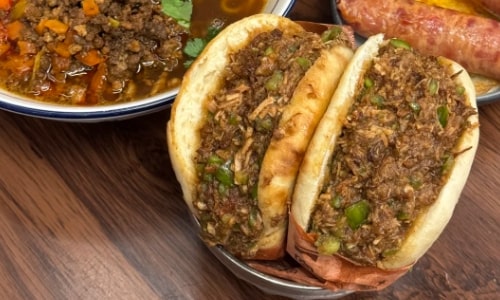
Known as the “world’s earliest hamburger,” Roujiamo is the signature food of Xi’an and a representative of Guanzhong folk cuisine, with a history dating back to the Zhou Dynasty—its prototype was the “cold meat wrapped in cake” eaten by Guanzhong ancestors. It consists of two indispensable parts: crispy and fluffy wheat flatbread (mo) and tender, flavorful braised meat. The meat used is usually pork belly (the most traditional choice) or beef; it is cut into pieces and braised slowly for 2-3 hours with more than 30 kinds of Chinese spices, including star anise, cinnamon, Sichuan peppercorn and licorice, making it tender, juicy, and not greasy at all. The flatbread is made of high-quality wheat flour, kneaded into dough and fermented, then baked in a traditional clay oven until the surface is golden and crispy, while the inside remains soft and chewy, with a strong wheat aroma.
The correct way to eat Roujiamo is to split the flatbread open (not cut all the way through), stuff it with sliced braised meat, and optionally add a little gravy for extra flavor—this is the most authentic way favored by locals. There are two popular varieties: La Zhi Rou Jia Mo (braised pork sandwich) and La Niu Rou Jia Mo (braised beef sandwich). For an authentic taste, try the pork version, which is more traditional and widely loved by locals for its rich flavor. Roujiamo is not only a convenient street food that can be eaten on the go but also a staple of Xi’an’s daily diet; it is often paired with Liangpi (cold skin noodles) and Bingfeng (local orange soda) to form the famous “San Qin Set Meal” beloved by all Xi’an people, which is a perfect combination of salty, spicy and refreshing flavors.
2. Yangrou Paomo (Crumbled Flatbread in Mutton Stew)
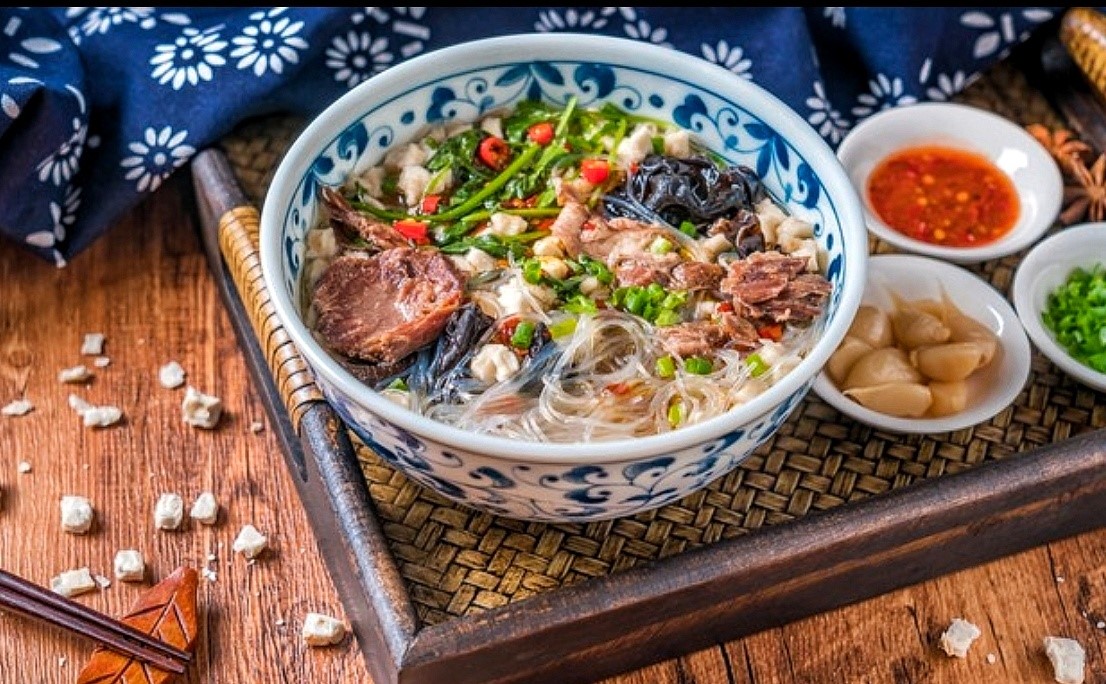
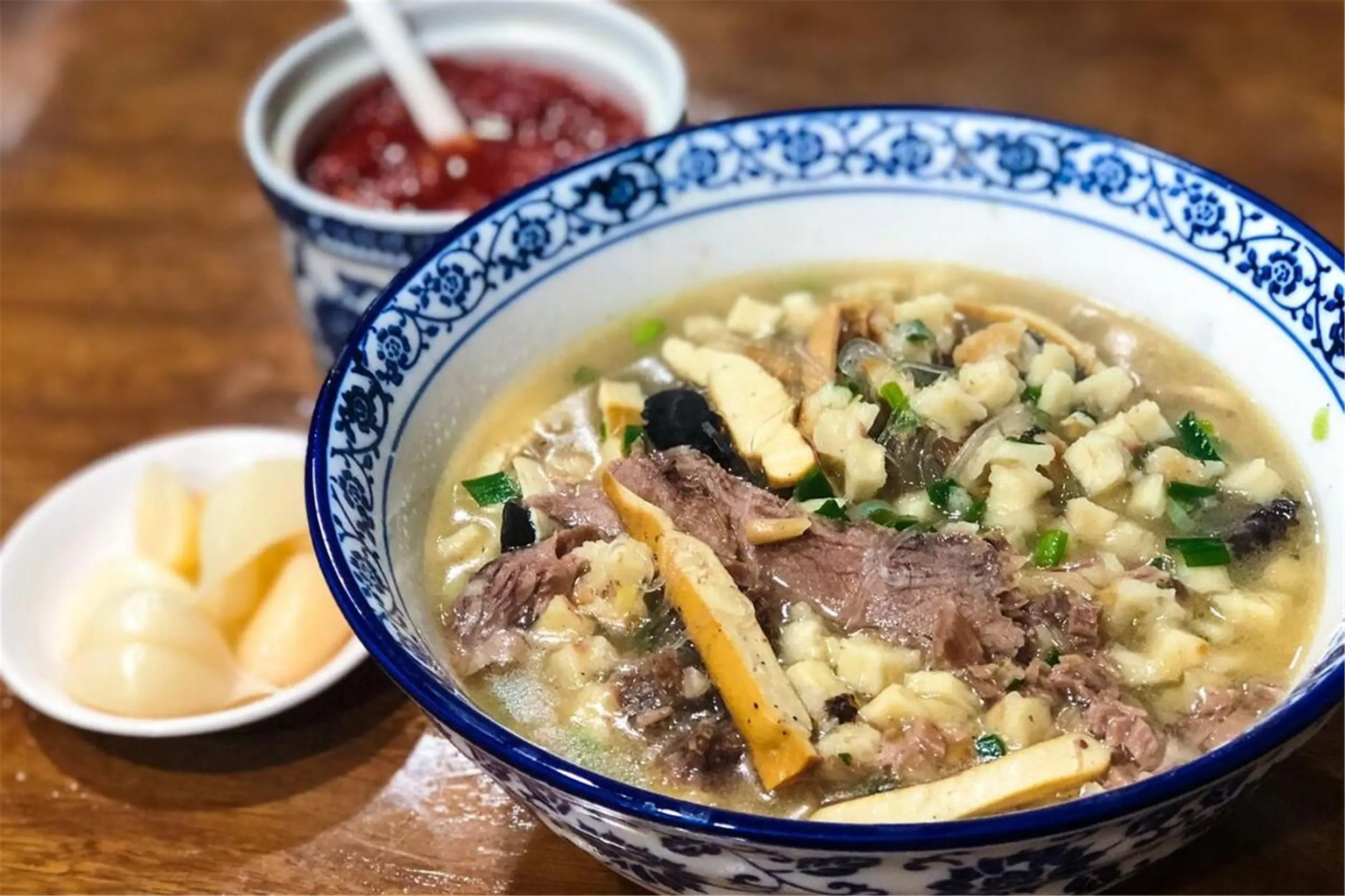
Yangrou Paomo is the most iconic and ritualistic food in Xi’an, embodying the bold and unconstrained character of Guanzhong people. It originated from the Tang Dynasty as a royal delicacy—imperial chefs made it with fine mutton and high-quality wheat flour to satisfy the emperor’s taste, and later it spread to the people, becoming a symbol of Xi’an’s cuisine and a representative of Guanzhong’s dietary culture. The dish is made of simmered mutton soup, hard wheat flatbread, and various side ingredients, with a warm and rich flavor that is perfect for cold days, warming the body and dispelling cold.
The most interesting and distinctive part of eating Yangrou Paomo is “breaking the bread”: you need to tear the hard flatbread into small pieces (the smaller the better, as it can absorb the soup more fully and taste more flavorful). This process is not only a kind of dietary ritual but also a way to experience Guanzhong’s folk customs—locals often say that “the smaller the bread pieces, the more sincere the hospitality.” Then, the waiter will take the crumbled bread to the kitchen, add it to the simmering mutton soup, and cook it with tender mutton slices, vermicelli, daylily, black fungus, and coriander. When served, the soup is milky white, the bread is soft and flavorful, and the mutton is tender and not fishy at all. It is usually paired with sugared garlic (to relieve greasiness) and chili sauce (to add flavor) to balance the richness.
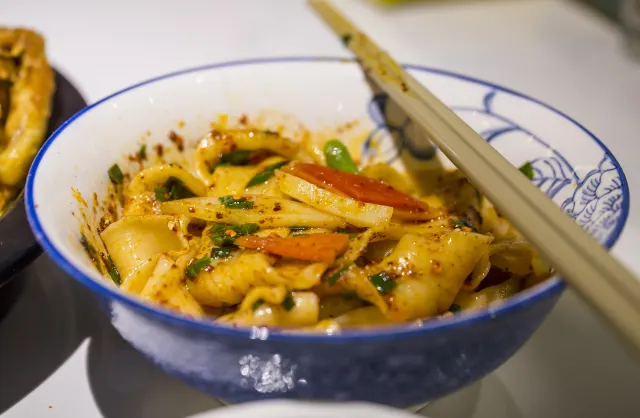
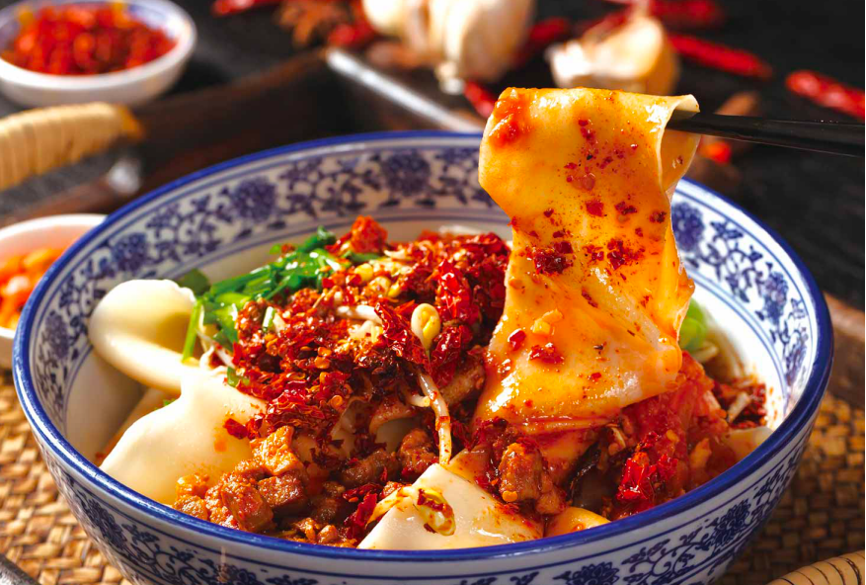
3. Biangbiang Noodles
Biangbiang Noodles are a famous Guanzhong pasta, named after the “biang biang” sound made when the dough is pulled and slapped on the table—a sound that is very familiar to locals and has become a distinctive “sound symbol” of Xi’an’s food culture. With a history of over 2,000 years, this noodle dish is known for its wide, thick, and chewy texture, as well as its spicy and fragrant flavor, which perfectly reflects the bold and straightforward character of Guanzhong people.
The noodles are hand-made: the dough is kneaded with wheat flour and water, left to ferment for a period of time, then pulled and slapped repeatedly on the table to form wide strips (about 3-5 centimeters wide and 1 meter long), which are then boiled in boiling water until they are soft but chewy. After being fished out, they are topped with red chili oil, minced garlic, scallions, soy sauce, vinegar, and optionally minced meat (pork or beef) or vegetables (spinach, bean sprouts). The highlight of Biangbiang Noodles is the chili oil: made of local dried chili peppers, sesame oil, and various spices, it is red, fragrant, and not overly spicy, enhancing the flavor of the noodles without covering up the original wheat aroma. The noodles are thick and chewy, with a satisfying texture that fills you up quickly. It is a favorite among locals, especially for breakfast or lunch, as it is simple, delicious, and energizing. For an authentic experience, visit small noodle shops in local alleys, where the noodles are made fresh on the spot, and you can watch the chefs pull and slap the dough with skill.
4. Liangpi (Cold Noodles)
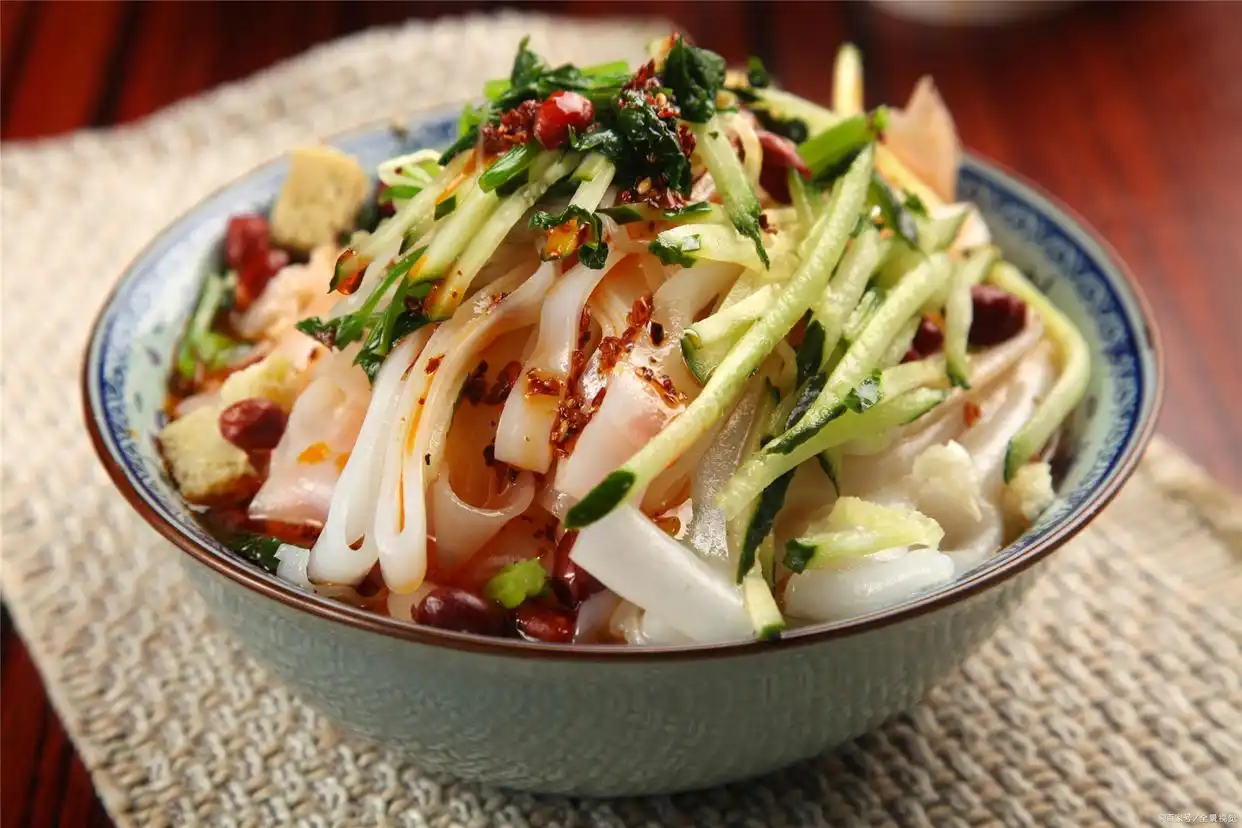
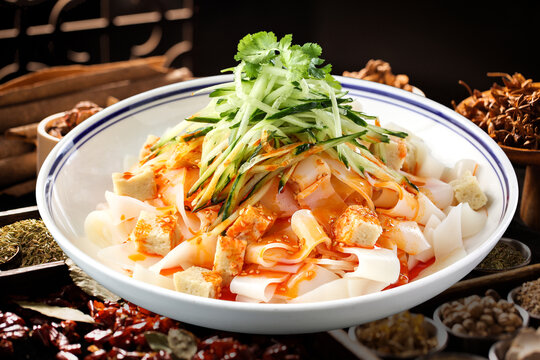
Liangpi is a popular cold snack in Xi’an, perfect for summer, with a history dating back to the Qin Dynasty—legend has it that it was invented by Qin Shi Huang’s chefs to solve the problem of food storage in hot weather. It is made of wheat or rice flour, mixed with water to form a thin batter, steamed into thin and transparent sheets, cut into strips after cooling, and served with a variety of seasonings. There are three main types of Liangpi in Xi'an: Gan Mian Pi (wheat cold skin, chewy and tough), Mi Pi (rice cold skin, soft and smooth), and Niang Pi (soybean cold skin, tender and delicate), each with a unique texture and flavor, suitable for different tastes.
The seasonings are the key to Liangpi’s deliciousness: sesame paste (rich and mellow), chili oil (fragrant and spicy), vinegar (sour and refreshing), soy sauce (salty and fresh), minced garlic (aromatic), scallions (crisp), and pickled vegetables (sour and crisp) are mixed together in a certain proportion to create a sour, spicy, fragrant, and refreshing flavor that is irresistible. The cold skin is thin, soft, and chewy, with a cool texture that relieves the heat of summer, making it a favorite summer snack for locals. It is often paired with Roujiamo and Bingfeng (a local orange soda) to form a classic “Xi’an fast food combination” that is loved by both locals and tourists—affordable, convenient, and full of local flavor.
5. Additional Classic Eats
Besides the above must-tries, Xi’an has many other classic foods worth tasting, each with its own unique flavor and cultural story: Dingjia Small Crispy Meat (tender fried beef cubes steamed in a small basin, served with pickled vegetables—tender on the inside and crispy on the outside, with a sour and fragrant taste), Hu La Tang (spicy soup with beef or lamb balls, vermicelli, and vegetables—a popular breakfast for locals, spicy and warm, energizing the whole day), Fen Zheng Rou (steamed pork with glutinous rice flour, wrapped in lotus leaf cakes—soft and glutinous, with a rich meat aroma, a traditional delicacy for festivals), Persimmon Cakes (sweet pastries made of ripe persimmons and glutinous rice—soft and sweet, with a hint of persimmon aroma, a famous dessert in Xi’an), and Qinzhen Mipi (a type of Liangpi made of rice flour, more soft and smooth than wheat Liangpi, a specialty of Qinzhen Town near Xi’an). In addition, you can also try Tongguan Roujiamo (with a more crispy crust than traditional Roujiamo) and Qishan Dadao Saozi Noodles (a provincial intangible cultural heritage, with thin noodles and sour-spicy soup).
For more food information, please refer to:
https://www.xianprivatetour.com/xian/xian-dining.htm
b. Recommended Food Gathering Places
1. Muslim Quarter (Huimin Street)
Muslim Quarter, located near the Drum Tower and Bell Tower in the city center, is the most famous food street in Xi’an, with a history of over 1,000 years. It is a gathering place for Xi’an’s Hui people, where Islamic culture and Guanzhong folk culture blend perfectly, and the food here is mainly halal (no pork or alcohol), with a strong ethnic flavor. As one of the most vibrant night markets in Xi’an, it is crowded with locals and tourists every day, especially in the evening, when the lights are on, and the aroma of food fills the entire street.
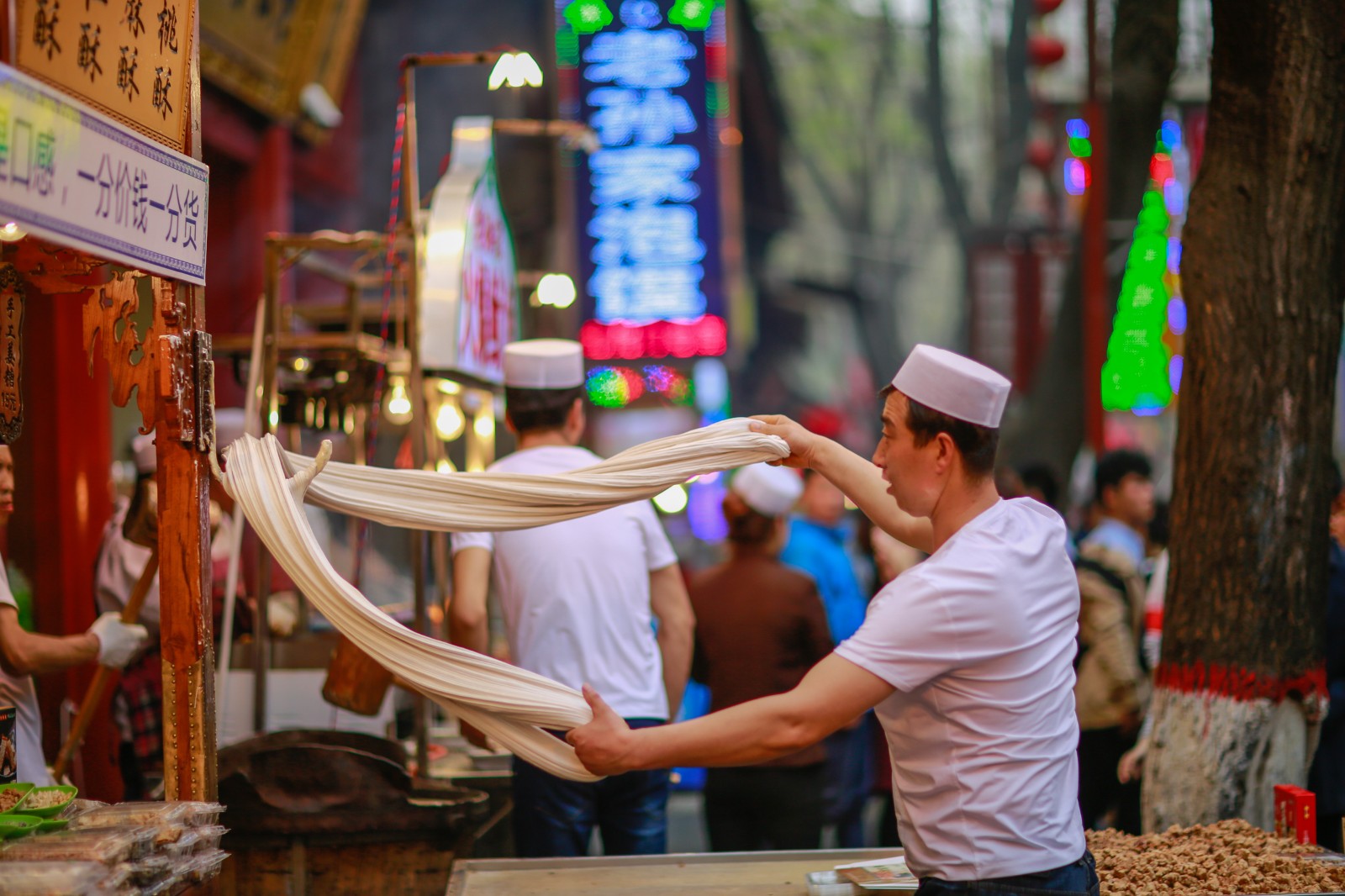
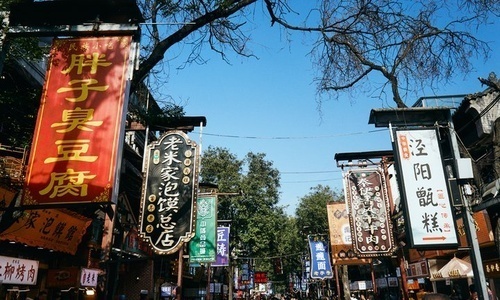
* Must-try foods here: Yangrou Paomo (the most famous is Lao Sun Jia and Tong Sheng Xiang), Roujiamo (beef version is more popular here), Liangpi (Gan Mian Pi and Mi Pi), Fen Tang Yang Xue (spicy sheep blood soup with vermicelli—tender sheep blood, chewy vermicelli, spicy and delicious), Zeng Gao (glutinous rice cake with red dates and beans—soft and sweet, a traditional dessert), and various halal snacks such as fried dough twists and candied fruits. In addition, you can also find many halal restaurants here, serving authentic Hui-style dishes such as braised beef and lamb chops.
* Tips: Muslim Quarter is very crowded during peak tourist seasons, so it is recommended to go in the morning or evening; when buying food, you can compare prices, and most shops accept Alipay/WeChat Pay and cash.
2. Yongxingfang
Yongxingfang, located at No. 15 Dongle Lane, Xincheng District, is a characteristic food street focusing on Shaanxi’s intangible cultural heritage food, different from the bustling Muslim Quarter—it is more elegant and has a strong cultural atmosphere, integrating food, culture, and folk customs. It gathers snacks from all over Shaanxi (Guanzhong, Shannan, and Shanbei), allowing you to taste all kinds of authentic Shaanxi food in one stop, making it a popular check-in place for tourists and a favorite food spot for locals.
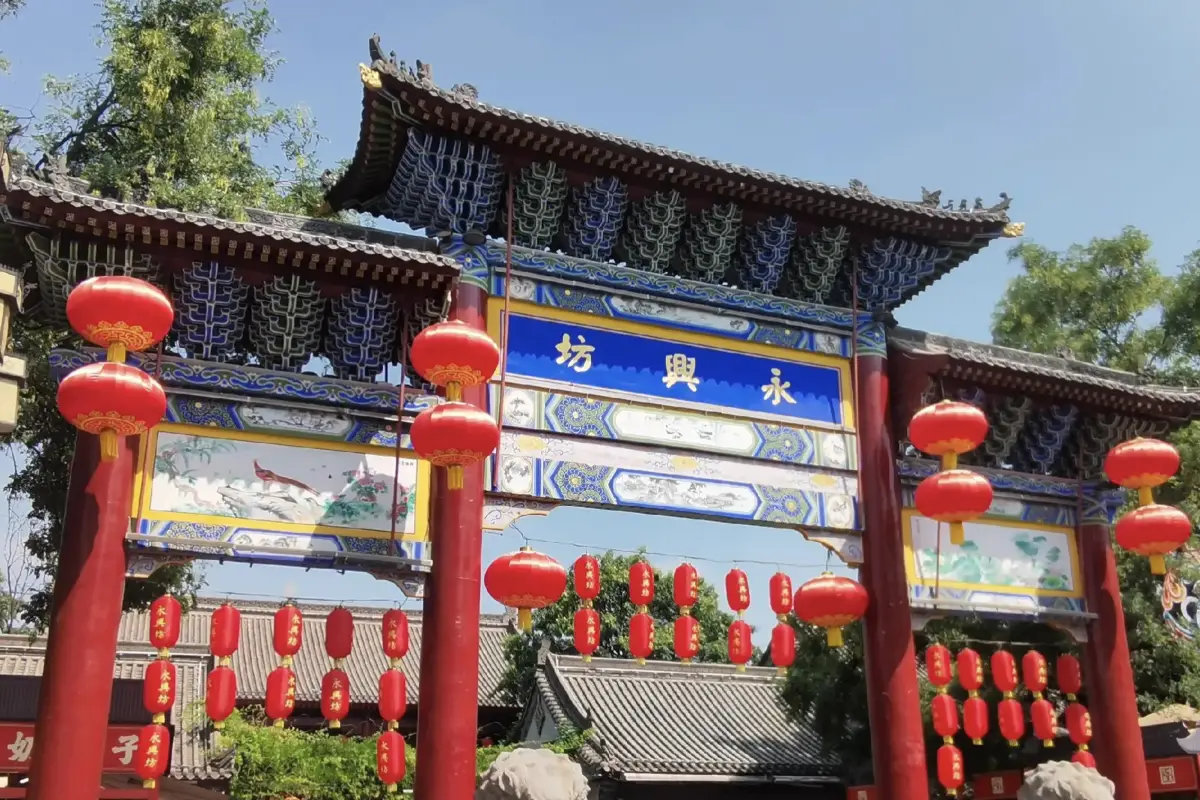
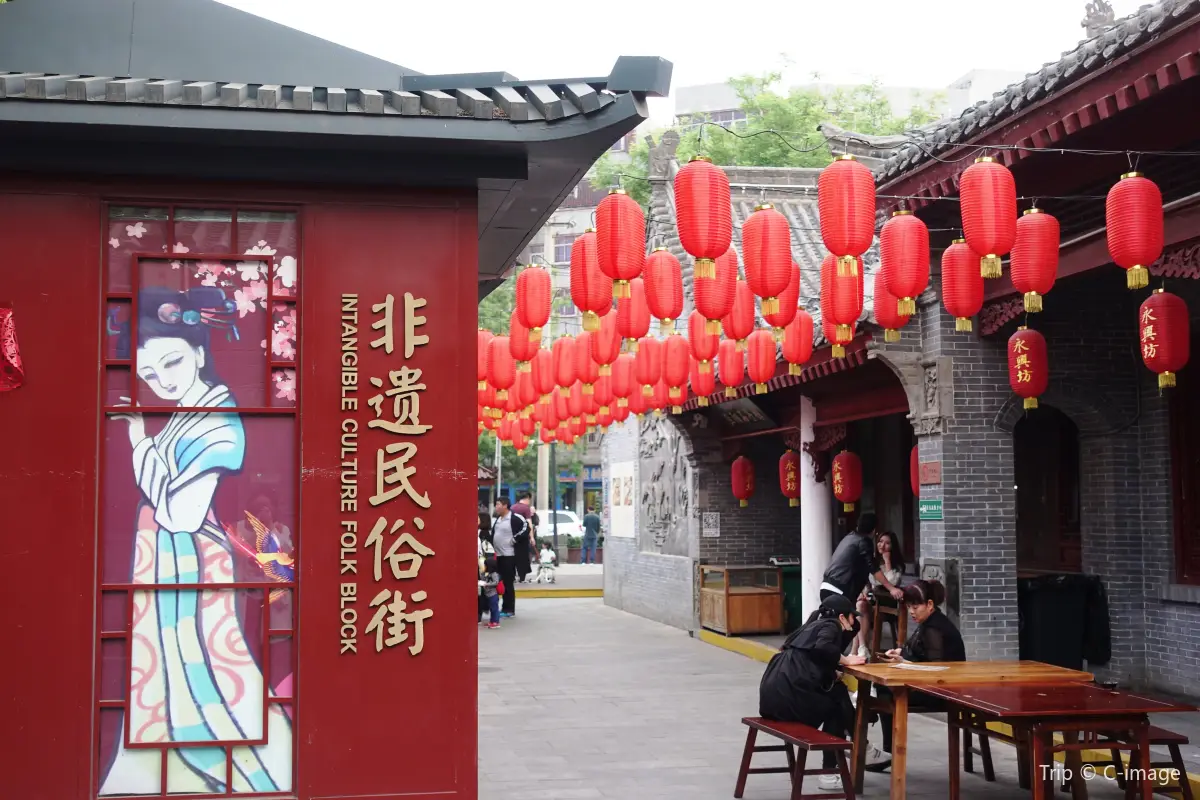
* Must-try foods here: Biangbiang Noodles (three-in-one version is recommended—with minced meat, tomato sauce, and chili oil), Mao Bi Su (a snack shaped like a writing brush—crispy outer skin, sweet filling, a “Internet-famous snack” in Xi’an), Yangrou Paomo (Chengcheng style, different from the traditional version, with a lighter soup), Qinzhen Mipi (authentic taste, served with fresh seasonings), San Yuan Liao Hua Tang (a traditional snack with a history of hundreds of years, crispy and sweet, once a royal delicacy), and Shannan Ankang Zheng Mian (a type of Liangpi that can be eaten with soup, chewy and refreshing). In addition, you can also experience the folk custom of Bowl-Smashing Wine here, watch the production process of traditional snacks (such as manual noodle pulling and sugar making), and buy Shaanxi specialties such as chili noodles and osmanthus cake as souvenirs.
* Tips: Yongxingfang is close to the Daming Palace National Heritage Park, so you can visit the heritage park first and then come here to taste food; the price is moderate, and the environment is clean and tidy.
3. Sajinqiao Food Street
Sajinqiao Food Street, located in Lianhu District, is a “hidden gem” food street loved by locals—less crowded than Muslim Quarter and Yongxingfang, but with more authentic and affordable food. It is a old street in Xi’an, with simple and unsophisticated buildings, and most of the shops here are small local restaurants with a history of decades, serving the most down-to-earth Xi’an snacks.
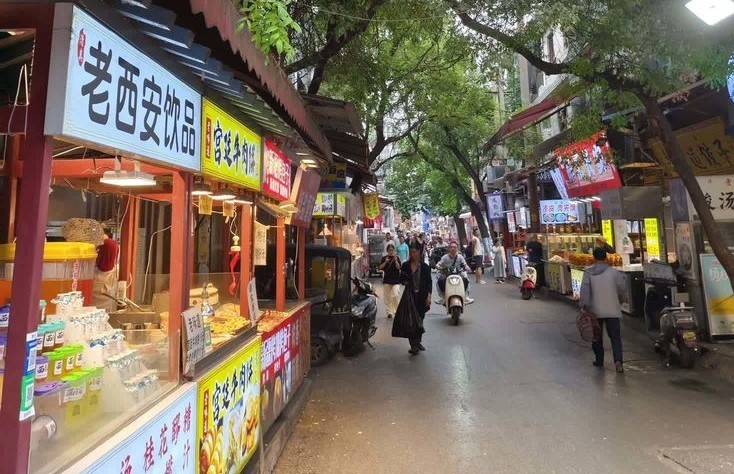
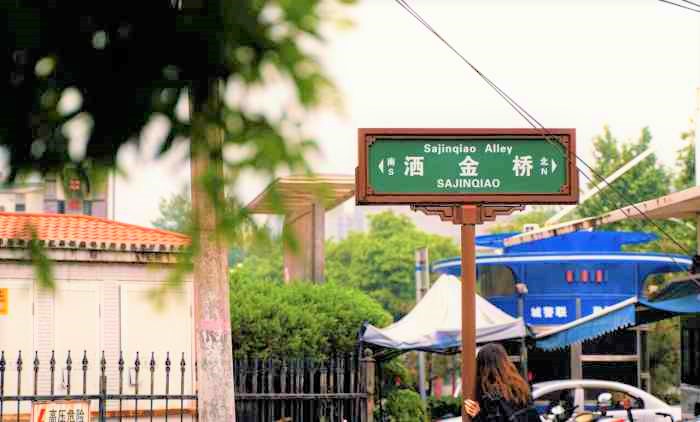
* Must-try foods here: Liangpi (local small shops have more authentic taste than famous brands), Roujiamo (the flatbread is baked in a clay oven on the spot, crispy and fragrant), Hu La Tang (locals’ favorite breakfast, the soup is rich and spicy), Dingjia Small Crispy Meat (homemade taste, tender and not greasy), and Persimmon Cakes (made of fresh persimmons, soft and sweet, no additives). In addition, there are many local breakfast shops here, serving Guanzhong-style breakfast such as soybean milk, fried dough sticks, and steamed buns, which are affordable and delicious.
* Tips: Sajinqiao Food Street is mainly for local consumption, so the price is very reasonable; most shops open early in the morning and close in the evening, so it is recommended to go for breakfast or lunch to taste the most authentic local flavor.
4. Datang Everbright City Food Street
Datang Everbright City, located in Qujiang New District, is a pedestrian street themed on Tang Dynasty culture, and its food street is an important part of it—integrating Tang-style snacks, classic Xi’an food, and modern Internet-famous snacks, with a strong Tang Dynasty cultural atmosphere. Walking along the food street, you can see Tang-style buildings, street performers (singing Tang poems, performing Tang-style dances), and various food stalls, making you feel as if you have traveled back to the prosperous Tang Dynasty.
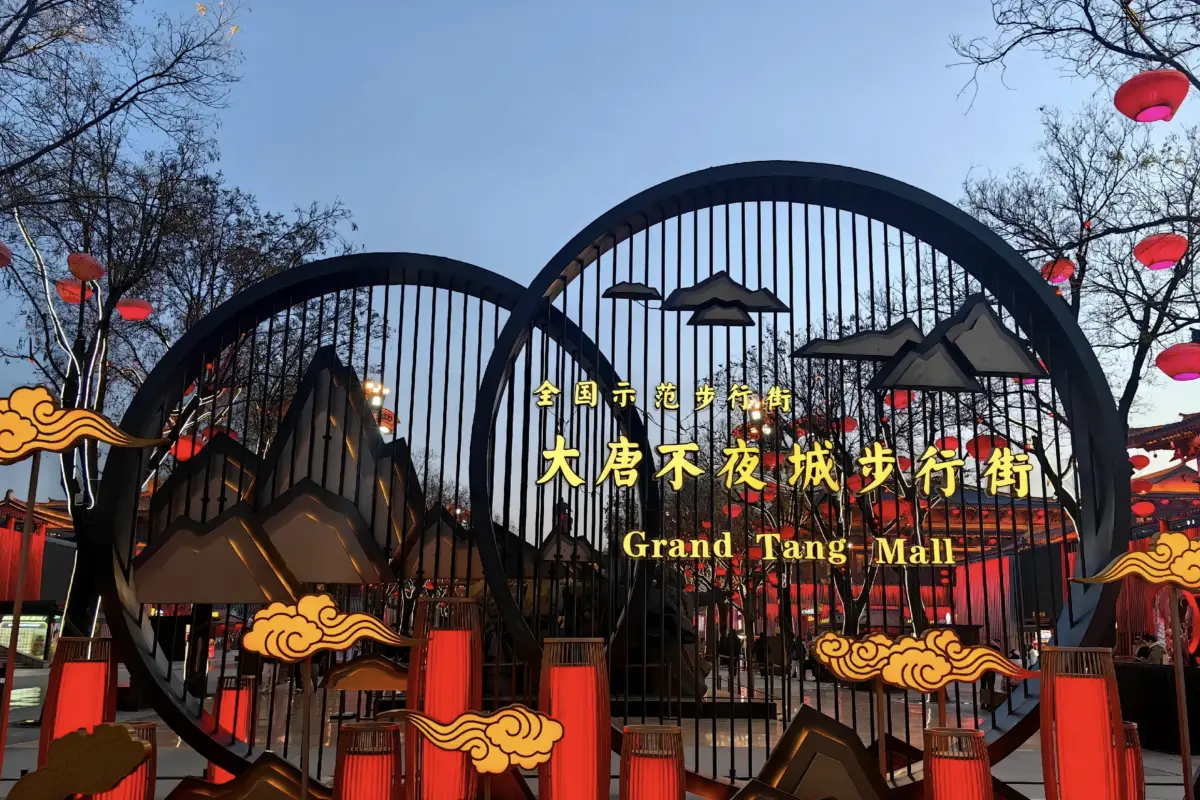
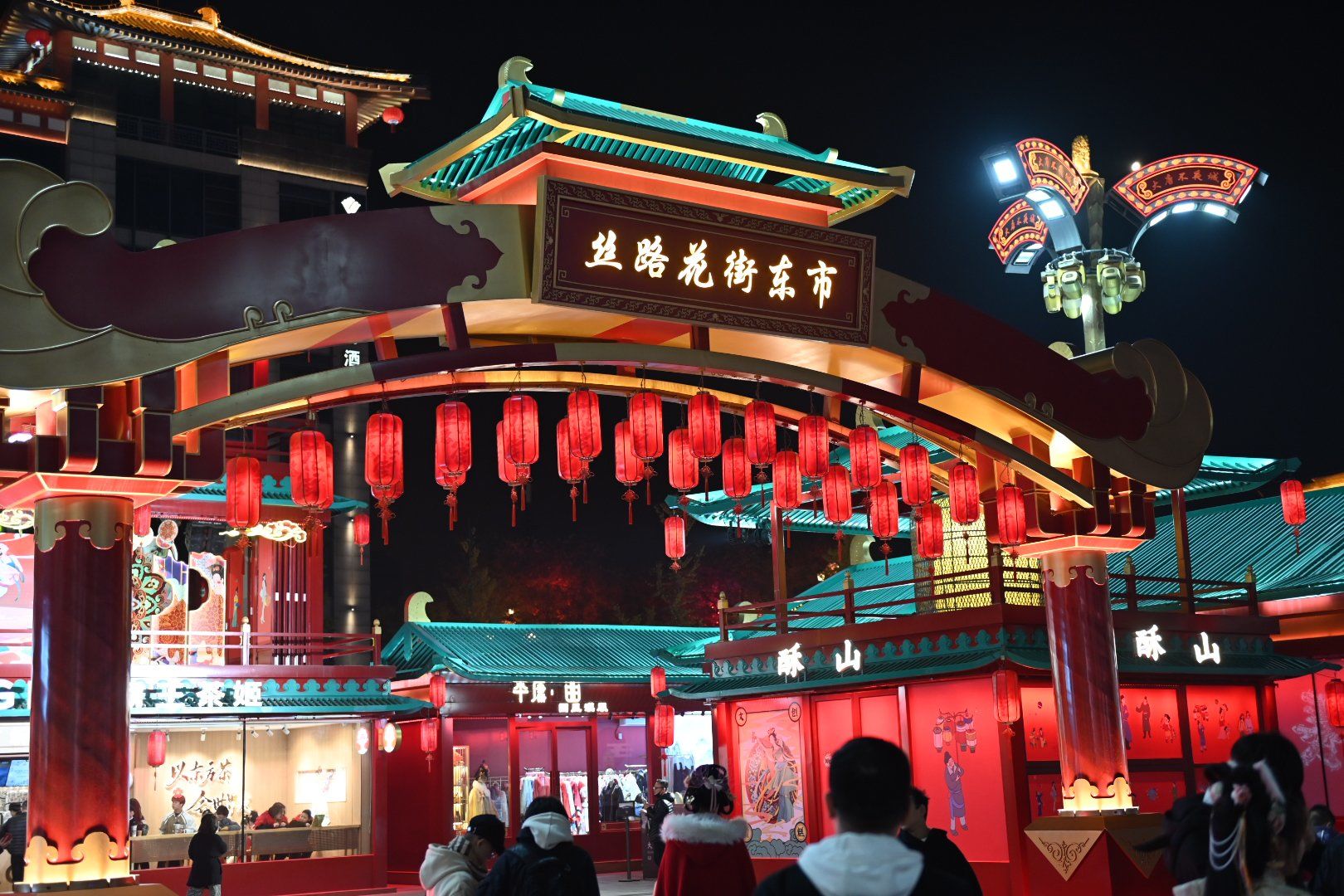
* Must-try foods here: Tang-style pastries (such as osmanthus cake, lotus seed cake—exquisite appearance, mellow taste, imitating the royal pastries of the Tang Dynasty), Huanggui Thick Wine (served in Tang-style bowls, with a strong osmanthus aroma), Biangbiang Noodles (Tang-style decoration, unique shape), and various Internet-famous snacks such as fried ice cream and milk tea with local characteristics. In addition, there are many high-end restaurants here, serving improved Xi’an food and Tang-style banquets, suitable for tourists who want to taste delicious food while experiencing Tang Dynasty culture.
* Tips: Datang Everbright City is most beautiful at night, when the lights are on, so it is recommended to go in the evening; the price is slightly higher than other food streets, but the environment and cultural experience are very good.
For more restaurants information, please refer to:
https://www.xianprivatetour.com/xian/restaurant.htm
Navigating Xi’an: Your Ultimate Transportation Essentials
a. Arriving in Xi’an
1. Plane
Xi’an Xianyang International Airport (IATA: XIY) is the only international airport in Xi’an, about 40 kilometers away from the urban area. It has opened many domestic and international routes, directly reaching many cities around the world and major cities in China.
* Ways to get to the urban area after arrival:
· Airport Intercity Railway (most convenient and economical): Take the Airport Intercity Line from Airport Station to Xi’an North Station (high-speed rail hub), the whole journey is about 27 minutes, the fare is 16 yuan, and you can transfer to the subway to go anywhere in the urban area.
· Airport Shuttle Bus (wide coverage): Multiple routes directly reach the core areas of the urban area (such as Bell Tower, Giant Wild Goose Pagoda, Railway Station), the fare is 25-35 yuan, the whole journey is about 1-1.5 hours, and the departure time follows the flight arrival time
· Taxi/Ride-Hailing (convenient and comfortable): There are regular taxi stops at the airport exit. Taking a taxi to the urban area costs about 120-180 yuan (depending on the destination). You can order a ride through a ride-hailing APP (such as Didi Chuxing), which supports English interface and no cash payment.
2. High-Speed Train/Train
Xi’an has two core railway stations - Xi’an North Station (mainly high-speed trains) and Xi’an Station (ordinary trains + some EMUs). Xi’an North Station is an important high-speed rail hub in China, with high-speed trains directly to Beijing, Shanghai, Guangzhou, Chengdu and other cities. From the North Station, you can take Metro Line 2 and Line 4 directly to the urban area; Xi’an Station is located in the core area of the urban area, adjacent to the City Wall, and you can take buses and Metro Line 4 directly to the scenic spots, making travel convenient. Tip: Tickets can be purchased through the 12306 official website, 12306 APP (supports English), and railway station ticket windows. A valid passport (foreigners’ ticket purchase certificate) is required.
b. Urban Transportation
1. Subway
Xi’an Metro currently has multiple lines in operation, covering all core scenic spots in the urban area (such as Terracotta Army, Giant Wild Goose Pagoda, Bell and Drum Tower, Grand Tang Mall). The fare is 2-8 yuan, and the operation time is 6:00-23:00. Advantages: Fast, on time, no traffic jams, it is the first choice for foreign visitors to travel in the urban area. Tip: You can buy a Xi’an Metro Card (cost 18 yuan, rechargeable, suitable for visitors staying for more than 3 days), or use mobile phone to scan the code to take the subway (supports Alipay and WeChat ride codes, just bind a bank card in advance); there are English signs in the subway, and some stations have English broadcasts, which are convenient for foreign visitors to identify.
2. Bus
Xi’an has dense bus routes, covering the urban area and surrounding scenic spots. The fare is 1-2 yuan, and some air-conditioned buses cost 2 yuan. Most of the operation time is 6:00-22:00. Tip: Bus stops have English signs, but the announcements on the bus are mostly in Chinese. You can check the route on your mobile phone map in advance; it is recommended to prepare a small amount of cash (1 yuan, 2 yuan banknotes/coins), as some old buses do not support code scanning payment; the tourist special line (such as You 5/306 Road) to Terracotta Army and Huaqing Palace can be taken at Xi’an Station, directly reaching the scenic spots, the fare is about 7 yuan. Please distinguish the regular tourist special line to avoid taking black cars.
3. Taxi/Ride-Hailing
The starting fare of taxis in the urban area is 10 yuan (within 3 kilometers). After exceeding 3 kilometers, 2.3 yuan is added per kilometer. At night (23:00-6:00 the next day), the starting fare is 11 yuan, and the surcharge is 0.5 yuan per kilometer. Ride-hailing (Didi Chuxing, Amap Taxi) is more convenient to use, supporting English interface and foreign address input. You can pay directly with your mobile phone, and the price is slightly lower than that of taxis, which is suitable for traveling with multiple people or carrying luggage. Tip: Please choose regular taxis when taking a taxi (the body is green or blue with regular license plates), avoid taking black cars on the side of the road to prevent being overcharged; you can turn on the mobile phone map navigation after getting on the bus to confirm the driving route.
4. Shared Bike/Electric Bike
Shared bikes and shared electric bikes can be seen everywhere in Xi’an urban area, which are suitable for short-distance travel (1-3 kilometers). The price is affordable (shared bikes 1-2 yuan/30 minutes, shared electric bikes 2-3 yuan/30 minutes), and they can be unlocked by scanning the code with a mobile phone (supports Alipay and WeChat). Tip: Before riding, please confirm the parking area (random parking is prohibited in the core areas of the City Wall and scenic spots), and wear a safety helmet; a Chinese driver’s license or international driver’s license is required to ride a shared electric bike. Do not ride without a driver’s license.
Accommodation Recommendations
a. Core Recommended Accommodation Areas
1. Bell and Drum Tower/Muslim Quarter Area
The most recommended accommodation area, located in the core of the urban area, adjacent to the Bell and Drum Tower and Muslim Quarter. It is within walking distance to Xi’an City Wall (Yongning Gate), directly accessible by Metro Line 2 and Line 4, making travel and dining extremely convenient. It is suitable for foreign visitors visiting Xi’an for the first time and wanting to feel the fireworks of the ancient city.
* Recommended Accommodation (by Budget):
· High-End Hotels (above 1000 yuan/night): The Westin Xi’an, with an excellent location, 5 minutes’ walk from the Bell and Drum Tower, luxurious facilities, providing English services and foreign currency exchange, equipped with a gym and swimming pool, suitable for tourists pursuing high-quality experiences.
· Mid-Range Hotels (400-1000 yuan/night): Xi’an Bell Tower Hotel, a time-honored hotel with a retro style, adjacent to the Bell and Drum Tower, within walking distance to Muslim Quarter, providing English services, cost-effective.
· Economical Hotels/Homestays (100-400 yuan/night): Xi’an Ancient City Wall Homestay, simple and ancient decoration, some rooms have a view of the City Wall, the owner can provide English consultation and itinerary suggestions, affordable price; 7 Days Inn (Bell and Drum Tower Store), a chain brand, clean and tidy, close to the subway station, suitable for tourists with limited budget.
2. Big Wild Goose Pagoda/Datang Everbright City Area
Suitable for foreign visitors who like night tours and prefer Tang Dynasty culture, adjacent to the Big Wild Goose Pagoda, Datang Everbright City and Shaanxi History Museum. At night, you can walk to Datang Everbright City to enjoy the light feast, directly accessible by Metro Line 3 and Line 4, comfortable environment and beautiful night view.
* Recommended Accommodation (by Budget):
· High-End Hotels (above 1000 yuan/night): Hyatt Regency Xi’an, 10 minutes’ walk from the Giant Wild Goose Pagoda, complete facilities, providing English services and transfer services, the supporting restaurant can taste Chinese and Western food, suitable for high-end tourists.
· Mid-Range Hotels (400-1000 yuan/night): Xi’an Bell Tower Hotel, a time-honored hotel with a retro style, adjacent to the Bell and Drum Tower, within walking distance to Muslim Quarter, providing English services, cost-effective.
· Economical Hotels/Homestays (100-400 yuan/night): Xi’an Ancient City Wall Homestay, simple and ancient decoration, some rooms have a view of the City Wall, the owner can provide English consultation and itinerary suggestions, affordable price; 7 Days Inn (Bell and Drum Tower Store), a chain brand, clean and tidy, close to the subway station, suitable for tourists with limited budget.
3. Xi’an North Station/High-Speed Rail Hub Area
Suitable for foreign visitors who are in transit or frequently travel by high-speed rail, adjacent to Xi’an North Station, directly accessible by Metro Line 2 and Line 4, convenient to go to the airport and various places in the urban area, cost-effective accommodation, suitable for short-term stay or transit tourists.
* Recommended Accommodation (by Budget):
· Mid-Range Hotels (400-1000 yuan/night): Hampton by Hilton Xi’an North Station, 5 minutes’ walk from Xi’an North Station, new facilities, providing English services and breakfast, suitable for transit tourists.
· Economical Hotels/Homestays (100-400 yuan/night): Jinjiang Inn (Xi’an North Station Store), a chain brand, clean and tidy, close to the subway station, affordable price, suitable for transit tourists with limited budget.
b. Accommodation Tips
1. Booking Method
You can book through platforms such as Booking, Agoda, Ctrip (supports English), and Fliggy. Booking 3-7 days in advance (10-15 days in advance for peak season) can enjoy a more preferential price; when booking, please confirm that the hotel provides English services and supports foreign currency payment or mobile payment (Alipay, WeChat).
2. Document Requirements
A valid passport (foreigners’ valid ID) must be presented when checking in, and the hotel will register it. No additional materials are required.
3. Facility Requirements
If you have special needs (such as English services, barrier-free facilities, luggage storage, transfer services), please note them in advance when booking to avoid affecting the check-in experience.
4. Peak Season Tips
Xi’an’s tourism peak season is March-May (spring), September-November (autumn), as well as holidays such as Spring Festival and National Day. During the peak season, hotel prices rise and rooms are tight. It is recommended to book in advance to avoid no room available.
For more luxury hotels information, please refer to:
https://www.xianprivatetour.com/xian/luxury-xian-hotel.htm
For more hotels information, please refer to:
https://www.xianprivatetour.com/xian/where-to-stay-in-xian.htm
 Xi'an Day Tour Package: Remarkable Terracotta Warriors & Enchanting Song of Everlasting Sorrow Performance
 Xi'an Airport Layover Tour: Discover the Majestic Terracotta Warriors with Comfortable Round-Trip Transfer
Photo Spots in Xi’an
Xi'an is a city where history and modernity meet, offering numerous breathtaking photo opportunities. From ancient landmarks to vibrant markets, here are some of the best spots to capture the essence of this culturally rich city:
1. Xi'an City Wall
.jpg "Xi'an City Wall")
.jpg "Xi'an Ancient City Wall")
* Best Time: Golden hour (1 hour before sunset, 5:30 PM–6:30 PM) for warm light on the gray bricks; night (19:00–21:00) for illuminated city walls against the dark sky.
* Top Photo Spots:
· Yongning Gate East Observation Deck: Captures the perfect symmetry of the city wall’s main gate, with the modern city skyline in the background—ideal for blending history and modernity.
· South Gate Staircase: The long, straight staircase creates dramatic leading lines, emphasizing the wall’s grand scale. Shoot from the bottom up with a wide-angle lens for a powerful perspective.
· West Wall of Yongning Gate: At dusk, the setting sun paints the wall in golden light, while the city lights begin to twinkle—create silhouette shots with the city as a backdrop.
* Photo Tips:
· Wear contrasting colors (red, blue, yellow) to stand out against the gray brick walls.
· Use a polarizing filter to reduce reflections on the brick surface and enhance color saturation.
· For night shots, use a tripod and long exposure (2–5 seconds) to capture light trails from passing cars below.
2. Bell Tower & Drum Tower
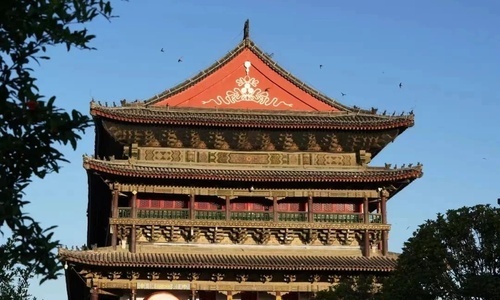
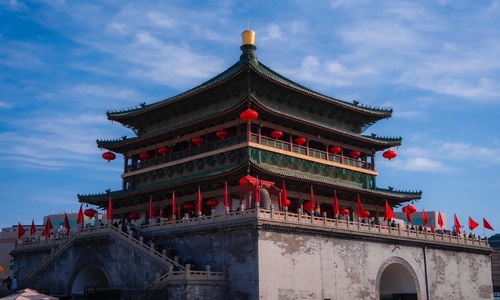
* Best Time: Blue hour (30 minutes after sunset, 6:30 PM–7:00 PM) when the sky turns deep blue and the towers’ golden lights are on—ideal for night photography.
* Top Photo Spots:
· Ka Yuan Mall 5th Floor Observation Deck: The ultimate spot for capturing both towers in one frame—shoot across the street with the busy pedestrian area below, creating a dynamic composition of history and daily life.
· Starbucks at Bell Tower: The closest view for official-style photos of the Bell Tower—shoot from the outdoor seating area with the tower perfectly centered.
· Yongning Gate Ticket Office: Looking north along the central axis, you can capture the Bell Tower in the distance with the city wall in the foreground, creating a layered historical perspective.
· Bell Tower Underground Passage: Shoot through the glass ceiling from below for a unique upward angle, including the tower’s intricate roof details.
* Photo Tips:
· Use a telephoto lens (70–200mm) to compress the perspective and make the towers appear closer together.
· For long exposures, use a tripod and set the ISO to 100 to avoid noise in night shots.
· Capture the towers’ reflection in nearby shop windows for creative mirror images.
3. Big Wild Goose Pagoda
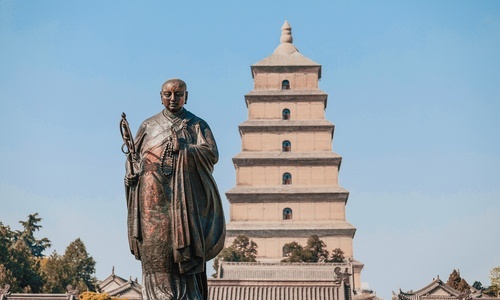
.jpg "Xuanzang and the Big Wild Goose Pagoda")
* Best Time: Sunrise (6:30 AM–7:30 AM) for soft morning light on the pagoda; night (8:00 PM–10:00 PM) for the illuminated pagoda and fountain shows.
* Top Photo Spots:
· Dayuecheng Shopping Mall Rooftop: The most famous spot for pagoda photos—elevator to the 4th floor, where you can shoot the pagoda with the "Chang’an" sign in the foreground, or through the prayer bell structure for a unique frame.
· Tang Da Ci'en Temple Ruins Park: Find the Buddha statue area to capture the pagoda and Buddha statue in one frame, creating a harmonious blend of religion and architecture.
· North Square Music Fountain: The 120-meter-wide fountain performs with music and lights (12:00, 16:00, 19:00, 20:00 daily), with the pagoda as a majestic backdrop—use a slow shutter speed (1/4–1 second) to create silky water effects.
· Pagoda Southern Steps: Shoot from the bottom of the 7-story pagoda with a wide-angle lens to emphasize its height and grandeur, while including the surrounding Tang-style pavilions.
* Photo Tips:
· For Hanfu photography, rent traditional costumes nearby (50–200 yuan/hour) and shoot with the pagoda as a backdrop—perfect for recreating Tang Dynasty aesthetics.
· Visit on weekdays to avoid crowds; arrive 30 minutes early for sunset shots to secure the best position.
· Combine the pagoda with cherry blossoms (March–April) or autumn leaves (October–November) for seasonal color accents.
4. Qujiang Pool Heritage Park
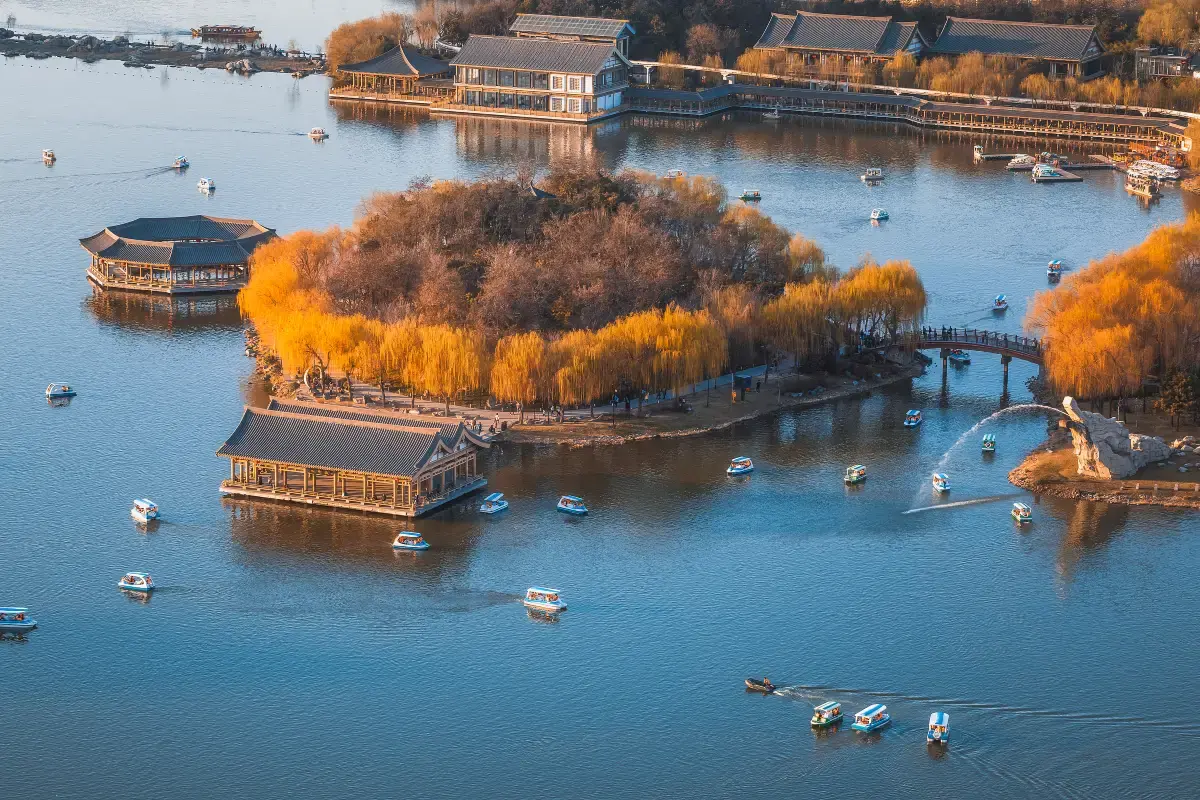
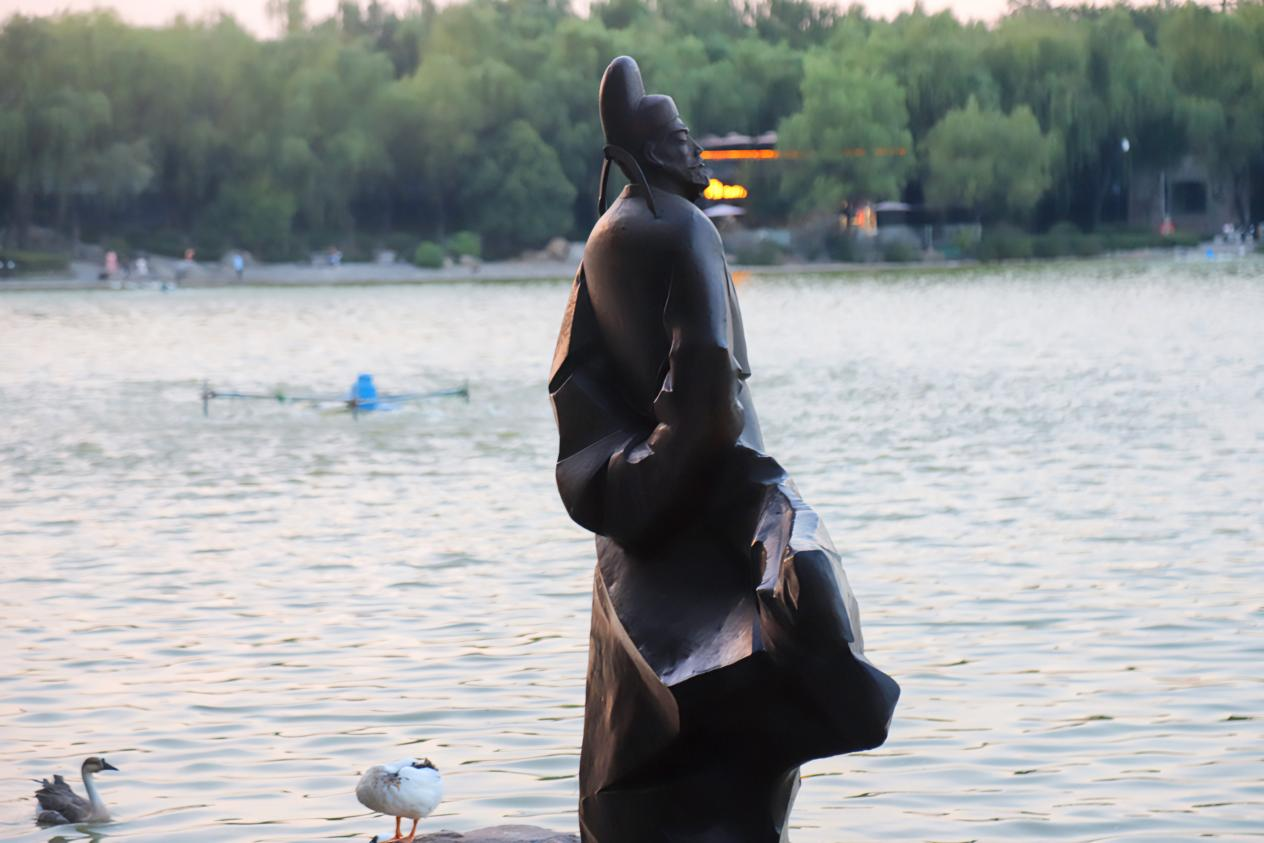
* Best Time: Spring (March–May) for cherry blossoms and peonies; autumn (September–November) for golden ginkgo leaves; early morning (7:00 AM–9:00 AM) for mist over the lake and soft light.
* Top Photo Spots:
· Nine-Turn Bridge: The curved stone bridge over the lake creates a perfect frame for photos—shoot from the bridge with the lake and distant pavilions in the background, or from the shore to capture the bridge’s reflection.
· Willow Bank: The weeping willows by the lake provide natural soft lighting—ideal for portrait photography, especially with Hanfu costumes and oil-paper umbrellas.
· Tang-style Pavilions: The park’s pavilions, such as the "Moon Viewing Pavilion" and "Flower Appreciation Pavilion," feature traditional Tang architecture with upturned eaves—shoot from a low angle to emphasize their elegance.
· Lake Reflection: On calm days, the park’s buildings and trees are perfectly reflected in the lake—use a polarizing filter to enhance the reflection and create symmetrical compositions.
* Photo Tips:
· Bring a small stool to shoot from a higher angle and avoid crowds in the background.
· Use a telephoto lens to compress the perspective and create a more intimate, focused composition.
· Combine with traditional props like musical instruments (pipa, guzheng) for authentic Tang Dynasty scenes.
Recommended Itineraries
1. Small-Scale Cultural Half-Day Trip: Small Wild Goose Pagoda — Xi’an Museum — Jianfu Temple
* Highlights
Avoid crowds, immerse yourself in the legacy of the Tang Dynasty and Xi’an’s local culture. The route is compact and relaxed, connected on foot, suitable for visitors who like tranquility and prefer in-depth cultural experiences. In the morning, you can listen to the “Morning Bell of the Wild Goose Pagoda”, one of the Eight Scenes of Guanzhong, and feel the poetry of “the bell rings through the morning mist, and the pagoda shadow reflects the morning glow”. Then visit the Small Wild Goose Pagoda, which has a history of more than 1,300 years and is a architectural miracle that has “split and merged three times”, as well as Jianfu Temple built by the royal family to offer blessings. Then visit Xi’an Museum, which is quiet and elegant, displaying thousands of exquisite cultural relics, allowing you to systematically understand the historical context of Xi’an from the Zhou, Qin, Han and Tang dynasties to the present. Compared with Shaanxi History Museum, it is more peaceful and you can slowly appreciate the beauty of cultural relics. Tip: Reservations are required for the Small Wild Goose Pagoda and Xi’an Museum, and you need to bring your original passport to enter; the experience of the Morning Bell of the Wild Goose Pagoda is charged (15 yuan per time) except in the early morning.
2. One-Day Historical and Cultural Trip: Shaanxi History Museum — Forest of Steles Museum — Bell and Drum Tower
* Morning
Book tickets for Shaanxi History Museum in advance, rent an English audio guide, focus on visiting the Tang Dynasty Mural Museum and Hejiacun Hoard cultural relics, deeply understand ancient Chinese history and culture, and feel the prosperity of the Tang Dynasty; have lunch at a characteristic snack bar around the museum and rest for a while.
* Afternoon
Go to the Forest of Steles Museum to visit the collected inscriptions and calligraphy works, appreciate the authentic works of famous calligraphers such as Yan Zhenqing and Liu Gongquan, understand the development context of ancient Chinese calligraphy art, and renting an English audio guide can better understand the historical stories behind the inscriptions; in the evening, go to the Bell and Drum Tower, climb the tower to overlook the panoramic view of Xi’an urban area, wait for the night view to light up, take photos, and feel the charm of the core of the ancient city.
* Tip: Free tickets for Shaanxi History Museum are in short supply, so you can book 3-5 days in advance. The paid exhibition “Tang Dynasty Relics” is worth seeing; flash photography is prohibited in the Forest of Steles Museum, and do not touch the inscriptions.
3. 3-Day Short Itinerary
* Day 1: Xi’an Urban Core History Line: Bell and Drum Tower — Xi’an City Wall — Muslim Quarter (Food)
Morning: Go to the Bell and Drum Tower, climb the tower to overlook the panoramic view of Xi’an urban area, feel the core style of the ancient city, and enjoy the bell and drum performance (scheduled performance); walk to Xi’an City Wall (Yongning Gate), rent a bicycle to ride for 1-2 hours, feel the grandeur of the ancient city wall, and check in the Internet-famous Corner Tower.
Afternoon: After the ride, go to Muslim Quarter to taste classic foods such as Roujiamo, Yangrou Paomo and Huanggui Persimmon Cake, visit souvenir shops, and feel the fireworks.
Evening: Go to watch the night view of the Bell and Drum Tower. The Bell and Drum Tower under the lights is particularly spectacular, suitable for taking photos. After that, return to the hotel to rest.
* Day 2: Tang Dynasty Culture Line: Shaanxi History Museum — Big Wild Goose Pagoda & Dacien Temple — Datang Everbright City
Morning: Book tickets for Shaanxi History Museum in advance, visit the museum, rent an English audio guide, understand the history and culture of Shaanxi and even China, and focus on visiting the Tang Dynasty Mural Museum and Hejiacun Hoard cultural relics.
Noon: Taste characteristic snacks around the museum and rest for a while.
Afternoon: Walk to the Big Wild Goose Pagoda & Dacien Temple, climb the Big Wild Goose Pagoda to overlook the panoramic view of Qujiang New District, visit Dacien Temple to understand the history of Monk Xuanzang’s pilgrimage to the West; wait for the music fountain performance at the North Square of the Big Wild Goose Pagoda (16:00 session) to feel the collision of water dance and light.
Evening: Go to Datang Everbright City, appreciate the light scenery and Tang Dynasty theme sculptures, watch performances such as Tumbler Lady and “Tang Dynasty Secret Box”, immerse yourself in the prosperity of the Tang Dynasty, and rent Tang costumes for taking photos.
* Day 3: World Wonder Line: The Museum of Qin Shi Huang’s Mausoleum and Terracotta Army — Return Trip/Free Activity
Morning: Take You charter a car to The Museum of Qin Shi Huang’s Mausoleum and Terracotta Army, rent an English audio guide, visit Pit 1, Pit 2, Pit 3 and Bronze Chariot and Horse Museum, feel the majestic momentum of the Qin Empire, and deeply understand the historical background of the Terracotta Army.
Noon: Dine at a characteristic farm restaurant around the Terracotta Army scenic spot and rest for a while.
Afternoon: Return to the urban area, you can have free activities (such as going to Shuyuanmen Pedestrian Street to experience calligraphy, buy souvenirs, or go to Sajinqiao to taste authentic food), and then return according to the flight/high-speed rail time.
Shopping in Xi’an: Must-Buy Souvenirs and Where to Find Them
A. Must-Buy Authentic Souvenirs
a. Food Souvenirs (Easy to Carry, Long Shelf Life, Suitable for All Groups)
1. Cured Beef and Mutton
A characteristic food of Xi’an Muslim Quarter, made of high-quality beef and mutton from Guanzhong, marinated with secret spices and slowly braised in old soup. The meat is firm and chewy, salty and flavorful, and can be preserved for about 15 days in vacuum packaging. It is the “top choice” of meat souvenirs in Xi’an.
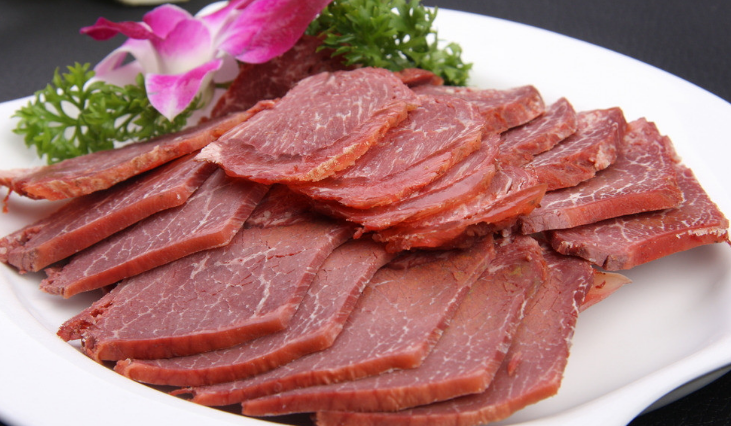
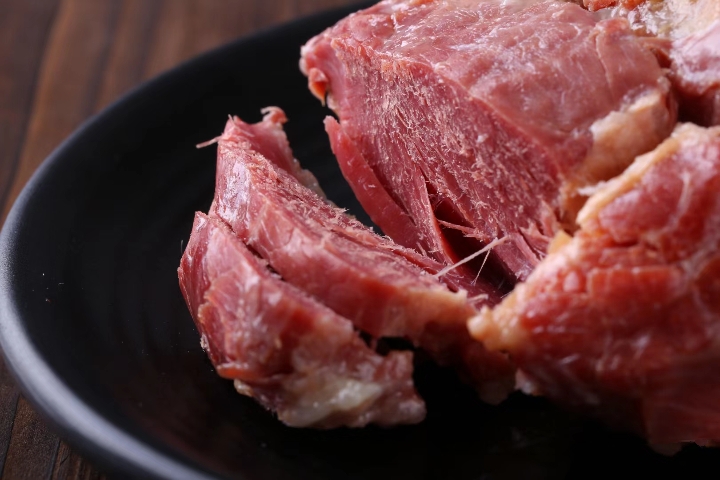
* Recommended Brands
- Lao Tong's Dried Beef and Lamb (Beiguangji Street Store)
· Address: Approximately 50 meters south of the Beiguangji Street, Xidaxue Alley, Qingzhen Temple Residential Area, Lianhu District, Xi'an, Shaanxi Province, China
· Opening hours (Mon to Sun): 08:00-22:00
- Qingzhen Liu Jixiao Dried Beef and Lamb Store (Beiguangji Street Store)
· Address: 187 Beiguangji Street, Qingnian Road Subdistrict, Xi'an, Shaanxi Province, China (Opposite Southeast Asia Zhen Cake King)
· Phone: +86-18966931163
· Opening hours (Mon to Sun): 06:30-19:00
- Lao Sun's Dried Beef and Lamb (Xiyangshi Store)
· Address: 183 Xiyangshi, Xi'an, Shaanxi Province, China
· Phone: +86-18092099285
· Opening hours (Mon to Sun): 08:00-22:00
Both of these brands are time-honored brands with guaranteed quality. It is recommended to buy whole piece packaging (grand for gifting) or sliced vacuum packaging (convenient for immediate consumption). It can be eaten with Roujiamo, cold mixed, or with Paomo. A small recipe card can be attached when gifting.
* Reference Price: 80-150 yuan/jin.
2. Huanggui Choujiu (Osmanthus Thick Rice Wine)
Known as “the liquid pastry drunk by imperial concubines”, the “golden goblet of clear wine worth ten thousand coins” mentioned in Li Bai’s poem refers to this kind of wine. Brewed from glutinous rice and sweet-scented osmanthus, it has an alcohol content of only 0.5%, sweet and sour, with a light osmanthus aroma. It tastes better when chilled and can be eaten with Zeng Gao.
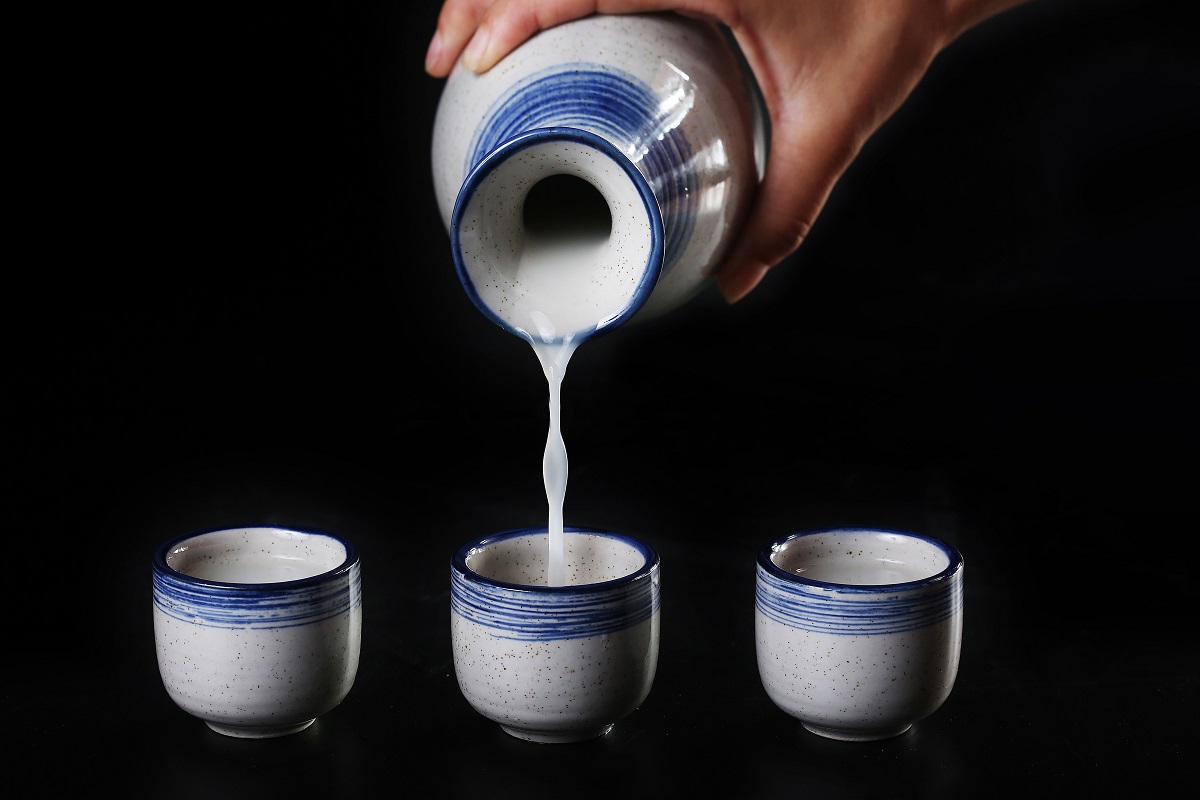
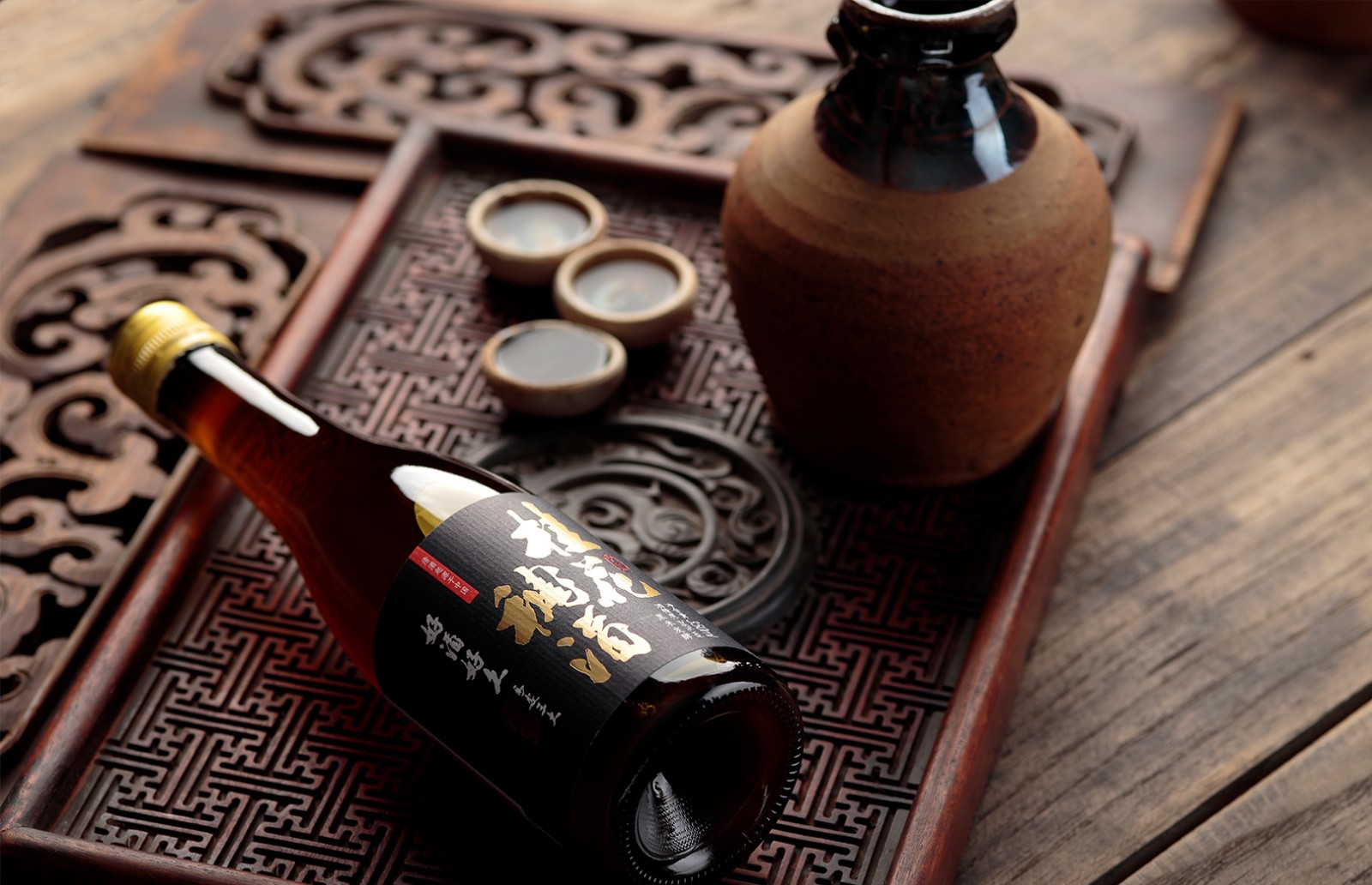
* Recommended Brand
- Xu's Huanggui Choujiu
· Address: No. 23 Baishulin, Beilin District, Xi'an, Shaanxi Province, China
· Phone: +86-15109288488
· Opening hours (Mon to Sun): 09:30-21:00
* Reference Price: 20-50 yuan/bottle.
3. Demao Gong Crystal Cake
“The First Qin Pastry”, a time-honored pastry in Xi’an, praised by Empress Dowager Cixi. The crispy skin wraps fillings such as rock sugar and green and red silk, sweet with fragrance, crispy but not greasy, and delicate in taste.
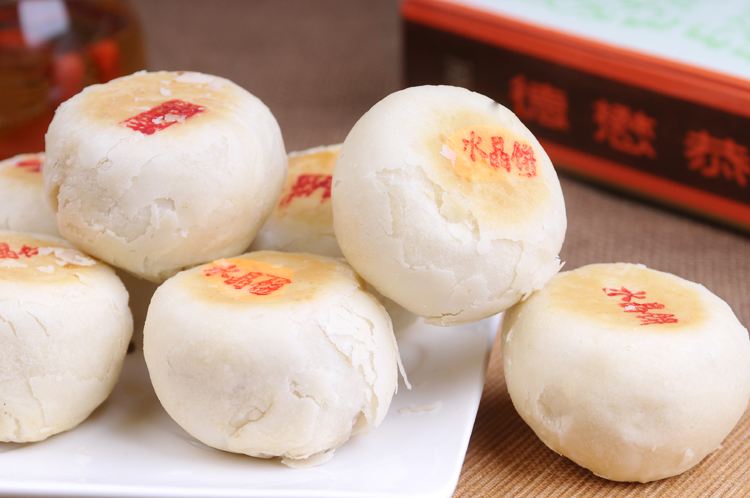
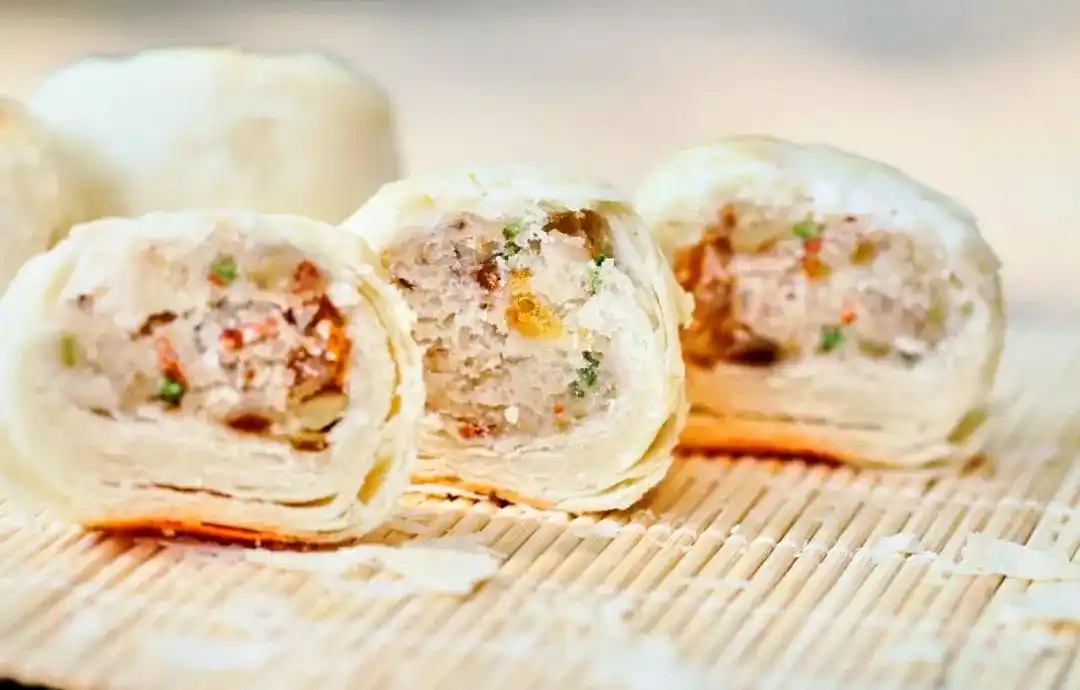
* Recommended
Gift box packaging from the main store on West Street (elegant packaging, suitable for gifting), or independent small packaging (convenient for eating). It is more authentic when paired with Fucha.
* Reference Price: 20-60 yuan/box.
4. Qiongguo Candy
An intangible cultural heritage food from Fuping, made of sesame, millet and maltose through traditional craftsmanship. It is crispy and crumbly when bitten, sweet but not greasy, and mellow in taste.
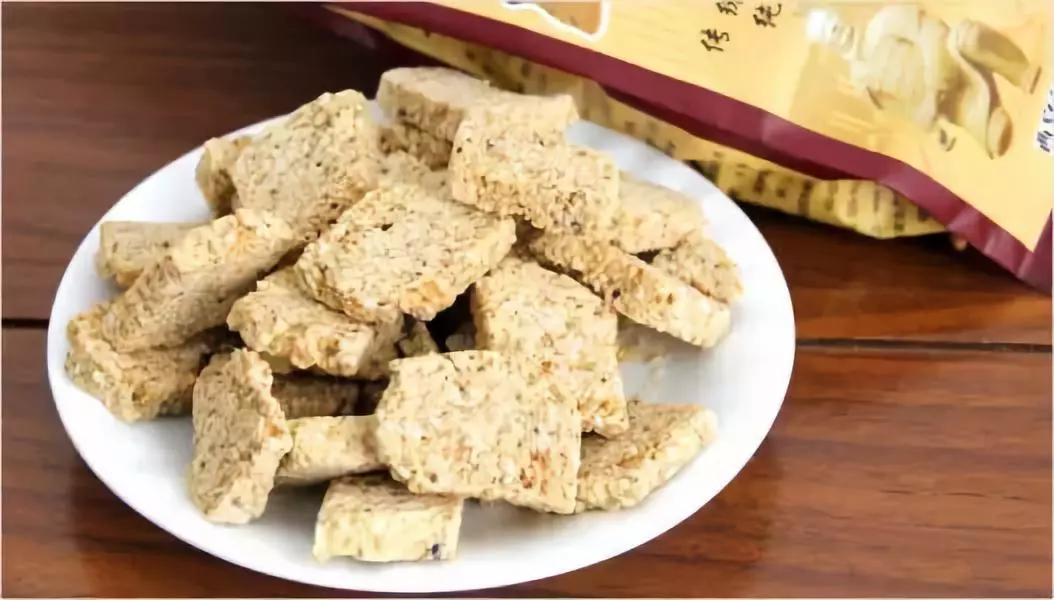
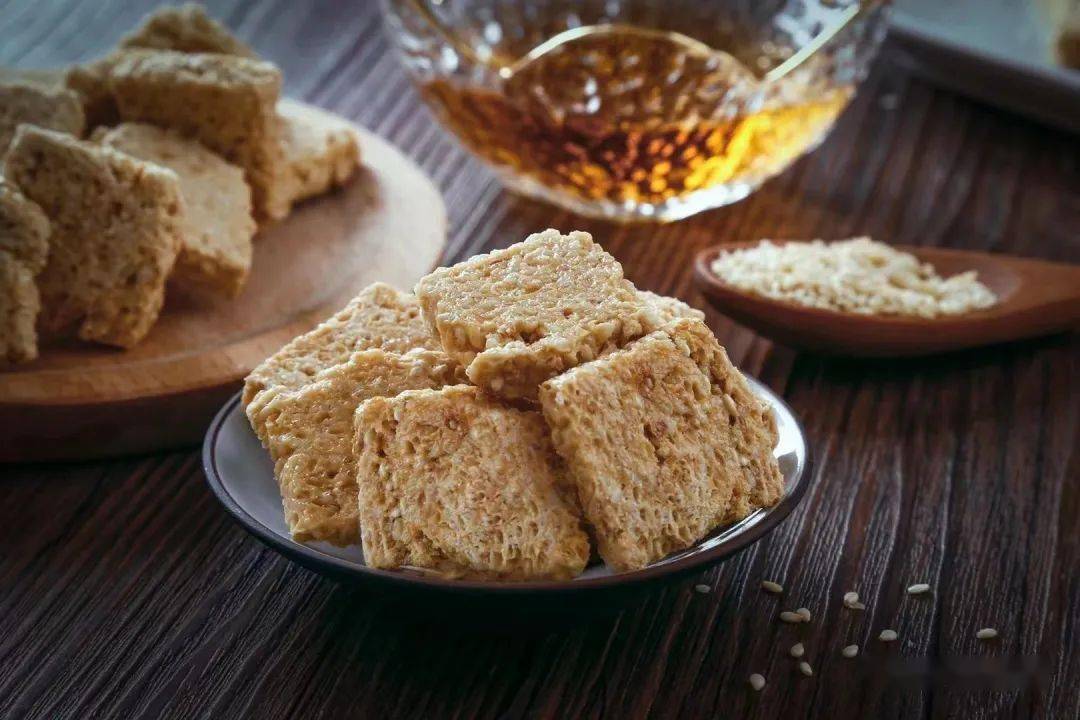
* Recommended Brand
- Fuping Zhang Lao Ba Qiong Guo Tang
· Address: 60 meters south of the north entrance of Yanta South Road, Yanta District, Xi'an, Shaanxi Province, China
· Phone: +86-18291926315
· Opening hours (Mon to Sun): 11:00-23:45
* Reference Price: 15-35 yuan/box.
5. Huo Jing Persimmon Cake (Fire Crystal Persimmon Cake)
A derivative of the “Internet-famous persimmon” in Zhang Yimou’s movie, made of Lintong Huo Jing persimmons by peeling, removing cores, pressing and drying. It is sweet and glutinous, retaining the natural sweetness of persimmons. When Huo Jing persimmons are not in season (October-November every year), it is the best alternative to fresh persimmons, and can be preserved for a long time in vacuum packaging.
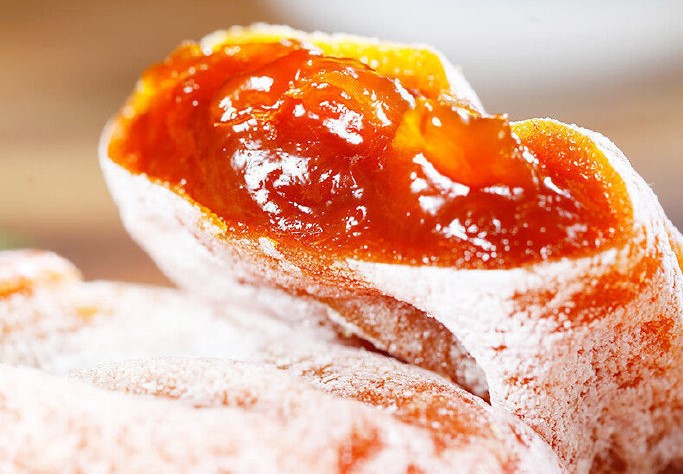
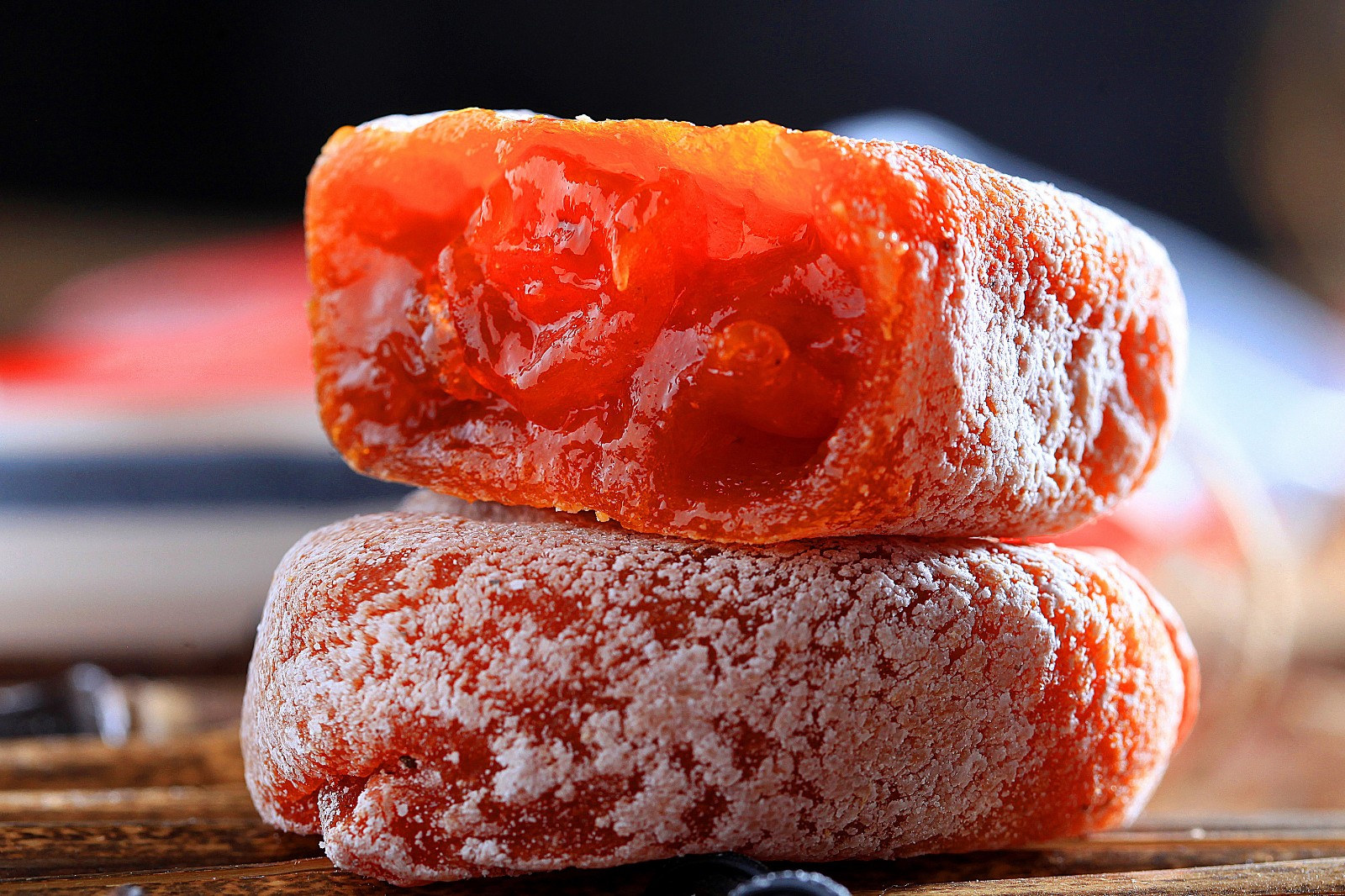
* Recommended Brand
- Lao Bai's Shaanxi Fuping Persimmon Cake Specialty Store (Sajin Bridge Store)
· Address: 60 meters south of the north entrance of Yanta South Road, Yanta District, Xi'an, Shaanxi Province, China
· Phone: +86-13324557035
· Opening hours (Mon to Sun): 08:00-20:00
* Reference Price: 20-40 yuan/box.
b. Cultural and Creative Souvenirs (Carrying Historical Culture, Both Practical and Commemorative)
1. Terracotta Army Cultural and Creative Products
The most characteristic cultural and creative products in Xi’an. Avoid stereotyped ornaments and prioritize practical styles for better cost performance.
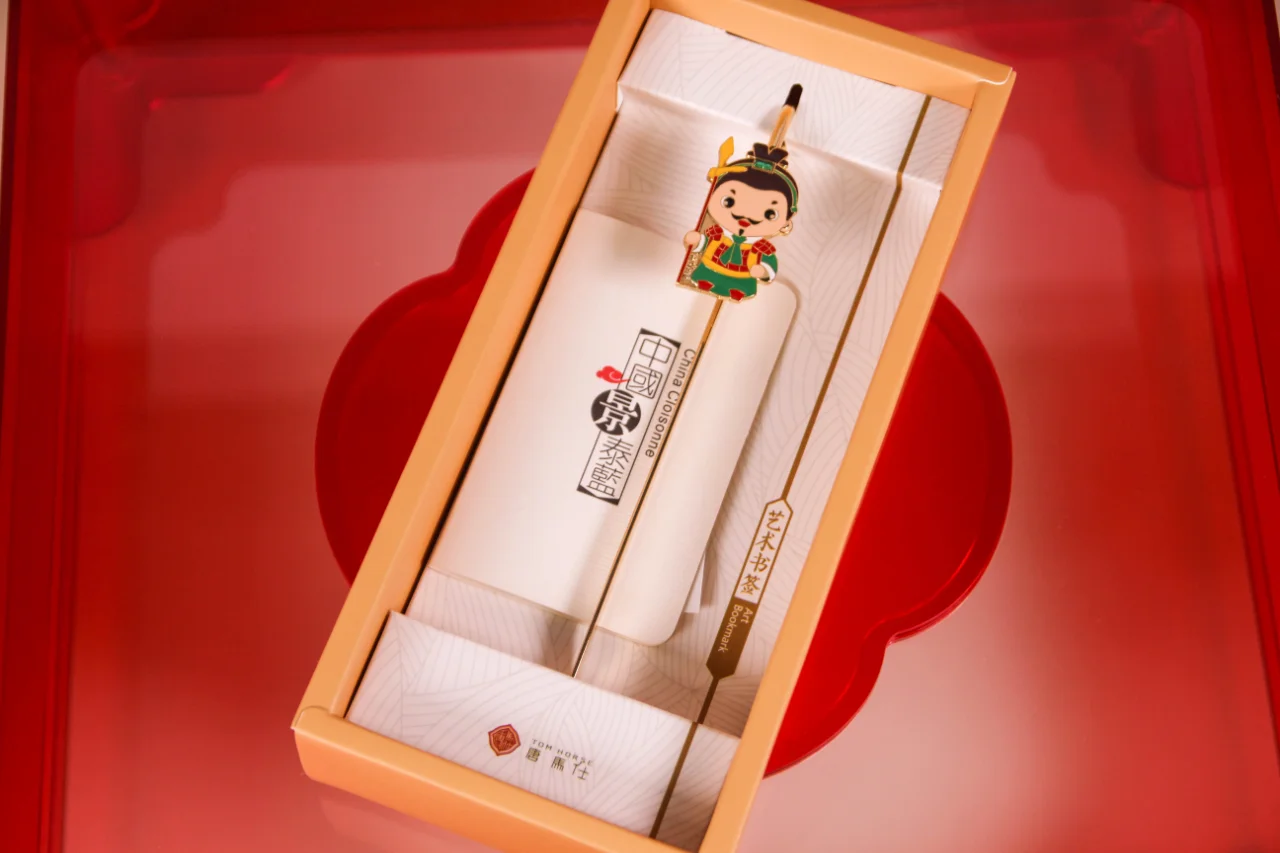
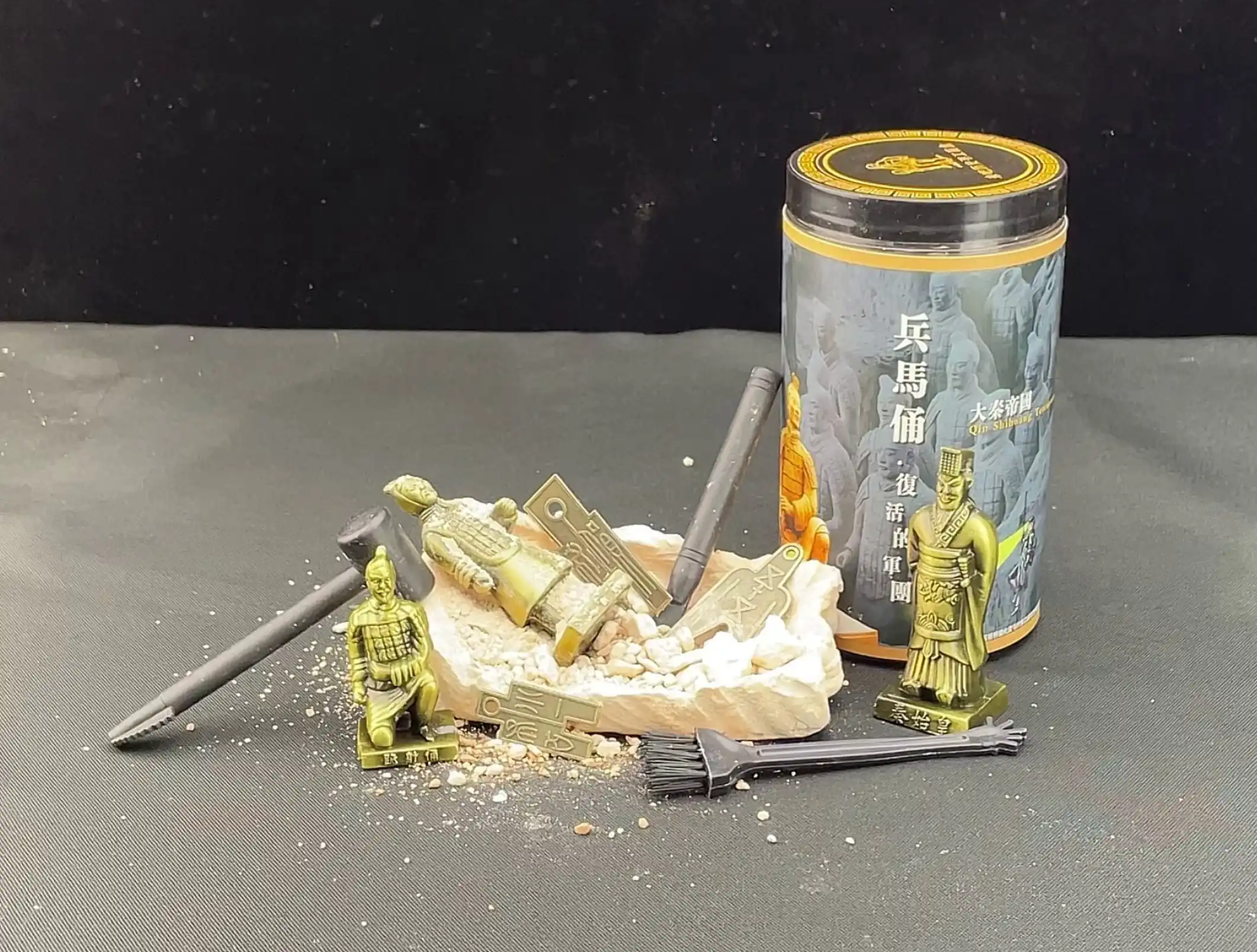
* Recommendations
Bronze Chariot and Horse Bookmark, Tiger Tally Bottle Opener, Q-version Terracotta Army Blind Box, Terracotta Army Key Chain. Exquisitely designed, they can be used as souvenirs and for daily use.
* Shopping Location
Official Cultural and Creative Store of the Museum of Qin Shi Huang’s Mausoleum and Terracotta Army
* Reference Price: 30-200 yuan.
2. Shadow Puppet
A representative work of Shaanxi intangible cultural heritage skills, made of cowhide through multiple processes such as carving and dyeing. The patterns are mostly historical figures and folk scenes, with bright colors and exquisite craftsmanship. It can be used as an ornament or for watching performances.
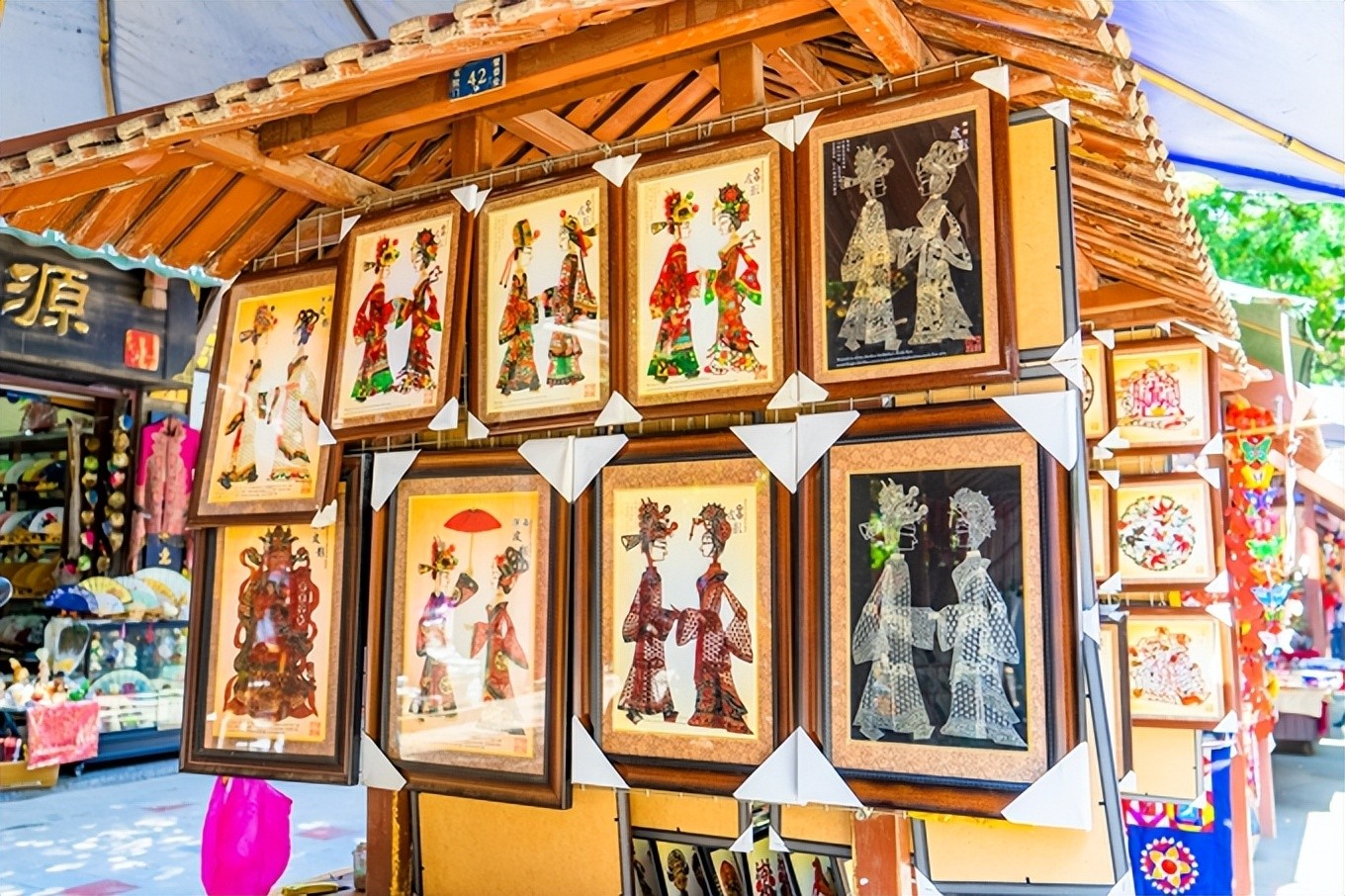
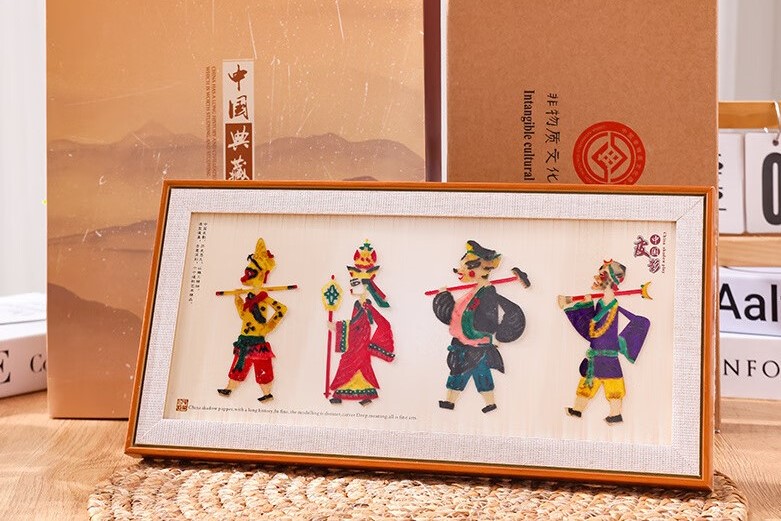
* Recommended Locations
Shuyuanmen Pedestrian Street, stores in Shaanxi Intangible Cultural Heritage Museum. You can buy finished products or customize exclusive patterns (such as engraving your own name).
* Reference Price: 30-150 yuan (small pieces), 150-500 yuan (large stage set).
3. Huxian Farmer’s Painting
A national intangible cultural heritage, with Guanzhong folk customs as the theme, depicting farm life and folk activities with strong colors, simple and unrestrained style. After framing, it becomes a work of art, suitable for hanging at home for decoration and showing cultural atmosphere.

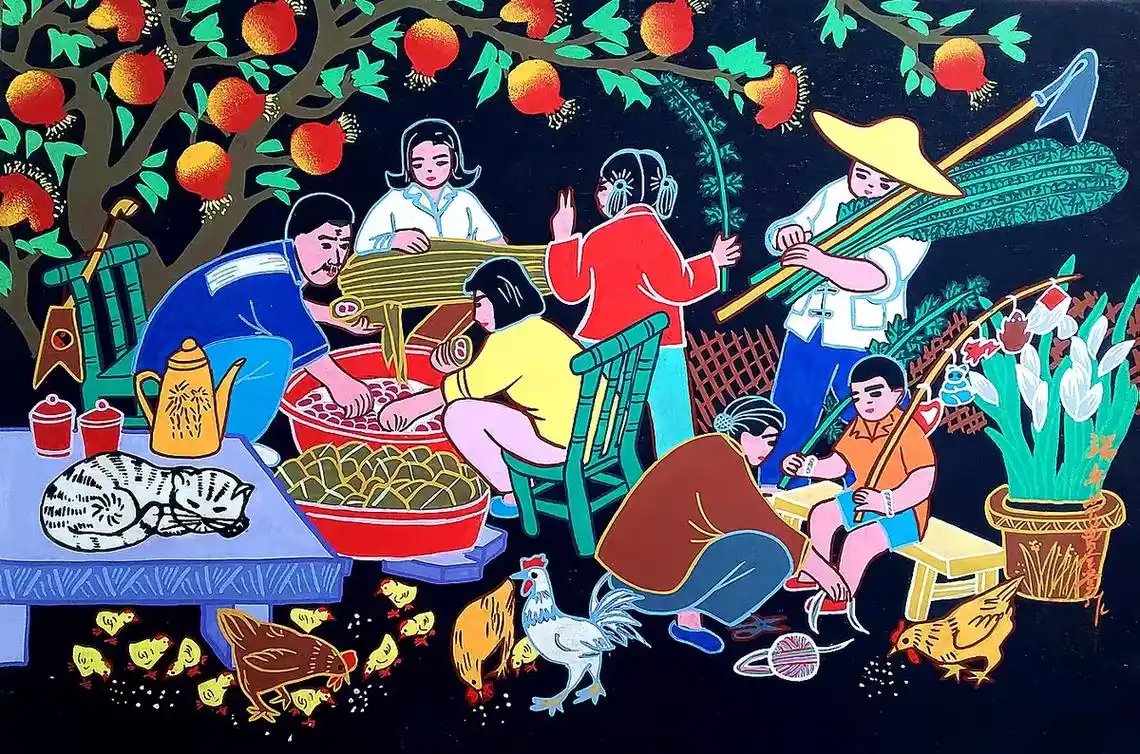
* Recommended Locations
Shuyuanmen Pedestrian Street, Intangible Cultural Heritage Hall in Yongxingfang (you can buy genuine products with collection certificates).
* Reference Price: 100-500 yuan/piece.
c. Alcoholic Souvenirs (Suitable for Friends and Elders Who Like Alcohol)
Xifeng Wine
One of China’s four famous wines and a representative of Feng-flavor Baijiu. It has a mellow taste and unique aroma. The green bottle high-neck version is the favorite of local Xi’an residents with high cost performance; the red Xifeng version has exquisite packaging, suitable for giving to important guests and elders.
* Shopping Locations
Large supermarkets (China Resources Vanguard, Hema, Yonghui Supermarket), Xifeng Wine Specialty Stores, Airport Duty-Free Stores (often with discounts).
* Shopping Location
Official Cultural and Creative Store of the Museum of Qin Shi Huang’s Mausoleum and Terracotta Army
* Reference Price: 50-800 yuan/bottle (depending on budget).
B. Recommended Reliable Shopping Locations
1. Shuyuanmen Pedestrian Street
Focusing on cultural products, it gathers calligraphy shops, cultural and creative stores, and intangible cultural heritage stalls. You can buy calligraphy rubbings, shadow puppets, Huxian Farmer’s Paintings, etc. The atmosphere is strong, and you can feel the cultural heritage of Xi’an. Some stores support customization, suitable for visitors who like cultural souvenirs. Tip: You can bargain appropriately when shopping (not a big range), be cautious of low-price counterfeits, and prioritize stores with physical store qualifications.
2. Official Cultural and Creative Store of the Museum of Qin Shi Huang’s Mausoleum and Terracotta Army
The preferred location for buying Terracotta Army cultural and creative products. It has guaranteed quality and more exquisite design, which is in line with the historical culture of the Terracotta Army. Avoid buying from small vendors around the scenic spot to prevent buying counterfeit and shoddy products.
3. Large Supermarkets
Suitable for buying food souvenirs, such as China Resources Vanguard, Hema, Yonghui Supermarket, etc. They have complete brands, transparent prices and guaranteed quality. Avoid high-priced stores around the scenic spot for better cost performance. There is a special Shaanxi specialty area in the supermarket, where you can buy Braised Beef and Mutton in Sauce, Crystal Cake, Huanggui Thick Wine, etc. at one time. You can also handle on-site mailing for convenient carrying (it is recommended to mail large souvenirs, and ice packs are needed for Braised Beef and Mutton in Sauce to keep fresh).
4. Yongxingfang, Muslim Quarter
Suitable for buying small-scale food souvenirs and intangible cultural heritage handicrafts. There are specialty stores from all over Shaanxi in Yongxingfang, where you can buy local characteristic snacks such as Zichang Pancakes and Suide Huangmomo; you can buy Braised Beef and Mutton in Sauce, Huanggui Persimmon Cake, etc. in Muslim Quarter. But you need to identify the stores, prioritize time-honored and regular stores with large passenger flow, avoid buying on the main street (high price), and you can go into the surrounding alleys to buy.
5. Shaanxi Intangible Cultural Heritage Museum
You can buy intangible cultural heritage handicrafts such as shadow puppets, paper-cutting and clay sculpture. You can also watch intangible cultural heritage skills performances and experience intangible cultural heritage production by yourself, understand the cultural background of intangible cultural heritage, and the souvenirs bought are more meaningful with guaranteed quality.
C. Tax Refund Guide for Overseas Travelers
a. Tax Refund Policy for Departing Foreign Tourists
1. Basic Definition & Eligible Applicants
* Tax Refund for Departing Tourists
This policy allows foreign travelers to receive a VAT refund on qualifying items purchased from tax refund stores when they depart from a designated exit port.
* Eligible Tourists
Foreign nationals and Hong Kong, Macau, and Taiwan residents who have stayed in China for no more than 183 days (calculated from the day after entry to the day of departure).
* Valid Identification
· Foreign nationals: Passport (must include entry record and visa information).
· Hong Kong/Macau residents: Mainland Travel Permit for Hong Kong and Macau Residents (Home Return Permit).
· Taiwan residents: Mainland Travel Permit for Taiwan Residents (Taiwan Compatriot Permit).
· Documents must include the most recent entry date and remain within validity.
2. Tax Refund Eligibility Criteria
* Purchase Amount
Purchases of tax refund items totaling at least RMB 200 (inclusive of tax) at the same store on the same day. (Multiple purchases at the same store on the same day can be combined.)
* Item Status
Items must be unused or unconsumed. (For example, clothes with tags, unopened electronics, unused cosmetics, etc.)
* Time Limit
The purchase date must be within 90 days of departure. (Based on the sales invoice date.)
* Carrying Requirement
Tax refund items must be carried by the traveler or checked in as luggage. (Cannot be mailed or carried by another person.)
* Departure Port
Departure must be from an approved exit port, such as Xi'an Xianyang International Airport. (Currently, Xi'an has only one designated exit port.)
* Application Entity
The tax refund application must be made by the traveler who made the purchase. (Applications cannot be made by others; the agreement must be signed by the traveler.)
3. Tax Refund Rate & Calculation
* Official Refund Rate: 11% (including VAT refund)
* Actual Refund Rate: Approximately 9% (after deducting 2% handling fee by the refund agency)
* Calculation Formula
· Refundable VAT = Sales Invoice Amount (inclusive of VAT) × Refund Rate (11%)
· Actual Refund Amount = Refundable VAT - Agency Handling Fee (2%)
· Example: For a purchase of RMB 1000, VAT refund would be RMB 110, and the actual refund would be RMB 90.
* Refund Currency: Only RMB, no foreign currency refunds.
4. Detailed Explanation of Two Tax Refund Methods
* Traditional Tax Refund Process
- Shopping & Request for Documentation: After shopping at a tax refund store, inform the staff that you need a tax refund. Provide your valid ID, and the staff will issue a Tax Refund Application Form and sales invoice.
- Customs Verification: On the day of departure, arrive at Xi'an Xianyang International Airport 3 hours in advance. Proceed to the customs tax refund verification window at the T3 terminal (near the check-in counters).
· Submit: Valid ID, tax refund application form, sales invoice, and tax refund items.
· After verification, the customs will stamp the application form (key step—without this stamp, no tax refund will be processed).
- Refund through Agency: After passing security, proceed to the tax refund agency counter in the quarantine area (near the central commercial district of T3). Submit the stamped application form, sales invoice, and valid ID.
Refund Methods:
· Cash Refund: Collect RMB cash on-site (up to RMB 10,000 per transaction).
· Bank Transfer: Provide an international credit card or UnionPay card, with the refund arriving in 7-15 business days (no amount limit).
- Receiving Refund:
· Cash Refund: Verify the amount and confirm receipt.
· Bank Transfer: Keep the tax refund receipt for tracking.
* Instant Tax Refund Service - New Policy for 2025
- Service Features: The airport tax refund window is "moved forward" to the shopping mall, allowing on-site tax refund without waiting for departure.
- Cross-Province Recognition: Starting in January 2026, Xi'an will recognize "Instant Tax Refund" services from Chongqing, Yunnan, Gansu, and Sichuan. After shopping at an "Instant Tax Refund" store in these regions, travelers can complete the tax refund verification at Xi'an Xianyang International Airport.
- Process:
· Shop at a store with the "Instant Tax Refund" sign and purchase tax refund items totaling at least RMB 200.
· Provide valid ID and sign the Instant Tax Refund Agreement (must be signed by the traveler).
· Complete international credit card pre-authorization (as collateral, which will be canceled after successful departure verification).
· Receive a prepayment of RMB equivalent to the tax refund.
· When departing, follow the traditional process to have the items verified by customs. If verification is not completed, the pre-authorization amount will be deducted.
5. Tax Refund Store Distribution in Xi'an
As of January 2026, Xi'an has 45 tax refund stores, with 15 offering Instant Tax Refund services.
* Core Shopping Areas:
· South Gate / Bell Tower Area: Zhongda International, Kaiyuan Mall, SKP, Wangfujing Department Store (International brands, many offering "Instant Tax Refund").
· Xiaozhai Area: Seg International Shopping Mall, Xiaozhai Baisheng (Young and trendy brands, close to the Big Wild Goose Pagoda).
· Big Wild Goose Pagoda / Tang Dynasty Nightlife Area: Joy City, Qujiang Intime Mall, Cultural Creative Stores (Cultural products, tourist-heavy area).
· High-tech Zone: Wanda Plaza, Century Golden Flower (High-end shopping centers, ideal for business travelers).
b. Duty-Free Shopping Policy
1. Downtown Duty-Free Store
* Name: China Duty-Free Xi'an Downtown Store
* Location: 30 South Street, Zhongda International South Street Store (200 meters south of Bell Tower), with a store area of approximately 2050 square meters (3 floors).
* Opening Date: November 26, 2025, the first downtown duty-free store in Northwest China.
* Eligible Travelers: Foreign and Chinese nationals holding valid exit documents who will depart from Xi'an Xianyang International Airport within 60 days.
* Required Documents:
· Foreign nationals: Passport + Visa + Exit Flight Itinerary.
· Hong Kong/Macau/Taiwan residents: Home Return Permit / Taiwan Compatriot Permit + Exit Flight Itinerary.
* Tax-Exempt Products & Price Advantages
· Imported Goods: Exempt from customs duties, VAT, and consumption tax, with a price advantage of 15%-30%.
· Domestic Products: Exempt from domestic VAT, with some items eligible for consumption tax refunds at the airport.
* Product Categories
· First Floor: Beauty products, skincare, perfumes (international top brands such as Estée Lauder, Lancôme, La Mer).
· Second Floor: Light luxury bags, watches, jewelry, imported alcohol (whiskey, wine).
· Third Floor: Travel electronics, local cultural products (exclusive designs with Xi'an elements such as Qin embroidery, city wall motifs).
* Special Services: Brand experience zones, whiskey tavern, VIP services, Xi'an specialty stamp collection.
2. Airport Duty-Free Store
* Location
· T2 Terminal: Departure quarantine area, near the boarding gates.
· T3 Terminal: Departure quarantine area, central commercial district, about 1500 square meters.
* Eligible Travelers: Passengers who have completed exit procedures and passed security.
* Product Categories: Includes cosmetics, perfumes, tobacco, luxury goods, food, travel accessories, etc., complementing the products available at the downtown duty-free store.
* Shopping Process
· After passing security, shop at the store.
· Pay and carry the goods directly onto the plane (liquid items must be sealed in plastic bags).
· Tobacco and alcohol are subject to customs quantity restrictions.
c. In-depth Practical Guide
1. Critical Tax Refund Precautions
* Application Form Filling: Ensure your name, passport number, and entry date match your documents exactly, without any corrections.
* Customs Verification: Tax refund items must be carried by the traveler or checked in (not in already checked-in luggage).
* Expensive Items: It is recommended to carry valuable items (e.g., watches, jewelry) with you for easier customs inspection.
* Tax Refund Method Selection:
· For amounts less than or equal to 10,000 RMB, either cash or bank transfer can be selected.
· For amounts greater than 10,000 RMB, bank transfer must be selected.
* Credit Card Pre-Authorization
· Only international credit cards (Visa, Mastercard, etc.) are accepted; UnionPay cards may not be accepted.
· Pre-authorization is 115%-120% of the refund amount (including fees and possible penalties).
* Tax Refund Window Times
· Customs verification window at T3: 6:00 AM - 10:00 PM.
· Tax refund agency counter at T3: 6:30 AM - until the last flight.
2. Critical Duty-Free Shopping Precautions
* Shopping Time at Downtown Duty-Free Stores: It is recommended to purchase at least 24 hours in advance to ensure timely delivery to the airport.
* Product Pickup: Pickup points are located in the T3 quarantine area, near the central commercial district.
· Pickup time: 4 hours to 1 hour before your flight departure.
· Be sure to bring your valid ID and pickup slip.
* Product Restrictions: Duty-free goods cannot be used or sold within China; they must be carried out of the country.
* Tobacco and Alcohol Restrictions:
· Cigarettes: Maximum 400 cigarettes (2 cartons) per person per trip.
· Alcohol: Maximum 1500 ml (about 2 bottles) per person per trip.
· Liquid Items: Must comply with airport security regulations (single bottle less than or equal to 100ml, total less than or equal to 1L).
* Return/Exchange Policy:
· Items bought from downtown duty-free stores must be returned or exchanged before pickup.
· Items bought from the airport duty-free store can be returned or exchanged on the same day.
3. 2026 Latest Policy Updates
* Cross-Province Recognition for Tax Refunds: Xi'an will implement cross-province recognition for "Instant Tax Refund" services with Chongqing, Yunnan, Gansu, and Sichuan starting in January 2026.
* Expansion of Tax Refund Stores: An additional 10 tax refund stores will open in Xi'an by January 2026, primarily in the Big Wild Goose Pagoda and High-tech zones.
* Upgraded Brands at Downtown Duty-Free Store: Over 20 new international luxury brands, including Gucci, Prada, and other high-end brands.
* Online Shopping Service: The downtown duty-free store will offer a new "Online Ordering + Offline Experience + Airport Pickup" service through an official mini-program.
d. Emergency Contact Information
* Xi'an Tax Bureau Tax Refund Consultation: 12366 (Chinese service, English translation assistance available, Service hours: 9:00 AM - 5:00 PM)
* Xi'an Xianyang International Airport Customs: 029-88796900 (Tax refund verification consultation)
* Xi'an Xianyang International Airport Tax Refund Agency: 029-88798888 ext. Tax Refund Counter
* China Duty-Free Xi'an Downtown Store: 029-87654321 (Business hours: 10:00 AM - 10:00 PM, Open year-round)
* China Duty-Free Airport Store: 029-88796666 (T3 Store), 029-88795555 (T2 Store)
Cultural Background In-Depth Analysis
a. Xi’an’s Status as an Ancient Capital
1. The Core Historical Context of the Capital of Thirteen Dynasties (Zhou, Qin, Han, Tang)
* Western Zhou Dynasty (c. 1046 BC – 771 BC)
The beginning of Xi’an as an ancient capital, with its capital “Haojing” (southwest of present-day Xi’an), which was a symbol of the early maturity of Chinese civilization. The Western Zhou Dynasty established the ritual and music system and the enfeoffment system, standardized social order and cultural etiquette. Its ritual and music culture not only influenced China for thousands of years, but also became the spiritual core of Chinese civilization. Today, the Fenggao Ruins around Xi’an are the remains of the Western Zhou capital, witnessing the prosperity of the early Chinese dynasties.
* Qin Dynasty (221 BC – 207 BC)
After unifying the six kingdoms, Emperor Qin Shi Huang established his capital in “Xianyang” (the junction of present-day Xi’an and Xianyang), pushing Xi’an to its first peak of civilization. The core contribution of the Qin Dynasty was “great unification” — unifying characters, currency, weights and measures, building highways and Lingqu Canal, and establishing a centralized system. These measures not only laid the foundation for the governance of ancient Chinese dynasties, but also made Xi’an the political, economic and cultural center of the country. The Terracotta Army and the Mausoleum of Qin Shi Huang are direct witnesses to the military culture and national strength of the Qin Dynasty, and material carriers of the “great unification” civilization.
* Han Dynasty (202 BC – 220 AD)
The Western Han Dynasty established its capital in "Chang’an" (northwest of present-day Xi’an), continuing and developing the great unification pattern of the Qin Dynasty, creating the prosperity of the "Rule of Wen and Jing" and the "Prosperous Age of Emperor Wu". The Han Dynasty was the beginning of China’s ancient foreign exchanges. Emperor Wu sent Zhang Qian on missions to the Western Regions, opening up a land route connecting the East and the West, and establishing Xi’an’s status as the eastern starting point of the Silk Road. At the same time, the culture and science and technology of the Han Dynasty were unprecedentedly prosperous. The invention of papermaking and the establishment of Confucianism had a profound impact on China and even world civilization. Today, the Ruins of Chang’an City of the Han Dynasty still show the magnificent scale of the ancient capital.
* Tang Dynasty (618 AD – 907 AD)
The Tang Dynasty established its capital in "Chang’an", which was the peak of Xi'an’s status as an ancient capital and the heyday of ancient Chinese feudal society, known as the "Prosperous Tang Dynasty". Chang’an in the Tang Dynasty was the largest and most prosperous city in the world at that time, with a population of one million, gathering envoys, merchants, monks and scholars from all over the world, forming an open, inclusive and diverse cultural atmosphere. Politically, the imperial examination system was improved, attracting talents from all walks of life. Culturally, poetry, calligraphy, painting and music were unprecedentedly prosperous. The poems of Li Bai, Du Fu, Bai Juyi and other poets became treasures of Chinese culture. Economically, the trade on the Silk Road reached its peak. Silk, porcelain and tea were transported from Xi’an to the West, while western jewelry, spices, religions and art were introduced to Chang’an, realizing the in-depth integration of Eastern and Western civilizations. After the Tang Dynasty, although Xi’an was no longer the national capital, it still continued the context of an ancient capital as the political and cultural center of the northwest region.
2. The Origin of Xi’an and the Silk Road: The Starting Point and Witness of the Integration of Eastern and Western Civilizations
The embryonic form of the Silk Road began in the Han Dynasty and was officially formed during the reign of Emperor Wu of the Han Dynasty. Its eastern starting point was Xi’an (ancient Chang’an). This status was not only due to Xi’an’s advantage as an ancient capital, but also its unique geographical location — located in the hinterland of the Guanzhong Plain, with convenient transportation, it was the core hub connecting inland China with the Western Regions, Central Asia and Europe. Starting from Xi’an, the Silk Road extended westward through the Hexi Corridor, Xinjiang, across Central Asia to Europe, with a total length of thousands of kilometers. It was not only a trade route, but also a channel for the exchange of culture, religion, science and technology and art.
As the starting point, Xi’an was the “first stop” for the integration of Eastern and Western civilizations. In the Han Dynasty, Zhang Qian’s missions to the Western Regions brought back crops such as grapes, alfalfa and carrots, as well as cultural elements such as Buddhism, acrobatics and music. In the Tang Dynasty, Chang’an became an international metropolis. Western merchants opened shops in Chang’an, and western dances and musical instruments (such as pipa and Hu Jia) were integrated into the Tang art system. Buddhism, Islam, Nestorianism and other religions spread in Chang’an, forming a cultural pattern of “coexistence of three religions”. At the same time, China’s inventions such as silk, porcelain, papermaking, printing and gunpowder were introduced to the West from Xi’an through the Silk Road, promoting the progress of world civilization.
Today, as an important node city of the “Belt and Road” initiative, Xi’an still inherits the civilized genes of the Silk Road. The Giant Wild Goose Pagoda, Xingjiao Temple, Daming Palace Ruins and other sites are precious relics of the cultural integration of the Silk Road, witnessing the inheritance and development of Xi’an from an ancient capital to a modern civilization hub.
b. The Cultural Origin of Local Folk Customs: Cultural Inheritance and Regional Characteristics in the Folk Atmosphere
1. Muslim Quarter: The In-Depth Integration of Islamic Culture and Guanzhong Folk Customs
Located in Lianhu District of Xi’an, Muslim Quarter is one of the most characteristic folk blocks in Xi’an. Its core cultural connotation is the in-depth integration of Islamic culture and Guanzhong folk customs, which originates from the multi-civilization exchange history of Xi’an as the starting point of the Silk Road.
The history of Islamic culture entering Xi’an can be traced back to the Tang Dynasty. During the Prosperous Tang Dynasty, the Silk Road was prosperous, and a large number of Arab and Persian merchants and monks came to Chang’an. Some of them settled down and gradually formed a Hui residential area, and Islamic culture was also introduced to Xi’an. Over time, Islamic culture gradually integrated with Guanzhong’s local folk customs, forming a unique folk style. In terms of diet, the Hui people adhere to Islamic dietary taboos (abstaining from pork and alcohol), and at the same time, combining with Guanzhong’s dietary characteristics, they have created characteristic foods such as Yangrou Paomo, Roujiamo and Zenggao, which are not only in line with Islamic dietary norms, but also integrated with Guanzhong’s dietary culture. In terms of architecture, the buildings in Muslim Quarter have both Islamic architectural characteristics (such as the dome and minaret of the mosque) and integrated with the architectural style of Guanzhong dwellings (such as blue bricks and gray tiles, overhanging eaves), forming a “Chinese-Western integrated” architectural style. In terms of festivals, the Hui people celebrate traditional Islamic festivals such as Eid al-Fitr and Eid al-Adha, and also participate in traditional Guanzhong festivals such as the Spring Festival and Mid-Autumn Festival. The two folk cultures are mutually inclusive and coexist harmoniously.
Today, Muslim Quarter is not only a residential area for the Hui people, but also a display window of Xi’an’s folk culture. Tourists from all over the world can not only feel the unique charm of Islamic culture here, but also experience the folk atmosphere of Guanzhong, witnessing the achievements of multi-civilization integration.
2. Qinqiang Opera: A Treasure of Opera with Northwest Regional Characteristics and a Cultural Carrier
Qinqiang Opera, also known as "Luantan", is one of the oldest opera genres in China and the most representative local folk culture in Shaanxi. Its core cultural connotation is the northwest regional characteristics and the spiritual outlook of the Guanzhong people. Its historical development is closely related to the regional environment and human customs of the northwest.
The origin of Qinqiang Opera can be traced back to the "Qin Sheng" (Qin voice) of the Tang Dynasty. Chang’an in the Tang Dynasty was the cultural center of the country, and the opera art was unprecedentedly prosperous. As a folk music in the Guanzhong region, "Qin Sheng" gradually developed into an opera genre with a unique style. After the development of Song, Yuan, Ming and Qing dynasties, Qinqiang Opera gradually matured, forming a complete aria, repertoire and performance system, becoming the most influential opera genre in the northwest region, known as the "ancestor of Chinese opera".
The regional characteristics of Qinqiang Opera are mainly reflected in three aspects: first, the aria. The aria of Qinqiang Opera is high-pitched, powerful, solemn and tragic, with a fast and rhythmic rhythm, which is in line with the bold, straightforward and tenacious character of the northwest people. Its singing style of "roaring Qinqiang Opera" has become a symbolic symbol of northwest regional culture, which can fully express the joys and sorrows of the Guanzhong people. Second, the theme. Most of the repertoires of Qinqiang Opera are based on historical stories and folk legends in Guanzhong, such as "Three Drops of Blood", "Executing Chen Shimei" and "Zhou Ren Returns Home", which not only reflect the historical culture of Guanzhong, but also embody the values and moral pursuits of the Guanzhong people. Third, the musical instruments. The accompanying instruments of Qinqiang Opera are mainly Banhu (a kind of Chinese fiddle) and Bangzi (a kind of wooden clapper), with Banhu’s bright and high-pitched tone and Bangzi’s fast and powerful rhythm, which complement the aria of Qinqiang Opera and highlight the musical characteristics of the northwest region.
Today, as a national intangible cultural heritage, Qinqiang Opera is still inherited and continued in Xi’an and even all over the northwest region, becoming an important carrier for the Guanzhong people to express their emotions and inherit their culture, and also an important window for foreign tourists to understand the northwest regional culture.
3. Bowl-Smashing Wine: The Modern Interpretation of Folk Implications and Cultural Inheritance
Bowl-Smashing Wine is a hugely popular folk experience activity for tourists visiting Xi'an in recent years. Its core cultural connotations are bidding farewell to the old and ushering in the new, praying for blessings and good fortune, and embodying boldness and free-spiritedness. Its cultural origin can be traced back to the ancient Bowl-Smashing Ritual, and after thousands of years of inheritance, it has become a distinctive folk symbol of Xi’an.
There are two mainstream accounts of its origin. One links it to ancient military practice: before marching to war, ancient soldiers would drink wine to summon courage, then smash their bowls afterward. This act symbolized “burning one’s boats and advancing with unwavering resolve”, expressing the soldiers’ determination to fight to the death and lay down their lives for their country. The other origin is tied to folk blessing customs: in ancient Guanzhong, people would drink and smash bowls on important occasions such as festivals, weddings and housewarmings. The gesture meant “smashing away worries and disasters, and welcoming auspiciousness and happiness”, conveying their longing for a better life.
As times have changed, the folk meaning of Bowl-Smashing Wine has expanded. Today, it is no longer just a blessing ritual, but also a way to express boldness and release stress. In folk districts like the Muslim Quarter and the Grand Tang Mall in Xi’an, tourists smash ceramic bowls firmly after drinking the wine. The crisp sound of shattering bowls reflects the open and forthright character of the Guanzhong people, and also carries visitors’ wishes for a pleasant journey and a happy life. At the same time, Bowl-Smashing Wine has grown into a viral icon of Xi’an’s folk culture, drawing tourists from across the globe to take part, and bringing fresh vitality to this ancient folk tradition in modern society.
Best Time to Visit
Autumn (September to November) is the absolute best time to travel from Shanghai to Xi'an, boasting the most pleasant weather for exploring this ancient imperial capital. With mild temperatures ranging from 15°C to 28°C, clear blue skies and low rainfall, this season lets you comfortably visit outdoor historic sites like the Terracotta Army, the Ancient City Wall and the Giant Wild Goose Pagoda without the bother of summer heat or winter chill. Xi’an’s autumn is also a feast for the eyes and taste buds: the ancient Guanyin Temple’s 1,400-year-old ginkgo tree turns golden, the Qinling Mountains are painted with red and orange leaves, and seasonal delicacies such as fire crystal persimmons and osmanthus cakes are in full supply. Though it’s a peak travel period, the pleasant experience far outweighs the slightly larger crowds, and advance booking of tickets and accommodation is all you need for a smooth trip.
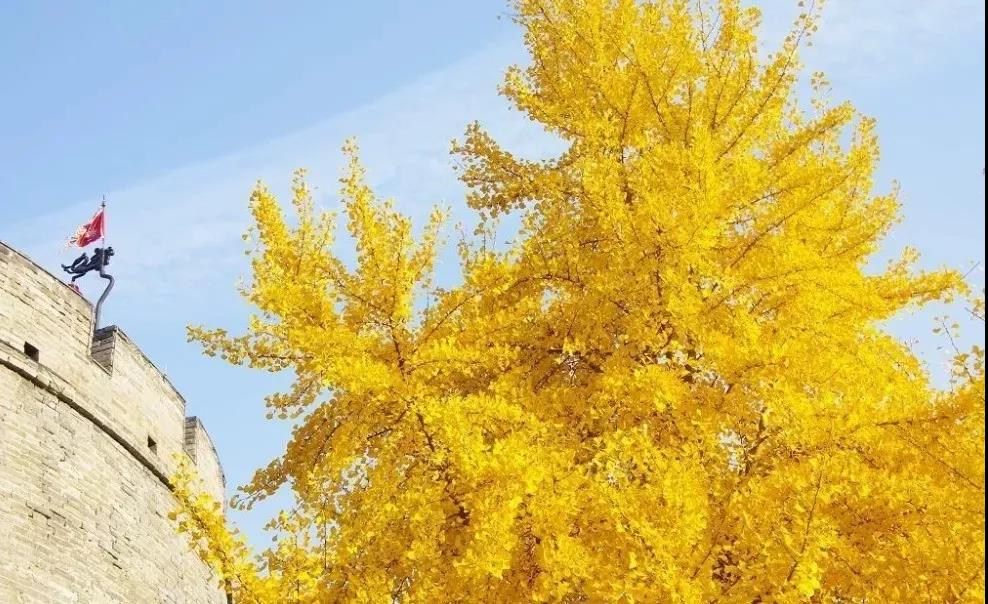
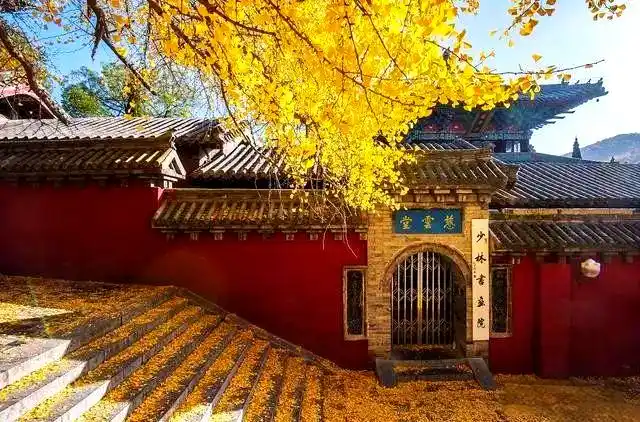
Spring (March to May) is a wonderful alternative, with temperatures between 10°C and 20°C and blooming flowers across the city—cherry blossoms at Qinglong Temple and tulips at Xingqing Palace create picturesque Chinese-style scenes, perfect for Hanfu photography and casual walks along the city’s lanes. However, spring in Xi’an is dry and windy with occasional sandstorms, so it’s wise to bring a scarf and moisturizing products, and avoid outdoor activities on dusty days.
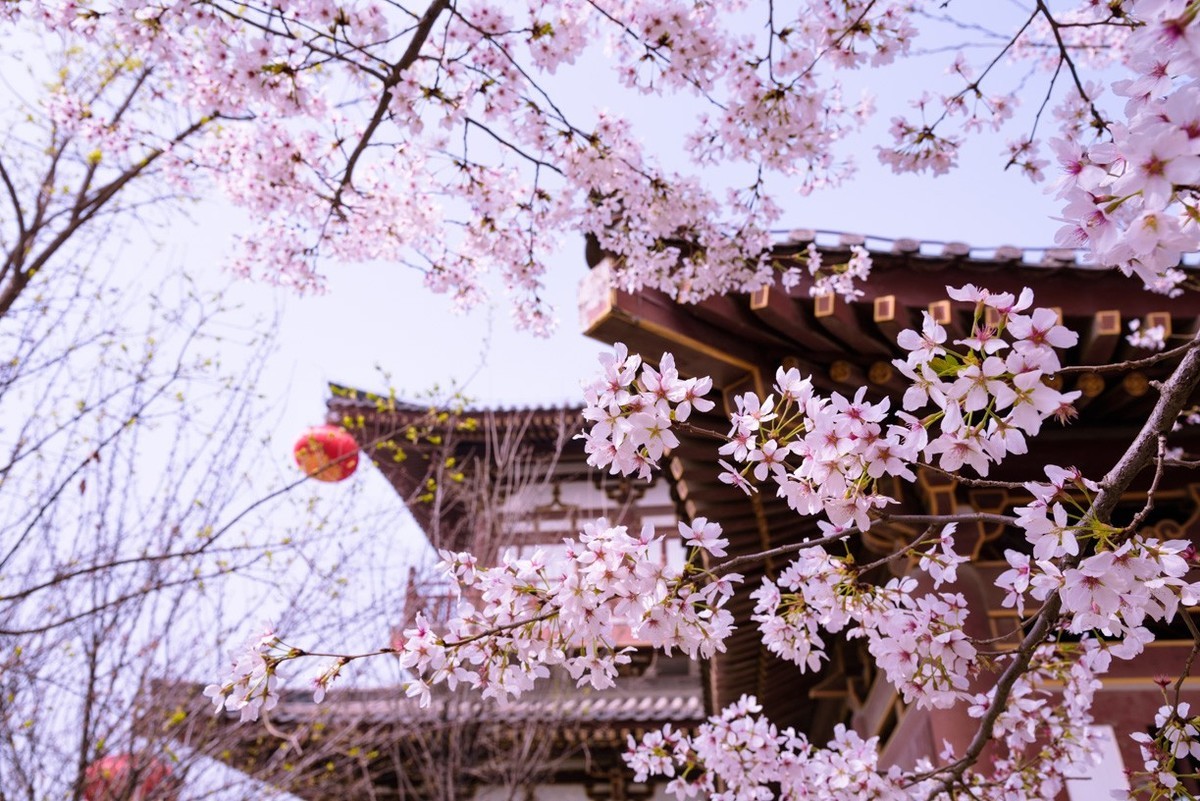
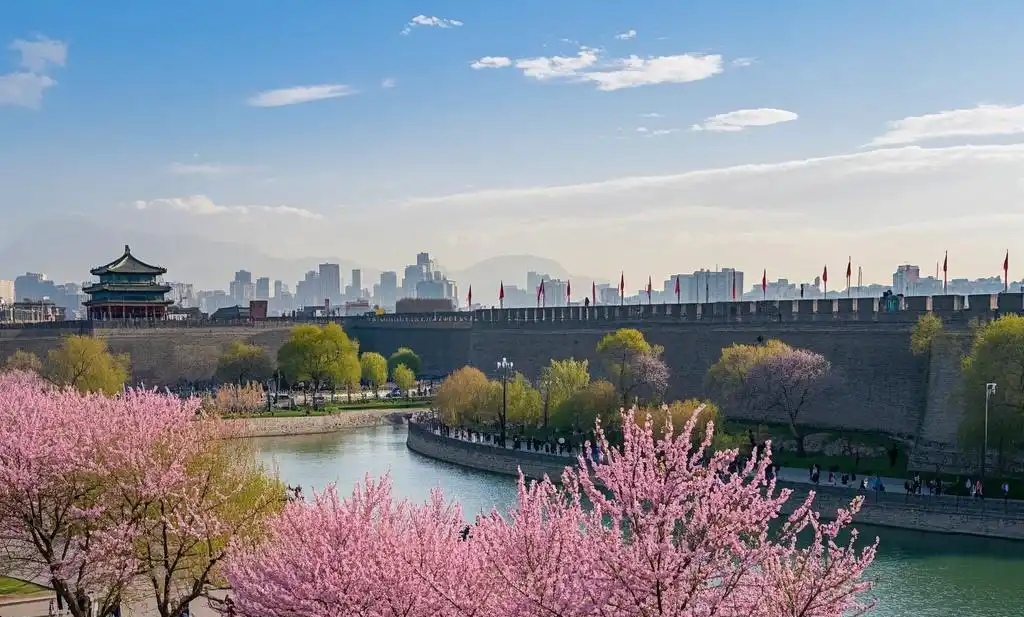
Summer (June to August) is the low season for outdoor sightseeing, as temperatures soar to 35°C or even higher with occasional short downpours. But this season unlocks Xi’an’s vibrant night charm: the Tang Paradise and the Everbright City come alive with dazzling light shows, the outdoor performance The Song of Everlasting Sorrow at Huaqing Pool is more enjoyable in the cool night air, and morning visits to popular attractions can help you avoid both the heat and crowds. Indoor spots like the Shaanxi History Museum are ideal for daytime exploration to escape the sun.
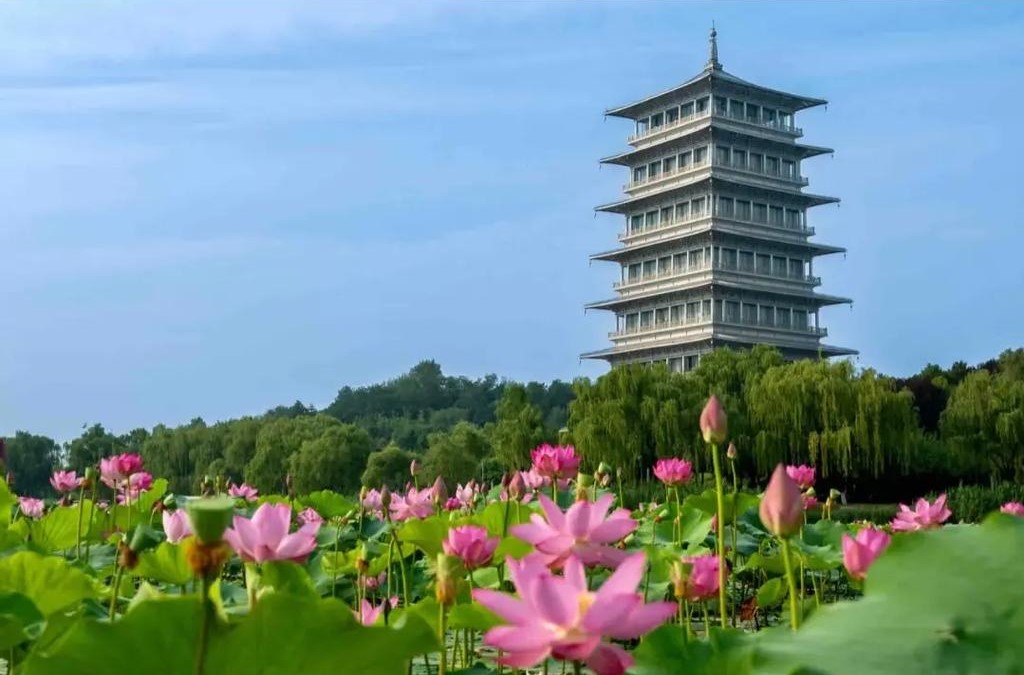
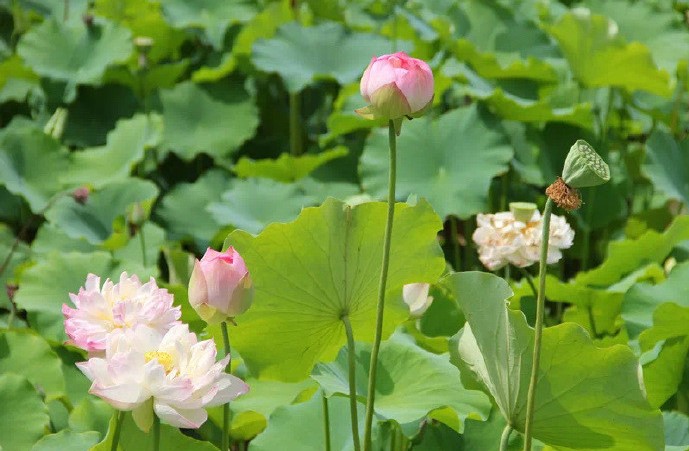
Winter (December to February) is the most budget-friendly time, with frigid temperatures from -5°C to 5°C and rare light snowfall. Most outdoor tourist sites have few visitors, and hotels and flight tickets are heavily discounted. A snowy Xi’an is incredibly poetic, with the Bell and Drum Towers and the Ancient City Wall covered in a thin layer of snow, recreating the grandeur of ancient Chang’an. The Spring Festival period (January to early February) is a highlight, as the city is decorated with festive lanterns—the Ancient City Wall Lantern Festival and intangible cultural heritage activities like iron flower performances bring the strongest Chinese New Year vibes to the ancient capital. Note that some outdoor performances may be suspended in winter, and warm, windproof clothing is a must for travel.
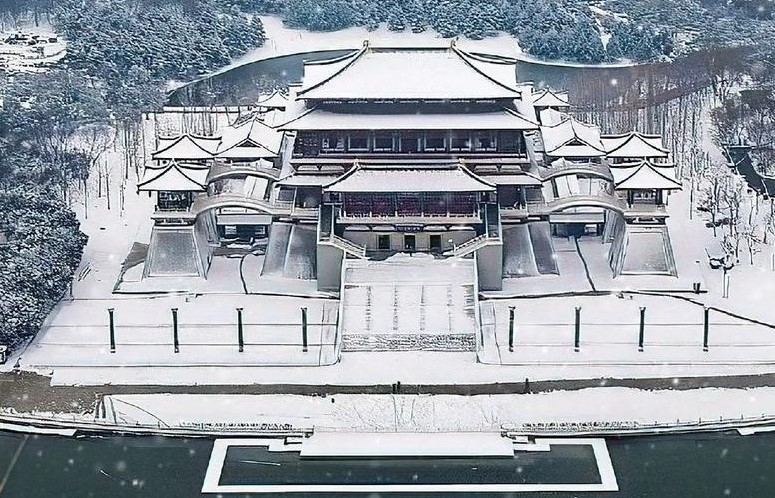
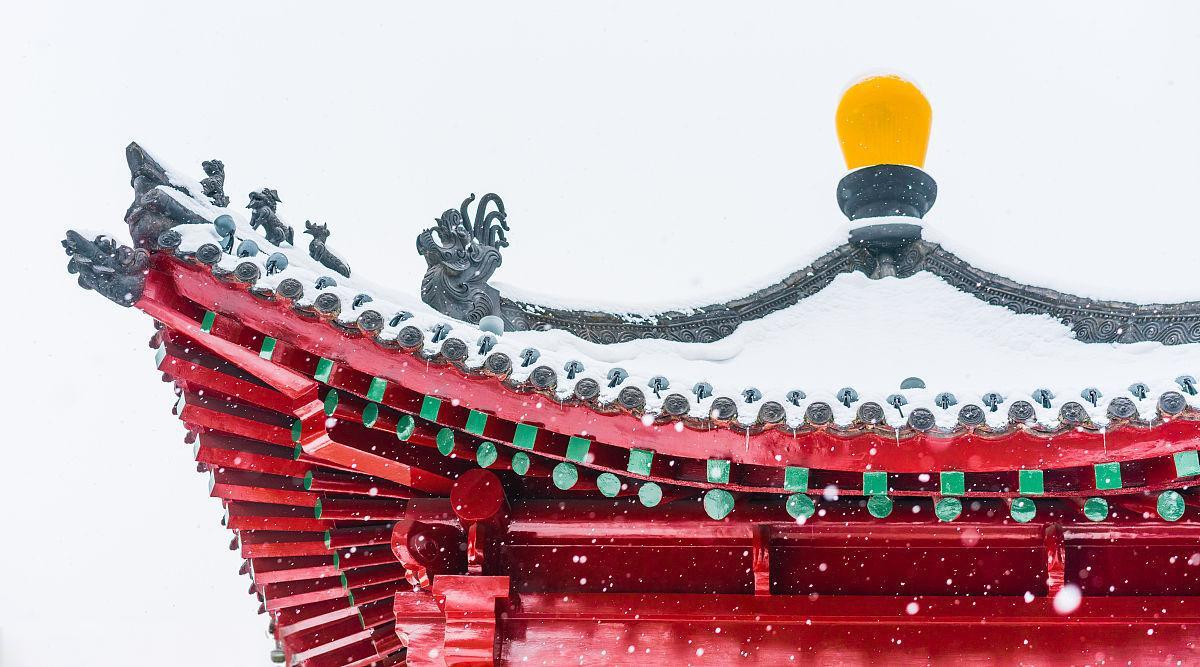
Practical Tips
1. Cultural and Customary Respect
* Religious and Ethnic Customs
Muslim Quarter and its surrounding areas in Xi’an are densely populated by Hui people who believe in Islam. Pork and alcohol are prohibited. Do not carry pork products or alcoholic beverages in halal shops, do not randomly take photos of the living scenes of Hui compatriots, and respect their religious beliefs and living habits.
* Cultural Relic Protection
Xi’an has many historical relics. Cultural relics in museums and scenic spots (such as Terracotta Army, murals, inscriptions) are protected by the state. Touching, carving, climbing are prohibited, and flash photography is prohibited (some scenic spots allow flash-free photography). Do not arbitrarily collect cultural relic fragments or ancient building components, otherwise you will face punishment.
* Public Etiquette
Please keep quiet in public places (subway, bus, scenic spots), do not talk loudly, spit everywhere or litter. Please abide by the order when queuing to buy tickets and take transportation, and respect others; do not graffiti or carve on the City Wall and ancient buildings, and protect historical buildings.
2. Language Communication
* Language Assistance
Most staff in Xi’an’s scenic spots, hotels and large shopping malls can provide basic English services. There are English signs and English guide maps in the scenic spots, and English audio guides can be rented; you can download translation APPs (such as Baidu Translate, Youdao Translate) in advance, and download Chinese-English vocabulary offline (such as scenic spot names, food names, common phrases) to facilitate communication.
* Ways to Ask for Help
If you have difficulty in language communication, you can go to the scenic spot visitor center, hotel front desk, or subway station service desk for help. The staff will assist in contacting a translator or providing help; you can also carry a copy of your passport to prove your identity in case of emergency.
3. Item Preparation and Others
* Document Preparation
Be sure to carry your original passport (valid document for entering China) with you. It is recommended to prepare a copy of your passport and an electronic backup (stored in your mobile phone and email) to avoid being unable to prove your identity if your passport is lost; if you plan to go to surrounding scenic spots such as Mount Hua, no additional documents are required.
* Time and Holidays
Most scenic spots and museums in Xi’an are open from 8:30 to 18:00 (may be advanced to 17:30 in winter). Some scenic spots (such as Grand Tang Mall) are open at night. It is recommended to check the opening time in advance to avoid running empty; there are a large number of people in scenic spots during Chinese legal holidays (Spring Festival, National Day, etc.), and tickets are tight. It is recommended to travel during off-peak hours.
4. Digital & Local Service Tips
* Communication & Network
After arriving in Xi’an, you can buy an overseas data card at China Mobile/China Unicom business halls in Xi’an Xianyang International Airport or Bell Tower Business District (recommended 7-day 10GB package, about 50 yuan). No need to bind a Chinese bank card, just present your passport; free WiFi is available in scenic spots, hotels and business districts. When connecting with an overseas mobile phone number, select “Visitor WiFi” and connect directly without registration.
* Practical APPs
Prioritize Amap/Baidu Maps for navigation (support foreign address input and English interface); use Didi Chuxing for ride-hailing (English interface, can bind overseas credit cards); use the official WeChat public account of the scenic spot for reservation (download in advance, select “Overseas User” when registering and fill in passport information).
* Payment Convenience
Alipay/WeChat can bind overseas mobile phone numbers and credit cards (both Visa/Mastercard are acceptable). After binding, you can directly scan the code to pay (supported by most stores and snack stalls); a small number of small alley stores and mobile vendors only accept cash. It is recommended to exchange a small amount of RMB in advance at the airport or bank (500-1000 yuan is enough).
* Local Life
Recommended 24-hour convenience stores are FamilyMart and 7-Eleven (where you can buy snacks and drinking water, supporting mobile payment); for night dining, you can choose foreign-related restaurants in Datang Everbright City and Bell Tower Business District (providing Chinese and Western food, supporting English menus).
5. Season & Weather Tips
* Spring (March-May)
Temperature 10-20°C, large temperature difference between morning and evening. It is recommended to wear a light coat + long-sleeved T-shirt and carry a thin scarf with you; there is much sand and dust in this season, so you can prepare a mask; it is recommended to go to the City Wall (Cherry Blossom Festival) and Qujiang Pool (spring outing), and the best visiting time is 9-11 am.
* Summer (June-August)
Temperature 25-38°C, hot and rainy. You need to do a good job in sun protection (sun protection clothing, sunscreen, sun hat) and carry an umbrella with you; avoid traveling during the high-temperature period at noon (12-14 pm), and you can choose Huaqing Palace (summer resort) and Grand Tang Mall (night tour); heavy rain may lead to the temporary closure of mountain scenic spots (Mount Hua, Taibai Mountain), so check the scenic spot announcement before traveling.
* Autumn (September-November)
Temperature 15-28°C, sunny weather, which is the best tourist season in Xi’an. It is recommended to wear a hoodie + light coat (add clothes in the morning and evening); it is recommended to go to Mount Hua (maple viewing) and Daming Palace Ruins (autumn scenery), and the best shooting time is 1 hour before and after sunset.
* Winter (December-February)
Temperature -5-10°C, cold and dry. You need to wear a down jacket, thick scarf, gloves and snow boots (non-slip); there is heating indoors, so you can carry thin clothes with you (convenient to change when entering and exiting indoors); it is recommended to go to Huaqing Palace (hot spring) and Xi’an City Wall (Ice and Snow Festival). For winter climbing in Mount Hua, you need to prepare non-slip crampons and pay attention to the scenic spot climbing warning.
* General Tips
For people prone to allergies in spring and autumn, carry anti-allergic drugs; heatstroke is easy in summer, so you can prepare heatstroke prevention drugs such as Huoxiang Zhengqi Water; it is dry in winter, so pay attention to replenishing water; before traveling in all seasons, check the local weather forecast of Xi’an (recommended to use Weather China APP, which supports English).
6. Emergency & Foreign-Related Service Tips
* Emergency Phones (Must Remember)
Police 110, First Aid 120, Fire 119, Tourism Complaint 12301, Foreign-Related Service Hotline 12345 (providing English service to solve various foreign-related problems); when dialing emergency phones, you can speak English directly, and the operator will arrange an English interpreter to assist.
* Document Emergency
If your passport is lost/stolen, call 110 to report to the police immediately, then go to Xi’an Entry-Exit Administration to reissue it. You need to prepare a copy of your passport (if available), photos and a police report. The reissue time is about 3-5 working days; if your visa is lost, contact your country’s embassy in China and apply for reissue with the police report and passport reissue certificate.
* Other Emergencies
If you lose the scenic spot reservation code, you can retrieve it in “My Reservation” on the official WeChat public account of the scenic spot, or go to the tourist service center at the scenic spot entrance to retrieve it with your original passport; if your mobile phone runs out of power, you can rent a power bank at the scenic spot tourist service center or convenience store (mortgaged with passport, no deposit required).
7. Shopping Tips
* Bargaining Tips
You can bargain appropriately in stores on Shuyuanmen Pedestrian Street and alleys of Muslim Quarter, generally 10%-20% off. Large supermarkets, official cultural and creative stores and specialty stores do not allow bargaining, with transparent prices.
* Carrying Tips
Pay attention to the shelf life of food souvenirs (especially Braised Beef and Mutton in Sauce), and eat them as soon as possible after opening the vacuum packaging; ask the store to pack fragile products (such as shadow puppets, rubbings, farmer’s paintings) firmly to avoid damage during transportation and carrying; large souvenirs can be mailed on site to save luggage space, and the store can provide mailing services (fee at your own expense).
* Demand Communication
If you have customization needs (such as shadow puppet lettering, rubbing customization), please communicate clearly with the store in advance, confirm the customization content, price and pick-up time to avoid subsequent disputes.
* International Mailing
For international mailing of souvenirs, you can choose DHL/FEDEX/EMS (all have offline outlets in Xi’an). Food needs to be vacuum-packed, and fragile products need to be reinforced; consult the store or courier before mailing to understand the tariff standards of the destination country for food and handicrafts, to avoid customs detention.
FAQs
Q: How to make reservations for top attractions (Terracotta Army, Shaanxi History Museum) and how far in advance?
A: All require advance booking via official channels, free of charge (except for some paid exhibitions):
· Museum of Qin Shi Huang’s Mausoleum and Terracotta Army: Book via the official WeChat account Qin Shi Huang’s Mausoleum Museum, with real-name registration (passport number and full name required). Book 3–5 days in advance during peak seasons (Mar–May, Sep–Nov, public holidays) and 1–2 days in advance during off-peak seasons.
· Shaanxi History Museum: Book via its official WeChat account. Free tickets are highly sought-after — book 3–5 days early (tickets released at 8:00 AM daily). Paid exhibitions (Tang Dynasty Mural Hall, Tang Dynasty Treasures) can be booked simultaneously with no rush. Present your original passport at the entrance for verification after successful booking.
Q: Do I need to cancel my reservation if I cannot visit on time?
A: Cancellation is strongly recommended. Most top attractions (Shaanxi History Museum, Terracotta Army) enforce a no-show penalty: 3 no-shows within 180 days will result in a 90-day booking ban. Cancel via My Orders/My Reservations on the original booking WeChat account. Please cancel at least 1 day in advance to avoid being marked as a no-show.
Q: Can I correct wrong information (name, passport number) after submission?
A: Online editing is not supported for most attractions. Cancel the incorrect reservation and rebook with correct details. If cancellation is unavailable close to the visit date, go to the attraction’s tourist service center with your original passport for manual verification.
Q: Must I carry my original passport at all times in Xi’an?
A: Yes. Your passport is your only valid ID in China. It is required for attraction entry, hotel check-in, tax refund, transport verification and emergencies. Keep a physical copy and digital scan (saved on your phone/email) as backup.
Q: Can I extend my Chinese visa in Xi’an before it expires?
A: Yes. Submit an extension application at Xi’an Public Security Bureau Entry-Exit Administration Bureau with your passport, valid visa, accommodation registration and travel itinerary. Processing takes 3–5 working days. Apply 7–10 days in advance to avoid overstaying. You can refer to the following webpage: https://s.nia.gov.cn/mps/bszy/wgrcrj/sqwgrqz/201903/t20190313_1006.html
Q: Where to get the best exchange rate for RMB in Xi’an?
A: · Bank of China (Bell Tower Branch, Giant Wild Goose Pagoda Branch) offers the most transparent rates with passport verification;
· Authorized foreign exchange counters at Xi’an Xianyang International Airport and Xi’an North Station;
· Star-rated hotels offer exchange services at slightly higher rates.
Q: What if my cross-border payment fails or is duplicated?
A: · Check your credit limit and network connection;
· Keep payment receipts and request a refund from the merchant;
· Cross-border refunds take 7–15 working days — contact the payment platform for progress updates.
Q: Can tax refund items be checked in?
A: Yes, but they must first be verified by customs before being checked in.
Q: What to do if I forget to complete the exit verification?
A: The pre-authorization for "Instant Tax Refund" will be deducted, and the traditional refund cannot be processed. The refund will be invalid.
Q: Can I pay with foreign currency at downtown duty-free stores?
A: Yes, USD, EUR, JPY, and other major currencies are accepted, as well as credit cards (Visa, Mastercard, UnionPay).
Q: Can I enjoy both tax refunds and duty-free shopping?
A: No, each item can only be eligible for one discount option.
Q: Are there special discounts for children's products?
A: Some maternal and infant products enjoy tax exemptions but no additional special discounts.
Xi’an is a city that offers a blend of history, culture, and modernity. Whether you're exploring ancient relics, tasting local delicacies, or immersing yourself in local traditions, Xi'an has something to offer every traveler. With this guide, you are now ready to embark on an unforgettable journey through one of China’s most fascinating cities.
Your Way Holiday’s Top Things to Do in Xi'an: Must-See Attractions & Unique Experiences in China’s Ancient Capital
We design private and tailor-made Xi'an tours customized to your travel style at affordable local prices. You’ll enjoy the comfort of a private, spacious car and the company of a professional local guide with over 5 years of experience, dedicated exclusively to you or your group. From transportation and tickets to authentic dining experiences (we always recommend the dishes most loved by locals), everything will be arranged according to your preferences. Please take a look at some of our most popular Xi’an tours below:
 Muslim Xi'an Tour: Explore Xi’an’s Rich Islamic Heritage
 2-Day Family-Friendly Adventure in Xi'an: Explore Ancient Wonders & Iconic Sights
Not exactly what you’re looking for? Don’t worry — all of our Xi’an tours can be fully customized based on your interests, schedule, and budget. We specialize in creating unique Xi'an experiences that go beyond the guidebook, giving you the chance to truly connect with the local culture and people. Our enthusiastic tour experts are always ready to provide detailed suggestions and will respond to your inquiry within 24 hours. Ready to explore Xi'an your way? Contact us today and let us design a Xi'an travel experience that fits your style. Your Way Holiday looks forward to your message! We're ready to design an unforgettable Xi'an trip for you anytime.
Prev: No previous link
Next: The Best Restaurants in Xi’an: A Guide to the City’s Top Dining Experiences
Wechat: YourWayHolidayAsia
24 Hours Hotline:
+86 137-3541-1378
Certificate of Excellence
2012 ~ 2026

Your Way Holiday
* Authentic Experiences: Genuine local experiences that immerse you in the true essence of Xi'an and beyond.
* Safety First: Highest safety standards with secure activities and reliable transportation.
* Customizable Tours: Flexible itineraries tailored to your interests and needs.
* Local Expertise: In-depth knowledge of Xi'an and China, offering exclusive insights.
* Professional Guides: Licensed bilingual guides with over 5 years of experience.
* Comfortable Travel: Experienced drivers and well-maintained vehicles for a smooth journey.
* Sustainable Tourism: Commitment to responsible tourism and supporting local communities.
* Customer-Focused: Personalized service and continuous improvement based on your feedback.
* Free Cancellation: Cancel up to 24 hours before travel for flexibility and peace of mind.
* 24/7 Support: Round-the-clock assistance for any questions or help needed.
(Your Privacy is Protected)
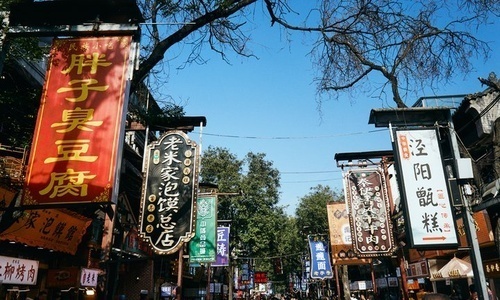 Xi'an Muslim Quarter Travel Guide: Street Food, Culture & Nightlife
 Exploring Grand Tang Mall Xi'an: Shopping, Dining, and Entertainment in the Heart of the Ancient City
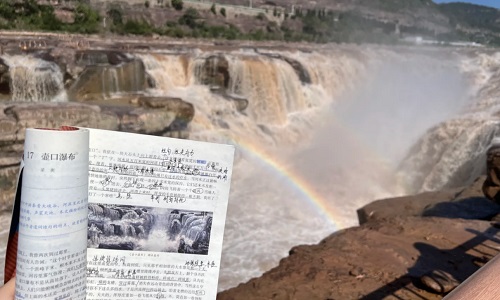 Hukou Waterfall Travel Guide: Visiting the Yellow River’s Most Spectacular Hukou Waterfall from Xi'an
 Huashan Mountain Travel Guide: Hiking the Most Dangerous and Beautiful Peak in China
.jpg "The Song of Everlasting Sorrow: A Timeless Tale of Love and Tragedy in Xi'an") The Song of Everlasting Sorrow: A Timeless Tale of Love and Tragedy in Xi'an
The Song of Everlasting Sorrow: A Timeless Tale of Love and Tragedy in Xi'an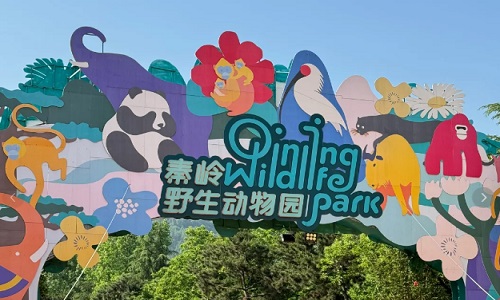 Exploring Xi'an Qinling Wildlife Park: A Natural Adventure in the Heart of the Qinling Mountains
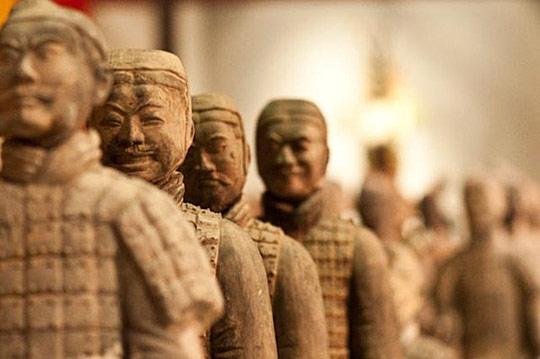 Discover the Terracotta Warriors in Xi'an: A Complete Guide to China’s Ancient Army
 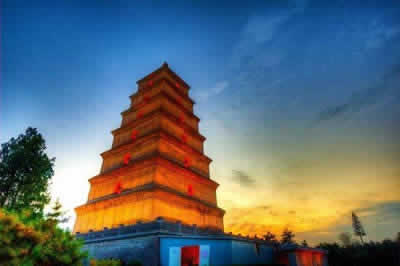 Big Wild Goose Pagoda
1 to 1 tailor-made service from our professional travel advisors for the most sophisticated
Constantly excellent reviews for attraction, hotel and service Competitive price
Local experts provide quality tours Best selected knowledgeable local guides Authentic local restaurants
7*24 hours available to create you a worry-free tour. No Hidden Fees and absolutely no pressure to buy. Secured









Copyright © 2017 www.xianprivatetour.com All rights reserved. 浙ICP备18056007号-6