How to Travel from Beijing to Xi’an: Best Options for Your Journey
Post Date: 2025/08/25 23:37
Beijing and Xi’an are two of China’s most iconic cities, each offering a rich tapestry of history, culture, and unforgettable sights. Beijing, the nation’s capital, is home to world-famous landmarks such as the Forbidden City, Tiananmen Square, and the Temple of Heaven, showcasing centuries of imperial heritage. Xi’an is renowned as the ancient capital of China and the starting point of the Silk Road, most famously known for the Terracotta Warriors and the city’s well-preserved Ming-era walls. Planning your transportation between these two cities is crucial for a smooth and enjoyable journey. With multiple options available, including high-speed trains, flights, and private transfers, understanding the differences can help you save time, stay comfortable, and make the most of your travel experience. This blog aims to guide you through the best ways to travel from Beijing to Xi’an, offering practical advice, comparisons, and insider tips so that you can choose the option that perfectly fits your schedule, budget, and travel preferences.
 Beijing to Xian 1 Day Tour: Day Trip to Terracotta Warriors & Tang Dynasty Show From Beijing by Bullet Train
 Beijing Xi’an 4 Day Tour with Bullet Train – Highlighting Smooth and Easy Travel
Quick Decision Helper
1. I have no more than 4 hours real travel time — Flight
If you are in a hurry and want to minimize the total time spent on the journey (excluding waiting time), flight is your best choice. The direct flight time between Beijing and Xi’an is only about 2 hours, which is the fastest way among all travel options. Note: You need to arrive at the airport 2 hours in advance for security checks and boarding, so calculate the total travel time reasonably to avoid missing the flight.
2. I want stable, comfortable, city-center to city-center — High-speed rail
High-speed rail stations in Beijing (Beijing West Station, Qinghe Station) and Xi’an (Xi’an North Station) are all close to the city center, which is very convenient for transfer to downtown areas. The high-speed rail schedule is extremely stable (basically no delays due to weather or traffic), the seats are spacious and comfortable, there are power sockets and free Wi-Fi on board, and you can move freely during the journey—this is the most balanced choice for comfort and convenience.
3. I want to save money & experience local life — Overnight regular train
The ticket price of overnight regular trains (Z/T/K series) is only 1/3 to 1/2 of high-speed rail and 1/4 of flights, which is the cheapest travel option. More importantly, taking the overnight train (departing Beijing at 8:00 PM–10:00 PM and arriving in Xi’an at 7:00 AM–9:00 AM the next day) can save you one night’s hotel fee (¥80–¥300), which is very cost-effective. At the same time, you can experience the real travel life of Chinese locals on the train, such as chatting with other passengers and trying local snacks sold on the train.
4. I want to stop along the way — Self-driving or high-speed rail + short stop
If you don’t want to go directly to Xi’an and want to visit cities along the route (such as Zhengzhou, Luoyang), self-driving gives you the most flexibility—you can stop at any time to visit scenic spots (such as Shaolin Temple in Zhengzhou, Longmen Grottoes in Luoyang) and adjust your itinerary freely. If you don’t want to drive by yourself, you can take high-speed rail to Zhengzhou or Luoyang first, stay for 1–2 days to visit local attractions, and then take high-speed rail to Xi’an, which is more convenient and safe than self-driving.
5. I travel with kids / elders / wheelchair — High-speed rail (best accessibility)
High-speed rail is equipped with complete facilities for the elderly, children, and passengers with disabilities, including baby changing rooms, stroller access, wheelchair spaces, and accessible toilets. There are also priority boarding services, and the staff can provide timely help (such as helping the elderly and disabled board the train). The stable speed and comfortable seats can also reduce the fatigue of the elderly and children during the journey.
6. I want luxury & privacy — First class / Business seat / Private transfer
If you pursue a high-end travel experience, you can choose the first class or business class of high-speed rail—first class has a 2+2 seating layout with more space, and business class has lie-flat seats, free meals and drinks, and exclusive attendant service. If you want more privacy and convenience, private transfer (door-to-door service from Beijing hotel to Xi’an hotel) is better, flexible departure time, and no need to worry about transfer and luggage.
Detailed Travel Options
A. High-Speed Rail (HSR) — Most Recommended
a. Basic Facts
* Daily frequency: 50+; Journey duration: 4.0–5.5 hours.
* Main stations: Beijing West — Xi’an North.
* Key facilities: Free on-board Wi-Fi, power outlets at every seat, dining car, wheelchair-accessible car, quiet car option.
b. Introduction to Common High-Speed Train Stations from Beijing to Xi'an
1. Main Departure Stations in Beijing
* Beijing West Railway Station: As the starting point of the Beijing-Kowloon Railway and a key passenger hub in North China, Beijing West Railway Station is the primary departure station for high-speed trains to Xi'an. Covering 510,000 square meters with 10 platforms and 18 tracks, it integrates Metro Lines 7 and 9 for seamless transfers, offering a comfortable and efficient travel experience.
* Beijing Fengtai Railway Station: Asia’s largest railway hub, Beijing Fengtai Railway Station features an exclusive double-layer yard design for high-speed and conventional railways. With a construction area of 400,000 square meters and 32 platforms, it adopts a three-dimensional traffic mode, integrating high-speed rail, conventional rail, and metro, serving as a key node in the Beijing-Tianjin-Hebei integrated transportation network.
* Qinghe Railway Station: A core hub of the Beijing-Zhangjiakou High-Speed Railway and the 2022 Winter Olympics transportation hub, Qinghe Railway Station serves passengers from northern Beijing and the northwest. It integrates Metro Line 13 and the Huairou-Miyun Suburban Railway, retaining a century-old station building to blend historical heritage with modern intelligent services.
2. Main Arrival Stations in Xi'an
* Xi'an North Railway Station: The largest passenger railway hub in Northwest China, Xi'an North Railway Station is a key node in China’s national high-speed rail network. As one of the largest high-speed railway stations in Asia, it features a Tang-Dynasty style design inspired by the Daming Palace, integrating Metro Line 2 for direct access to the city center, about 12 kilometers away.
* Xi'an Railway Station: A landmark station in the ancient city, Xi'an Railway Station is adjacent to the Ming City Wall and integrates the Longhai High-Speed Railway. With a double-square and double-station building design, it offers a three-dimensional travel experience. Walking out of the station, travelers can directly access the cultural heritage of the ancient city, including the Ming City Wall and the Daming Palace.
c. Seat Types & Real Experience
Fares are fixed by China State Railway Group, with no dynamic pricing (unlike flights), so prices remain consistent year-round (only seat class affects cost). Detailed breakdown:
* Second-Class Seat: 669–773 CNY (varies slightly by train number, no difference in comfort). Seats are arranged in a 3+2 layout (three seats on one side, two on the other), with a seat width of 45 cm, legroom of 90 cm, and adjustable backrests (recline up to 15°). Each row has a small table attached to the front seat backrest, suitable for single travelers or small groups.
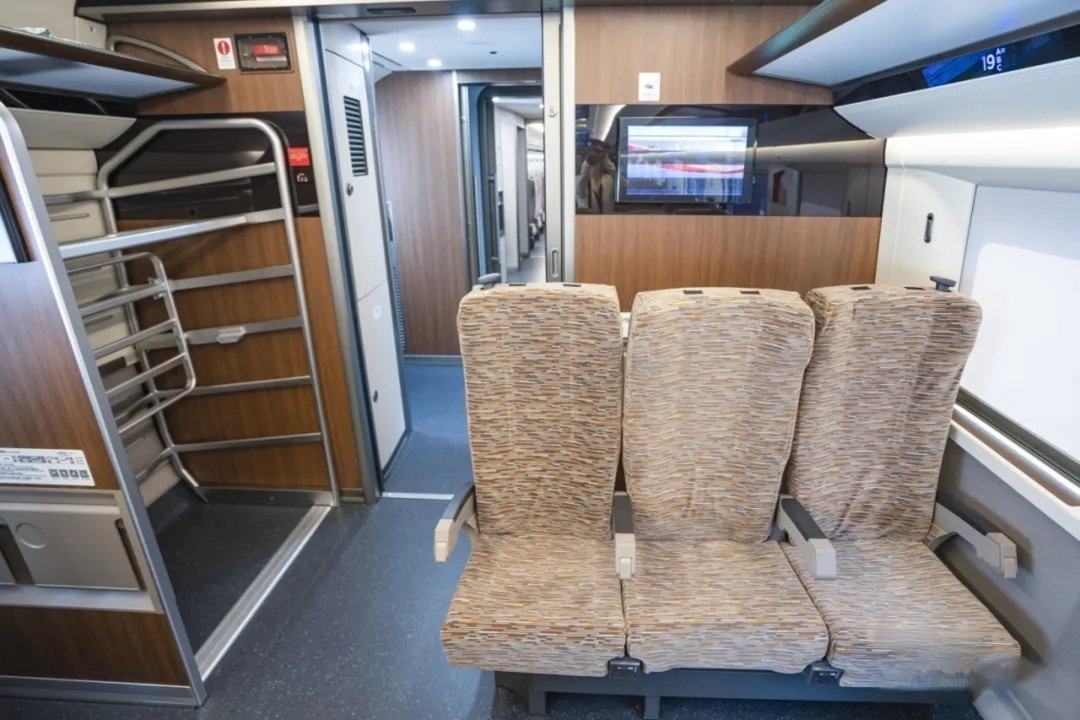
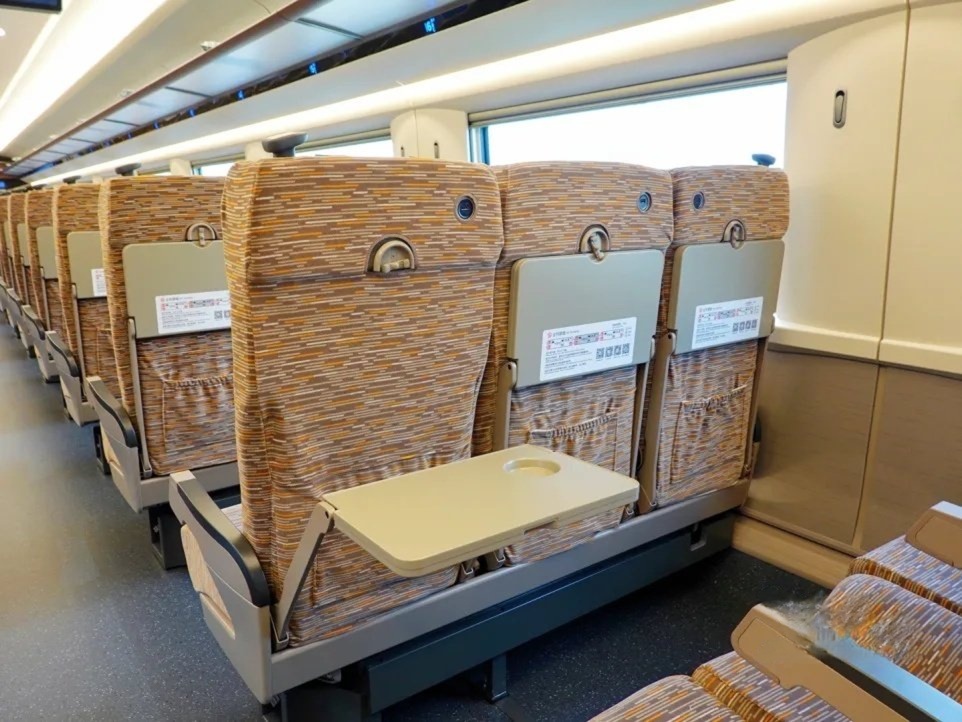
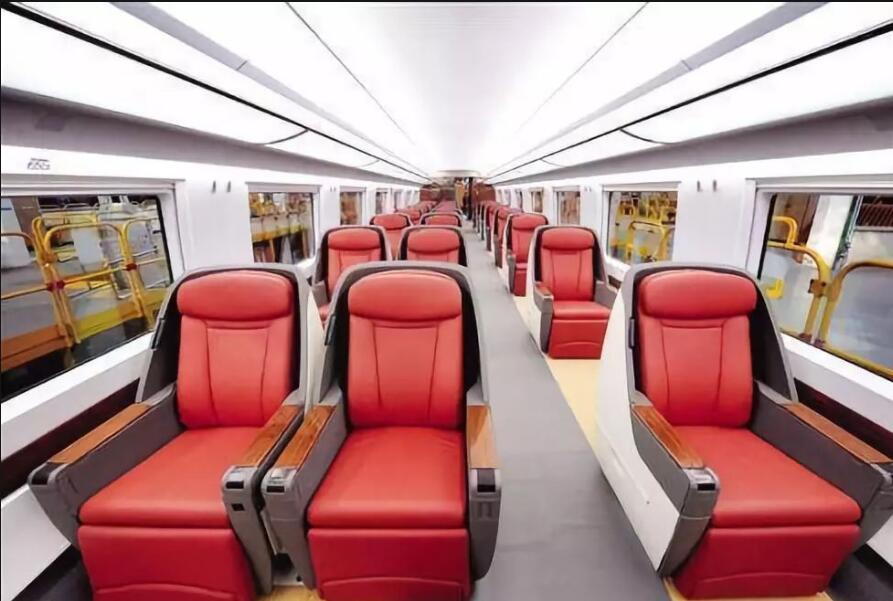
* First-Class Seat: 1,094.5–1,241.5 CNY. Seats are arranged in a 2+2 layout, with a seat width of 60 cm, legroom of 105 cm, and fully adjustable backrests (recline up to 30°). Each seat has a personal reading light, power outlet, and a foldable table in the armrest, offering more privacy and comfort for business travelers or families.
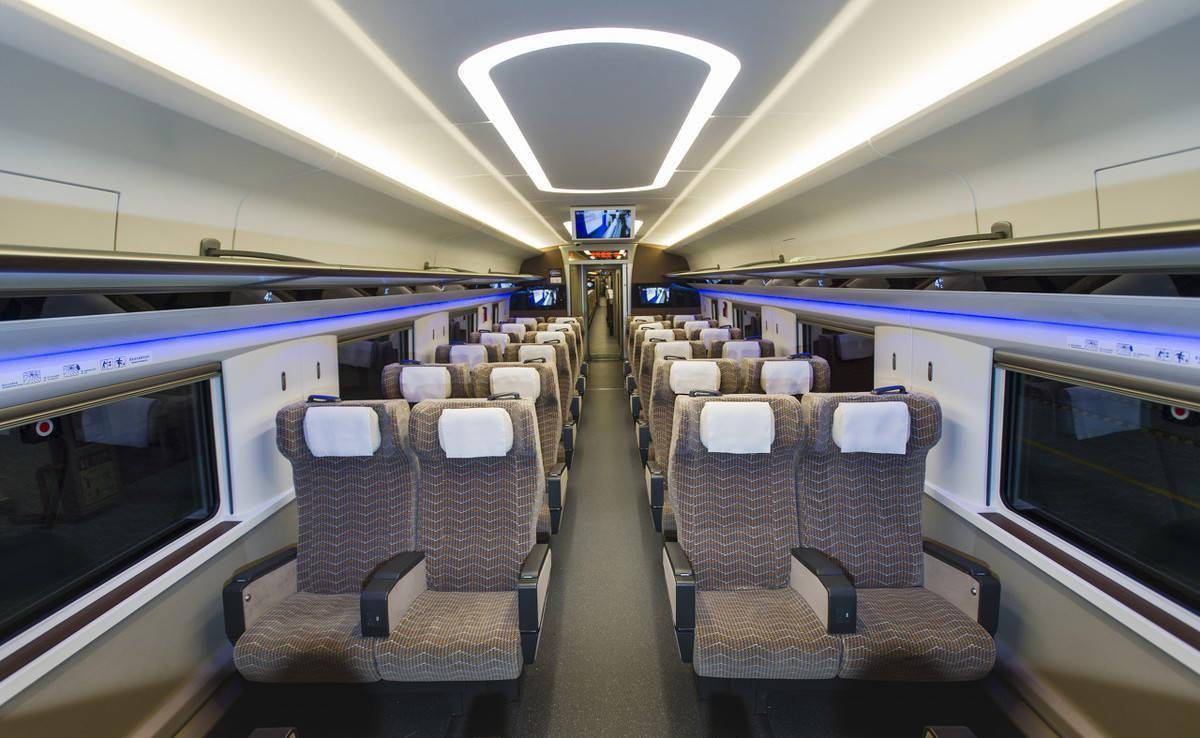
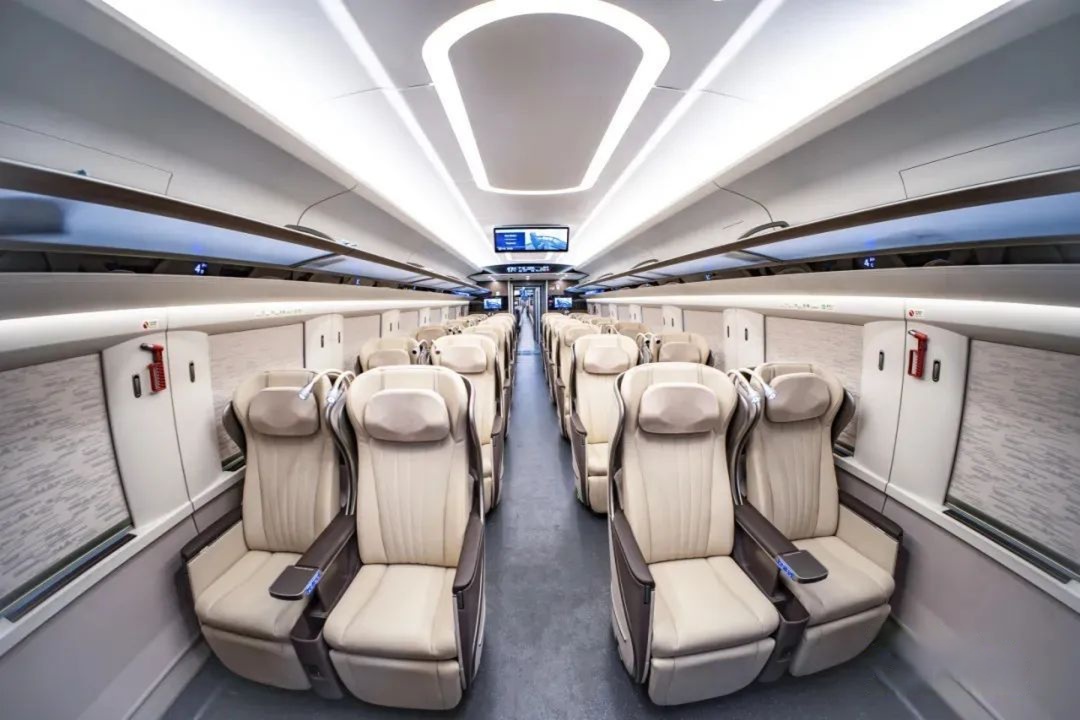
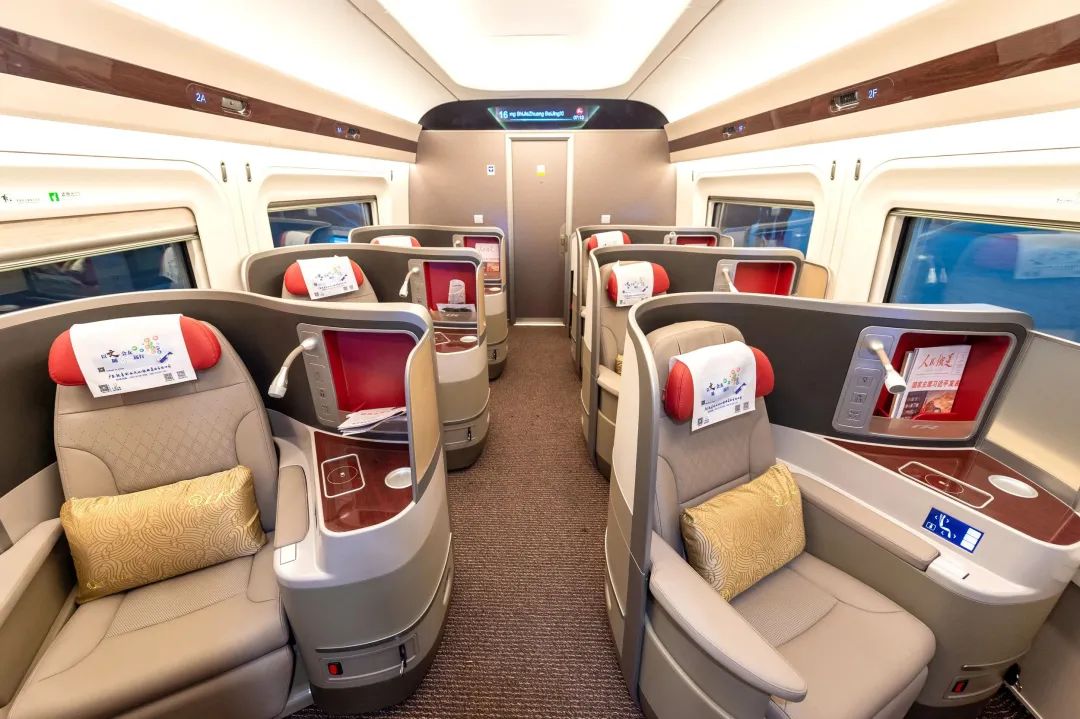
* Business-Class Seat: 2,080–2,418.5 CNY. Seats are arranged in a 2+1 layout (two seats on one side, one on the other) or single seats, with a seat width of 80 cm, fully reclinable backrests (180° flat bed), and footrests. Additional amenities include complimentary meals (for journeys over 4 hours), drinks, blankets, and dedicated service from flight attendants. Business-class carriages are located at the front or rear of the train, with fewer passengers (20–30 seats per carriage).
d. Onboard Travel Experience
* WiFi & Connectivity: Free WiFi (“ChinaRailWiFi”) is available throughout the train. To connect, select the network, enter your phone number (Chinese or international) to receive a verification code, and log in. Note that international phone numbers may take longer to receive codes (1–2 minutes), and signal may be weak in tunnels (brief disconnections).
* Power Outlets: Every seat is equipped with power outlets, including USB-A, USB-C, and Type-C ports, located under the seat (second-class) or in the armrest (first-class/business-class). Charging speed is standard (5V/2A), suitable for phones, tablets, and laptops.
* Dining & Catering:
· Dining Car: Located in the middle of the train (usually Carriage 8 or 9), offering hot meals (boxed meals: 30–80 CNY, including braised pork, kung pao chicken, and vegetarian options), snacks (instant noodles, biscuits), and drinks (coffee, tea, soda). Operating hours: 7:00 AM–9:00 PM.
· Seat-Side Delivery: Scan the QR code on the seat backrest to order food via WeChat or Alipay (international credit cards are not accepted for in-train ordering). Food is delivered directly to your seat at major intermediate stations (Nanjing South, Xuzhou East, Zhengzhou East) within 15–20 minutes.
· BYO Food: Travelers can bring their own food and drinks (no strong-smelling items, e.g., durian, preserved eggs) to save money.
* Seating & Comfort: Seats are ergonomically designed, with soft cushions and adjustable headrests. Second-class carriages have air conditioning set to 24–26°C, while first-class/business-class offer personalized temperature controls. Luggage racks are available above each seat (for small luggage, max 20 kg) and at the end of each carriage (for large luggage, max 30 kg).
* Restrooms & Hygiene: Clean restrooms are available at both ends of each carriage, including accessible restrooms (for travelers with disabilities) in every other carriage. Toilet paper and hand sanitizer are provided, and staff clean the restrooms every 30 minutes.
* Other Amenities: Each carriage has a water dispenser (hot and cold water), so bring a reusable bottle. Blankets are available for free in business-class, and can be borrowed in first-class (deposit required).
e. Travel Tips for Foreigners
* Seat Selection: When booking tickets, select seats via 12306 or Trip.com—"A" and "F" are window seats (ideal for viewing scenery, e.g., the Yellow River near Zhengzhou), "C" and "D" are aisle seats (easy access to restrooms and luggage).
* Boarding Process: Arrive at the station 30–45 minutes before departure (1 hour during peak seasons). Scan your passport or the 12306 dynamic QR code at the security checkpoint, then find your platform via the electronic display (platform numbers are marked on tickets). Board the train 15 minutes before departure, with carriage numbers indicated on the platform floor.
* Lost & Found: If you lose belongings on the train, contact the conductor (via the call button above your seat) or visit the "Lost and Found" office at Beijing West or Xi'an North Station, providing your ticket information and a description of the item.
* Security Check: Liquids per container =100ml; power bank =100Wh (clearly labeled); no flammable items.
* Smoking Ban: Strictly prohibited on platforms & trains; fine up to ¥2000.
* Luggage Limit: Free allowance up to 20kg per person; total dimension = 130cm; oversized items require special handling.
f. Pros & Cons
* Pros: Reliable schedule (minimal delays); comfortable seating; stations located near city centers; flexible luggage policy; scenic route views.
* Cons: Higher fare than overnight trains; tickets may sell out during peak seasons (e.g., National Day, Spring Festival).
 Beijing Xian Tour Packages: 6 Days China Ancient Capital Tour of Beijing & Xian
 Beijing Xian Tour Package: 3-Day Xian Culture & Culinary Tour from Beijing by Bullet Train
B. Flight — Fastest Option
a. Airports & Real Total Time
1. Beijing Capital (PEK) / Daxing (PKX)
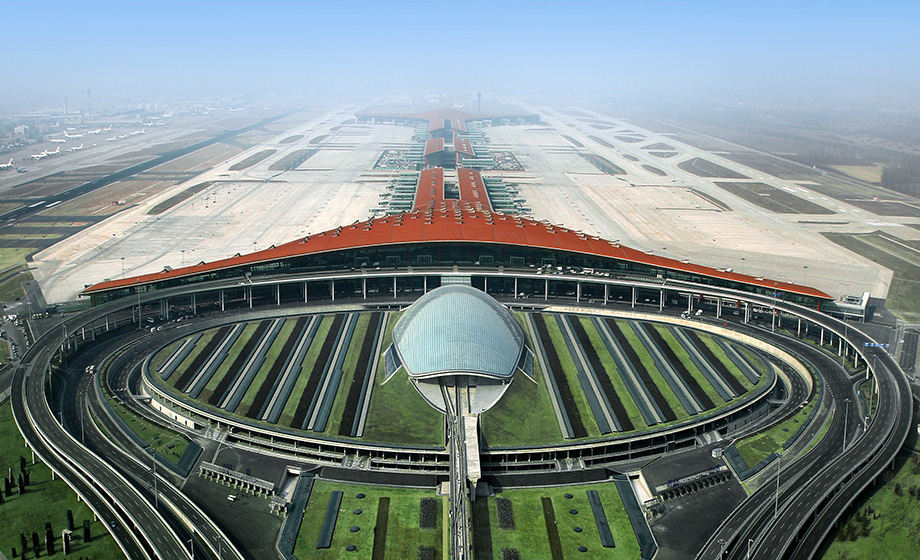
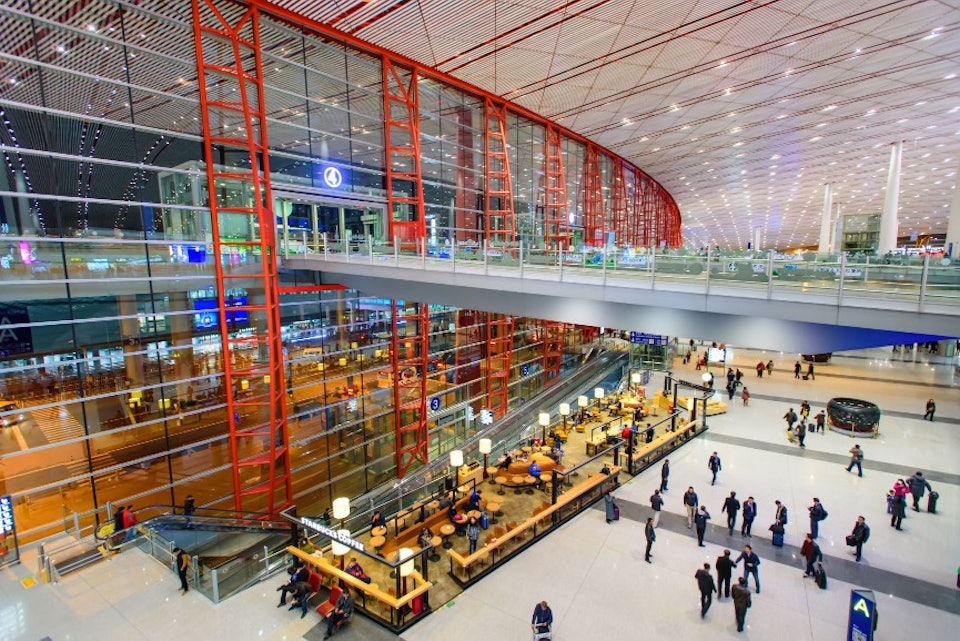
Beijing Capital International Airport (IATA: PEK, ICAO: ZBAA) is a 4F-class international hub and China’s primary national gateway. Located in Chaoyang and Shunyi Districts, it is 25 km southwest of downtown Beijing. Opened in March 1958 as China’s first large civil airport independently designed and built, it now has three terminals (T1, T2, T3), three runways, and two control towers. Its air network covers 227 destinations in 54 countries. With a focus on business and direct domestic/international passengers, it serves central Beijing and the city’s sub-center, acting as a key window for China’s international exchanges.
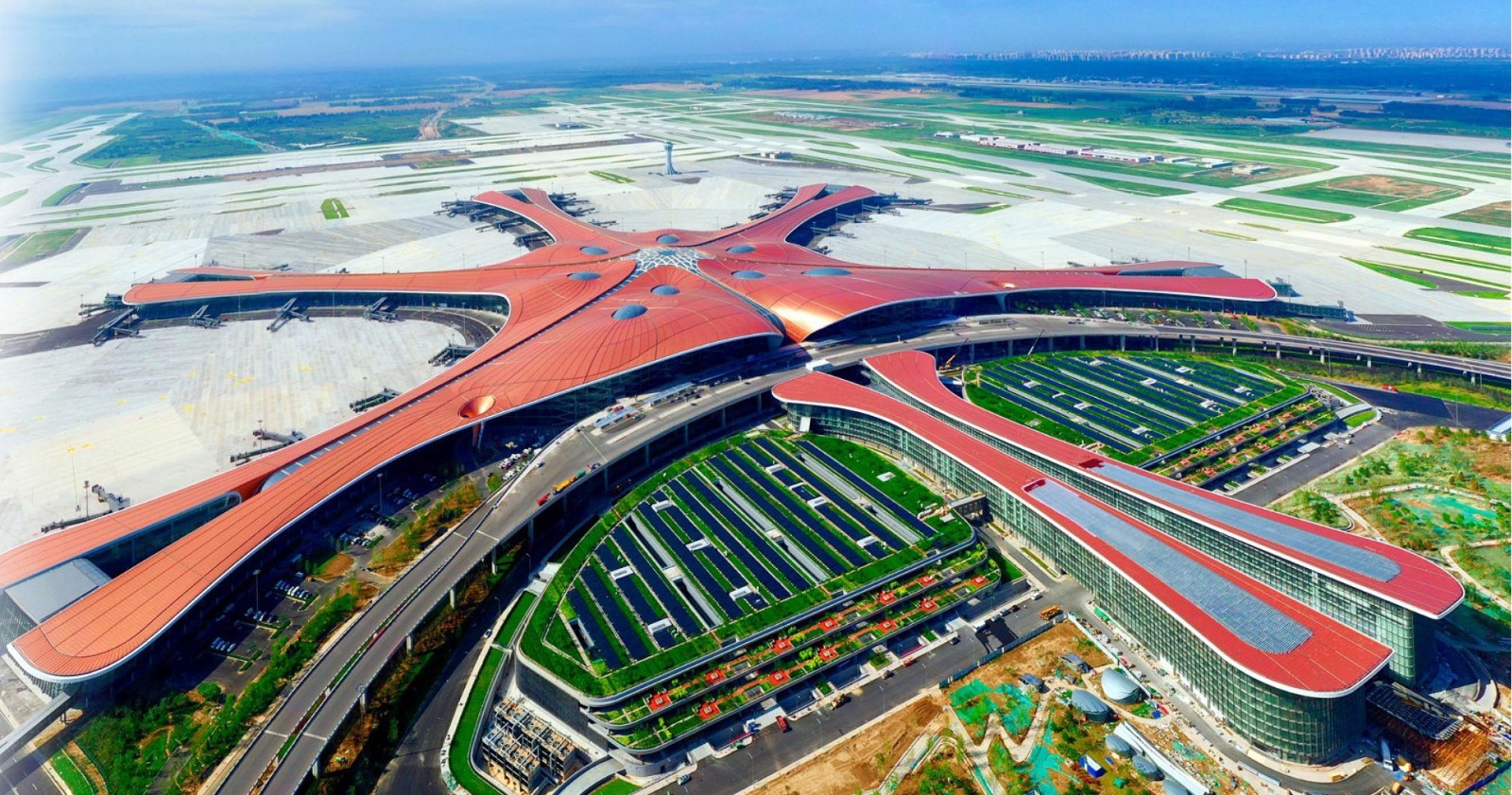
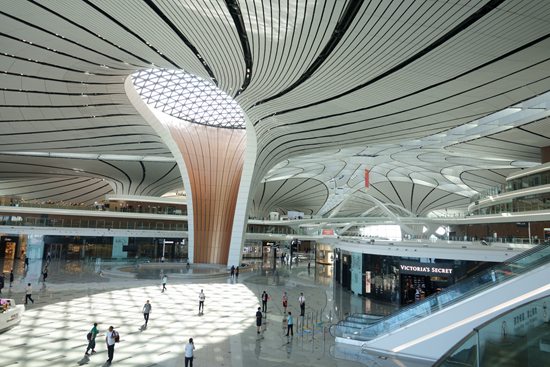
Beijing Daxing International Airport (IATA: PKX, ICAO: ZBAD) is a 4F-class international hub and China’s new national gateway. Located at the junction of Daxing District (Beijing) and Guangyang District (Langfang, Hebei), it is 46 km from Tian’anmen Square and 26 km from downtown Langfang. Opened on September 25, 2019, it features the world’s largest single-terminal building (1.4 million sqm) with a striking "Phoenix Spreading Wings" design by Zaha Hadid. The terminal has five themed sky gardens and integrates metro, intercity rail, and airport buses for seamless transfers. It primarily serves international flights, low-cost carriers, and transfer passengers, supporting the development of southern Beijing, Xiong’an New Area, and the Beijing-Tianjin-Hebei region.
2. Xi'an Xianyang International Airport (XIY)
Xi'an Xianyang International Airport (IATA: XIY, ICAO: ZLXY) is a 4F-class international aviation hub and the largest air transportation hub in Northwest China. Located in Dizhang Subdistrict, Weicheng District, Xianyang City, Shaanxi Province, it is about 25 km south of Xi'an city center and 13 km west of Xianyang city center. Opened on September 1, 1991, it has evolved from a regional airport to a world-class international hub.
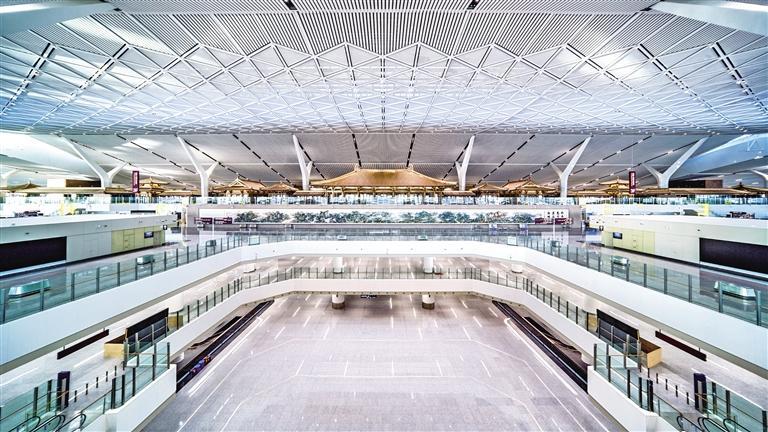
The airport features Terminals T2, T3, and T5 (with a total area of over 400,000 sqm) and two parallel runways (3,000m and 3,800m), capable of accommodating large aircraft like the A380. The newly opened Terminal T5 (700,000 sqm) adopts an ancient Chang'an architectural style and a "main building + six finger corridors" layout, with an 8-minute walking distance to the farthest gate.
It operates 146 domestic destinations and nearly 90 international/regional routes covering 91 cities in 43 countries, achieving full coverage of the five Central Asian countries. In 2024, it handled 47.03 million passengers and 331,800 aircraft movements. As a key hub for the Belt and Road Initiative, it integrates air-rail intermodal transport and smart services, connecting Xi'an to the world while showcasing the city's rich cultural heritage.
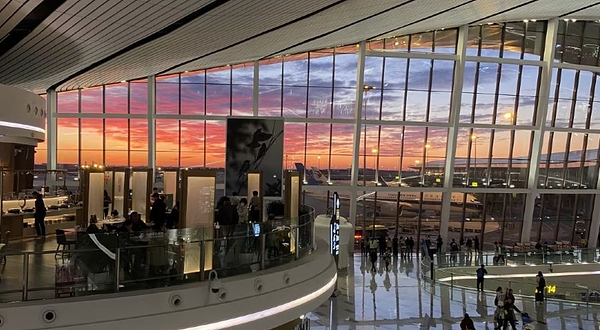
3. Real Total Time
Flight time: ~2 hours; Total travel time: 4–6 hours (includes airport transfer, security check, baggage claim).
b. Airlines & Service
1. Major airlines
* Air China (CA) – Flag Carrier
China’s national flag carrier and a member of the Star Alliance. It operates the most frequent daily flights, primarily from Beijing Capital Airport (PEK). It is renowned for its punctuality and high service standards.
* China Eastern Airlines (MU)
A core member of the SkyTeam Alliance. It mainly operates from Beijing Daxing International Airport (PKX). It offers a wide range of flight times, including convenient morning and evening options.
* China Southern Airlines (CZ)
The world’s largest airline by passenger traffic (member of SkyTeam). It operates from Beijing Daxing International Airport (PKX) with multiple daily departures, providing strong backup for ticket availability.
* Hainan Airlines (HU) – 5-Star Airline
Skytrax 5-Star rated airline, operating primarily from Beijing Capital Airport (PEK). It is favored by travelers for its spacious seating and high-quality cabin service.
2. Standard Onboard Services
* Complimentary Meals & Drinks
All flights include free hot meals and a selection of beverages.
· Meal Service: Depending on the flight time (breakfast, lunch, dinner, or late-night snack), airlines provide Chinese or Western set meals. Non-meal time flights offer snacks such as sandwiches, pastries, or local specialties.
· Beverages: Free flow of hot drinks (coffee, tea, hot water) and cold drinks (mineral water, soft drinks). Alcoholic beverages are available for purchase in Economy Class (complimentary in Business Class).
· Special Meals: You can pre-order special meals (Kosher, Halal, vegetarian, child meals) 24–48 hours in advance via the airline’s official website or app.
* Blankets
Complimentary blankets are available on all flights. Flight attendants will provide them upon request, which is especially useful for early morning, late-night, or winter flights.
* USB Charging Ports
Nearly all aircraft on this route are equipped with USB charging ports at each seat (located on the seatback or armrest). This allows you to charge your phone, camera, or power bank throughout the flight.
· Note: Power sockets (AC) are usually only available in Business Class; Economy Class mainly supports USB charging.
c. Luggage Rules
* Checked Baggage: Standard free allowance: 20kg for Economy Class; fragile items (electronics, valuables) should be carried on-board.
* Carry-on Baggage: Usually 1 piece (no more than 5kg); size limit: 20×40×55cm (varies slightly by airline; 20-inch suitcase is generally acceptable).
d. Pros & Cons
* Pros: Shortest travel time; stable cost; saves one night’s hotel expense; no strict seating arrangement.
* Cons: No free on-board Wi-Fi; longer total time due to airport procedures; possible flight delays due to weather.
C. Regular Train — Most Budget-Friendly
a. Routes & Schedule
* Main routes: Beijing West — Xi’an.
* Typical schedule: Departs 18:00–22:00, arrives 06:00–09:00 next day.
* Duration: 11–15 hours.
b. Types: Z/T/K trains
1. Z-series (Direct Express)
The fastest type among regular trains, with a total travel time of 11–12 hours. It operates as an overnight train, usually departing Beijing West Railway Station between 20:00–22:00 and arriving at Xi’an Railway Station between 07:00–09:00 the next day. The biggest advantage is no stops along the way, which saves time and ensures you can get enough rest on the train. It is the most recommended type among regular trains for foreign tourists, as it balances cost, time and comfort.
2. T-series (Express)
A medium-speed option with a travel time of 13–14 hours. Compared with Z-series, it has a few stops (usually 2–3 major stations along the route, such as Zhengzhou), so the total time is 2–3 hours longer than Z-series. The departure and arrival times are similar to Z-series (overnight), and the ticket price is slightly lower than Z-series, suitable for tourists who are not in a hurry and want to save a little more money.
3. K-series (Fast)
The most economical but slowest type, with a travel time of 17–18 hours. It has many stops (more than 10 stations along the way), including small and medium-sized stations, which leads to a long travel time. It also operates overnight, but the ride comfort is slightly worse than Z-series and T-series. It is only recommended for tourists with an extremely tight budget who do not mind a longer journey.
c. Introduction to Common Train Stations from Beijing to Xi'an
1. Main Departure Stations in Beijing
* Beijing Railway Station: Beijing Railway Station, a first-class passenger hub and "Capital Gateway", is located at No.13 Maojiawan Hutong, Dongcheng District. Originally built in 1901, its current station building, completed in September 1959 as one of Beijing’s "Ten Great Buildings" for the 10th National Day, serves as a key junction for Beijing-Harbin, Beijing-Shanghai, Beijing-Guangzhou railways. It handles passenger transport to Northeast/East China and international services to Moscow, Ulaanbaatar and Pyongyang. The 71,000 m² station has a 12,000 m² waiting area and 28 entry channels.
* Beijing West Railway Station: Beijing West Railway Station, a national comprehensive hub, opened on January 21, 1996, at East Lianhuachi Road, Fengtai District. As the starting station of Beijing-Guangzhou and Beijing-Kowloon railways, it covers 32 provincial-level regions and 211 prefecture-level cities. With a 510,000 m² building, 18 platforms and 20 arrival/departure tracks, it handles over 65 million annual passengers. It is the main station for Beijing-Xi’an ordinary trains, featuring popular "overnight departure, morning arrival" services like Z151, T7 and T231.
* Beijing Fengtai Railway Station
Beijing Fengtai Railway Station, a comprehensive hub in southern Beijing, opened in June 2022 at Zhengyang Street, Fengtai District. The 400,000 m² station has 17 platforms and 32 arrival/departure tracks. It is Beijing’s first major hub for both ordinary and high-speed trains, hosting some Beijing-Xi’an ordinary services (e.g., K4237, T55) and intercity trains. Connected to Metro Lines 10, 16 and intercity railways, it facilitates passenger transfers in southern Beijing.
2. Main Arrival Stations in Xi'an
* Xi’an Railway Station: Xi'an Railway Station, located at No.47 North Ring Road, Xincheng District, is the main ordinary train hub of Xi'an, adjacent to the Ming City Wall and Daming Palace Ruins. With a 9-platform, 18-track layout and a 26,000 m² waiting area, it handles 300 daily trains and over 54 million annual passengers. It mainly operates Z/T/K-series trains to Beijing, featuring a Tang Dynasty-themed waiting hall with a "108 Fang" layout. Metro Line 4 connects it to downtown Xi'an’s iconic attractions.
d. Fare Structure & Seat Classes
Fares are fixed by China State Railway Group, with no dynamic pricing, and are 50–60% cheaper than high-speed trains. Detailed breakdown:
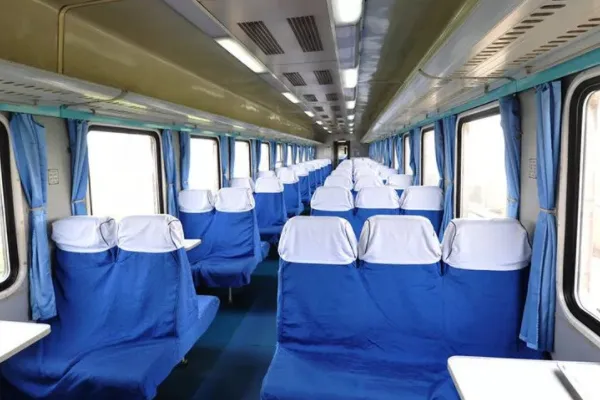
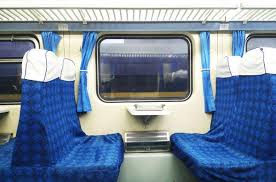
* Hard Seat: 233–237 CNY. Seats are arranged in a 3+2 layout (plastic or fabric cushions), with no adjustable backrests, legroom of 60 cm, and no personal space. Carriages are crowded (118 seats per carriage), with standing passengers allowed during peak seasons, making it uncomfortable for long journeys. Only recommended for budget travelers with no other options.
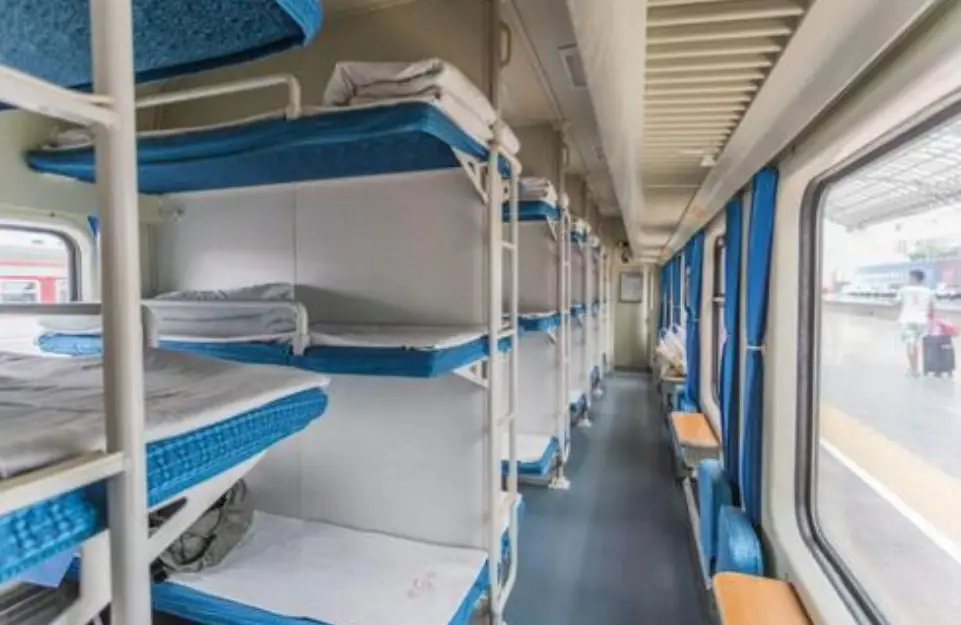
* Hard Sleeper: 370–438 CNY. The most popular option for normal train travel, with 6-berth compartments (2 upper, 2 middle, 2 lower bunks) per carriage. Bunks are 60 cm wide, with a thin mattress, pillow, and blanket provided. Each compartment has a small table, and luggage can be stored under the lower bunks or on the luggage rack above the door. Upper bunks are cheaper but require climbing a ladder; lower bunks are more expensive but easier to access and more comfortable for sitting.
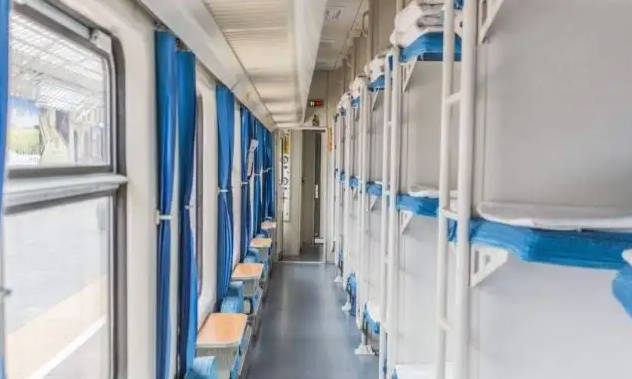
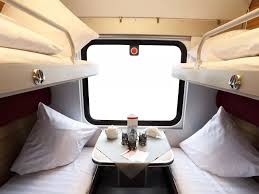
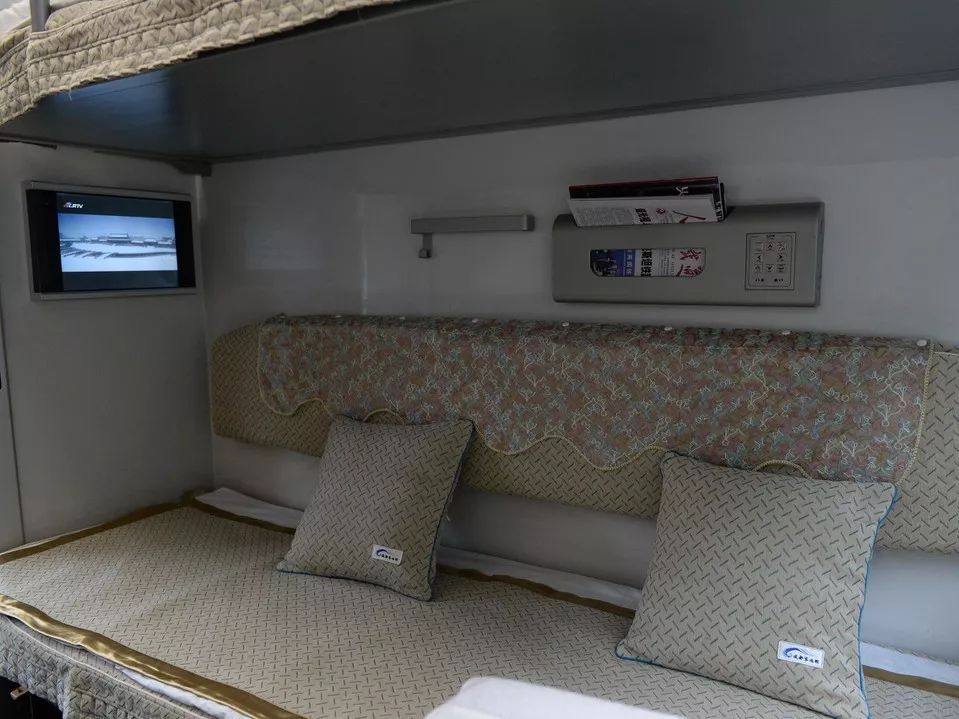
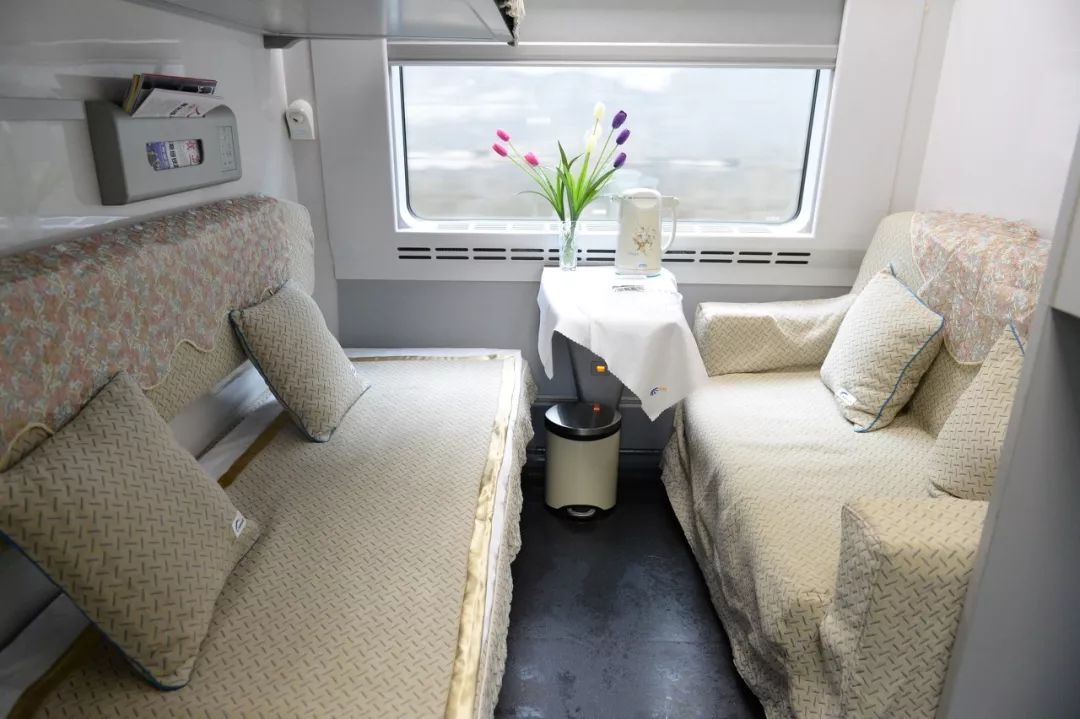
* Soft Sleeper: 531–641 CNY. A more comfortable option, with 4-berth compartments (2 upper, 2 lower bunks) per carriage, featuring wooden or leather cushions, a thicker mattress, and a door that can be closed for privacy. Compartments have a small table, and each bunk has a reading light and a power outlet (1–2 per compartment). Soft sleeper carriages are less crowded (36 seats per carriage), with better hygiene and quieter environments, suitable for travelers seeking more comfort.
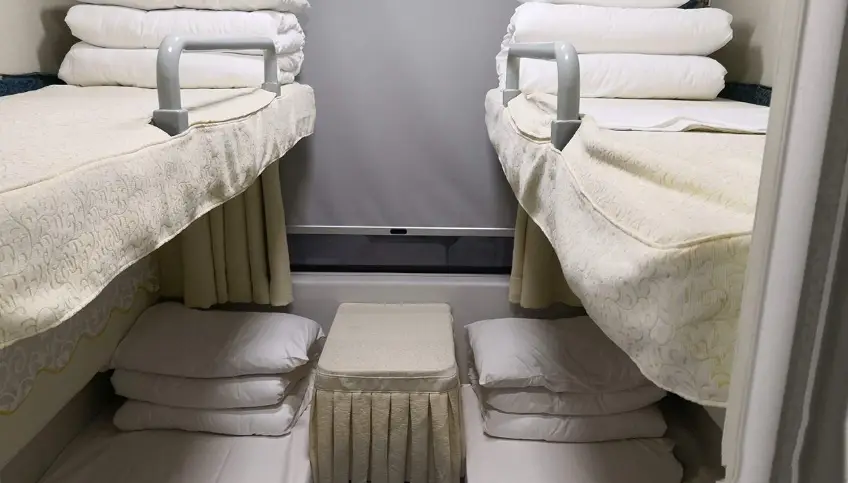
* Luxury Soft Sleeper: Rare on this route, with 2-berth compartments (upper and lower bunks) and private restrooms, costing 800–900 CNY. Only available on T-series trains (e.g., T138) and must be booked well in advance.
e. Notes
1. Overnight Travel Preparation
* Comfort Items: Bring a travel pillow, eye mask, earplugs (to block noise from other passengers and train operations), and warm clothes (train air conditioning is cold at night, even in summer).
* Hygiene Supplies: Bring toiletries (toothbrush, toothpaste, towel), wet wipes, and a small blanket (the provided blanket is thin).
* Valuables: Keep passports, phones, and wallets in a small bag close to your body (e.g., a neck pouch). Lock your luggage with a padlock, especially for soft sleeper compartments (doors can be locked).
2. Onboard Etiquette & Safety
* Be quiet after 10:00 PM to avoid disturbing other passengers’ sleep. Do not use loud electronic devices or talk loudly in the compartment.
* For hard sleeper compartments (shared with 5 other passengers), introduce yourself briefly to build trust, but avoid sharing personal information (e.g., hotel address, travel plans) with strangers.
3. Onboard Facilities & Services
* Dining Car: Available on most trains, offering simple boxed meals (20–40 CNY), instant noodles, and hot water. Prices are lower than high-speed trains but hygiene standards are basic.
* Restrooms: Located at the end of each carriage, with squat toilets (no sitting toilets) on most K-series trains; T-series trains may have 1–2 sitting toilets per carriage. Bring your own toilet paper (not always provided).
* Power Outlets: Only available in soft sleeper compartments (1–2 per compartment) and the dining car. No power outlets in hard sleeper or hard seat carriages, so bring a fully charged power bank.
f. Pros & Cons
* Pros: Lowest price; saves hotel cost; authentic local travel experience; flexible luggage.
* Cons: Long travel time; relatively low comfort; no free Wi-Fi; possible delays.
D. Other Options
1. Long-Distance Bus (NOT recommended for foreigners)
Long-distance buses connect Beijing and Xi’an via national highways and expressways, but they are strongly discouraged for international travelers due to significant language and comfort barriers. This option is only viable for budget travelers with fluent Chinese and extensive experience with China’s intercity bus systems.
* Basic Service Information
· Daily Departures: 3–5 buses daily, primarily departing from Beijing Liuliqiao Long-Distance Passenger Terminal (the largest interprovincial bus station in Beijing) and Beijing Bawangfen Terminal. Most depart in the late afternoon or evening for overnight travel.
· Travel Duration: 14–16 hours (varies by traffic, weather, and road conditions). Overnight buses aim to arrive in Xi’an the next morning.
· Price Range: ¥300–¥400 per person (one-way). Tickets are cheaper than trains but do not reflect the poor value for comfort and time.
* Critical Disadvantages (Why It’s Not Recommended)
· No English Support: No English-speaking staff at ticket counters, on buses, or in stations. All signs, announcements, and ticket systems are in Chinese only. Online booking platforms (e.g., Bus365) have limited or no English interface.
· Uncomfortable Seating: Most buses use narrow, hard seats or basic semi-reclining seats with minimal legroom. There are few sleeper bus options for this route, and seats lack lumbar support for 14+ hours of travel.
· Frequent Delays: Delays of 1–3 hours are common due to expressway congestion (especially during holidays), heavy fog or smog in northern China, or road construction. There is no reliable English notification system for delays or cancellations.
· Inconvenient Transfers: Bus stations are often located in suburban areas, far from city centers and tourist districts. Public transportation from stations to hotels has no English announcements, and taxi drivers may not speak English.
· Lack of Luggage Protection: Luggage is stored in an unsecured undercarriage compartment with no segregation or supervision. Theft or damage to luggage is not uncommon, and there is little recourse for international travelers.
· Safety Concerns: Overnight buses may have poor lighting and no on-board security. In case of emergencies (e.g., accidents, medical issues), there is no English-speaking emergency response.
· Unsuitable for Specific Groups: Families with children, elderly travelers, or anyone with mobility issues will find this option extremely challenging.
2. Self-Driving
Self-driving offers ultimate flexibility for travelers who want to explore off-the-beaten-path destinations or make stopovers (e.g., Zhengzhou, Luoyang) along the way. It is a viable option for experienced international drivers with the correct documentation and preparation.
* Rental Requirements (Mandatory)
· Valid Documentation: A valid International Driver’s License (IDL) plus an official Chinese translation (certified by a Chinese notary public or recognized by major international car rental companies like Hertz or Avis). A foreign driver’s license alone is not accepted.
· Age & Experience: Drivers must be at least 21 years old (25+ for premium car models) and have a minimum of 1 year of driving experience with a clean driving record.
· Rental Pickup: Major rental companies (Hertz, Avis, Shenzhou International) offer service at Beijing Capital Airport (PEK), Beijing Daxing International Airport (PKX), and downtown Beijing. Book online in advance for the best rates and vehicle availability.
* Cost Breakdown (Round Trip Estimate)
All costs are calculated based on the standard G5 Beijing-Kunming Expressway route (approximately 1,082 km one-way) and exclude the car rental fee itself.
· Expressway Tolls: The one-way toll is approximately ¥530 to ¥600, resulting in a total round-trip cost of ¥1,060 to ¥1,200. This fee is fixed and collected at toll gates or via the ETC system.
· Fuel Costs: Fuel expenses vary significantly by vehicle type. For a compact 1.6L sedan, the one-way fuel cost is about ¥646 to ¥675, with a round-trip total of ¥1,292 to ¥1,350. For a larger SUV, the one-way cost increases to ¥700 to ¥800, with a round-trip total of ¥1,400 to ¥1,600. Fuel prices in China are subject to periodic adjustments by the government.
· Parking Fees in Xi’an: Parking at major attractions such as the Terracotta Army and Giant Wild Goose Pagoda costs ¥10 to ¥20 per hour. For extended stays, downtown shopping malls like SEG International Shopping Center typically offer 2 hours of free parking for customers, with discounted rates thereafter. Over a 3–4 day stay in Xi’an, parking fees usually total ¥150 to ¥300 round trip.
· Total Road Costs (Round Trip): Combining tolls, fuel, and parking, the total round-trip cost ranges from approximately ¥2,500 to ¥3,150 for a compact car, and ¥2,700 to ¥3,300 for an SUV. This does not include optional expenses such as car rental insurance, toll road rescue services, or parking fines.
* Essential Travel Tips
· Offline Maps: Download the offline map package for Beijing–Shaanxi on Amap (Gaode Map) (English version available). Google Maps has limited functionality in China, so Amap is the most reliable option.
· Traffic Rules & Speed Limits:
- Drive on the right side of the road (opposite to the UK, Australia, and Japan).
- Speed limits: 120 km/h for small vehicles on expressways, 80 km/h in tunnels/on bridges, and 60 km/h on ramps. Speed cameras are strictly enforced.
- Use ETC (Electronic Toll Collection) for faster expressway payments (available for rental cars via the rental company).
* Trip Preparation:
· Medicines & Supplies: Pack motion sickness pills, painkillers, band-aids, bottled water (1–2 liters per person), and non-perishable snacks (e.g., nuts, energy bars) for the long drive.
· Vehicle Check: Before departure, confirm the rental car has a full tank of gas, working GPS, spare tire, jack, triangle warning sign, and fire extinguisher (mandatory in China).
· Refueling: Most gas stations on expressways are self-service and accept Alipay or WeChat Pay. Staff at full-service stations can assist with refueling if needed.
Beijing Xian Tour Packages: 6 Days China Ancient Capital Tour of Beijing & Xian
Beijing Xian Tour Package: 3-Day Xian Culture & Culinary Tour from Beijing by Bullet Train
How to Buy Tickets
A. General Ticketing Prerequisites
a. Valid Documents
1. Core Document
A passport with a remaining validity of at least 6 months from the date of travel is mandatory. This requirement applies to both flight and train bookings, as well as boarding/boarding checks. Ensure the passport is in good condition—no torn pages, faded photos, or expired visas (if required for entry/transit in China).
2. Alternative Documents
Foreign permanent residence permits issued by Chinese authorities are also acceptable, with the same validity as passports. For travelers from Hong Kong, Macao, and Taiwan regions, Hong Kong-Macao Resident Travel Permits, Taiwan Resident Travel Permits, or Mainland Travel Permits for Taiwan Residents (Mainland Pass) can be used.
3. Document Consistency
The name, passport number, and date of birth on the ticket must be identical to those on the passport. If you renew your passport after booking, immediately contact the airline, railway department, or booking platform to update the document information; otherwise, you will be denied boarding.
4. Special Notes
Temporary passports or travel documents are only accepted if they have official seals and are recognized by Chinese border control. It is recommended to confirm with the booking channel in advance to avoid invalid documents.
b. Identity Verification
Identity verification rules differ between train and flight tickets, and failure to complete verification will affect ticket purchase and use.
1. Train Ticket Verification
Two verification methods are available: online and offline, and verification only needs to be completed once (valid for long-term use, unless passport information changes).
* Online Verification (via 12306 App/Website):
· Download the 12306 App (English version available) or log in to the official 12306 website, register an account with your mobile phone number (international phone numbers are supported).
· Enter the "My Passengers" section, click "Add Passenger", select "Foreign Passport" as the document type, and fill in passport number, full name (consistent with passport), date of birth, and other information.
· Upload a clear photo of the passport's personal information page (ensure text and photos are legible), submit for verification.
· Automatic verification takes 5–10 minutes for most cases; if automatic verification fails (e.g., blurred photo, information mismatch), manual review will be initiated, which takes 1–3 working days. You will receive a notification via SMS or App message once verified.
· Note: If you change your passport (new passport number), you need to re-add the passenger information and complete verification again.
* Offline Verification (at Railway Station Ticket Windows):
· Bring your original passport to the ticket window of any major railway station (e.g., Shanghai Hongqiao Station, Xi’an North Station, Shanghai Railway Station).
· Inform the staff of your intention to complete identity verification for train ticket purchase. The staff will scan the passport and verify the information on-site, which takes 2–5 minutes.
· This method is recommended if online verification fails or you are in a hurry to buy tickets, as it ensures immediate completion.
2. Flight Ticket Verification
No prior online or offline verification is required before booking. However, the following points must be noted:
· The passport information filled in during booking (full name, passport number, expiration date) must be 100% consistent with the original passport used for boarding. Even a minor typo (e.g., missing middle name, wrong letter case) will result in boarding refusal.
· If you need to change passport information after booking (e.g., passport renewal), contact the airline’s customer service or the booking platform immediately. Most airlines allow free information modification 24 hours before departure; changes within 24 hours may incur a service fee.
· During check-in (online or offline), the airline will verify your passport and ticket information. Ensure you carry the original passport—electronic copies or scanned versions are not accepted for boarding.
c. Payment Methods
Various payment methods are supported for online and offline bookings, with slight differences between channels. Choose the method suitable for you based on convenience.
1. Online Payment
* International Credit Cards (Visa/Mastercard)
Supported by 12306 website (not available on 12306 App), airline official websites/apps, and third-party platforms (Trip.com, Expedia). Ensure the card has sufficient balance or a credit limit, and inform your bank in advance of your travel-related payment to avoid transaction rejection due to "unusual activity".
* Alipay/WeChat Pay
The most convenient payment methods in China. Foreign users can bind international credit cards (Visa/Mastercard) to Alipay or WeChat Pay:
· For Alipay: Go to "Me" — "Payment Settings" — "Bind Card", select "International Card", and follow the prompts to fill in card information and verify.
· For WeChat Pay: Go to "Me" — "Service" — "Wallet" — "Cards", add an international card, and complete verification via SMS.
These two apps are accepted by almost all online booking channels, with instant payment confirmation.
* Google Pay/Apple Pay: Supported exclusively by Trip.com and other international OTA platforms. Bind your credit card to Google Pay/Apple Pay in advance, and complete payment with one click during booking—suitable for users familiar with overseas mobile payment.
* Notes: Online payments may incur a small currency conversion fee (1–3% of the transaction amount) depending on your bank and card type. Choose a card with no foreign transaction fees to save costs.
2. Offline Payment
* Cash (CNY): Accepted at railway station ticket windows, airport ticket counters, and authorized ticket agencies. It is recommended to carry sufficient cash (especially for peak seasons when network payments may be unstable). Note that foreign currencies are not accepted—exchange CNY at banks, airports, or hotels in advance.
* UnionPay Cards: All offline ticket counters accept UnionPay debit/credit cards. Foreign users with UnionPay cards can pay directly, with no additional fees.
* International Credit Cards: Airport ticket counters and large travel agencies support Visa/Mastercard payments, but some small ticket agencies may only accept cash or UnionPay—confirm in advance before purchasing.
* Common Payment Issues & Solutions:
· Transaction Failure: Check if the card balance/credit limit is sufficient, whether the bank has blocked the transaction, or if the network is unstable. Try switching to another payment method or retry later.
· Payment Successful but Ticket Not Issued: Screenshot the payment record immediately, contact the booking platform’s customer service or the relevant transportation department (airline/railway) to confirm, and request a refund or reissue of the ticket if necessary.
· Refund Processing: Refunds will be returned to the original payment method. Credit card refunds take 3–7 working days, while Alipay/WeChat Pay refunds are usually completed within 24 hours.
B. Ticketing Process by Transportation
a. Flight Tickets
1. Recommended Platforms & Advantages
* Trip.com (Ctrip International Version)
The most recommended platform for foreign travelers. It supports 19 languages (English, Japanese, Korean, etc.), has a user-friendly interface optimized for overseas users, and provides 24/7 English customer service via phone, email, and online chat. It integrates flights from all airlines, allowing one-click comparison of fares, departure times, and transfer options. New users can get exclusive discounts (e.g., 5% off for first booking) and free cancellation insurance. Payment methods include international credit cards, Google Pay, Apple Pay, Alipay, and WeChat Pay.
* Official Airline Websites/Apps
Air China (www.airchina.com.cn), China Eastern Airlines (www.ceair.com), and China Southern Airlines (www.csair.com) all have English versions. The advantage is direct access to the latest flight schedules and fare information, no additional service fees, and priority handling of changes/refunds (faster than third-party platforms). Some airlines offer member points for direct bookings, which can be redeemed for free upgrades or tickets.
* Fliggy (International Version)
Backed by Alibaba, it supports English operation and international credit card payments. It is suitable for users who frequently use Alipay, as payment can be completed with one click via Alipay binding. It often launches flash sales for Shanghai-Xi’an routes during off-peak seasons, with fares 20–30% lower than usual.
2. Online Booking Steps (Take Trip.com as an example)
* Search for Routes: Open the Trip.com App/website, select "Flights", enter departure city (Shanghai – select SHA or PVG), arrival city (Xi’an – XIY), travel date, and number of passengers (adults/children/infants). Check "Direct Flights Only" if you want to avoid transfers.
* Select Flights: The results page will display flights sorted by fare, duration, or departure time. Pay attention to the following details: departure/arrival time (avoid early morning/late night flights if you dislike night transfers), aircraft type (large aircraft like Boeing 787/Airbus A330 are more comfortable for long flights), and fare class (economy class is cost-effective, premium economy offers extra legroom).
* Enter Passenger Information: Click "Book Now", select passenger type (foreigner), and fill in information strictly according to the passport: full name (consistent with passport spelling, including middle name if any), passport number, passport expiration date, and date of birth. Do not modify any letters or symbols, as even minor errors will cause boarding refusal.
* Choose Additional Services: Optional services include checked luggage upgrade (standard economy class usually includes 20kg checked luggage; additional 10kg costs 50–80 CNY), in-flight meal preference (vegetarian, halal, etc.), and seat selection (window seats for scenery, aisle seats for convenience).
* Payment & Confirmation: Select your preferred payment method, complete the payment, and the system will send the e-ticket to your registered email within 5–10 minutes. The e-ticket contains key information such as flight number, departure time, passenger name, and booking reference number – save it to your phone (PDF version) and print a copy for backup.
3. Offline Booking Process
* Prepare Materials
Bring your original passport (valid for at least 6 months) and sufficient funds (cash in CNY or international credit card/UnionPay card).
* Choose Booking Location
Airport Ticket Counters: Go to the ticket counter of your preferred airline at Shanghai Hongqiao (SHA) or Pudong (PVG) Airport. Staff can speak basic English and will help search for flights according to your travel needs.
* Complete Booking
Inform the staff of your departure date, preferred flight time, and seat requirements. The staff will verify your passport information, print the e-ticket confirmation, and ask you to confirm the details (flight number, passenger name). Pay with cash or card, and keep the receipt and e-ticket confirmation properly.
b. Train Tickets
1. Official Platform (12306 App/Website)
* Switch to English Interface
Download the 12306 App (search "12306" in App Store/Google Play) or log in to the official website (www.12306.cn). Click the language icon in the upper right corner to switch to English.
* Register & Verify Identity
Click "Register", enter your international mobile phone number (supports most countries/regions), receive the verification code, and set a password. After registration, go to "My Passengers" ? "Add Passenger", select "Foreign Passport", fill in passport information, upload a clear photo of the passport's personal page, and submit for verification (detailed verification steps refer to 3.1.2).
* Ticket Booking (On-Sale at 10:00 AM, 15 Days in Advance)
· On the on-sale date (15 days before departure), log in to 12306 at 9:55 AM (5 minutes in advance) to prepare – tickets for popular routes (e.g., G876) sell out within 1–2 minutes.
· Select "Train Tickets", enter departure station (Shanghai Hongqiao), arrival station (Xi’an North), travel date, and number of passengers.
· Filter trains by departure time or duration, select the desired train, then choose seat class (second-class/first-class/business-class) and seat preference (window/aisle).
· Confirm the order, select payment method (12306 website supports international credit cards; App only supports Alipay/WeChat Pay/UnionPay), and complete payment within 30 minutes (otherwise, the order will be automatically canceled).
* Boarding Preparation
No need to collect paper tickets – you can enter the station by scanning your passport or the 12306 dynamic QR code (generated in the App's "My Orders"). For emergencies (e.g., passport failure), you can collect a paper ticket at the railway station's ticket window or self-service machine with your passport.
2. Foreigner-Friendly Platform (Trip.com)
* Register an Account: Download the Trip.com App, click "Sign Up", and register with your email or international mobile phone number (separate from the Ctrip domestic version account). New users can claim a 3% discount coupon for train tickets (valid for 7 days) on the homepage.
* Enter Passenger Information: Go to "My" — "Train Passengers", add passenger details (foreign passport), and the platform will automatically sync with 12306 for identity verification (no need to verify separately on 12306).
* Book Tickets: Select "Trains", enter the route (Shanghai Hongqiao to Xi’an North), travel date, and passenger number. The platform will display real-time train schedules, seat availability, and fares. Select the train and seat class, confirm the order, and pay with international credit cards, Google Pay, or Apple Pay.
* Receive Confirmation: After payment, the booking confirmation (with train number, seat number, and booking code) will be sent to your email and Trip.com App. You can enter the station by scanning your passport (no need to exchange for paper tickets), and the platform provides English customer service for ticket changes/refunds.
3. Offline Booking Process
* Railway Station Ticket Windows
· Bring your original passport to the ticket window of Shanghai Hongqiao Station, Shanghai Railway Station, or Xi’an North Station.
· Inform the staff of the departure date, departure/arrival stations, and seat class. The staff will verify your identity, check seat availability, and print the paper ticket on-site.
· Payment methods include cash (CNY), international credit cards, UnionPay cards, Alipay, and WeChat Pay. The whole process takes 5–10 minutes, suitable for travelers who are not familiar with online operations.
* Authorized Ticket Agents
Small ticket agencies in downtown areas also sell train tickets, but they charge a service fee of 5 CNY per ticket. Ensure the agency has an official license (displayed prominently at the storefront) to avoid counterfeit tickets. Bring your original passport and pay with cash or card.
* Notes on Self-Service Machines
Railway station self-service ticket machines only accept foreign permanent residence permits for ticket purchase – foreign passports are not supported. Do not attempt to use passports on self-service machines to avoid equipment malfunctions.
c. Refund & Modification Rules
1. Train Ticket Refund & Modification Rules(2026 New Rules)
(1) Refund Rules
* Free Refund Within 30 Minutes of Payment
If the departure time is more than 4 hours away, you can refund the ticket for free within 30 minutes of successful payment – limited to 1 order per person per day. This rule applies to all seat classes and is designed to avoid accidental booking errors.
* Regular Refund Fees
· No fee if refunded =15 days before departure;
· 5% of the ticket price if refunded 15–48 hours before departure;
· 10% of the ticket price if refunded 24–48 hours before departure;
· 20% of the ticket price if refunded less than 24 hours before departure.
Fees are calculated based on the ticket face value, and the remaining amount is returned to the original payment method.
* No Refunds After Departure
Tickets cannot be refunded once the train has departed. Only same-day modifications are allowed (see modification rules below).
* Special Scenarios
Refunds due to force majeure (natural disasters, train cancellations/delays by railway department) are free of charge. Provide relevant certificates (e.g., train delay notice) to the railway station window or booking platform for free refund. If you need to refund due to illness, bring a medical certificate issued by a tertiary hospital to apply for a fee-free refund.
(2) Modification Rules
* Number of Modifications
Each ticket can be modified only once (including changes to departure date, train number, or seat class). No further modifications or refunds are allowed after the first modification.
* Modification Time
· Before departure: Can modify to any train on the same route (Shanghai Hongqiao to Xi’an North) within 10 days of the original departure date, subject to seat availability.
· After departure: Can only modify to other trains departing on the same day (before midnight), and must complete the modification at the departure station window before the new train departs. No modifications are allowed for trains that have already departed.
* Fee for Modifications
No fee if the new ticket price is the same as the original; if the new ticket is more expensive, pay the difference; if the new ticket is cheaper, the difference is not refunded (only applicable to modifications before departure).
2. Flight Ticket Refund & Modification Rules
* Fee Standards (Vary by Airline & Fare Class)
· Economy Class (Basic Fare): Refund fee is 10–30% of the ticket price if refunded 24 hours before departure, 30–50% if refunded within 24 hours before departure, and no refund if refunded after departure. Modification fee is 50–200 CNY, plus the fare difference if the new flight is more expensive.
· Premium Economy/Business Class: Refund fee is 0–10% of the ticket price before departure, and 20% within 24 hours before departure. Modifications are usually free (1–2 times), with only the fare difference to pay.
· Special Fares (Flash Sale/Light Fare): Non-refundable and non-modifiable in most cases. Check the fare rules carefully before booking, as some flash sale fares allow modification with a high fee (30–50% of the ticket price).
* Processing Channels
Refunds/modifications can be handled via the original booking platform (Trip.com, airline official website) or airline customer service. Online processing is faster (completed within 1–3 hours), while offline processing at airport counters takes 30–60 minutes.
* Free Refund/Modification Scenarios
· Flight cancellation/delay by the airline (delay for more than 2 hours);
· Force majeure (natural disasters, political events, etc.);
· Passenger illness/death (provide medical certificate or death certificate);
· Visa refusal (provide visa refusal letter, some airlines charge a small service fee).
* Refund Processing Time
Refunds to international credit cards take 3–7 working days; refunds to Alipay/WeChat Pay take 24–48 hours; refunds to cash take 1–3 working days (processed at the original offline location).
 Tours From Beijing: 2-Day All Inclusive Xian Private Combo Tour from Beijing with Optional Air Ticket
 Beijing Xian Tour Packages: 3 Days Xian Classic Tour From Beijing by Bullet Train
Pre-Travel Preparation Checklist
1. Documents
* Passport: Must have more than 6 months of remaining validity (from the date of entry into China). If your passport is about to expire, renew it in advance—otherwise, you may be refused entry at the border.
* China Visa: Most foreign tourists need to apply for a Chinese visa before traveling. However, 59 countries including the US, UK, Australia, Canada, Japan, and South Korea can enjoy a visa-free stay of 15–30 days (the specific number of days varies by country). Check the official list in advance to confirm whether you are eligible for visa-free entry.
* Copy of passport & visa: Make 2–3 copies of your passport (photo page) and visa, and store them separately from the original documents. If your original passport is lost or stolen, the copies can help you quickly apply for a replacement at the embassy or consulate.
* Hotel booking confirmation: Print a physical copy (English version is acceptable). You may need to show it when entering China or checking into the hotel—electronic versions on your phone are also acceptable, but a printed copy is more convenient in case of poor network.
* Travel insurance certificate: Print or save an electronic copy. It is not mandatory for entry, but it is essential for handling emergencies such as medical treatment and trip cancellation.
2. Digital Life
* Offline map: Download offline map packages in advance to avoid getting lost without network. Recommended options: Apple Maps or Google Maps (download the offline package for Beijing and Xi’an); Baidu Maps (has a full English version, easy to use, and accurate for local public transport).
* Translation tools: Prepare offline translation tools to communicate smoothly. Google Translate (download the Chinese-English offline package, supports text and voice translation); Baidu Translate (supports real-time voice translation, even offline, and is more accurate for local dialects and daily expressions).
* eSIM / China SIM card: Stay connected at all times. You can buy a China SIM card at Beijing Capital Airport or Daxing Airport—¥50–¥100 for 7 days, with unlimited data (supports 4G/5G). eSIM is also available (check if your phone supports it in advance), which is more convenient without changing physical cards.
* Payment methods: Alipay and WeChat Pay are the most commonly used payment methods in China (most shops, restaurants, and scenic spots do not accept cash). Foreigners can register Alipay or WeChat Pay, bind an international credit card (Visa/Mastercard), and no Chinese bank card is needed. Follow the on-screen prompts to complete real-name authentication (simple and fast).
3. Luggage Smart Packing
* Seasonal clothing: Choose clothes according to the season of your trip to ensure comfort:
· Spring (March–May): Light jacket (mornings and evenings are cool), long-sleeve shirts, and comfortable pants.
· Summer (June–August): Cool and breathable clothes (T-shirts, shorts, dresses), plus sunscreen (SPF 50+), a sunhat, and sunglasses (Xi’an is very hot in summer).
· Autumn (September–November): Thin coat (temperatures drop in the evening), long-sleeve tops, and pants.
· Winter (December–February): Down jacket, warm gloves, a hat, and thick socks (both Beijing and Xi’an are very cold in winter, with temperatures possibly below 0?).
* Electronic accessories:
· Power bank: Must be =100Wh (otherwise, it will be confiscated at security checks); label it clearly.
· Charger, USB cable: Prepare a spare set in case of loss.
· Adapter: China uses socket types A, C, and I (most foreign plugs are compatible, but it is recommended to bring a universal adapter to avoid inconvenience).
* Daily necessities:
· Reusable water bottle: Environmentally friendly and convenient for refilling water.
· Travel towel: Some budget hotels do not provide disposable towels, so a lightweight, quick-drying travel towel is recommended.
Stopover Destinations
These are the most popular, convenient, and culturally valuable stopover cities on the Beijing–Xi’an high-speed rail route. Perfect for travelers who want to turn a simple trip into a deep cultural tour.
1. Baoding (Hebei Province)
* Distance from Beijing: 1.5 hours by high-speed rail.
Very close, ideal for a short half-day break that adds culture without delaying your main trip.
* Must-visit attractions:
· Zhili Governor’s Office
The highest-level and best-preserved provincial official residence from the Qing Dynasty. Walking through its courtyards and halls, you can learn about ancient Chinese official systems, imperial court rules, and how local provinces were governed.
· Baoding Ancient City Wall
Remaining authentic historical sections, free to visit. You can walk on the old wall, enjoy views of the old town, and feel the calm, solid atmosphere of an ancient northern Chinese city.
* Local snack you must try:
· Baoding Donkey Meat Fire
Crispy, flaky flatbread stuffed with tender, savory braised donkey meat. It’s a classic, affordable northern Chinese street food.
Price: ¥8–¥12 each.
* Recommended stopover time: 4–6 hours (half day)
2. Zhengzhou (Henan Province)
* Distance from Beijing: 2.5 hours by high-speed rail.
Located in the heart of central China, it is the gateway to Shaolin Temple and the birthplace of Chinese Kung Fu culture.
* Must-visit attractions:
· Shaolin Temple
The world-famous birthplace of Shaolin Kung Fu and an important Zen Buddhist temple. You can watch exciting live Kung Fu performances by real monks, visit ancient halls and the Pagoda Forest, and understand the thousand-year-old blend of Zen and martial arts.
· Songshan Scenic Area
The beautiful mountain area where Shaolin Temple is located. It has peaceful forests, unique natural landscapes, and many historical sites, perfect for light hiking and sightseeing.
* Local snack you must try:
· Zhengzhou Braised Noodles
Thick, chewy noodles stewed in a rich, savory soup with beef, vegetables, and mild spices. Warm, filling, and typical of local central Chinese flavor.
Price: ¥15–¥20 per bowl.
* Recommended stopover time: 1 full day
3. Luoyang (Henan Province)
* Distance from Beijing: 3 hours by high-speed rail.
One of China’s oldest ancient capitals, known as the starting point of Chinese Buddhism and a city of great historical treasure.
* Must-visit attractions:
· Longmen Grottoes
UNESCO World Heritage Site. More than 100,000 Buddha statues and niches carved into cliff faces along the Yi River, built over 500+ years. It is one of China’s greatest ancient Buddhist art treasures.
· White Horse Temple
China’s first official Buddhist temple, built over 1,900 years ago. It marks the formal introduction of Buddhism into China. The temple is quiet, elegant, and full of deep religious and historical meaning.
* Local food you must try:
· Luoyang Water Banquet
A famous traditional set meal with 8–12 mostly soup-based dishes. Light, healthy, and rooted in ancient imperial culture. It is a unique cultural dining experience.
Price: ¥50–¥80 per person.
* Recommended stopover time:1–2 days
4. Stopover Itinerary Example
This smooth 3-day route connects kung fu, world heritage, and ancient culture with short, convenient high-speed rail rides.
· Day 1: Beijing — Zhengzhou (HSR, 2.5 hours)
Visit Shaolin Temple & watch the Shaolin Kung Fu show
Stay overnight in Zhengzhou
· Day 2: Zhengzhou — Luoyang (HSR, 30 minutes)
Visit Longmen Grottoes
Visit White Horse Temple
Stay overnight in Luoyang
· Day 3: Luoyang — Xi’an (HSR, 1.5 hours)
Arrive in Xi’an, check into your hotel, and start your Xi’an trip
Luggage Storage Guide
1. Beijing Stations
* Beijing West Railway Station
· Type: Official luggage storage counter (operated by the railway station, with professional staff on duty)
· Price: ¥20–¥50 per bag per day. The specific price varies by luggage size and weight: small bags (backpacks, handbags) cost ¥20–¥30 per day, while large suitcases (28 inches and above) cost ¥40–¥50 per day.
· Hours: 24 hours a day, 7 days a week. No closure on holidays, suitable for travelers taking early-morning or late-night trains.
· Location: Near the main entrance (East Square) and ticket hall of the station. There are obvious English signs marked “Luggage Storage” to guide you, and the counters are located on the first floor of the station hall, easy to find after entering the station.
· Additional Notes: You only need to show your passport (or other valid ID) when storing luggage; no complicated procedures. Staff can communicate in simple English to help you complete the storage process quickly.
* Qinghe Railway Station
· Type: Self-service luggage lockers (fully automated, no staff needed, easy to operate independently)
· Price: ¥10–¥20 per 4 hours. The price is determined by the locker size: small lockers (for backpacks, small handbags) cost ¥10 per 4 hours, and medium lockers (for 20–24 inch suitcases) cost ¥20 per 4 hours. If you exceed 4 hours, it will be charged by the next 4-hour period.
· Hours: Operate with the station’s business hours, usually 6:00–23:00 (consistent with the first and last train times). Please check the station’s closing time in advance to avoid missing the pick-up time.
· Advantage: The touch-screen interface fully supports English, and the operation steps are simple (select locker size — scan QR code to pay — open locker — store luggage — close locker and get a pick-up code). No language barrier for international travelers.
· Additional Notes: Lockers have size limits; large suitcases (26 inches and above) cannot be stored. It is recommended to store large luggage at Beijing West Railway Station if you pass through Qinghe Station.
2. Xi’an Stations
* Xi'an North Railway Station
· Type: Official luggage storage counter (operated by the railway station, safe and reliable, with 24-hour supervision)
· Price: ¥20–¥40 per bag per day. Similar to Beijing West Railway Station, the price is based on luggage size: small bags cost ¥20–¥30 per day, and large suitcases cost ¥35–¥40 per day.
· Hours: 24 hours a day, suitable for travelers arriving in Xi’an late at night or departing early in the morning, and no need to worry about time restrictions.
· Location: Near the south entrance of the station (the main entrance for high-speed rail passengers) and the ticket hall on the first floor. There are English signs to guide you, and you can also ask the station staff for directions (simple English is available).
· Additional Notes: When picking up luggage, you need to show the storage receipt and your passport (or the ID used for storage) to ensure the safety of your luggage.
*Xi'an Railway Station
· Type: Self-service luggage lockers + official counter (dual options to meet different needs)
· Price: Same as Xi'an North Railway Station, ¥20–¥40 per bag per day for counter service; self-service lockers cost ¥10–¥20 per 4 hours (same pricing as Qinghe Railway Station, based on locker size).
· Hours: Counter service is 24 hours a day; self-service lockers operate with the station’s business hours (usually 5:30–23:30).
· Additional Notes: The counter is located near the west entrance of the station, and self-service lockers are scattered in the waiting hall and near the entrance. You can choose the storage method according to your luggage size and stay time: large luggage is recommended to be stored at the counter, and small luggage can be stored in self-service lockers for convenience.
3. Airports
* Beijing Capital (PEK) / Beijing Daxing (PKX) / Xi'an Xianyang (XIY)
· Type: Official airport luggage storage (operated by the airport, with strict security checks and 24-hour monitoring)
· Price: ¥30–¥60 per bag per day. The price varies by airport and luggage size: Beijing Capital Airport (PEK) and Beijing Daxing Airport (PKX) cost ¥35–¥60 per bag per day, and Xi’an Xianyang Airport (XIY) costs ¥30–¥55 per bag per day. Large suitcases (28 inches and above) are at the upper end of the price range.
· Hours: 24 hours a day, 7 days a week. It is fully suitable for tourists with early flights (departing before 8:00) or late arrivals (arriving after 22:00), who can store their luggage temporarily without rushing to the hotel.
· Location: At each airport, the luggage storage counter is located on the arrival floor (Terminal 1, 2, 3 of PEK; Terminal 1, 2 of PKX; Terminal T2, T3 of XIY). There are clear English signs marked “Luggage Storage” and airport staff can provide guidance in English.
· Suitable for: Tourists with early flights or late departures. For example, if your flight departs at 7:00 in the morning, you can store your luggage at the airport the night before and go to the airport directly the next day; if you arrive in Xi’an late at night, you can store your luggage first and check into the hotel the next morning.
· Additional Notes: All stored luggage will go through security checks to ensure no prohibited items are stored. You need to show your passport and flight ticket when storing, and keep the receipt properly for pick-up.
4. Downtown Xi'an
*Near Bell Tower / Drum Tower
· Type: Official luggage storage shops (cooperated with local travel agencies, formal and safe, with professional staff on duty)
· Price: ¥15–¥30 per bag per day, more cost-effective than stations and airports. Small bags cost ¥15–¥20 per day, and large suitcases cost ¥25–¥30 per day.
· Hours: 09:00–22:00 every day. It is consistent with the opening hours of scenic spots around Bell Tower and Drum Tower, suitable for tourists who visit the city center during the day.
· Location: Concentrated near the east entrance of Bell Tower and the north entrance of Drum Tower, usually within 500 meters of the scenic spots. Most shops have English signs, and you can also find them through Amap (English version) by searching for "Luggage Storage near Bell Tower".
· Perfect for: Visitors who want to explore the city center without heavy bags. The Bell Tower, Drum Tower, Muslim Street, and other scenic spots are concentrated in this area. Storing your luggage here allows you to visit freely on foot, without carrying heavy suitcases.
· Additional Notes: The shops provide simple packaging services for fragile items (such as souvenirs), and you can ask the staff for help if needed (simple English is available).
5. Important Tips
· Keep your luggage storage receipt at all times. You need it to get your bags back.
· Do NOT store valuables in checked luggage: cash, passport, phone, laptop, jewelry, etc.
· For large suitcases, choose the counter service; self-service lockers are for small-to-medium bags only.
 Beijing to Xian Tours Package: 3 Days Beijing and Xian Sightseeing Tour By High Speed Train
 2-Day Family-Friendly Adventure in Xi'an: Explore Ancient Wonders & Iconic Sights
Useful Tips for Foreign Tourists
1. Book HSR/flight 2–4 weeks early (save 30%–50%)
Ticket prices for high-speed rail and flights fluctuate greatly with departure time. Booking 2 to 4 weeks in advance is the golden period—you can often get discounted tickets, with the maximum discount reaching 50% for flights and 30% for high-speed rail. Avoid booking within 3 days of departure, as prices will rise sharply.
2. Overnight regular train = free hotel (save ¥80–¥300)
Taking an overnight regular train (departing Beijing at 8:00 PM–10:00 PM and arriving in Xi’an at 7:00 AM–9:00 AM the next day) allows you to sleep on the train and skip booking a hotel for the night. This alone can save you ¥80–¥300 (the price of a budget hotel in downtown Xi’an), which is very cost-effective for budget travelers.
3. Metro > taxi for city transit (cheaper & faster)
In both Beijing and Xi’an, metro lines cover major scenic spots, stations, and downtown areas. The metro fare is only ¥3–¥8 per trip, while a taxi ride from the station to downtown can cost ¥50–¥100. Moreover, the metro avoids traffic jams, so it is often faster than taxis during rush hour.
4. Local snacks
Buy from street stalls (cheaper than restaurants), try Roujiamo, Liangpi, Paomo. Street stalls in Xi’an (especially around Muslim Quarter and Bell Tower) offer authentic local snacks at very low prices—Roujiamo (Chinese hamburger) costs ¥8–¥12, Liangpi (cold noodles) costs ¥6–¥10, and Paomo (bread soaked in soup) costs ¥15–¥25. These are much cheaper than restaurants, and you can taste the most authentic local flavors.
5. Dress modestly
Avoid revealing clothes when visiting temples or historical sites: When visiting temples, historical sites, or other cultural and religious places in Xi’an (such as White Horse Temple), dress modestly. Avoid wearing overly revealing clothes (such as short skirts, tank tops), which is a respect for local culture and religious customs.
6. Greetings
A simple "Ni Hao" (Hello) is polite and welcomed by locals: Learning a simple Chinese greeting can help you better communicate with locals. A simple "Ni Hao" (Hello) is enough to show your politeness, and most locals will respond warmly to you. You can also learn a few other simple phrases, such as "Xie Xie" (Thank you) and "Duo Shao Qian" (How much?), which will make your trip more convenient.
FAQs
Q: Can foreigners use the 12306 app?
A: Yes, the app has an English interface. You only need to register with your passport number and overseas mobile phone number, and bind an international credit card for payment.
Q: Can I bring food and drinks on the train or plane?
A: Yes, you can bring non-liquid food (snacks, bread) on both; liquid food (soup, yogurt) is allowed on the train but not on the plane (except for baby food).
Q: What if I miss my train or plane?
A: For HSR: You can change to the next available train on the same day (pay a small fee if the price is higher); for flights: Contact the airline counter to reschedule or refund (free if delayed/canceled by the airline).
Q: Is WiFi free on HSR and planes?
A: HSR: Most G-series high-speed rails have free WiFi (connect to “China Railway WiFi”); Planes: WiFi is available on some flights (free for business class, paid for economy class).
Q: Can I charge my phone on the train or plane?
A: Yes, HSR has power sockets (USB + two-hole/three-hole) next to each seat; planes have USB ports on the back of the seat (economy class) or power sockets (business class).
Q: Is Xi’an safe at night?
A: Yes, Xi’an is one of the safest cities in China. Scenic spots and downtown areas have 24-hour security, but avoid isolated areas.
Q: Do I need to learn Chinese before traveling?
A: No, but learning basic phrases (Ni Hao, Xiexie) is helpful. Translation apps (Google Translate) and English signs at major places are sufficient for communication.
Q: Can I exchange foreign currency in Xi’an?
A: Yes, you can exchange at the airport, railway station, or Bank of China branches (bring your passport, English service available).
Traveling from Beijing to Xi’an is more than just a journey between two cities—it is a walk through China’s imperial history, ancient culture, and modern vitality. Whether you choose the speedy flight, the comfortable high-speed rail, the budget-friendly overnight train, or take time to explore wonderful stopover cities, you will experience the unique charm of northern and central China. We wish you a safe, smooth, and unforgettable trip, full of wonderful memories and amazing discoveries.
Your Way Holiday’s Guide to Traveling from Beijing to Xi'an: Best Ways to Get There by Train, Flight & More
We design private and tailor-made Xi'an tours customized to your travel style at affordable local prices. You’ll enjoy the comfort of a private, spacious car and the company of a professional local guide with over 5 years of experience, dedicated exclusively to you or your group. From transportation and tickets to authentic dining experiences (we always recommend the dishes most loved by locals), everything will be arranged according to your preferences. Please take a look at some of our most popular Xi’an tours below:
Beijing to Xi'an 1 Day Tour: Day Trip to Terracotta Warriors From Beijing by Bullet Train
 Exquisite Xi'an Night Tour Indulge in Mouthwatering Culinary Delights and Authentic Muslim Cuisine
Not exactly what you’re looking for? Don’t worry — all of our Xi’an tours can be fully customized based on your interests, schedule, and budget. We specialize in creating unique Xi'an experiences that go beyond the guidebook, giving you the chance to truly connect with the local culture and people. Our enthusiastic tour experts are always ready to provide detailed suggestions and will respond to your inquiry within 24 hours. Ready to explore Xi'an your way? Contact us today and let us design a Xi'an travel experience that fits your style. Your Way Holiday looks forward to your message! We're ready to design an unforgettable Xi'an trip for you anytime.







.jpg "The Song of Everlasting Sorrow: A Timeless Tale of Love and Tragedy in Xi'an")